
Editorial Note: This article is for educational purposes only and should not replace medical advice. If your baby’s rash spreads rapidly, becomes infected, causes discomfort, or is accompanied by fever or other concerning symptoms, consult your pediatrician promptly.
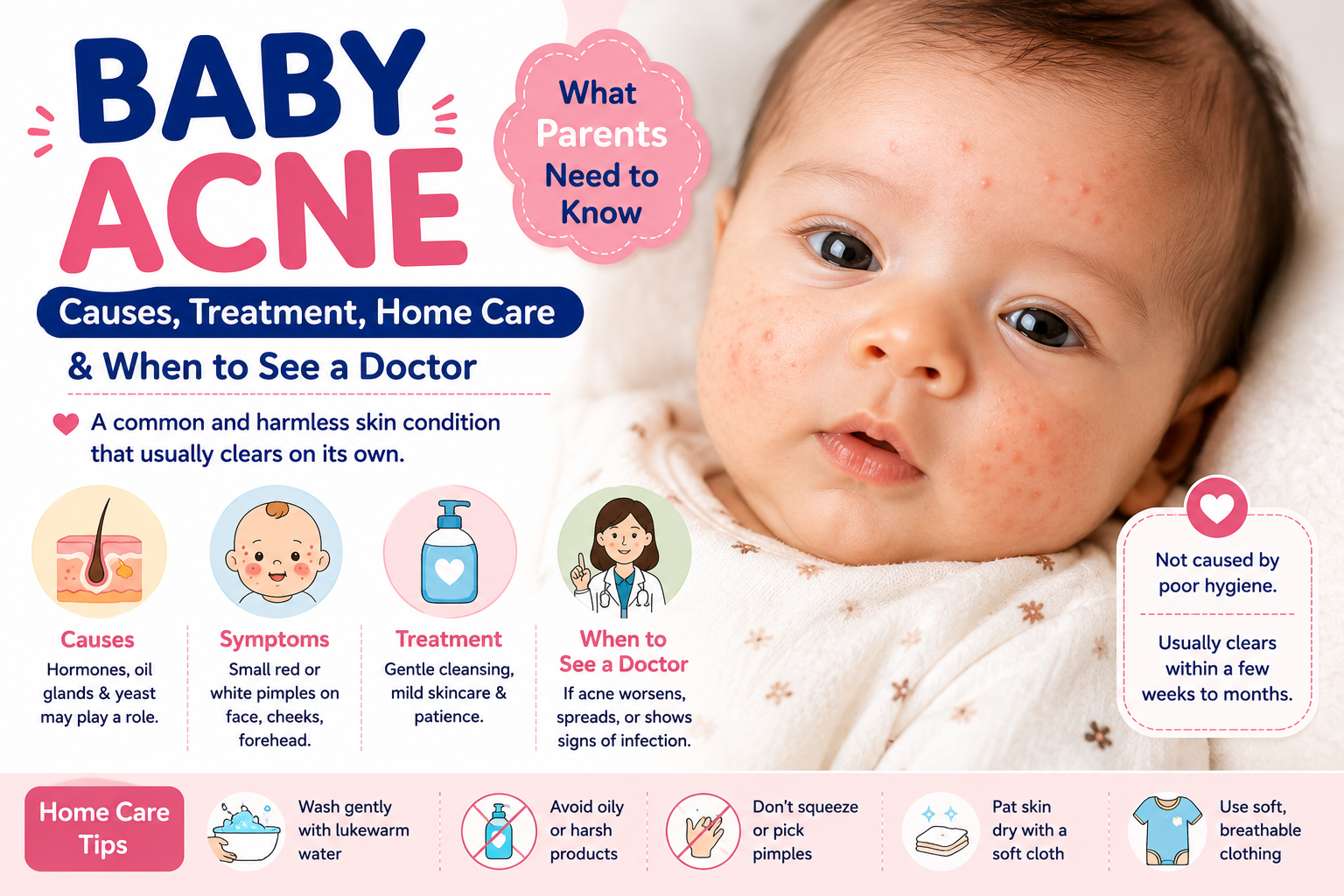
Tiny red or white bumps appearing on your newborn’s face can be alarming for new parents. Fortunately, baby acne is a common and harmless skin condition that affects many newborns during their first few weeks of life.
Also known as newborn acne or neonatal acne, it usually develops on the cheeks, forehead, nose, or chin and often clears up without any treatment within a few weeks or months.
Understanding what causes baby acne, how to care for your baby’s delicate skin, and when to seek medical advice can help you manage the condition with confidence.
HealthyChildren.org provides trusted pediatric guidance on newborn skin conditions, baby acne, and infant skincare.
What Is Baby Acne?
Baby acne is a temporary skin condition characterized by small red or white pimples that develop on a newborn’s face.
Unlike teenage acne, baby acne is not caused by poor hygiene, oily skin, or diet. It usually appears between 2 and 6 weeks after birth and is considered a normal part of newborn skin development.
Most babies remain healthy, comfortable, and unaffected by the rash.
Is Baby Acne Normal?
Yes. Baby acne is very common.
Studies estimate that up to 20% of newborns may develop neonatal acne during the first few weeks of life. It affects both boys and girls and usually resolves on its own without leaving scars. The American Academy of Dermatology recommends gentle skincare and advises against using adult acne medications on infants unless prescribed by a doctor.
What Causes Baby Acne?
Doctors don’t know the exact cause, but several factors may contribute.
1. Maternal Hormones
Hormones passed from the mother to the baby before birth may temporarily stimulate the baby’s oil glands, leading to small pimples.
This is considered the most likely cause.
2. Immature Oil Glands
A newborn’s sebaceous (oil) glands are still developing.
As they mature, temporary blockage and increased oil production may contribute to acne.
3. Skin Sensitivity
A baby’s delicate skin can become irritated by:
- Saliva
- Milk residue
- Rough fabrics
- Certain skincare products
Although these don’t directly cause acne, they may make existing bumps appear more noticeable.
4. Yeast (Malassezia)
Some research suggests that a naturally occurring skin yeast called Malassezia may play a role in certain cases of neonatal acne.
Symptoms of Baby Acne
Baby acne commonly appears as:
- Small red bumps
- White or yellow pimples
- Tiny pustules
- Mild redness around pimples
- Slight skin irritation
The rash usually appears on:
- Cheeks
- Nose
- Forehead
- Chin
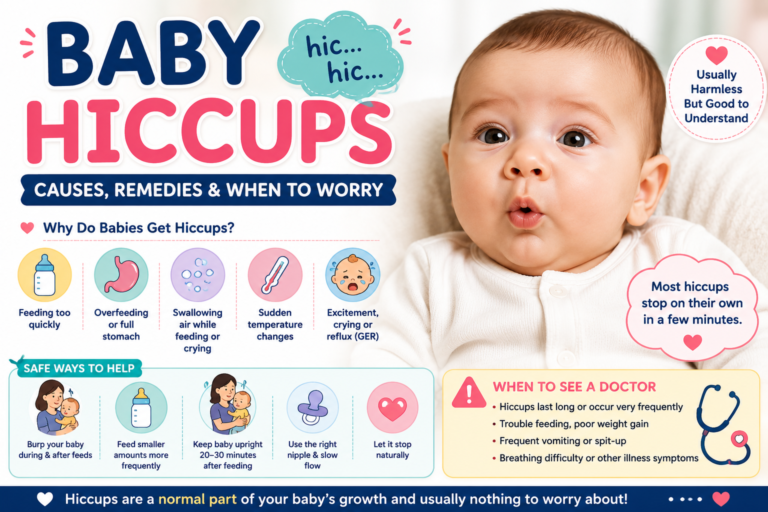
Occasionally, it may spread to the scalp, neck, or upper chest. During the newborn stage, parents often notice common conditions like Baby Hiccups alongside temporary skin changes such as baby acne.
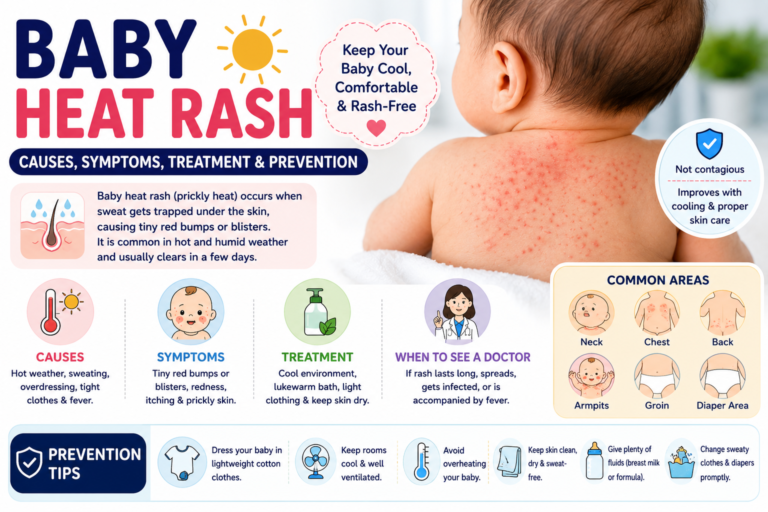
Baby Acne vs Baby Heat Rash
| Baby Acne | Heat Rash |
|---|---|
| Small red or white pimples | Tiny red bumps |
| Mostly on the face | Neck, chest, back, skin folds |
| Appears at 2–6 weeks | Can occur at any age |
| Not caused by heat | Triggered by sweating and blocked sweat glands |
| Clears naturally | Improves when baby is kept cool |
When Does Baby Acne Start?
Baby acne usually appears:
- Between 2 and 6 weeks of age
- Occasionally shortly after birth
- Rarely after 6 weeks
If acne develops after 6 weeks of age, it may be classified as infantile acne, which should be evaluated by a pediatrician. The NHS recommends washing a baby’s face gently with lukewarm water and avoiding harsh skincare products.
How Long Does Baby Acne Last?
Most cases improve within:
- A few weeks
- 1–3 months
- Occasionally up to 6 months
Most babies recover completely without treatment or permanent marks.
How Is Baby Acne Treated?
The good news is that baby acne usually doesn’t require any medical treatment. Most cases clear up naturally as your baby’s skin matures.
The best approach is gentle skincare and avoiding products that may irritate your baby’s delicate skin. If your baby’s facial rash is caused by saliva rather than acne, read our guide on Baby Drool Rash to understand the differences.
Home Care Tips for Baby Acne
Wash Your Baby’s Face Gently
Clean your baby’s face once a day using:
- Lukewarm water
- A soft washcloth
- A mild, fragrance-free baby cleanser (if recommended)
Pat the skin dry instead of rubbing it. Along with skin changes, parents may notice changes in stool color. Learn what Green Baby Poop means and when it is considered normal.
Avoid Oily Products
Skip:
- Heavy lotions
- Oils
- Greasy creams
- Petroleum-based cosmetics (unless prescribed)
These products can clog pores and make acne appear worse.
Don’t Squeeze or Pick Pimples
Resist the urge to pop baby pimples.
Doing so may:
- Irritate the skin
- Increase the risk of infection
- Delay healing
- Cause scarring (rare)
Keep Skin Clean and Dry
After feeding, gently wipe away:
- Milk
- Saliva
- Spit-up
These can irritate sensitive skin if left on the face.
Be Patient
Baby acne usually disappears without leaving scars.
Avoid trying multiple home remedies or over-the-counter acne products.
What Should You Avoid?
Never use adult acne treatments unless prescribed by a doctor.
Avoid:
- Benzoyl peroxide
- Salicylic acid
- Retinoid creams
- Steroid creams
- Alcohol-based products
- Harsh soaps
- Scrubbing brushes
- Home remedies like lemon juice, toothpaste, or essential oils
These products may damage your baby’s delicate skin. Some babies naturally develop rosy cheeks, which can sometimes be confused with skin conditions like baby acne.
Can Baby Acne Be Prevented?
Because baby acne is mainly related to normal hormonal changes, it cannot always be prevented.
However, healthy skincare habits may reduce irritation:
- Wash the face gently once daily.
- Use fragrance-free baby products.
- Avoid over-washing.
- Dress your baby in soft cotton clothing.
- Keep the face clean after feeding.
- Avoid unnecessary skincare products.
When Should You See a Doctor?
Consult your pediatrician if:
- The rash spreads rapidly.
- Pimples become swollen, painful, or filled with pus.
- Your baby develops a fever.
- The rash appears after 6 weeks of age and worsens.
- The bumps don’t improve after 3–4 months.
- The rash affects feeding or your baby seems unwell.
- You suspect eczema, an infection, or another skin condition.
Seek urgent medical care if your baby develops fever, lethargy, or signs of a serious skin infection. If your baby’s rash appears suddenly, is itchy, or spreads quickly, it may be Baby Hives rather than baby acne.
Baby Acne vs Eczema
| Baby Acne | Baby Eczema |
|---|---|
| Small pimples | Dry, itchy patches |
| Usually not itchy | Often very itchy |
| Mostly cheeks, forehead, nose | Face, elbows, knees, body |
| Appears at 2–6 weeks | Often starts after 2–3 months |
| Clears on its own | May require moisturizers or treatment |
| Rarely causes discomfort | Can make babies irritable due to itching |
Conclusion
Baby acne is a common and temporary skin condition that affects many newborns during their first few weeks of life. Although the small pimples can worry parents, they usually disappear without treatment and do not leave scars.
Gentle cleansing, avoiding harsh skincare products, and keeping your baby’s skin clean are often all that’s needed. If the rash persists, becomes infected, or is accompanied by other concerning symptoms, consult your pediatrician for further evaluation.
Frequently Asked Questions
Is baby acne normal?
Yes. Baby acne affects many newborns and is usually harmless.
When does baby acne start?
It commonly appears between 2 and 6 weeks after birth.
How long does baby acne last?
Most cases clear within 1 to 3 months, although some may last a little longer.
Does baby acne hurt?
No. Baby acne usually doesn’t cause pain or itching.
Can breast milk cure baby acne?
There is no strong scientific evidence that applying breast milk to baby acne speeds healing. Gentle skincare is recommended instead.
Can I use baby lotion on acne?
Avoid heavy lotions unless recommended by your pediatrician, as they may clog pores.
Should I pop baby pimples?
No. Squeezing pimples may irritate the skin and increase the risk of infection.
Is baby acne contagious?
No. Baby acne cannot spread from one baby to another.
Can formula cause baby acne?
Current evidence does not show that formula feeding causes baby acne.
Can baby acne spread to the body?
It may occasionally appear on the scalp, neck, or upper chest, but it is most common on the face.
Does baby acne leave scars?
Almost never. Baby acne usually heals without permanent marks.
What’s the difference between neonatal acne and infantile acne?
Neonatal acne appears during the first few weeks of life and usually resolves on its own. Infantile acne develops after about 6 weeks of age and may require medical evaluation.
Is baby acne caused by poor hygiene?
No. Baby acne is not related to cleanliness or hygiene.
When should I worry about baby acne?
Seek medical advice if the rash becomes severe, persists beyond a few months, develops signs of infection, or is associated with fever or other concerning symptoms.