
Editorial Note: This article is for informational purposes only and should not replace professional medical advice. If your baby has difficulty feeding, persistent white patches that don’t wipe away, fever, or appears unwell, consult your pediatrician promptly.
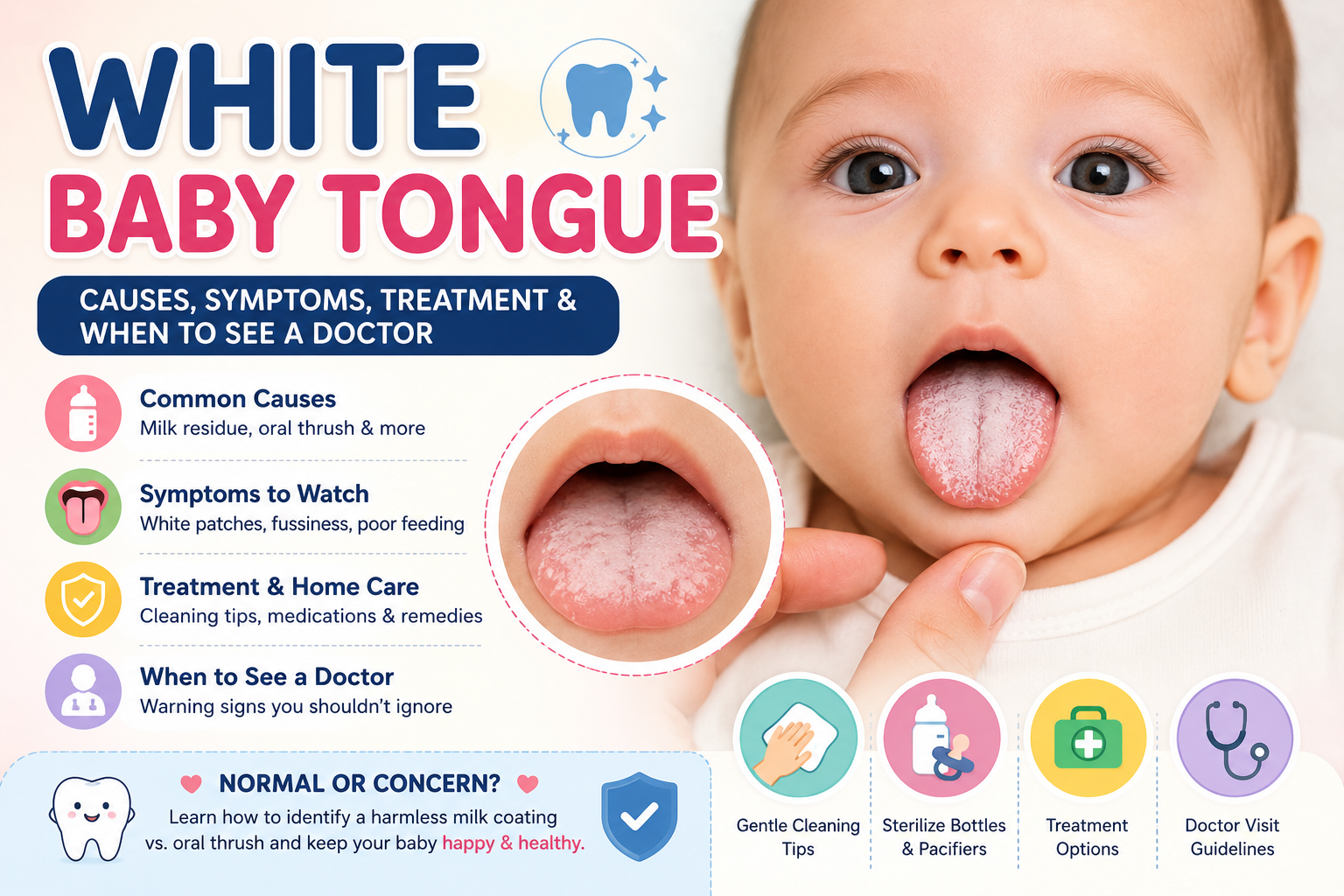
A white baby tongue is a common concern among new parents. After feeding, it’s normal to notice a thin white coating on your baby’s tongue, which is often simply leftover milk. However, if the white coating doesn’t wipe away easily or spreads to the cheeks, gums, or roof of the mouth, it could be a sign of oral thrush, a common fungal infection in infants.
Understanding the difference between harmless milk residue and a condition that requires treatment can help you care for your baby’s oral health with confidence.
HealthyChildren.org provides trusted information on infant oral health, feeding, and common infections such as oral thrush.
In this guide, we’ll explain the common causes of a white baby tongue, how to identify oral thrush, home care tips, treatment options, and when you should contact your pediatrician.
Is a White Baby Tongue Normal?
Yes, in many cases, a white coating on your baby’s tongue is completely normal. Babies who are breastfed or formula-fed often have a thin layer of milk residue left behind after feeding.
The coating usually disappears between feeds and doesn’t cause discomfort.
However, persistent white patches that remain even after feeding may indicate another condition, such as oral thrush.
Common Causes of a White Baby Tongue
1. Milk Residue (Most Common)
Milk residue is the most common reason for a white tongue in newborns and young infants.
It occurs because:
- Babies produce less saliva than older children.
- Milk can collect on the tongue after feeding.
- The tongue doesn’t clean itself as effectively in newborns.
Milk residue usually:
- Appears only on the tongue.
- Wipes away easily.
- Doesn’t cause pain or feeding problems.
2. Oral Thrush (Yeast Infection)
Oral thrush is a fungal infection caused by an overgrowth of Candida yeast.
Unlike milk residue, oral thrush causes thick white patches that:
- Do not wipe off easily.
- May bleed slightly if scraped.
- Can appear on the tongue, inner cheeks, gums, lips, and roof of the mouth.
- May make feeding uncomfortable.
Oral thrush is common in babies younger than 6 months because their immune systems are still developing. Excess saliva can sometimes irritate the skin around the mouth. Read our guide on Baby Drool Rash to learn how to prevent and treat drool-related skin irritation.
3. Dry Mouth
A baby who isn’t producing enough saliva due to dehydration, mouth breathing, or illness may develop a temporary white coating on the tongue.
Other symptoms may include:
- Dry lips
- Fewer wet diapers
- Sleepiness
- Poor feeding
4. Poor Oral Hygiene
Although newborns don’t have teeth yet, milk residue and bacteria can accumulate if the mouth isn’t cleaned occasionally.
Gently wiping your baby’s gums and tongue with a clean, damp cloth can help maintain good oral hygiene. The American Academy of Pediatric Dentistry (AAPD) recommends cleaning your baby’s gums and tongue even before the first tooth erupts.
5. Antibiotic Use
Babies taking antibiotics—or breastfeeding mothers taking antibiotics—may have an increased risk of developing oral thrush because antibiotics can disrupt the natural balance of microorganisms in the mouth.
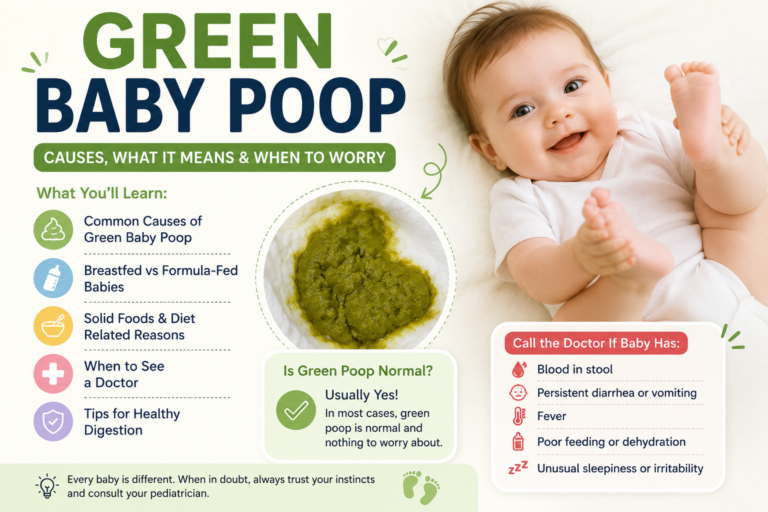
If your baby is taking antibiotics, you may also notice digestive changes. Learn more about Green Baby Poop and when stool color changes are considered normal.
White Baby Tongue: Milk Residue vs Oral Thrush
| Feature | Milk Residue | Oral Thrush |
|---|---|---|
| Wipes off easily | ✅ Yes | ❌ No |
| Only on the tongue | ✅ Usually | ❌ Often spreads to cheeks and gums |
| Causes pain | ❌ No | ✅ Sometimes |
| Affects feeding | ❌ Rarely | ✅ May cause discomfort |
| Requires treatment | ❌ No | ✅ Often yes |
Symptoms That May Accompany a White Baby Tongue
Depending on the cause, your baby may also experience:
- White patches inside the mouth
- Fussiness during feeding
- Poor latch while breastfeeding
- Mild mouth discomfort
- Cracked corners of the mouth
- Diaper rash (sometimes associated with thrush)
- Dry mouth
- Reduced feeding
How to Check Your Baby’s Tongue
You can gently inspect your baby’s mouth by:
- Washing your hands thoroughly.
- Using clean hands and good lighting.
- Gently lowering the baby’s lower lip.
- Looking for white patches on the tongue, gums, cheeks, and roof of the mouth.
- Never force your baby’s mouth open if they are resisting.
Home Care for a White Baby Tongue
The appropriate treatment depends on the cause. Milk residue usually requires no treatment, while oral thrush may need antifungal medication prescribed by your pediatrician.
Clean Your Baby’s Mouth Gently
Even before your baby has teeth, it’s a good idea to clean their mouth once or twice a day.
- Wash your hands thoroughly.
- Wrap a clean, damp gauze pad or soft cloth around your finger.
- Gently wipe the gums, tongue, and inside of the cheeks.
- Avoid scrubbing or scraping the tongue.
The NHS explains the symptoms of oral thrush, available treatments, and when parents should seek medical advice.
Continue Regular Feeding
Breastfeeding or formula feeding should usually continue as normal unless your baby’s healthcare provider recommends otherwise.
If feeding becomes painful or difficult because of oral thrush, contact your pediatrician.
Sterilize Feeding Equipment
If your baby has oral thrush:
- Sterilize bottles, nipples, pacifiers, and teething toys regularly.
- Wash breast pump parts after every use.
- Replace worn bottle nipples and pacifiers if advised.
Treat Oral Thrush Promptly
If your pediatrician diagnoses oral thrush, treatment may include:
- Antifungal oral drops or gel.
- Treatment for breastfeeding mothers if yeast infection is present on the nipples.
- Continued oral hygiene until the infection clears.
Do not use over-the-counter medications or home remedies without medical advice.
When Should You See a Doctor?
Contact your pediatrician if:
- The white coating doesn’t wipe away.
- White patches spread to the cheeks, gums, or roof of the mouth.
- Your baby refuses feeds or has difficulty sucking.
- The white patches last longer than a few days.
- Your baby develops a fever.
- You notice bleeding after attempting to wipe the patches.
- Your baby has repeated episodes of oral thrush.
- Your baby has fewer wet diapers or shows signs of dehydration.
Seek urgent medical care if your baby has trouble breathing, severe dehydration, or becomes unusually difficult to wake. If your baby develops white patches along with a skin rash or raised bumps, read our article on Baby Hives to understand possible allergic reactions.
White Baby Tongue vs Oral Thrush
| White Milk Coating | Oral Thrush |
|---|---|
| Thin white film | Thick white patches |
| Wipes away easily | Doesn’t wipe away easily |
| Only on the tongue | Tongue, cheeks, gums, lips, roof of mouth |
| No pain | May cause soreness and feeding discomfort |
| No treatment needed | Usually requires antifungal medication |
Can a White Baby Tongue Be Prevented?
While milk residue is normal and can’t always be prevented, you can reduce the risk of oral thrush by:
- Cleaning your baby’s mouth daily.
- Sterilizing bottles, nipples, and pacifiers.
- Washing breast pump parts thoroughly.
- Treating maternal nipple yeast infections promptly if breastfeeding.
- Following good hand hygiene.
- Completing prescribed medications exactly as directed.
As your baby’s teeth begin to appear, maintaining good oral hygiene becomes even more important. Learn about the Baby Teeth Order and what to expect during teething.
Conclusion
A white baby tongue is often harmless and simply caused by milk residue, especially in newborns and young infants. However, thick white patches that don’t wipe away, spread inside the mouth, or interfere with feeding may be signs of oral thrush and should be evaluated by a healthcare provider.
Regular oral hygiene, proper cleaning of feeding equipment, and early medical treatment when needed can help keep your baby’s mouth healthy. If you’re ever unsure whether the white coating is normal, it’s always best to consult your pediatrician.
Along with oral health, it’s important to monitor your baby’s skin. Our guide on Infant Rosy Cheeks explains common causes of facial redness and when to seek medical advice.
Frequently Asked Questions
Is a white baby tongue normal?
Yes. A thin white coating after breastfeeding or formula feeding is usually milk residue and is completely normal.
How can I tell if it’s milk residue or oral thrush?
Milk residue wipes away easily and is usually only on the tongue. Oral thrush forms thick white patches that don’t wipe off and may spread to the cheeks and gums.
Can I wipe my baby’s tongue?
Yes. You can gently clean your baby’s tongue and gums using a clean, damp cloth or gauze. Avoid scraping forcefully.
Does breastfeeding cause a white tongue?
Breastfeeding itself doesn’t cause oral thrush, but breast milk can leave a temporary white coating on the tongue after feeds.
Is oral thrush contagious?
The yeast that causes thrush can pass between a breastfeeding mother and baby, so both may need treatment if infected.
Can formula-fed babies develop oral thrush?
Yes. Oral thrush can affect both breastfed and formula-fed babies.
Does oral thrush hurt babies?
It can. Some babies become fussy, feed less, or seem uncomfortable while sucking.
How long does oral thrush last?
With appropriate treatment, oral thrush often improves within 1–2 weeks, though follow your pediatrician’s guidance.
Can antibiotics cause a white baby tongue?
Yes. Antibiotics can increase the risk of oral thrush by disrupting the normal balance of microorganisms in the mouth.
Should I clean my newborn’s tongue every day?
Yes. Gently cleaning your baby’s gums and tongue once daily can support good oral hygiene, even before teeth appear.
When should I worry about a white baby tongue?
Seek medical advice if the white patches don’t wipe away, spread inside the mouth, cause feeding problems, or are accompanied by fever or dehydration.
Can a white tongue be a sign of dehydration?
Sometimes. A dry mouth and reduced saliva can contribute to a white coating, especially if your baby is dehydrated.
Can oral thrush come back?
Yes. Recurrence is possible, particularly if feeding equipment isn’t sterilized properly or if both the baby and breastfeeding parent aren’t treated when necessary.
Can teething cause a white tongue?
Teething doesn’t usually cause a white tongue directly, though increased saliva changes and feeding patterns may make milk residue more noticeable.
How do I prevent oral thrush in my baby?
Maintain good oral hygiene, sterilize feeding equipment, wash breast pump parts thoroughly, and seek prompt treatment if you or your baby develop symptoms of thrush.