

Medical note: This article provides general pregnancy information and does not diagnose the cause of feeling hot or sweating. Contact your obstetrician, midwife or maternity care team if you have a fever, feel significantly unwell or have symptoms that concern you.
You are sitting comfortably when suddenly your face feels hot.
Within seconds, warmth spreads across your neck and chest. You may start sweating—even though everyone else in the room seems perfectly comfortable.
Then, a few minutes later, the feeling begins to settle.
If this sounds familiar, you may be experiencing hot flashes during pregnancy.
Hot flashes during pregnancy are sudden episodes of warmth that may affect the face, neck, chest or whole body. Hormonal changes and increased blood flow to the skin can make pregnant women feel warmer and sweat more than usual. The NHS guidance on common pregnancy symptoms explains that feeling hotter during pregnancy is common because of hormonal changes and increased blood supply to the skin.
Quick answer: Pregnancy hot flashes may feel like a sudden wave of heat, flushing or sweating. They can occur in early pregnancy or later trimesters and may also happen at night. However, a hot flash is different from a measured fever of 38°C (100.4°F) or higher, which is an urgent maternal warning sign according to the CDC.
What Are Hot Flashes During Pregnancy?
A hot flash is a sudden feeling of warmth or heat.
The sensation may begin unexpectedly and can affect:
- your face;
- neck;
- upper chest;
- back;
- or the whole body.
You may notice:
- sudden warmth;
- facial flushing;
- sweating;
- damp skin;
- a warm neck or chest;
- feeling overheated for a short period.
Some pregnant women describe it as:
“A wave of heat suddenly moving through my body.”
Others simply notice that they are much warmer and sweatier than they were before pregnancy.
The NHS says pregnant women are likely to feel warmer than usual because of hormonal changes and increased blood supply to the skin. Sweating may also increase.
If you are still in the first trimester and noticing several new body changes at once, MomSaathi’s pregnancy weeks 9 to 12 guide explains common symptoms and first-trimester changes in more detail.
Are Hot Flashes Normal During Pregnancy?
Feeling warmer and sweating more can be normal during pregnancy.
Your body is undergoing significant physiological changes.
These include:
- changing hormone levels;
- increased blood flow;
- changes in temperature regulation;
- the physical demands of pregnancy.
The NHS specifically recognises feeling hot in pregnancy as a common pregnancy problem and explains that hormonal changes and increased blood supply to the skin can contribute.
A 2013 prospective study also found that hot flashes were reported by more than one-third of women during pregnancy and/or the postpartum period, although individual experiences varied.
However, there is an important distinction:
Feeling suddenly hot is not automatically the same as having a fever.
If you are unsure, check your temperature with a thermometer rather than judging only by how hot you feel.
What Do Pregnancy Hot Flashes Feel Like?
Pregnancy hot flashes can feel different from simply being warm because the weather is hot.
You may be comfortable one moment and suddenly notice:
heat → flushing → sweating → gradual cooling
A hot flash may feel like:
- a sudden rush of heat;
- warmth spreading upwards;
- a hot face;
- flushed cheeks;
- sweating around the neck;
- a warm chest;
- damp hair or skin;
- feeling too hot under normal clothing.
The episode may be brief.
However, not every episode of sweating or warmth is necessarily a hot flash.
A hot environment, physical activity, illness and other factors can also make you feel overheated.
Why Do Hot Flashes Happen During Pregnancy?
There is not always one single cause.
Several pregnancy-related changes may contribute to feeling hotter.
1. Hormonal Changes
Pregnancy causes major changes in hormone levels.
These hormonal changes can affect many body systems and may contribute to changes in temperature perception.
The NHS directly links feeling warmer during pregnancy with hormonal changes.
Cleveland Clinic also explains that pregnancy hot flashes are commonly associated with hormonal changes, particularly during the first trimester when pregnancy hormones are changing rapidly.
2. Increased Blood Flow to the Skin
Blood circulation changes during pregnancy.
According to the NHS, increased blood supply to the skin is one reason pregnant women may feel warmer.
This may contribute to:
- warmth;
- flushing;
- increased sweating.
3. Your Body Is Working Harder
Pregnancy places additional physical demands on your body.
As pregnancy progresses, carrying and supporting a growing pregnancy may also contribute to feeling warmer or becoming uncomfortable in heat.
Cleveland Clinic notes that hot flashes later in pregnancy may be influenced not only by hormonal changes but also by the physical demands of carrying a growing fetus.
4. Hot Weather and Humidity
For pregnant women in India, this factor deserves special attention.
A hot flash can be difficult to distinguish from environmental overheating when temperatures and humidity are already high.
The CDC explains that pregnancy can increase vulnerability to heat-related illness and dehydration, and very hot environments or strenuous activity may increase core body temperature.
If you are pregnant during a hot Indian summer, do not assume every episode of dizziness, weakness or overheating is “just hormones.”
Are Hot Flashes a Sign of Pregnancy?
Hot flashes alone are not a reliable way to confirm pregnancy.
Some women may feel warmer or sweat more during early pregnancy.
However, the NHS list of common early pregnancy symptoms focuses on signs such as:
- a missed or lighter period;
- nausea or vomiting;
- tiredness;
- sore breasts;
- urinating more often.
Feeling hot is not a pregnancy test.
If pregnancy is possible, use an appropriate pregnancy test and contact your healthcare professional when needed.
Do not conclude:
“I had a hot flash, so I must be pregnant.”
Many factors can cause sudden warmth or sweating.
Hot Flashes in Early Pregnancy
Hot flashes can occur during early pregnancy.
The first trimester involves significant hormonal changes as the body adapts to pregnancy.
Cleveland Clinic notes that hot flashes may be particularly noticeable during the first trimester because hormones are rapidly changing to support pregnancy.
You may experience hot flashes alongside other early pregnancy symptoms such as:
- tiredness;
- nausea;
- breast changes;
- increased urination;
- emotional changes.
However, symptoms vary significantly.
One pregnant woman may feel hot frequently.
Another may never describe a single hot flash.
Both experiences can occur.
For a week-by-week overview of first-trimester body changes, read MomSaathi’s pregnancy weeks 9 to 12 symptoms and baby development guide.
Hot Flashes in the First Trimester
During the first trimester, changing hormones may be one factor behind episodes of sudden warmth.
You may notice hot flashes:
- during the day;
- after activity;
- while sleeping;
- in a warm room.
The important question is whether you are simply experiencing a temporary feeling of warmth or whether you have a measured high temperature.
A hot flash may make you feel very warm.
A fever involves an elevated body temperature.
If you feel unusually hot or unwell, use a thermometer.
Do not rely only on touching your forehead.
Hot Flashes in the Second Trimester
Some pregnant women continue experiencing hot flashes during the second trimester.
Others may notice them for the first time.
As pregnancy progresses, your body continues to adapt to:
- increased physical demands;
- changes in circulation;
- a growing uterus and baby.
Cleveland Clinic notes that hot flashes can continue into the second trimester or appear for the first time later in pregnancy.
The second trimester is also when many women begin noticing their baby’s first movements.
If you are trying to understand those first fluttering sensations, MomSaathi’s guide on what quickening in pregnancy feels like explains when early fetal movements may begin and how they can feel.
Hot Flashes in the Third Trimester
Feeling hot may become particularly uncomfortable later in pregnancy.
A growing pregnancy can make:
- warm rooms feel hotter;
- physical activity more tiring;
- sleep less comfortable.
You may also find that your usual clothing suddenly feels too warm.
Choose comfort over trying to dress exactly as you did before pregnancy.
Loose, breathable clothing may help. The NHS recommends loose clothing made from natural fibres because these can be more breathable and absorbent than synthetic materials.
If hot flashes are new, severe or accompanied by other concerning symptoms, discuss them with your healthcare professional.
Hot Flashes at Night During Pregnancy
You finally fall asleep.
Then you wake up feeling hot and sweaty.
Your pillow may feel damp.
Your clothes may stick to your skin.
Nighttime sweating can occur during pregnancy.
Pregnancy-related changes that make you feel warmer during the day do not simply switch off when you go to bed.
A warm bedroom, heavy bedding or non-breathable sleepwear may make nighttime discomfort worse.
Try:
- keeping the bedroom comfortably cool;
- using breathable sleepwear;
- choosing lighter bedding when appropriate;
- keeping drinking water nearby.
The NHS recommends keeping the room cool and notes that an electric fan may help when feeling hot during pregnancy.
Hot Flashes vs Night Sweats During Pregnancy
The terms are sometimes used interchangeably, but they describe slightly different experiences.
| Hot Flashes | Night Sweats |
|---|---|
| Sudden feeling of heat | Sweating during sleep |
| Can occur day or night | Occurs at night |
| May cause facial or chest flushing | May leave clothes or bedding damp |
| May be brief | May disturb sleep |
| Can occur without heavy sweating | Sweating is the main noticeable symptom |
You can experience both.
However, persistent or unusually severe night sweats should be discussed with your healthcare professional, particularly if you also have fever or feel unwell.
Hot Flashes and Sweating During Pregnancy
Sweating is one of your body’s ways of cooling itself.
The NHS says pregnant women are likely to sweat more because they may feel warmer than usual.
You may notice more sweating:
- under your arms;
- around your breasts;
- on your back;
- around your neck;
- on your face;
- between skin folds.
In India’s hot and humid climate, increased sweating can also make skin discomfort more noticeable.
Wear breathable clothing and change out of damp clothing when practical.
If sweating is extreme, persistent or associated with illness, contact your healthcare professional.
Hot Flashes and Chills During Pregnancy
Some women describe feeling hot and then suddenly cold.
After sweating, cooling of the skin may make you feel chilly.
However, hot flashes with significant chills or shivering should not automatically be blamed on pregnancy hormones.
Chills may occur with illness or infection.
Check your temperature and pay attention to other symptoms.
These may include:
- body aches;
- cough;
- painful urination;
- vomiting;
- diarrhoea;
- severe headache;
- feeling significantly unwell.
If you have a fever or concerning symptoms, contact your healthcare professional.
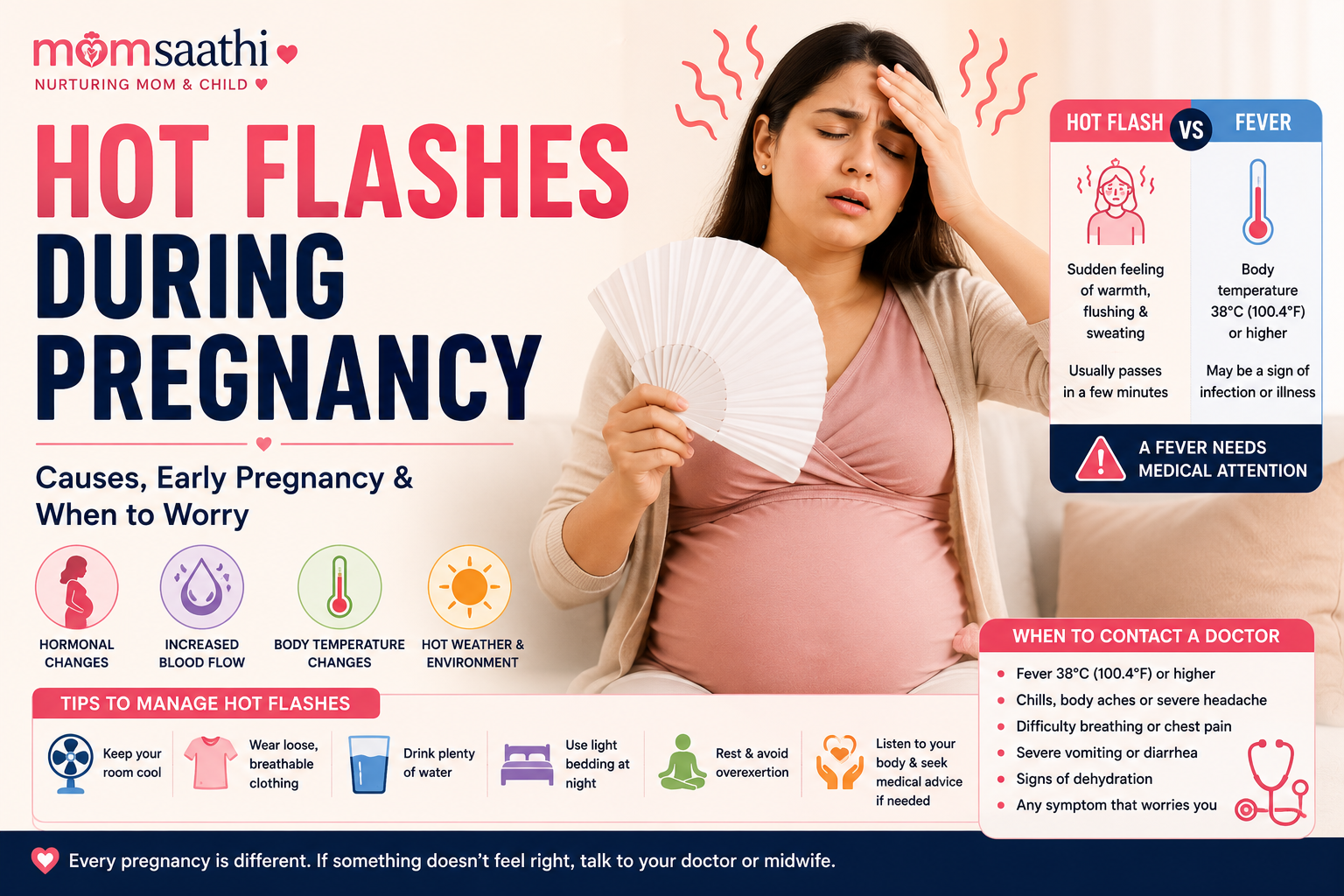
Hot Flash or Fever: How Can You Tell?
This is one of the most important sections of this article.
A hot flash and fever are not the same thing.
| Pregnancy Hot Flash | Fever |
|---|---|
| Sudden feeling of warmth | Measured elevated temperature |
| May pass relatively quickly | Temperature may remain elevated |
| May cause flushing | May occur with illness |
| Sweating may occur | Chills or body aches may occur |
| Temperature may be normal | Thermometer shows a high temperature |
The CDC lists a fever of 100.4°F or 38°C or higher as an urgent maternal warning sign.
If you feel hot and are unsure:
Use a thermometer.
Do not diagnose a fever based only on how warm your face feels.
Equally, do not dismiss a measured fever as:
“Probably just a pregnancy hot flash.”
Fever and prolonged elevation of body temperature can require medical assessment during pregnancy.
Can Hot Flashes Cause a Fever?
A typical hot flash is not the same as a fever caused by illness or infection.
You may feel intensely hot during a hot flash without having a temperature of 38°C or higher.
This is why checking your temperature can be useful when you are unsure.
If your thermometer shows a high temperature, seek medical advice rather than assuming the reading is caused by a normal pregnancy symptom.
Can Dehydration Make You Feel Hot During Pregnancy?
Dehydration and heat exposure can make pregnancy more uncomfortable and may contribute to symptoms such as weakness or dizziness.
Pregnant women may also be more vulnerable to heat-related illness and dehydration. The CDC specifically advises drinking plenty of water and taking steps to stay cool in hot conditions.
Pay attention to your fluid intake, particularly if you are:
- sweating heavily;
- exercising;
- spending time outdoors;
- experiencing vomiting or diarrhoea;
- living in hot weather.
If you have severe vomiting, diarrhoea or signs of dehydration, seek medical advice.
MomSaathi’s foods to avoid during pregnancy guide also explains warning symptoms associated with foodborne illness, including high fever, severe vomiting or diarrhoea and dehydration.
Can Thyroid Problems Cause Hot Flashes During Pregnancy?
Feeling hot or sweating can have causes other than normal pregnancy changes.
Thyroid conditions can affect temperature tolerance and other body functions.
However, you cannot diagnose a thyroid problem based on hot flashes alone.
Speak with your healthcare professional if sweating or heat intolerance is persistent or if you have other symptoms that concern you.
Your doctor can consider your:
- medical history;
- pregnancy stage;
- symptoms;
- physical assessment;
- need for blood tests.
Do not start thyroid medication or supplements based on online symptoms.
Can Low Blood Sugar Cause a Hot or Sweaty Feeling?
Sweating can occur for many reasons.
If you repeatedly experience sweating with symptoms such as:
- shakiness;
- weakness;
- dizziness;
- confusion;
seek medical advice, particularly if you have diabetes, gestational diabetes or take medicines that can affect blood glucose.
Do not assume every sweaty episode is a pregnancy hot flash.
The pattern and accompanying symptoms matter.
Are Hot Flashes Dangerous for the Baby?
Feeling warmer than usual during pregnancy is not automatically dangerous to your baby.
Pregnancy-related warmth and sweating are common.
However, this is different from:
- significant fever;
- hyperthermia;
- heat-related illness.
The CDC explains that increased internal temperature and fever during pregnancy have, in some circumstances, been linked with pregnancy complications. It also notes that pregnancy can increase vulnerability to heat-related illness.
The MotherToBaby fact sheet on fever and hyperthermia during pregnancy also explains why prolonged raised body temperature, particularly in early pregnancy, should be discussed with a healthcare provider.
The key distinction is:
Feeling hot ≠ automatically having a dangerously high core body temperature.
If you are concerned, check your temperature and seek medical advice.
How to Cool Down During Pregnancy Hot Flashes
You may not be able to prevent every hot flash.
But simple changes can make episodes more comfortable.
Wear Loose, Breathable Clothing
Choose loose-fitting clothes.
Natural fibres may feel more comfortable in warm weather.
The NHS specifically recommends loose clothing made from natural fibres when feeling hot during pregnancy.
Keep Your Room Cool
Use ventilation or a fan where appropriate.
The NHS recommends keeping your room cool and suggests using an electric fan.
Drink Water Regularly
Keep water accessible throughout the day.
This is particularly important in hot weather or when sweating heavily.
The CDC advises pregnant women to drink plenty of water and take extra precautions during heat exposure.
Use Lighter Bedding
If you frequently wake feeling hot, consider whether heavy bedding is adding to the discomfort.
Choose bedding appropriate for your room temperature and climate.
Take Breaks in Hot Weather
Do not push yourself to continue strenuous activity when you feel overheated.
Move to a cooler environment and rest.
The CDC advises limiting time in heat and taking precautions because pregnancy can increase the risk of heat-related illness.
How to Stop Hot Flashes During Pregnancy
Many women search:
“How do I stop pregnancy hot flashes completely?”
Unfortunately, there may not be one instant solution.
If your hot flashes are related to normal pregnancy changes, the goal may be to reduce discomfort and identify avoidable triggers.
Try observing whether episodes are more noticeable after:
- spending time in a hot room;
- physical activity;
- wearing heavy clothing;
- sleeping under heavy bedding;
- becoming dehydrated.
Keep a simple symptom note if episodes are frequent.
Record:
Time → what you were doing → symptoms → measured temperature if unwell
This can also give your healthcare professional clearer information if symptoms continue.
Do not take medication, herbal remedies or “hormone-balancing” supplements for pregnancy hot flashes without discussing them with a qualified healthcare professional.
Foods and Drinks That May Make You Feel Hotter
Some people notice that certain foods or drinks make them feel warmer or sweat more.
Individual triggers can vary.
You may want to observe whether symptoms occur after:
- very spicy foods;
- hot drinks;
- large meals.
This does not mean every pregnant woman needs to avoid spicy food.
Instead, notice your own pattern.
Pregnancy nutrition decisions should also consider food safety. For a broader list of foods requiring caution, read MomSaathi’s foods to avoid during pregnancy guide.
Can Hot Flashes Predict Baby Gender?
No. Hot flashes cannot reliably tell you whether you are having a boy or girl.
You may hear claims such as:
“Feeling hot means a boy.”
or:
“Night sweats mean a girl.”
These are pregnancy myths.
Cleveland Clinic specifically notes that hot flashes are not a reliable predictor of fetal sex.
Do not use pregnancy symptoms to determine your baby’s sex.
Hot Flashes During Pregnancy: When Should You Worry?
Contact your healthcare professional if you are concerned about your symptoms.
Seek prompt medical assessment if feeling hot is accompanied by a measured fever of 38°C or 100.4°F or higher. The CDC identifies this as an urgent maternal warning sign.
You should also seek medical advice for concerning symptoms such as:
- feeling significantly unwell;
- difficulty breathing;
- severe or persistent vomiting;
- severe diarrhoea;
- signs of dehydration;
- severe headache;
- confusion;
- significant chills or shivering;
- painful urination;
- severe abdominal pain.
This list is not exhaustive.
The safest principle is:
A brief feeling of warmth may be a pregnancy symptom. A measured fever or significant illness needs medical attention.
Pregnancy Hot Flashes: Myths vs Facts
| Myth | Fact |
|---|---|
| Hot flashes only happen during menopause | Hot flashes can also occur during pregnancy |
| Feeling hot always means fever | A hot flash can occur without a measured fever |
| Hot flashes confirm pregnancy | They are not a reliable pregnancy test |
| Pregnancy hot flashes only happen in the first trimester | They may occur at different stages |
| Night sweating always means something is wrong | Pregnancy-related warmth can contribute, but persistent or concerning symptoms need assessment |
| Hot flashes predict the baby’s sex | There is no reliable connection |
| You should ignore a fever because pregnancy makes you hot | A measured fever requires appropriate medical attention |
| An online symptom checker can diagnose the cause | A healthcare professional may need to assess persistent or concerning symptoms |
MomSaathi’s Pregnancy Hot Flash Checklist
Feeling suddenly hot?
Ask yourself:
1. Was the warmth sudden and temporary?
This may be consistent with a hot flash.
2. Am I sweating more than usual?
Pregnancy can make you feel warmer and sweat more.
3. Is the room or weather very hot?
Environmental heat may be contributing.
4. Have I checked my temperature?
Use a thermometer if you feel unwell or are unsure whether you have a fever.
5. Is my temperature 38°C or higher?
Seek prompt medical advice.
6. Am I drinking enough fluids?
Pregnancy can increase vulnerability to dehydration and heat-related illness.
7. Do I have chills or other illness symptoms?
Do not automatically label the episode a pregnancy hot flash.
8. Are the episodes persistent or worrying me?
Discuss them with your healthcare professional.
Frequently Asked Questions About Hot Flashes During Pregnancy
Are hot flashes normal during pregnancy?
Feeling warmer and sweating more can occur during pregnancy. Hormonal changes and increased blood supply to the skin are among the reasons pregnant women may feel hotter than usual.
What causes hot flashes during pregnancy?
Pregnancy-related hormonal changes and increased blood flow to the skin may contribute to feeling hot. Physical demands, environmental heat and other factors may also affect temperature comfort.
Are hot flashes a sign of early pregnancy?
Some women may feel warmer during early pregnancy, but hot flashes alone cannot confirm pregnancy. A pregnancy test is more appropriate when pregnancy is possible.
Can you get hot flashes in the first trimester?
Yes. Hot flashes may occur during the first trimester, when pregnancy hormones are changing rapidly.
Can hot flashes happen in the second trimester?
Yes. Hot flashes may continue into the second trimester or appear for the first time later in pregnancy.
Why do I get hot flashes at night while pregnant?
Pregnancy-related changes may make you feel warmer and sweat more. A warm bedroom, heavy bedding and non-breathable sleepwear may also increase nighttime discomfort.
Are pregnancy hot flashes the same as night sweats?
Not exactly. A hot flash is a sudden feeling of heat that can occur day or night. Night sweats refer to sweating during sleep.
How can I tell a hot flash from a fever?
A hot flash causes a feeling of warmth, while fever involves an elevated body temperature. Use a thermometer if you are unsure. A temperature of 38°C or 100.4°F or higher is an urgent maternal warning sign.
Can dehydration cause hot flashes during pregnancy?
Dehydration and heat exposure can contribute to feeling unwell, weak or overheated. Pregnant women should take precautions in hot conditions and drink plenty of water.
Can hot flashes harm my baby?
Feeling warmer than usual is not automatically harmful. However, fever, hyperthermia and heat-related illness are different situations and may require medical attention.
How can I cool down during a pregnancy hot flash?
Wear loose breathable clothing, keep your room cool, drink water regularly and take breaks from hot environments. These measures align with NHS and CDC heat guidance.
Do hot flashes mean I am having a boy?
No. Hot flashes do not reliably predict your baby’s sex.
Should I worry about hot flashes and chills during pregnancy?
Significant chills or shivering may occur with illness and should not automatically be blamed on pregnancy hormones. Check your temperature and seek medical advice if you have a fever or feel unwell.
When should I call my doctor about pregnancy hot flashes?
Contact your healthcare professional if symptoms are persistent, severe or concerning. Seek prompt medical advice for a temperature of 38°C or higher or other serious symptoms.
Can I take medicine for pregnancy hot flashes?
Do not start medicines, herbal remedies or supplements specifically for hot flashes without discussing them with your pregnancy healthcare professional.
Final Thoughts
So, are hot flashes during pregnancy normal?
Feeling warmer and sweating more can be a common part of pregnancy. Hormonal changes and increased blood supply to the skin are among the reasons pregnant women may feel hotter than usual.
A pregnancy hot flash may feel like:
a sudden wave of heat… a warm face… flushing… sweating… and then gradual cooling.
Hot flashes may occur during early pregnancy, the first trimester or later stages of pregnancy.
You may also notice nighttime sweating.
Simple measures such as breathable clothing, a cooler room and regular fluid intake may make you more comfortable. The NHS recommends loose natural-fibre clothing and keeping the room cool, while the CDC advises pregnant women to drink plenty of water and take precautions in hot conditions.
But remember the most important distinction:
Feeling hot is not the same as having a fever.
If you feel unwell, check your temperature.
A measured fever of 38°C or 100.4°F or higher is listed by the CDC as an urgent maternal warning sign and requires prompt medical attention.
Listen to your symptoms, use a thermometer when needed and contact your maternity care team if something concerns you.