
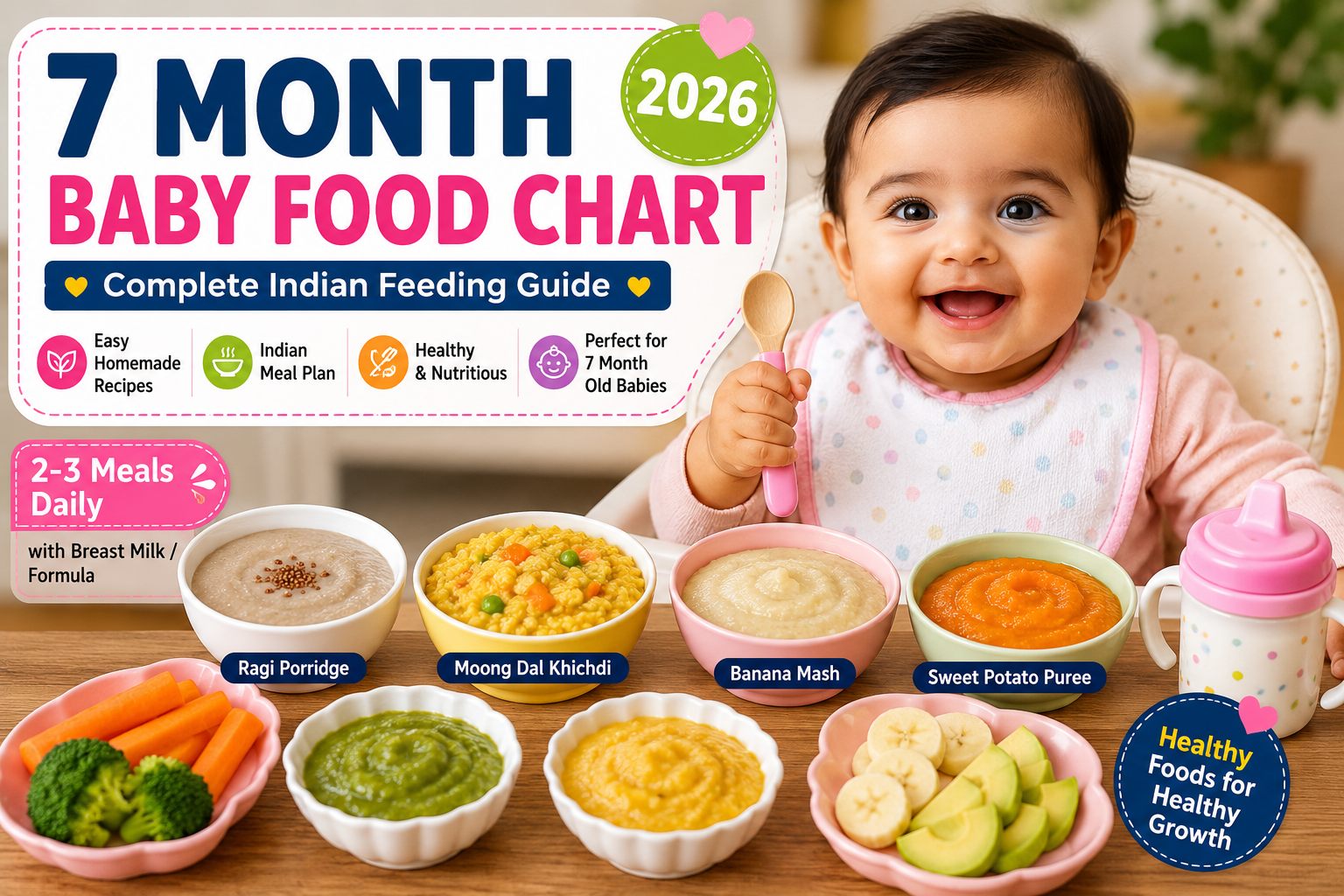

As your baby turns 7 months old, feeding becomes even more exciting. Your little one is now ready to explore a wider variety of tastes, textures, and nutritious foods while continuing to receive most of their nutrition from breast milk or formula.
Many parents wonder:
- What should a 7-month-old eat?
- How many meals should a baby have at 7 months?
- Can babies eat fruits and vegetables together?
- Is it safe to introduce finger foods?
- What foods should still be avoided?
If you have similar questions, you’re not alone.
This comprehensive guide includes a 7 month baby food chart, Indian meal ideas, feeding schedules, homemade recipes, foods to avoid, allergy tips, and expert feeding advice to help your baby grow strong and healthy.
Can a 7-Month-Old Baby Eat More Solid Foods?
Yes.
At 7 months, most babies become more comfortable eating solids and gradually increase from one meal to two or three small meals each day, depending on their readiness and appetite.
Breast milk or infant formula should continue to provide most of your baby’s nutrition during the first year. Solid foods are introduced to complement milk feeds and help babies develop eating skills, discover new flavours, and meet increasing nutritional needs such as iron and zinc.
Developmental Changes at 7 Months
Many babies at this age can:
- Sit without support for short periods.
- Hold food with their hands.
- Move food around the mouth.
- Open their mouth when offered food.
- Show excitement during mealtimes.
- Begin chewing soft mashed foods.
- Develop improved hand-eye coordination.
These milestones make mealtimes more interactive and enjoyable.
How Much Should a 7-Month-Old Eat?
Every baby has a different appetite.
A general guide includes:
- Breast milk or formula: 5–6 feeds daily (or as needed)
- Solid meals: 2–3 small meals
- Water: Small sips in an open cup or sippy cup during meals
Start with 2–3 tablespoons of food and gradually increase based on your baby’s hunger cues.
Never force-feed.
Foods to Include in a 7-Month Baby Diet
A balanced diet should include foods from different food groups.
Fruits
Offer soft, ripe fruits such as:
- Banana
- Apple puree
- Pear puree
- Papaya
- Mango (seasonal)
- Avocado
- Chikoo (Sapota)
These provide vitamins, fibre, and natural sweetness.
Vegetables
Nutritious vegetables include:
- Pumpkin
- Sweet potato
- Carrot
- Bottle gourd
- Beetroot
- Potato
- Peas (well mashed)
- Spinach (cooked and pureed)
Vegetables provide important vitamins, minerals, and antioxidants.
Cereals & Grains
Introduce a variety of grains:
- Rice porridge
- Ragi porridge
- Oats
- Suji (Semolina)
- Broken wheat (Dalia)
- Homemade khichdi
Whole grains support energy and healthy digestion.
Protein-Rich Foods
Protein supports growth and muscle development.
Good options include:
- Moong dal
- Masoor dal
- Toor dal
- Well-cooked lentils
- Plain yogurt
- Paneer (soft and mashed)
- Egg (if introduced)
- Chicken puree
- Fish (boneless and well cooked)
Introduce one new protein source at a time.
Sample 7 Month Baby Food Chart
| Time | Meal |
|---|---|
| 6:30 AM | Breast Milk / Formula |
| 8:30 AM | Ragi Porridge |
| 11:00 AM | Breast Milk |
| 1:00 PM | Vegetable Khichdi |
| 3:30 PM | Breast Milk |
| 5:30 PM | Banana Mash |
| 8:00 PM | Breast Milk / Formula |
Adjust timings according to your baby’s routine.
Weekly Indian Meal Plan
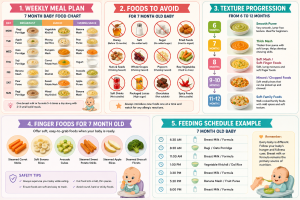
Monday
Breakfast
Ragi Porridge
Lunch
Pumpkin Puree
Tuesday
Breakfast
Apple Puree
Lunch
Rice Dal Khichdi
Wednesday
Breakfast
Banana Mash
Lunch
Sweet Potato Mash
Thursday
Breakfast
Oats Porridge
Lunch
Moong Dal Puree
Friday
Breakfast
Pear Puree
Lunch
Vegetable Khichdi
Saturday
Breakfast
Suji Porridge
Lunch
Carrot Potato Mash
Sunday
Breakfast
Papaya Mash
Lunch
Rice Cereal with Dal
Homemade Baby Food Recipes
Preparing baby food at home allows you to use fresh ingredients and adjust textures as your baby develops.
Simple recipes include:
Vegetable Khichdi
Ingredients:
- Rice
- Moong dal
- Pumpkin
- Carrot
Cook until very soft and mash thoroughly before serving.
Ragi Porridge
Ingredients:
- Ragi flour
- Water
- Breast milk or formula (if appropriate after cooking)
Cook until smooth.
Avoid adding sugar.
Oats Porridge
Cook oats until soft and blend if needed.
Serve warm.
Sweet Potato Mash
Steam sweet potato.
Mash with a spoon until smooth.
Can Babies Start Finger Foods at 7 Months?
Some babies may begin exploring soft finger foods if they can:
- Sit independently.
- Pick up food with their fingers.
- Bring food to their mouth.
- Chew soft textures.
Safe finger food ideas include:
- Steamed carrot sticks
- Soft banana slices
- Avocado pieces
- Soft sweet potato sticks
- Steamed apple slices
- Well-cooked broccoli florets
Always supervise your baby while eating.
Feeding Tips
To make mealtimes enjoyable:
- Feed your baby while seated upright.
- Introduce one new food every 3–5 days.
- Avoid distractions such as television or mobile phones.
- Encourage self-feeding when appropriate.
- Let your baby decide how much to eat.
- Continue breastfeeding or formula feeding on demand.
Remember, messy eating is part of learning.
Printable 7 Month Baby Food Chart
By 7 months, many babies are ready for 2–3 small meals a day along with breast milk or formula. This sample schedule can be adjusted to suit your baby’s appetite and daily routine.
| Time | Meal |
|---|---|
| 6:30 AM | Breast Milk / Formula |
| 8:30 AM | Ragi Porridge / Oats Porridge |
| 11:00 AM | Breast Milk / Formula |
| 1:00 PM | Vegetable Khichdi / Dal Rice Mash |
| 3:30 PM | Breast Milk / Formula |
| 5:30 PM | Banana Mash / Apple Puree |
| 8:00 PM | Breast Milk / Formula |
Remember: Breast milk or formula remains the primary source of nutrition during the first year, while solids help babies learn to eat a variety of foods.
7-Day Indian Meal Plan for a 7-Month-Old Baby
| Day | Breakfast | Lunch | Evening |
|---|---|---|---|
| Monday | Ragi Porridge | Vegetable Khichdi | Banana Mash |
| Tuesday | Apple Puree | Moong Dal Rice | Pear Puree |
| Wednesday | Oats Porridge | Pumpkin Mash | Papaya |
| Thursday | Banana Mash | Carrot Potato Mash | Yogurt (if introduced) |
| Friday | Suji Porridge | Dal Khichdi | Avocado Mash |
| Saturday | Pear Puree | Sweet Potato Mash | Apple Puree |
| Sunday | Ragi Porridge | Mixed Vegetable Puree | Banana |
Foods to Avoid at 7 Months
Even though your baby is eating more solids, some foods should still be avoided.
Do not give:
- Honey (before 12 months)
- Whole nuts
- Popcorn
- Whole grapes
- Hard fruits without softening
- Added sugar
- Added salt
- Soft drinks
- Packaged juices
- Chocolates
- Fried foods
- Spicy foods
- Unpasteurized dairy products
These foods may increase the risk of choking or are not appropriate for your baby’s developing digestive system.
Can a 7-Month-Old Drink Water?
Yes.
Once solids have started, you can offer small sips of clean drinking water during meals using an open cup or a small sippy cup.
Water should not replace breast milk or formula, which remain your baby’s main source of hydration and nutrition.
Allergy Introduction Guide
Many pediatric experts recommend introducing common allergenic foods after starting complementary feeding rather than delaying them unnecessarily.
Common allergenic foods include:
- Egg
- Peanut (smooth peanut butter mixed into foods, never whole peanuts)
- Wheat
- Dairy
- Soy
- Fish
Introduce one new food at a time and wait 3–5 days before introducing another.
Seek medical advice immediately if your baby develops:
- Hives
- Swelling
- Vomiting
- Wheezing
- Difficulty breathing
Common Mistakes Parents Make When Feeding a 7-Month-Old
- Introducing several new foods on the same day.
- Adding salt or sugar to homemade baby food.
- Replacing breast milk or formula too quickly.
- Offering foods that pose a choking risk.
- Forcing the baby to finish every meal.
- Comparing the baby’s appetite with other children.
Finger Food Safety Tips
As your baby begins exploring finger foods:
- Always supervise meals.
- Offer soft foods that can be easily mashed with fingers.
- Cut food into age-appropriate pieces.
- Avoid hard, round, or sticky foods.
- Let your baby self-feed while remaining close by.
Safe finger foods include:
- Soft banana slices
- Avocado cubes
- Steamed carrot sticks
- Soft pear slices
- Sweet potato wedges
- Well-cooked broccoli florets
Self-feeding supports hand-eye coordination and independence.
What Parents Should Know
By seven months, babies are usually ready to enjoy a greater variety of homemade foods while continuing breast milk or formula. Offer soft fruits, vegetables, cereals, lentils, and iron-rich foods, introduce one new food at a time, and avoid honey, added salt, and added sugar.
Related Articles
Common Feeding Challenges
Parents often notice that babies:
- Throw food on the floor.
- Refuse favourite foods.
- Eat very little some days.
- Prefer playing over eating.
- Want to feed themselves.
These behaviours are completely normal and part of learning.
Stay patient, offer healthy choices, and avoid forcing your baby to eat.
Nutrition Tips for Healthy Growth
To support healthy development:
- Include iron-rich foods every day.
- Offer colourful fruits and vegetables.
- Rotate cereals such as rice, oats, ragi, and dalia.
- Continue breastfeeding or formula feeding.
- Encourage your baby to experience different textures.
- Maintain regular meal times while staying responsive to hunger cues.
Comparison Table
| Age | Meals | Texture |
|---|---|---|
| 6 Months | 1–2 | Smooth Puree |
| 7 Months | 2–3 | Thick Puree & Soft Mash |
| 8 Months | 3 | Soft Finger Foods |
| 9 Months | 3 + Snack | Lumpy Foods |
| 10–12 Months | 3 + 2 Snacks | Family Foods |
Frequently Asked Questions
How many meals should a 7-month-old eat?
Most babies enjoy 2–3 small meals each day in addition to breast milk or formula.
Can a 7-month-old eat rice?
Yes. Well-cooked rice, rice porridge, and soft mashed khichdi are excellent first grains for many babies.
Is yogurt safe for a 7-month-old?
Plain, unsweetened yogurt can usually be introduced around this age if your pediatrician agrees and your baby tolerates dairy.
Can babies eat eggs at 7 months?
Many babies can begin eating well-cooked eggs after starting solids. Introduce eggs individually and watch for any signs of an allergic reaction.
Can I give fruit and vegetables together?
Yes. Once your baby has tolerated individual fruits and vegetables, you can gradually combine them into simple homemade meals.
7 Month Baby Feeding Checklist
✅ Breastfeed or formula feed regularly
✅ Offer 2–3 solid meals
✅ Include one iron-rich food daily
✅ Introduce only one new food every 3–5 days
✅ Encourage self-feeding
✅ Give small sips of water
✅ Avoid salt and sugar
✅ Always supervise meals
Key Takeaways
- Most 7-month-old babies eat 2–3 small meals daily.
- Breast milk or formula remains the primary source of nutrition.
- Introduce one new food every 3–5 days.
- Include iron-rich foods like dal, ragi, and oats.
- Offer soft finger foods only when your baby is developmentally ready.
- Avoid honey, added salt, added sugar, and choking hazards.
Quick Answer
What should a 7-month-old baby eat?
A 7-month-old baby can eat soft mashed fruits, vegetables, rice, oats, ragi, dal, khichdi, yogurt, and other age-appropriate foods while continuing breast milk or formula. Most babies have 2–3 small meals daily, with new foods introduced gradually and without added salt or sugar.
Final Thoughts
The seventh month is an exciting stage of your baby’s feeding journey. As your little one becomes more confident with solids, mealtimes become an opportunity to build healthy eating habits, develop motor skills, and explore a wide variety of nutritious foods.
Remember:
- Every baby develops differently.
- Continue breast milk or formula.
- Introduce new foods patiently.
- Encourage self-feeding when appropriate.
- Focus on variety rather than quantity.
With love, patience, and consistency, you’ll help your baby enjoy a lifetime of healthy eating.
Trusted Resources & Further Reading
Looking for evidence-based information on infant feeding and nutrition? These trusted organizations provide expert guidance for parents on complementary feeding, healthy growth, food safety, and baby development.
- World Health Organization (WHO) – Infant and Young Child Feeding
- UNICEF Parenting – Baby Food & Nutrition
- HealthyChildren.org (American Academy of Pediatrics) – Starting Solid Foods & Infant Nutrition
- CDC – Infant & Toddler Nutrition
- Indian Academy of Pediatrics (IAP) – Child Nutrition & Health
Editorial Note: This guide is based on recommendations from trusted health organizations, including the World Health Organization (WHO), UNICEF, the American Academy of Pediatrics (AAP), the Centers for Disease Control and Prevention (CDC), and the Indian Academy of Pediatrics (IAP). Every baby develops differently. Consult your pediatrician before introducing allergenic foods or making significant dietary changes.
[…] Indian baby […]