
Medical Note: This article is for informational purposes only and does not replace professional medical advice. If your baby develops difficulty breathing, swelling of the lips or face, widespread hives, or a rapidly worsening rash, seek emergency medical care immediately.
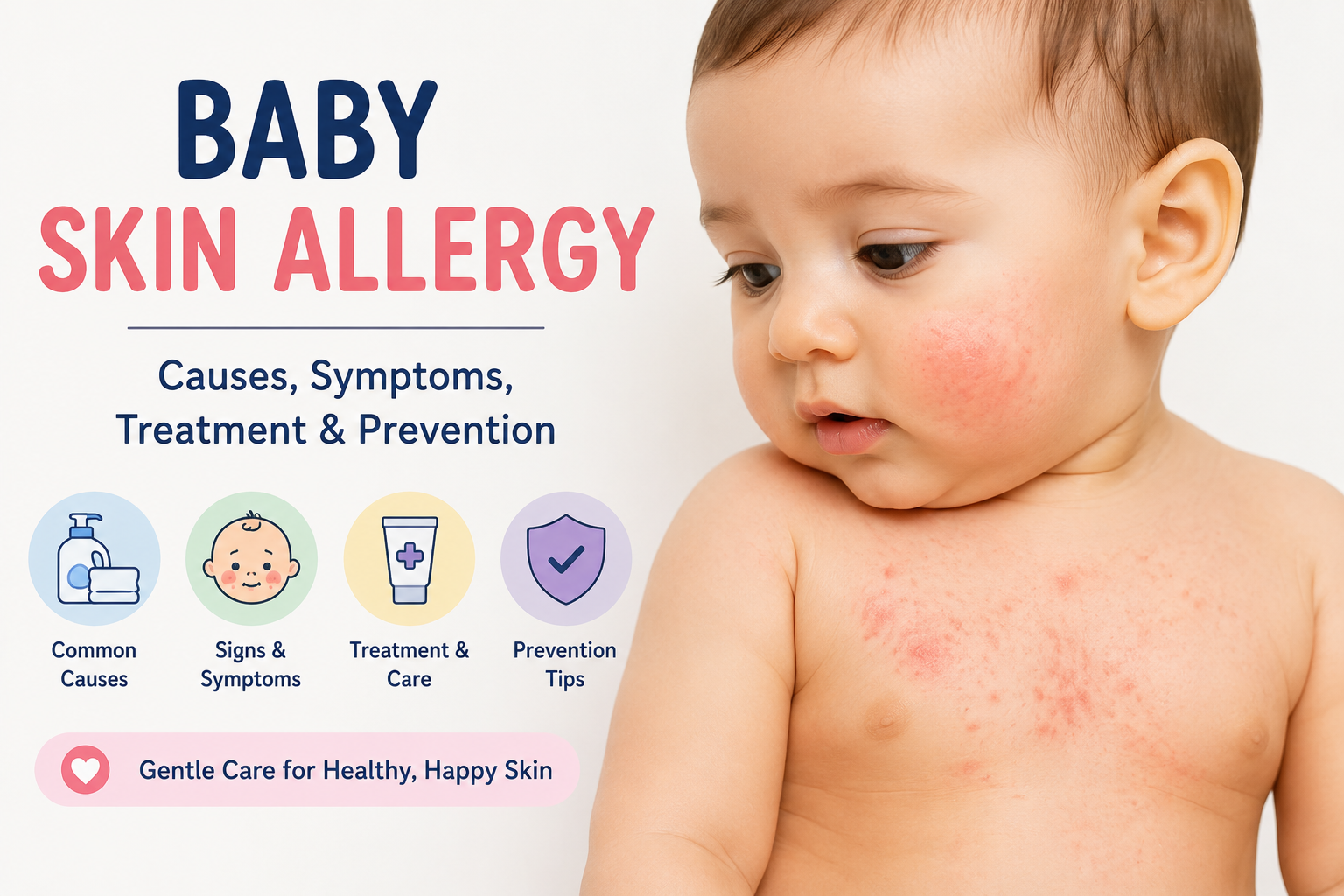
A baby skin allergy occurs when a baby’s immune system reacts to an allergen, causing the skin to become red, itchy, swollen, or irritated. Allergic skin reactions are common during infancy because babies have delicate skin and an immature immune system that is still developing.
Skin allergies may be triggered by foods, skincare products, soaps, detergents, fabrics, insect bites, medications, pollen, dust mites, or pet dander. While many allergic rashes are mild and resolve with proper care, some reactions require prompt medical attention.
Understanding the signs, identifying the trigger, and seeking timely treatment can help prevent complications and keep your baby’s skin healthy.
What Is a Baby Skin Allergy?
A baby skin allergy is an immune response that causes inflammation of the skin after exposure to an allergen.
Unlike simple skin irritation, an allergy involves the immune system reacting to something it considers harmful, even though it may not be dangerous for most people.
Skin allergies may appear suddenly or develop several hours after exposure.
How Common Are Skin Allergies in Babies?
Skin allergies are among the most common health concerns during infancy.
Many babies experience at least one allergic skin reaction before their first birthday.
Common allergic skin conditions include:
- Contact dermatitis
- Atopic dermatitis (eczema)
- Hives (urticaria)
- Food allergy-related rash
- Drug allergy rash
- Insect bite allergy
According to the American Academy of Allergy, Asthma & Immunology (AAAAI), allergic diseases frequently begin during infancy and early childhood.
What Causes Baby Skin Allergies?
Many substances can trigger an allergic reaction.
1. Food Allergies
Common food allergens include:
- Cow’s milk
- Eggs
- Peanuts
- Tree nuts
- Soy
- Wheat
- Fish
- Shellfish
Some babies develop:
- Hives
- Facial redness
- Body rash
- Swelling
Food allergies usually appear shortly after eating.
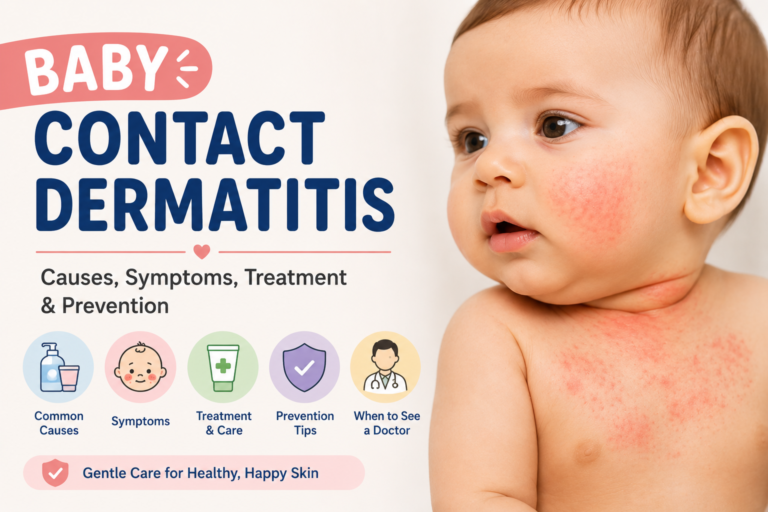
2. Contact Dermatitis
Skin may react after touching:
- Soap
- Shampoo
- Baby wipes
- Detergents
- Fabric softeners
- Perfumes
- Nickel
- Wool clothing
3. Baby Eczema
Babies with eczema have a weaker skin barrier that allows allergens to enter more easily.
Symptoms include:
- Dry skin
- Itching
- Red patches
- Rough skin
Read our Baby Eczema article.
4. Pet Allergies
Some babies are sensitive to:
- Dog dander
- Cat dander
- Bird feathers
5. Dust Mites
Dust mites living in mattresses, carpets, and bedding may trigger allergic skin reactions in sensitive babies.
6. Pollen Allergy
Seasonal pollen may contribute to skin irritation in babies with allergies.
7. Medicine Allergy
Some babies may develop allergic rashes after certain medications, particularly antibiotics. Medication allergies should always be evaluated by a healthcare professional.
8. Insect Bite Allergy
Mosquitoes, ants, fleas, or bees may cause localized allergic reactions.
Learn more in our Baby Mosquito Bites guide.
9. Latex Allergy
Although uncommon, some babies may react to latex products such as balloons or certain medical gloves.
10. Mold Allergy
Exposure to mold spores in damp environments may worsen allergic skin conditions.
Symptoms of Baby Skin Allergy
Symptoms vary depending on the allergen and severity.
Common signs include:
- Red rash
- Itching
- Dry skin
- Raised bumps
- Hives
- Swelling
- Small blisters
- Peeling skin
- Warm skin
- Burning sensation
- Cracked skin
- Irritability due to itching
Some babies may also develop:
- Runny nose
- Sneezing
- Watery eyes
- Wheezing
- Vomiting (food allergy)
- Diarrhea
Types of Baby Skin Allergies
| Allergy Type | Common Trigger | Symptoms |
|---|---|---|
| Contact Dermatitis | Soap, detergent, fabrics | Red itchy rash |
| Food Allergy | Milk, eggs, peanuts | Hives, swelling |
| Eczema | Genetic + environmental | Dry itchy skin |
| Hives (Urticaria) | Food, infection, medicine | Raised itchy welts |
| Drug Allergy | Antibiotics, medicines | Widespread rash |
| Insect Allergy | Mosquito, bee, ant | Local swelling and redness |
Baby Skin Allergy vs Skin Irritation
| Baby Skin Allergy | Skin Irritation |
|---|---|
| Immune system reaction | Direct irritation |
| Usually itchy | Often stings or burns |
| May spread | Usually localized |
| May recur | Improves after irritant removal |
| May require allergy treatment | Usually resolves with skincare |
Who Is at Higher Risk?
Your baby may have a higher risk if they:
- Have eczema.
- Have asthma.
- Have a family history of allergies.
- Have hay fever.
- Have food allergies.
- Have sensitive skin.
How Is Baby Skin Allergy Diagnosed?
Doctors usually diagnose skin allergies by:
- Reviewing medical history.
- Examining the rash.
- Asking about recent foods or products.
- Assessing family history of allergies.
If needed, they may recommend:
- Allergy testing
- Blood tests
- Skin prick testing (in selected cases)
- Food elimination trials
According to the American Academy of Pediatrics (AAP), identifying the trigger is the most effective way to prevent recurrent allergic reactions.
Treatment for Baby Skin Allergy
Treatment for a baby skin allergy depends on identifying and avoiding the allergen while relieving symptoms and protecting the baby’s delicate skin. Mild allergic reactions often improve with gentle skincare and removal of the trigger, whereas moderate to severe allergies may require prescription medication under medical supervision.
According to the American Academy of Allergy, Asthma & Immunology (AAAAI), avoiding known allergens is the most effective way to prevent future allergic reactions.
How Is Baby Skin Allergy Treated?
1. Identify and Remove the Allergen
The first step is determining what caused the allergic reaction.
Common triggers include:
- Certain foods
- Baby wipes
- Soap
- Shampoo
- Laundry detergent
- New clothing
- Pets
- Dust mites
- Pollen
Once identified, avoid exposing your baby to the allergen.
2. Moisturize the Skin
Daily moisturizing helps repair the skin barrier.
Choose:
- Fragrance-free moisturizer
- Hypoallergenic baby cream
- Ceramide-based moisturizers
If your baby has dry skin, read our Baby Dry Skin guide.
3. Treat Eczema Properly
Many babies with skin allergies also develop eczema.
Treatment may include:
- Daily moisturizers
- Prescription steroid creams (only if prescribed)
- Gentle bathing routines
Read our Baby Eczema guide.
4. Antihistamines
For itchy allergic rashes or hives, your pediatrician may prescribe antihistamines.
Never give allergy medicines without medical advice.
5. Prescription Creams
Doctors may prescribe:
- Mild corticosteroid creams
- Calcineurin inhibitors (selected cases)
These reduce inflammation and itching.
6. Treat Secondary Infection
If scratching causes bacterial infection, treatment may include:
- Antibiotic cream
- Oral antibiotics
Always complete the prescribed course.
7. Food Allergy Management
If food allergy is confirmed:
- Avoid the trigger food.
- Read food labels carefully.
- Follow your pediatrician’s feeding recommendations.
Home Care Tips
Most babies improve with proper home care.
Keep the Skin Moisturized
Apply moisturizer:
- After every bath
- Before bedtime
- Whenever skin appears dry
Bathe with Lukewarm Water
Keep baths short (5–10 minutes).
Avoid:
- Hot water
- Bubble baths
- Strong soaps
Dress Your Baby in Cotton Clothing
Soft cotton fabrics reduce skin irritation.
Avoid:
- Wool
- Rough fabrics
- Tight elastic clothing
Trim Your Baby’s Nails
Keeping nails short reduces scratching and lowers the risk of infection.
Wash Clothes Properly
Use:
- Fragrance-free detergent
- Extra rinse cycle
- No fabric softeners if they trigger irritation
Keep the Environment Clean
Reduce exposure to:
- Dust
- Pet dander
- Mold
- Smoke
What Should Parents Avoid?
Avoid:
- Scented lotions
- Harsh soaps
- Talcum powder
- Essential oils
- Adult skincare products
- Overheating
- Tight clothing
- Scratching the rash
Can Baby Skin Allergy Be Prevented?
Although not every allergy can be prevented, the risk can be reduced.
Parents should:
- Moisturize daily.
- Use fragrance-free baby products.
- Introduce complementary foods as recommended by your pediatrician.
- Wash new clothes before use.
- Keep nails trimmed.
- Avoid cigarette smoke.
- Maintain a clean home environment.
- Keep the baby’s skin cool and dry.
According to the American Academy of Pediatrics (AAP), maintaining a healthy skin barrier can reduce flare-ups in babies prone to eczema and allergies.
Possible Complications
Untreated skin allergies may lead to:
- Skin infection
- Persistent eczema
- Severe itching
- Sleep disturbance
- Skin thickening
- Bleeding
- Scarring (rare)
- Food allergy complications
Signs of a Severe Allergic Reaction (Emergency)
Seek emergency medical care immediately if your baby develops:
- Difficulty breathing
- Swollen lips
- Swollen tongue
- Facial swelling
- Persistent vomiting
- Wheezing
- Blue lips
- Loss of consciousness
- Sudden widespread hives
These may be signs of anaphylaxis, a life-threatening allergic reaction requiring urgent treatment.
Baby Skin Allergy vs Baby Eczema
| Baby Skin Allergy | Baby Eczema |
|---|---|
| Triggered by allergens | Chronic inflammatory skin condition |
| Often appears suddenly | Usually develops gradually |
| May include hives | Dry, itchy patches are common |
| Improves after allergen removal | Requires ongoing skin care |
| Can occur anywhere | Common on cheeks, elbows, knees, and skin folds |
When Should You See a Doctor?
Contact your pediatrician if:
- The rash lasts longer than one week.
- The rash spreads rapidly.
- Your baby has a fever.
- Blisters develop.
- The rash oozes pus.
- Your baby is extremely uncomfortable.
- Home care does not improve the rash.
- The rash keeps recurring.
- You suspect a food or medication allergy.
According to the NHS, babies with persistent or severe allergic skin reactions should be evaluated by a healthcare professional.
Conclusion
Baby skin allergies are common and can be triggered by foods, skincare products, detergents, environmental allergens, insect bites, or medications. Most mild allergic rashes improve after the trigger is removed and with gentle skincare, while some cases require medical treatment.
Parents should also learn to distinguish a skin allergy from Baby Eczema, Baby Heat Rash, Baby Hives, Baby Contact Dermatitis, Baby Dry Skin, Baby Fungal Infection, and Baby Belly Rash, as each condition has different causes and management. Early diagnosis, proper skincare, and avoiding known allergens can help keep your baby’s skin healthy and comfortable.
Frequently Asked Questions (FAQs)
What causes baby skin allergies?
Common triggers include foods, soaps, detergents, fabrics, medications, pet dander, pollen, dust mites, and insect bites.
What does a baby skin allergy look like?
It may appear as red patches, hives, itchy bumps, swelling, or dry inflamed skin.
Are baby skin allergies common?
Yes. Skin allergies are one of the most common allergic conditions during infancy.
Can food allergies cause skin rashes?
Yes. Food allergies often cause hives, redness, itching, or swelling.
Can eczema be caused by allergies?
Allergies can trigger eczema flare-ups in susceptible babies.
How long does a baby skin allergy last?
Mild reactions often improve within a few days after the allergen is removed, while eczema may require long-term management.
Are baby skin allergies contagious?
No. Allergic skin reactions are not contagious.
Can detergents cause baby skin allergies?
Yes. Fragrances and harsh chemicals in detergents may trigger contact dermatitis.
Should I stop using baby lotion?
Only discontinue products if you suspect they are causing irritation. Choose fragrance-free, hypoallergenic moisturizers.
Can pets trigger skin allergies?
Yes. Some babies are allergic to pet dander.
Is coconut oil safe for allergic skin?
Consult your pediatrician before using natural oils, especially if your baby has eczema or a suspected allergy.
Can skin allergies return?
Yes. Re-exposure to the same allergen may cause another reaction.
How can I prevent skin allergies?
Avoid known allergens, moisturize daily, use gentle skincare products, and keep the skin clean and dry.
Can babies outgrow allergies?
Some children outgrow certain food allergies and eczema, while others may continue to have allergies later in life.
When is a baby skin allergy an emergency?
Seek emergency care if your baby has difficulty breathing, swelling of the face or tongue, widespread hives, persistent vomiting, or signs of anaphylaxis.