
Medical Note: This article is intended for educational purposes only and should not replace professional medical advice. If your baby’s peeling skin is accompanied by fever, redness, swelling, blisters, pus, bleeding, or poor feeding, seek medical evaluation promptly.
Seeing your baby’s skin peel can be surprising, especially for first-time parents. Fortunately, baby peeling skin is usually a normal part of newborn development and rarely indicates a serious medical problem. Most babies experience some degree of peeling during the first few weeks after birth as their skin adjusts from the fluid-filled womb to the dry outside environment.
Although peeling skin often resolves on its own, certain conditions such as eczema, dry skin, infections, allergies, or dehydration can also cause persistent peeling that requires medical attention.
Understanding why your baby’s skin is peeling, knowing what is normal, and learning how to care for delicate newborn skin can help parents feel more confident during their baby’s early months. The American Academy of Dermatology (AAD) recommends gentle bathing and frequent moisturizing to protect a baby’s skin barrier.
This guide explains the causes, symptoms, treatment, home care, prevention tips, and warning signs that every parent should know.
What Is Baby Peeling Skin?
Baby peeling skin refers to the shedding of the outermost layer of skin (epidermis). It commonly occurs in newborns during the first days or weeks after birth and is considered a normal part of skin adaptation.
The peeling usually affects the hands, feet, ankles, wrists, or tummy but can appear anywhere on the body.
In most cases, peeling is painless and improves naturally without treatment. Cradle Cap causes greasy yellow scales on the scalp and differs from the dry, flaky peeling commonly seen in newborns.
Is Baby Peeling Skin Normal?
Yes.
Most newborns experience mild skin peeling after birth. Babies spend months surrounded by amniotic fluid, and after delivery, the outer skin layer naturally dries and sheds.
Peeling is especially common in:
- Full-term babies
- Babies born after their due date (post-term)
- Babies during the first 2–3 weeks of life
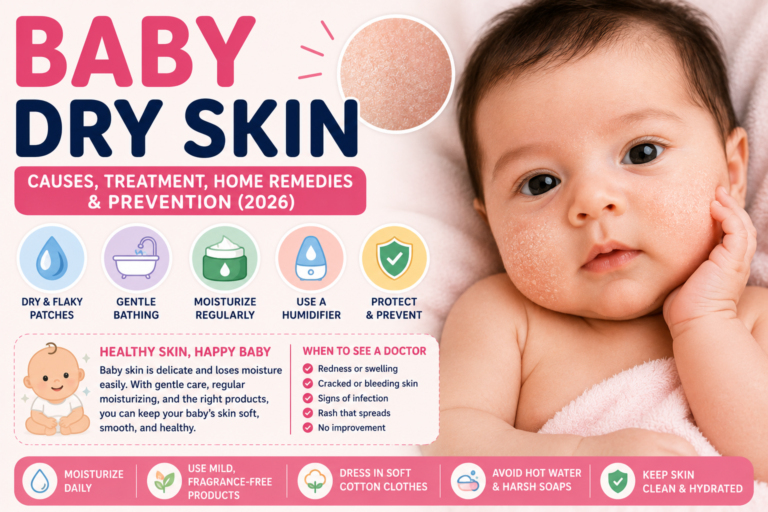
Premature babies may peel less because their protective coating (vernix caseosa) is often more abundant at birth. Although Baby Dry Skin and peeling skin may appear similar, dry skin usually causes rough, flaky patches, while newborn peeling is a normal shedding process.
What Causes Baby Peeling Skin?
1. Normal Newborn Skin Shedding
The most common cause is the natural loss of the outer skin layer after birth.
This type of peeling:
- Is harmless
- Is not painful
- Usually resolves within a few weeks
If your baby’s peeling skin is accompanied by redness, itching, or inflamed patches, it could be Baby Eczema rather than normal newborn skin peeling.
2. Dry Skin
Low humidity, cold weather, indoor heating, or frequent bathing can dry out your baby’s skin, causing it to peel. During warm weather, babies may develop Baby Heat Rash, which causes tiny red bumps rather than peeling skin.
3. Post-Term Pregnancy
Babies born after 40–42 weeks often have more noticeable peeling because they lose much of the protective vernix before birth. The National Eczema Association explains how eczema differs from normal newborn skin peeling and offers evidence-based skincare advice.
4. Frequent Bathing
Bathing too often or using hot water removes natural skin oils and may increase peeling.
5. Harsh Soaps and Skincare Products
Products containing fragrances, alcohol, or strong detergents can irritate a baby’s delicate skin barrier.
6. Baby Eczema (Atopic Dermatitis)
If peeling occurs with:
- Red patches
- Itching
- Dry, inflamed skin
it may indicate eczema rather than normal newborn peeling.
7. Skin Infections
Rarely, fungal or bacterial infections may cause peeling along with redness, swelling, or discharge.
8. Allergic Reactions
Some babies develop peeling after exposure to certain skincare products, detergents, or fabrics.
9. Rare Medical Conditions
Very rarely, inherited skin disorders or nutritional deficiencies may cause persistent or severe peeling. Along with peeling skin, newborns may also develop Milia in Newborns, which appear as tiny white bumps caused by trapped keratin.
Symptoms of Baby Peeling Skin
Symptoms may include:
- Thin flakes of skin
- Dry peeling patches
- Peeling around fingers and toes
- Peeling on hands and feet
- Mild dryness
- Rough skin
- Small cracks in severe cases
Normal peeling is generally not associated with pain, fever, or swelling. The NHS recommends using fragrance-free emollients and avoiding harsh soaps to keep a baby’s skin healthy.
Where Does Baby Peeling Skin Commonly Occur?
Peeling is most commonly seen on the:
- Hands
- Feet
- Fingers
- Toes
- Ankles
- Wrists
- Legs
- Arms
- Abdomen
The face may also peel slightly in some newborns. Baby Acne is another common newborn skin condition that typically resolves without treatment.
Baby Peeling Skin vs Dry Skin
| Baby Peeling Skin | Baby Dry Skin |
|---|---|
| Skin sheds in thin flakes | Skin feels rough and flaky |
| Common in newborns | Can occur at any age |
| Often temporary | May persist without moisturizers |
| Usually painless | May cause mild itching |
| Resolves naturally | Improves with regular moisturizing |
Risk Factors
Your baby may be more likely to develop peeling skin if they:
- Are born after their due date
- Have dry or sensitive skin
- Live in a cold or dry climate
- Take frequent baths
- Have a family history of eczema or allergies
Can Baby Peeling Skin Go Away on Its Own?
Yes.
Most newborn peeling resolves naturally within 2 to 4 weeks without special treatment. Gentle skincare and regular moisturizing can help keep your baby’s skin comfortable while it heals.
Treatment for Baby Peeling Skin
Most cases of baby peeling skin do not require medical treatment. Gentle skincare, regular moisturizing, and avoiding skin irritants are usually enough to help the skin heal naturally.
Best Moisturizers for Baby Peeling Skin
Choose a moisturizer that is:
- Fragrance-free
- Dye-free
- Hypoallergenic
- Suitable for newborns
- Thick cream or ointment rather than a thin lotion
Helpful ingredients include:
- Ceramides
- Glycerin
- Petrolatum (petroleum jelly)
- Shea butter (baby-safe products)
Apply moisturizer 2–3 times a day, especially after bathing, to lock in moisture.
How to Care for Baby Peeling Skin
1. Give Short, Lukewarm Baths
- Keep baths between 5–10 minutes.
- Use lukewarm water instead of hot water.
- Avoid bathing more than once a day unless necessary.
2. Use a Mild Baby Cleanser
Choose a soap-free, fragrance-free cleanser and use only a small amount. Avoid harsh soaps that can strip away the skin’s natural oils.
3. Moisturize Immediately After Bathing
Within 3 minutes after the bath:
- Gently pat the skin dry.
- Leave the skin slightly damp.
- Apply a generous layer of moisturizer over the peeling areas.
4. Avoid Picking or Peeling the Skin
Never pull or peel loose skin. Let it shed naturally to prevent irritation, bleeding, or infection.
5. Dress Your Baby in Soft Cotton Clothing
Loose, breathable cotton fabrics help reduce friction and irritation. Avoid rough wool or synthetic materials that may worsen peeling.
Home Remedies for Baby Peeling Skin
Keep Indoor Air Moist
Using a humidifier during dry weather or in air-conditioned rooms helps maintain moisture in your baby’s skin.
Wash Clothes with Baby-Friendly Detergent
Choose fragrance-free, hypoallergenic laundry detergents and avoid fabric softeners if they irritate your baby’s skin.
Keep Nails Trimmed
If your baby rubs or scratches peeling skin, keeping their nails short helps prevent skin damage.
Maintain Proper Hydration
For babies who are breastfed or formula-fed, ensuring adequate feeding supports healthy skin.
What Should You Avoid?
Do not:
- Peel or pull loose skin.
- Use hot water for bathing.
- Bathe your baby too frequently.
- Apply scented lotions or adult skincare products.
- Scrub peeling skin with washcloths.
- Use alcohol-based skincare products.
- Apply essential oils directly to your baby’s skin without medical advice.
Can Baby Peeling Skin Be Prevented?
Normal newborn peeling cannot always be prevented, but you can reduce excessive dryness by:
- Moisturizing daily.
- Keeping baths short.
- Using fragrance-free skincare products.
- Avoiding hot water.
- Dressing your baby in soft cotton clothing.
- Maintaining comfortable indoor humidity.
Possible Complications
Normal peeling rarely causes complications. However, severe peeling may lead to:
- Dry cracked skin
- Bleeding
- Skin irritation
- Secondary bacterial infection
- Increased discomfort
- Eczema flare-ups in susceptible babies
When Should You See a Doctor?
Consult your pediatrician if:
- Peeling continues beyond 4–6 weeks.
- The skin becomes very red or swollen.
- Blisters develop.
- Yellow crusts, pus, or foul-smelling discharge appear.
- Your baby develops a fever.
- The peeling spreads rapidly.
- Your baby seems unusually irritable or uncomfortable.
- The skin begins to bleed or crack deeply.
- You suspect eczema or another skin condition.
Seek immediate medical care if your baby develops signs of infection or appears unwell. If peeling is accompanied by raised, itchy welts, your baby may have Baby Hives, which can be caused by an allergic reaction.
Baby Peeling Skin vs Baby Eczema
| Baby Peeling Skin | Baby Eczema |
|---|---|
| Normal skin shedding | Chronic inflammatory skin condition |
| Usually not itchy | Often intensely itchy |
| Mild flaking | Red, inflamed patches |
| Improves naturally | Often needs medical treatment |
| Common during first few weeks | Can occur throughout infancy |
Conclusion
Baby peeling skin is a normal and temporary part of newborn development. In most cases, it improves naturally within a few weeks without medical treatment. Gentle bathing, regular moisturizing, and avoiding harsh skincare products can help protect your baby’s delicate skin while it heals.
If peeling becomes severe, is associated with redness, swelling, blisters, fever, or signs of infection, consult your pediatrician for further evaluation.
Frequently Asked Questions (FAQs)
Is baby peeling skin normal?
Yes. Mild peeling is very common during the first few weeks after birth.
Why is my newborn’s skin peeling?
The outer layer of skin naturally sheds as your baby adjusts to life outside the womb.
How long does baby peeling skin last?
Most peeling improves within 2–4 weeks, though some babies may take slightly longer.
Should I peel the loose skin off?
No. Allow the skin to shed naturally.
Is peeling skin painful?
Normal newborn peeling is usually painless.
Can I apply moisturizer?
Yes. A fragrance-free moisturizer can help reduce dryness and support the skin barrier.
Which moisturizer is best?
Choose a thick, fragrance-free cream or ointment designed for babies.
Can frequent baths make peeling worse?
Yes. Frequent or hot baths can remove natural oils and increase dryness.
Is peeling a sign of eczema?
Not always. Eczema usually causes red, itchy, inflamed patches in addition to dry skin.
Can weather cause peeling?
Yes. Cold weather, low humidity, and indoor heating can worsen dry, peeling skin.
Does every newborn experience peeling?
No, but it is very common, especially in full-term and post-term babies.
Can peeling become infected?
Yes. Deep cracks or broken skin can increase the risk of bacterial infection.
Is peeling more common in overdue babies?
Yes. Babies born after their due date often have more noticeable peeling because they have less protective vernix remaining on their skin.
Can I use natural oils?
Some natural oils may not be suitable for all babies. Speak with your pediatrician before using coconut oil, olive oil, or other oils on newborn skin.
When should I worry about baby peeling skin?
Seek medical advice if peeling is severe, persistent, accompanied by redness, swelling, blisters, pus, fever, bleeding, or if your baby appears unwell.