
Medical Note: This article is for educational purposes only and should not replace professional medical advice. If your baby’s skin rash spreads rapidly, becomes swollen, or is accompanied by fever or other concerning symptoms, consult your pediatrician.
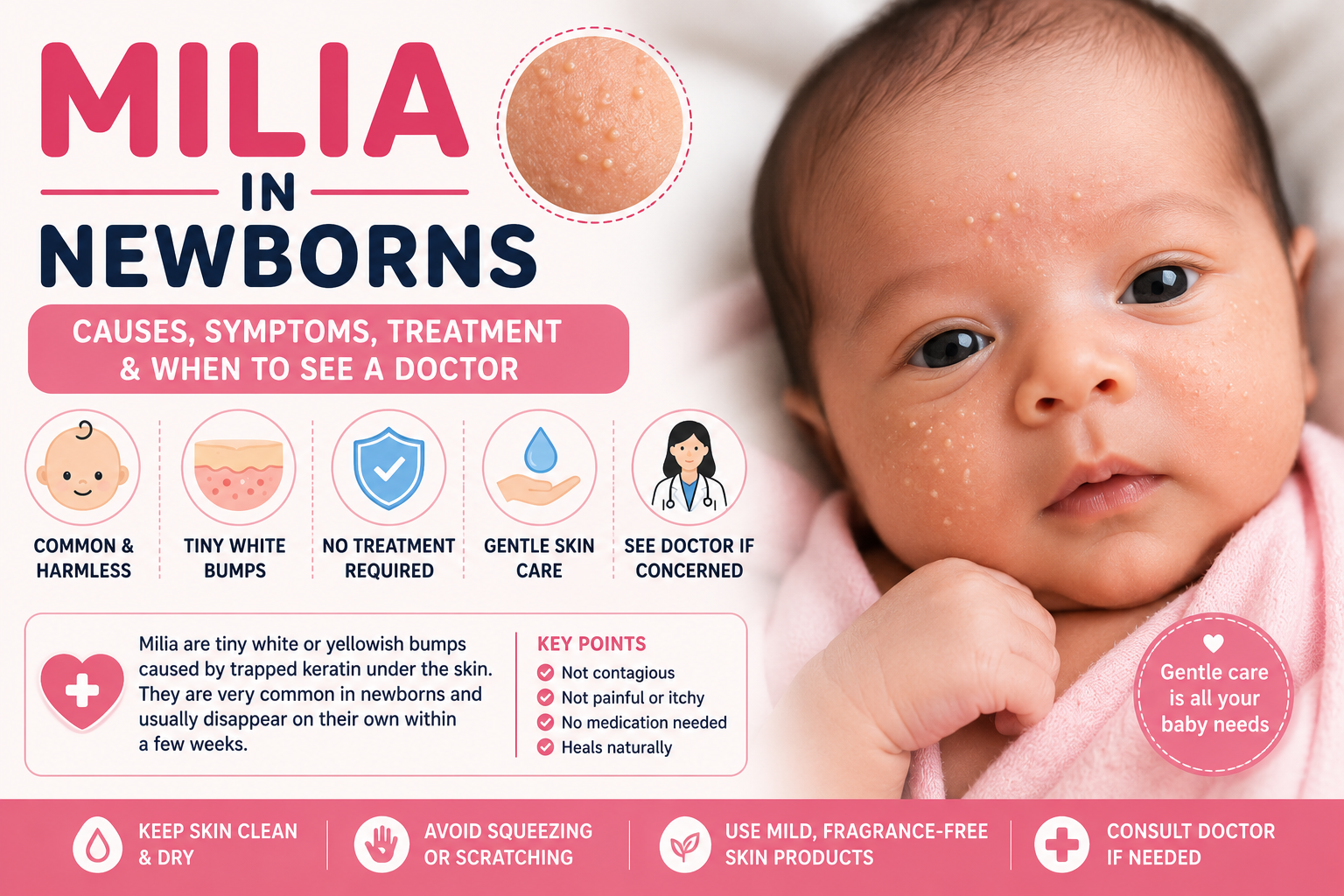
Tiny white or yellowish bumps on your newborn’s face can surprise many first-time parents. These small bumps are often milia, a very common and harmless skin condition seen in newborn babies.
Although milia may resemble baby acne or a skin infection, they are completely normal and usually disappear on their own within a few weeks without any treatment. HealthyChildren.org provides trusted information on common newborn skin conditions, including milia and newborn skincare.
Understanding what milia are and knowing how to care for your baby’s delicate skin can help you avoid unnecessary worry.
In this guide, we’ll explain everything parents need to know about milia in newborns, including its causes, symptoms, treatment, home care, prevention, and when medical attention may be needed.
Although Baby Acne and milia may look similar, baby acne usually appears as red pimples with mild inflammation, while milia are tiny white bumps caused by trapped keratin.
What Is Milia?
Milia are tiny white or yellowish cysts that form just beneath the surface of the skin. They develop when keratin, a natural protein found in the skin, becomes trapped under the outer layer of the skin.
These small bumps are harmless, painless, and not contagious.
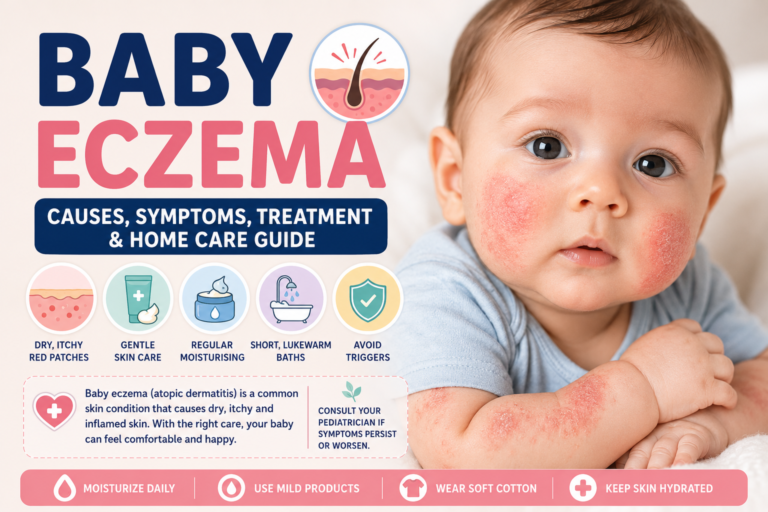
Unlike pimples, milia do not contain pus or bacteria and should never be squeezed. If your baby develops dry, itchy patches instead of tiny white bumps, it may be Baby Eczema, which requires a different skincare approach.
Is Milia Common in Newborns?
Yes.
Milia affect nearly 40–50% of healthy newborns, making them one of the most common skin conditions seen during the first few weeks of life.
They are equally common in both boys and girls and can occur in babies of all skin tones. The American Academy of Dermatology (AAD) explains that milia are harmless keratin-filled cysts that usually resolve without treatment.
What Causes Milia in Newborns?
The exact cause is not always known, but milia usually develop because a newborn’s skin is still maturing.
Common reasons include:
1. Trapped Keratin
Dead skin cells become trapped beneath the surface of the skin, forming tiny white cysts.
2. Developing Skin
A newborn’s skin barrier is still developing after birth, making milia more likely during the first few weeks.
3. Normal Skin Development
Milia are considered a normal part of skin maturation and are not caused by illness.
4. No Relation to Hygiene
Milia are not caused by poor hygiene, allergies, or infections.
Parents should avoid excessive washing or scrubbing.
Symptoms of Milia
Typical features include:
- Tiny white or yellow bumps
- Smooth, firm bumps
- No redness around the bumps
- No itching
- No pain
- No pus
- No fever
Babies usually behave normally and are not bothered by milia. MedlinePlus offers reliable medical information about newborn skin conditions, including milia.
Where Does Milia Appear?
Milia commonly appear on the:
- Nose
- Cheeks
- Chin
- Forehead
Less commonly, they may also develop on the:
- Scalp
- Upper lip
- Eyelids
- Gums (Epstein pearls)
- Roof of the mouth (Bohn’s nodules)
Milia vs Baby Acne
| Milia | Baby Acne |
|---|---|
| Tiny white bumps | Red pimples with whiteheads |
| No redness | Often surrounded by redness |
| Usually present at birth | Usually appears after 2–4 weeks |
| Not inflamed | Mild inflammation may occur |
| Clears naturally | May take longer to resolve |
Who Is More Likely to Get Milia?
Milia can occur in any healthy newborn.
It is more commonly seen in:
- Full-term babies
- Healthy newborns
- Babies during the first month of life
Premature babies can also develop milia, although they may be slightly less common.
How Long Does Milia Last?
Most newborn milia disappear naturally within:
- Two to four weeks
- Sometimes up to three months
They heal without treatment and do not leave scars.
Is Milia Contagious?
No.
Milia cannot spread from one baby to another or from parents to babies.
It is simply a normal skin condition during infancy.
Treatment for Milia in Newborns
The good news is that milia do not require any medical treatment. In most cases, the tiny white bumps disappear naturally as your baby’s skin matures.
The best approach is to leave the bumps alone and follow a gentle skincare routine. Another harmless newborn skin condition is Cradle Cap, which causes greasy yellow scales on the scalp rather than tiny white bumps on the face.
Home Care Tips for Milia
Wash Your Baby’s Face Gently
Clean your baby’s face once a day using:
- Lukewarm water
- A soft washcloth
- Mild, fragrance-free baby cleanser (if needed)
Avoid excessive washing, as it may irritate your baby’s delicate skin.
Pat the Skin Dry
After washing:
- Gently pat the skin dry with a soft towel.
- Avoid rubbing the affected area.
Let the Skin Heal Naturally
Milia usually clear on their own without creams or medicines.
Most babies do not need any special treatment.
Use Gentle Baby Skincare Products
Choose products that are:
- Fragrance-free
- Alcohol-free
- Hypoallergenic
- Designed for newborn skin
What Should You Avoid?
Do not:
- Squeeze or pop the bumps.
- Scratch or pick at the skin.
- Apply acne creams or medicated ointments.
- Use harsh soaps or exfoliating products.
- Apply home remedies such as toothpaste, lemon juice, or essential oils.
- Scrub your baby’s face.
These practices can damage the skin and increase the risk of infection.
Can Milia Be Prevented?
Since milia are part of normal newborn skin development, they cannot usually be prevented.
However, you can help keep your baby’s skin healthy by:
- Washing the face gently once daily.
- Avoiding heavy oils and greasy creams unless advised by a doctor.
- Using mild baby skincare products.
- Keeping the skin clean and dry.
When Should You See a Doctor?
Although milia are harmless, consult your pediatrician if:
- The bumps become red or swollen.
- Pus or fluid develops.
- The rash spreads rapidly.
- The bumps persist beyond 3 months.
- Your baby develops a fever.
- The rash appears painful.
- You are unsure whether the bumps are milia or another skin condition.
Seek immediate medical care if signs of infection develop. If your baby’s rash appears suddenly with raised, itchy welts, it may be Baby Hives, which can be linked to an allergic reaction.
Milia vs Heat Rash
| Milia | Baby Heat Rash |
|---|---|
| Tiny white bumps | Tiny red or pink bumps |
| Usually on the face | Common on the neck, chest, and skin folds |
| Not itchy | May feel itchy or prickly |
| Caused by trapped keratin | Caused by blocked sweat glands |
| Clears naturally | Improves by keeping the baby cool |
Tiny red bumps caused by blocked sweat glands are usually a sign of Baby Heat Rash, not milia.
Milia vs Cradle Cap
| Milia | Cradle Cap |
|---|---|
| Small white bumps | Yellow, greasy scales |
| Mostly on the nose and cheeks | Mostly on the scalp |
| Smooth skin around bumps | Flaky, crusty patches |
| No itching | Usually not itchy |
| No treatment needed | Gentle scalp care may help |
Conclusion
Milia are one of the most common and harmless skin conditions in newborns. These tiny white bumps are caused by trapped keratin beneath the skin and usually disappear naturally within a few weeks without leaving scars.
The best care involves gentle cleansing, avoiding harsh skincare products, and resisting the urge to squeeze or pick the bumps. If the bumps become inflamed, persist beyond three months, or are accompanied by other symptoms, consult your pediatrician for further evaluation.
Frequently Asked Questions (FAQs)
Are milia common in newborns?
Yes. Milia affect nearly half of all healthy newborns.
Are milia painful?
No. Milia are painless and do not bother babies.
Can I pop milia?
No. Squeezing milia can damage the skin and increase the risk of infection.
How long do milia last?
Most disappear within 2–4 weeks, although some may take up to three months.
Do milia itch?
No. Milia are not itchy.
Are milia contagious?
No. They cannot spread from one person to another.
Can breastfeeding cause milia?
No. Breastfeeding does not cause milia.
Can formula milk cause milia?
No. Milia are not related to feeding choices.
Can I apply baby lotion?
Yes, if needed, use a gentle, fragrance-free moisturizer suitable for newborns. Avoid heavy creams unless recommended by your pediatrician.
Is milia the same as baby acne?
No. Milia are tiny white cysts caused by trapped keratin, while baby acne usually appears as red pimples with mild inflammation.
Can adults get milia?
Yes. Milia can occur in people of all ages, although they are most common in newborns.
Will milia leave scars?
No. They usually heal completely without scarring.
Can sunlight help remove milia?
No. Newborns should not be exposed to direct sunlight to treat milia.
Can oils make milia worse?
Heavy oils may clog the skin in some babies. Use only baby-safe products recommended for newborn skin.
When should I worry about milia?
Seek medical advice if the bumps become red, swollen, filled with pus, spread rapidly, or persist beyond three months.