
Home » Baby Care » Newborn Care » Cradle Cap: Causes, Symptoms, Treatment & When to See a Doctor
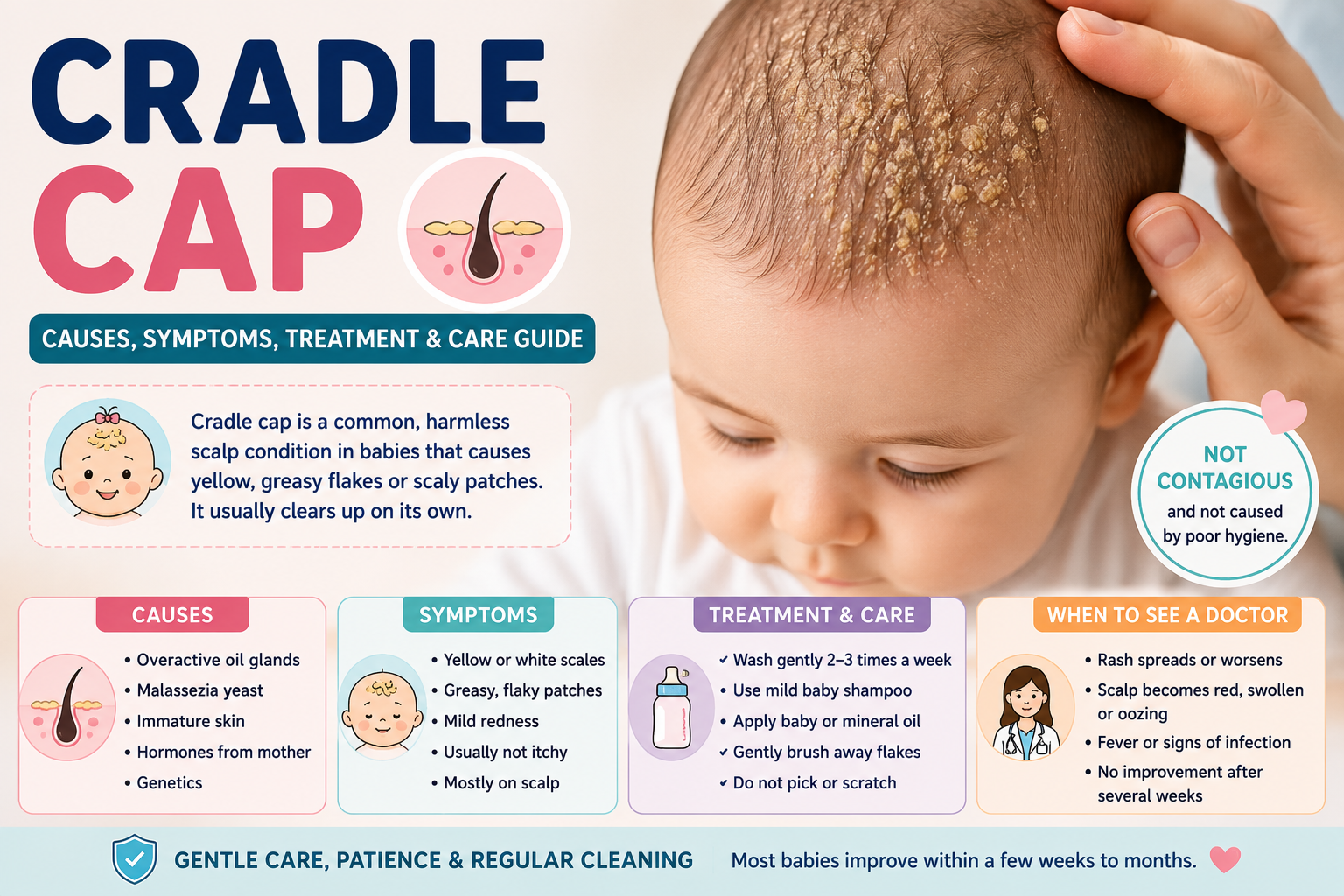
Cradle cap infographic explaining the causes of yellow flaky scalp in babies, common symptoms, safe treatment, home care tips, and when parents should see a doctor.

Cradle Cap: Causes, Symptoms, Treatment & When to See a Doctor

Editorial Note: This article is for informational purposes only and should not replace professional medical advice. If your baby’s scalp becomes swollen, infected, oozes fluid, or the rash spreads significantly, consult your pediatrician.

Noticing yellow, greasy flakes or scaly patches on your baby’s scalp can be concerning for new parents. Fortunately, cradle cap is a common and harmless skin condition that affects many newborns and young infants.

Also known as infantile seborrheic dermatitis, cradle cap usually appears during the first few months of life and often clears up on its own without causing pain or itching.

Although it may look unpleasant, cradle cap is not contagious, is not caused by poor hygiene, and usually doesn’t bother your baby.

This guide explains what cradle cap is, why it happens, how to treat it safely at home, and when medical attention may be needed. Learn what to expect as your baby grows with our comprehensive Child Development Milestones guide covering physical, cognitive, and emotional development from birth to 5 years.

HealthyChildren.org provides trusted information on cradle cap, newborn skincare, and infant health.

What Is Cradle Cap?

Cradle cap is a common skin condition that causes:

  • Greasy yellow scales
  • White flaky patches
  • Thick crusts
  • Mild redness

These patches usually develop on the scalp but may also appear around the:

  • Eyebrows
  • Ears
  • Eyelids
  • Nose
  • Neck folds

Despite its appearance, cradle cap is generally harmless and doesn’t cause discomfort. Skin conditions such as Baby Acne are also common during the newborn period and usually improve without long-term treatment.


Is Cradle Cap Common?

Yes.

Cradle cap affects many babies, particularly during the first 3 months of life. It usually improves by 6 to 12 months of age without leaving scars or affecting hair growth.

Both boys and girls can develop cradle cap. The American Academy of Dermatology (AAD) recommends gentle scalp care and avoiding harsh products when treating cradle cap.


What Causes Cradle Cap?

The exact cause isn’t fully understood, but several factors may contribute.

1. Overactive Oil (Sebaceous) Glands

Hormones passed from the mother before birth may temporarily increase oil production in your baby’s scalp.

The extra oil can trap dead skin cells, causing flaky scales.

MedlinePlus offers reliable medical information about cradle cap and other common infant skin conditions.


2. Malassezia Yeast

A naturally occurring skin yeast called Malassezia may contribute to cradle cap in some babies.

This yeast normally lives on healthy skin and is not contagious.


3. Immature Skin

A newborn’s skin barrier is still developing, making the scalp more prone to temporary skin conditions.


4. Genetics

Some babies who have eczema or a family history of skin conditions may be slightly more likely to develop cradle cap.


Symptoms of Cradle Cap

Common signs include:

  • Yellow or white greasy scales
  • Thick crusty patches
  • Flaky scalp
  • Mild redness
  • Oily skin
  • Dry-looking flakes

Unlike eczema, cradle cap usually does not itch or make babies uncomfortable. If your baby’s rash appears during hot weather, it may be Baby Heat Rash rather than cradle cap.


Where Can Cradle Cap Appear?

Although it most commonly affects the scalp, it may also appear on the:

  • Forehead
  • Eyebrows
  • Behind the ears
  • Eyelids
  • Nose
  • Neck folds
  • Armpits
  • Diaper area (less common)

Cradle Cap vs Baby Dandruff

Cradle Cap Baby Dandruff
Thick yellow greasy scales Small white flakes
Common in infants More common in older children
Usually not itchy May cause mild itching
Clears on its own May persist without treatment
Related to seborrheic dermatitis Often caused by dry scalp

Who Is More Likely to Get Cradle Cap?

Cradle cap is more common in babies who:

  • Are younger than 6 months
  • Have oily skin
  • Have a family history of eczema or seborrheic dermatitis
  • Experience naturally increased oil production during infancy

How Long Does Cradle Cap Last?

Most babies improve within:

  • A few weeks
  • 2–6 months
  • Usually before their first birthday

Some babies may experience mild recurrences before it disappears completely.
How Is Cradle Cap Treated?

Most cases of cradle cap improve on their own within a few weeks or months. Treatment focuses on gently loosening and removing the scales while keeping your baby’s scalp healthy.

See also  Newborn Baby Care (0–3 Months): Complete Guide for New Parents

Home Care Tips for Cradle Cap

Wash the Scalp Regularly

Wash your baby’s scalp 2–3 times a week using:

  • A mild baby shampoo
  • Lukewarm water

Gently massage the scalp with your fingertips to loosen the scales.


Use a Soft Baby Brush

After shampooing, use a soft baby brush or soft toothbrush to gently remove loose flakes.

Do not scrub forcefully, as this may irritate the skin.


Apply Baby Oil or Mineral Oil (If Needed)

For thick scales:

  • Apply a small amount of baby oil, coconut oil, or mineral oil.
  • Leave it on for 10–15 minutes.
  • Wash it off thoroughly with baby shampoo.

Avoid leaving oil on the scalp for long periods, as it may worsen scaling. Rosy cheeks are often a normal finding in infants, but they can sometimes occur alongside common skin conditions like cradle cap.


Keep the Scalp Clean

Wash away excess oil after brushing to prevent scales from building up again.


Be Patient

Cradle cap usually improves naturally and rarely causes permanent problems.

Avoid trying multiple home remedies or harsh treatments.


What Should You Avoid?

Do not:

  • Pick or peel the scales.
  • Scratch the scalp.
  • Use adult anti-dandruff shampoos unless prescribed.
  • Apply steroid creams without medical advice.
  • Use strong soaps or alcohol-based products.
  • Scrub the scalp aggressively.

These practices may irritate your baby’s delicate skin or increase the risk of infection.


Can Cradle Cap Be Prevented?

Cradle cap cannot always be prevented, but these habits may help reduce buildup:

  • Wash your baby’s scalp regularly with a mild shampoo.
  • Brush the scalp gently after washing.
  • Avoid excessive oil buildup.
  • Use fragrance-free baby hair products.
  • Keep your baby’s scalp clean and dry.

Babies may also develop Baby Drool Rash, a common skin irritation caused by prolonged exposure to saliva.


When Should You See a Doctor?

Most babies recover without medical treatment. However, consult your pediatrician if:

  • The rash spreads beyond the scalp.
  • The skin becomes swollen, painful, or warm.
  • Yellow crusts begin oozing fluid.
  • Your baby develops a fever.
  • The rash becomes very itchy.
  • Cradle cap persists beyond 12 months.
  • Home care does not improve the condition after several weeks.
  • Hair loss occurs in the affected area.

Seek urgent medical care if signs of a skin infection develop. If the rash spreads rapidly or is accompanied by itching, read our guide on Baby Hives to understand possible allergic reactions.


Cradle Cap vs Baby Eczema

Cradle Cap Baby Eczema
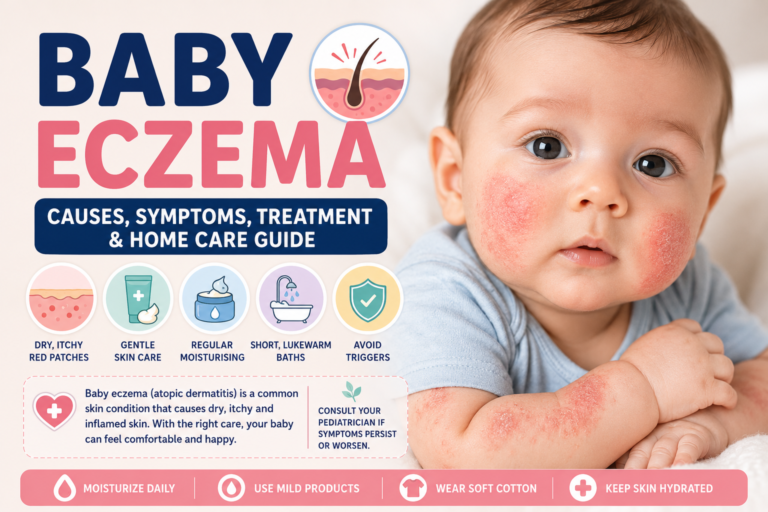
Greasy yellow scales Dry, red, itchy patches
Usually not itchy Very itchy
Mostly affects the scalp Common on cheeks, elbows, knees, and body
Oily appearance Dry and rough skin
Often clears on its own May require long-term skincare and treatment

Conclusion

Cradle cap is a common and harmless scalp condition that affects many babies during the first few months of life. Although the yellow, flaky scales may look concerning, they usually disappear on their own and rarely cause discomfort.

Gentle washing, soft brushing, and occasional use of baby oil to loosen thick scales are often enough to manage cradle cap. If the rash spreads, becomes infected, or doesn’t improve with home care, consult your pediatrician for further evaluation.


Frequently Asked Questions

Is cradle cap contagious?

No. Cradle cap cannot spread from one baby to another.

Does cradle cap hurt babies?

No. It is usually painless and rarely causes discomfort.

Can cradle cap make my baby itchy?

Most babies do not experience itching. If your baby is scratching frequently, another skin condition such as eczema may be present.

When does cradle cap usually start?

It commonly appears during the first few weeks or months after birth.

How long does cradle cap last?

Most cases improve within a few weeks to several months and usually clear before the baby’s first birthday.

Can cradle cap cause hair loss?

Temporary hair loss may occur when thick scales come off, but hair typically grows back normally.

Should I remove the scales?

Only gently loosen loose flakes after washing. Never forcefully peel or pick the scales.

Can coconut oil help?

Some parents use coconut oil to soften thick scales before washing, but it should be washed off thoroughly afterward.

Is cradle cap caused by poor hygiene?

No. Cradle cap is not related to cleanliness or poor hygiene.

Can adults catch cradle cap?

No. Cradle cap is not contagious.

Can cradle cap spread to the face?

Yes. It may appear around the eyebrows, ears, nose, eyelids, and neck folds.

Do I need medicated shampoo?

Most babies do not. Medicated shampoos should only be used if recommended by your pediatrician.

Can cradle cap come back?

Yes. Some babies may experience mild recurrences before it resolves completely.

When should I call the doctor?

Seek medical advice if the rash becomes infected, spreads widely, causes discomfort, or persists beyond one year of age.

Will cradle cap leave scars?

No. Cradle cap usually heals completely without leaving scars or affecting normal hair growth.

More Reading

Post navigation

Subscribe
Notify of
guest

0 Comments
Oldest
Newest Most Voted
0
Would love your thoughts, please comment.x
()
x