
Milk is one of the most consumed beverages in Indian households. The milk is a staple in many aspects of our daily diet – from morning tea and coffee to feeding our children and making desserts at home.
But when shopping for milk many people often ask themselves:
Should I opt for toned milk or normal milk?
Both types of milk are good sources of important nutrients, including protein, calcium, vitamins and minerals, but they differ in fat content, calories and their appropriateness for different ages and health goals.
Knowing the difference between toned milk and normal milk can help you choose the right one for you and your family. In this article we will be comparing their nutrition, health benefits, disadvantages and help you decide which option is best for your needs.
What is Regular Milk?
Normal milk is milk that has not had its fat removed and is often called whole milk or full-cream milk.
Cow’s milk is typically 3.5–4% fat, but buffalo milk can be 6–8% fat or even higher. Normal milk has a richer texture, has a more creamy taste and contains more calories as the fat is not significantly reduced.
In many traditional Indian households, full-cream milk is preferred for its rich flavour and versatility in cooking.
Key Features of Normal Milk
- Naturally high in milkfat
- Creamy in texture and taste
- Higher caloric content
- Provides fat-soluble vitamins A, D, E and K
- Commonly used for making curd, paneer, sweets and desserts
What Is Toned Milk?
Toned Milk is prepared by mixing whole milk with skimmed milk and water. This reduces the fat content and retains most of the important nutrients.
Toned milk was introduced in India to make milk more affordable and provide adequate nutrition to the consumers.
According to Indian dairy standards, toned milk usually contains:
- About 3% fat
- Minimum 8.5% SNF (solids-not-fat)
Toned milk has a lower fat content than full-cream milk and therefore fewer calories.
Highlights of Toned Milk
- Reduced fat content
- Fewer calories
- Great source of protein and calcium
- Easier to process for some people
- Good for the weight watchers
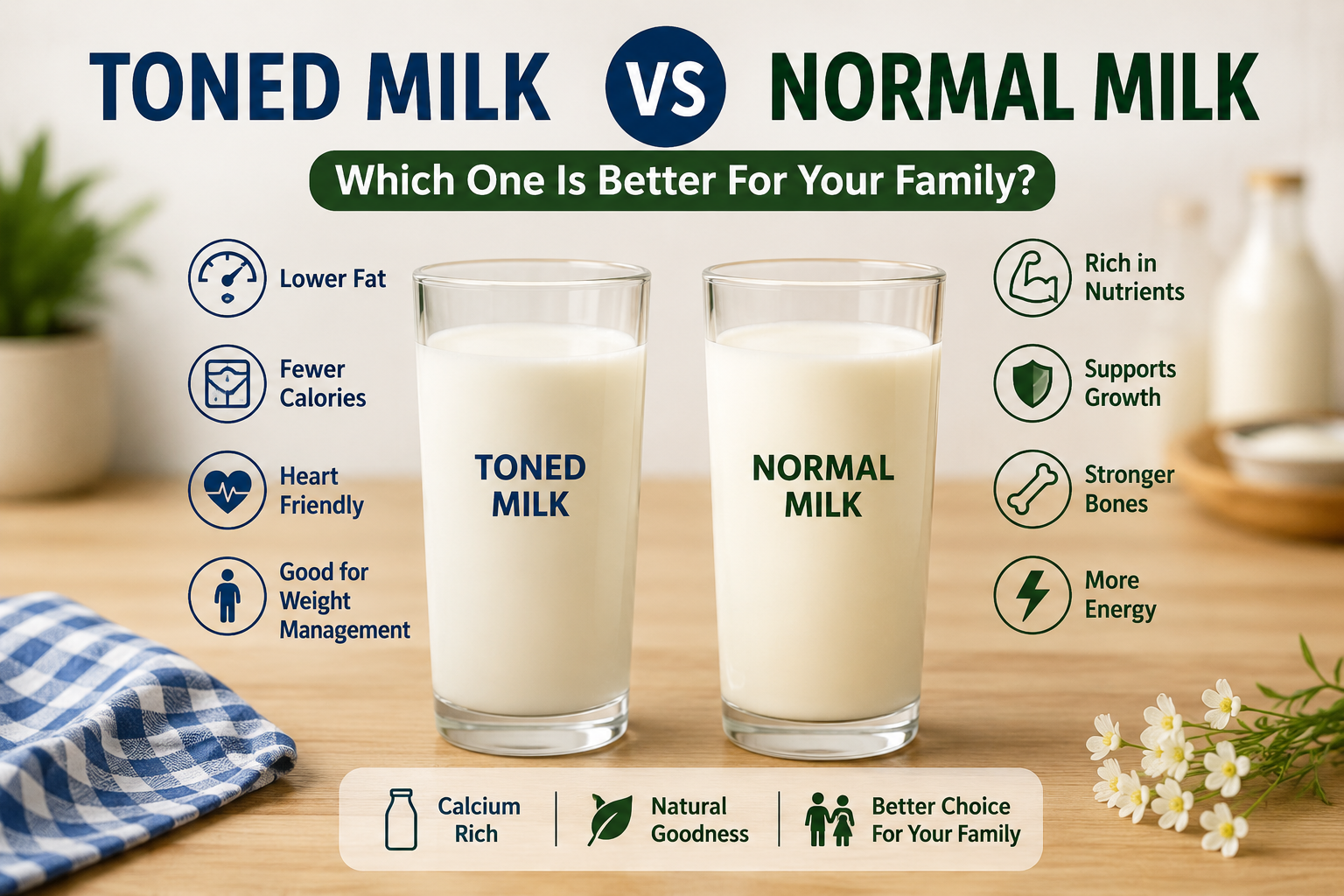
Quick Comparison: Toned Milk Vs Normal Milk
| Feature | Toned Milk | Normal Milk |
|---|---|---|
| Fat Content | Around 3% | 3.5–8% |
| Calories | Lower | Higher |
| Taste | Light | Rich and Creamy |
| Texture | Less Creamy | Creamy |
| Protein | Similar | Similar |
| Calcium | Similar | Similar |
| Weight Management | Better Option | Higher Calorie Intake |
| Children | Suitable | Suitable |
| Cooking & Sweets | Good | Excellent |
| Heart Health | Better for Some Adults | Depends on Overall Diet |
baby feeding and nutrition guide
Nutritional Information
Proteins
Toned milk and normal milk both have good quality protein.
Protein is required for:
- Muscle growth
- Tissue regeneration
- A healthy immune system
- Children’s growth and development
Protein in toned milk is usually very little different from normal milk.
weight gain foods for babies
Calcium
The calcium content, however, is not significantly altered by the toning process.
Both types of milk encourage:
- Healthy bones
- Teeth in good condition
- Adequate muscle function
- Nerve communication
Vitamins & Minerals
The two varieties have:
- Calcium
- Phosphorus
- Potassium
- Vitamin B12
- Riboflavin
Regular milk has more fat, so it has slightly more fat-soluble vitamins.
Calories
This is where the biggest difference shows up.
A glass of whole milk will generally be higher in calories due to the higher fat content.
Toned milk contains nearly the same nutrients but is lower in calories, making it attractive to adults trying to manage their weight.
solutions for picky eaters
Benefits of Toned Milk
1. Reduced Fat
The main advantage of toned milk is that it has less fat.
Toned milk is preferred by people who want to cut down on calories without sacrificing nutrition.
2. Helps with Weight Control
Toned milk has fewer calories than full-cream milk so it is easier to fit into a weight-loss or weight-maintenance diet.
3. Heart-Healthy Option
Some health care providers suggest lower-fat dairy products for those who are trying to manage cholesterol or cardiovascular risk factors.
4. Balanced Nutrition
Toned Milk, which is lower in fat, still provides:
- Proteins
- Calcium
- Vitamins
- Minerals
That makes it a nutritious everyday drink.
5. For Adults
Many adults who live sedentary lifestyles may not need the extra calories of full-cream milk.
Benefits of Normal Milk
1. A Rich Source of Energy
Normal milk is higher in calories and fat. It is good for:
- Children in Growth
- People who are underweight
- People with higher energy needs
2. A Better Flavour
Many people enjoy the rich, creamy taste of full-cream milk.
Makes it more pleasant to drink and use in recipes.
3. Encourages the Development of Children
Healthy fats are important for young children because:
- Growth of the brain
- Hormone synthesis
- Growth and Development
Regular milk can provide these nutritional requirements.
4. Great for Traditional Cooking
Full-cream milk provides a richer:
- Kheer
- Paneer
- Rabdi
- Kulfi
- Homemade sweets
5. Increased Satiety
Some people feel fuller for longer when they drink normal milk because it contains fat.
What Milk Is Best for Kids?
Children need good nutrition, which contains healthy fats.
Unless certain medical conditions dictate otherwise, paediatricians generally recommend full-fat milk for toddlers and young children.
Older children can have either toned milk or normal milk depending upon:
- Growth needs
- Levels of activity
- Diet, in general
- What the doctor advises
Parents should always consult their paediatrician about milk choices for younger children.
child development milestones
What Is the Best Milk for Weight Loss?
For weight management, toned milk is generally the better choice.
It provides:
- Calorie reduction
- Lower fat
- Similar protein content
- Similar calcium levels
This allows people to drink milk without a significant increase in calories.
What’s the Best Milk for Your Heart?
Toned milk has less saturated fat and is often preferred by adults who are conscious of cholesterol and heart health.
But heart health is about the overall dietary pattern, not just one food choice.
Factors such as:
- Exercise
- Total calories consumed
- Intake of fruit and vegetables
- Smoking status
- Managing stress
Have a far greater impact on long-term cardiovascular health.
complete mom health guide
Common Myths About Toned Milk
Myth 1: Toned Milk Has Fewer Nutrients
Not so.
Most nutrients, like protein, calcium and minerals, stay mostly intact.
Myth 2: Toned Milk Is Unnatural
Toned milk is a genuine milk product, produced under a controlled process.
Myth 3: Kids Don’t Drink Toned Milk
Much of the milk consumed by school children can be toned milk, as part of a balanced diet.
The best choice will depend on age, growth needs and medical advice.
Normal Milk or Toned Milk: Which One Should You Choose?
Opt for Toned Milk If You:
- Desire fewer calories
- Are controlling weight
- Select low-fat dairy products
- Lead a sedentary lifestyle
- Require milk for daily family consumption
Select Normal Milk If You:
- Need more energy
- Are underweight
- Have growing children at home
- Prefer a richer taste
- Cook traditional dairy-based dishes often
The Last Word
Both toned and normal milk are healthy and provide important nutrients like protein, calcium, vitamins and minerals.
The big difference is in the fat and calorie content. Toned milk has less fat and calories, so it is good for adults and people who want to maintain their weight. Normal milk is a preferred choice for growing children and people with higher nutritional requirements, as it has a richer taste and offers additional energy.
The question really is:
Which milk is better for your individual health goals and lifestyle?
Rather than asking which milk is better in general.
Both toned milk and normal milk can be part of a healthy and balanced diet and can contribute to overall health and well-being when consumed in moderation.
Frequently Asked Questions (FAQs)
1. Is toned milk healthier than normal milk?
Neither is universally healthier. Toned milk contains less fat and fewer calories, while normal milk provides more energy and a richer taste. The healthier option depends on your individual dietary needs.
2. Can children drink toned milk?
Yes, older children can drink toned milk as part of a balanced diet. However, younger children may require the additional healthy fats present in full-cream milk. Always consult a pediatrician for personalized guidance.
3. Does toned milk contain less calcium?
No. Toned milk retains most of its calcium content. The difference in calcium levels between toned milk and normal milk is usually minimal.
4. Which milk is better for weight loss?
Toned milk is generally considered better for weight loss because it contains fewer calories and less fat while still providing protein and calcium.
5. Is normal milk better for muscle building?
Both toned milk and normal milk provide high-quality protein. However, normal milk offers additional calories that may benefit individuals trying to gain weight or build muscle.
6. Which milk is better for making tea and coffee?
Both types can be used, but many people prefer normal milk because of its creamier texture and richer flavor.
References & Resources
| Topic | Resource |
|---|---|
| Dietary Guidelines for Indians | Indian Council of Medical Research (ICMR) |
| National Nutrition Guidelines | Dietary Guidelines for Indians 2024 |
| Healthy Diet & Nutrition | World Health Organization (WHO) |