
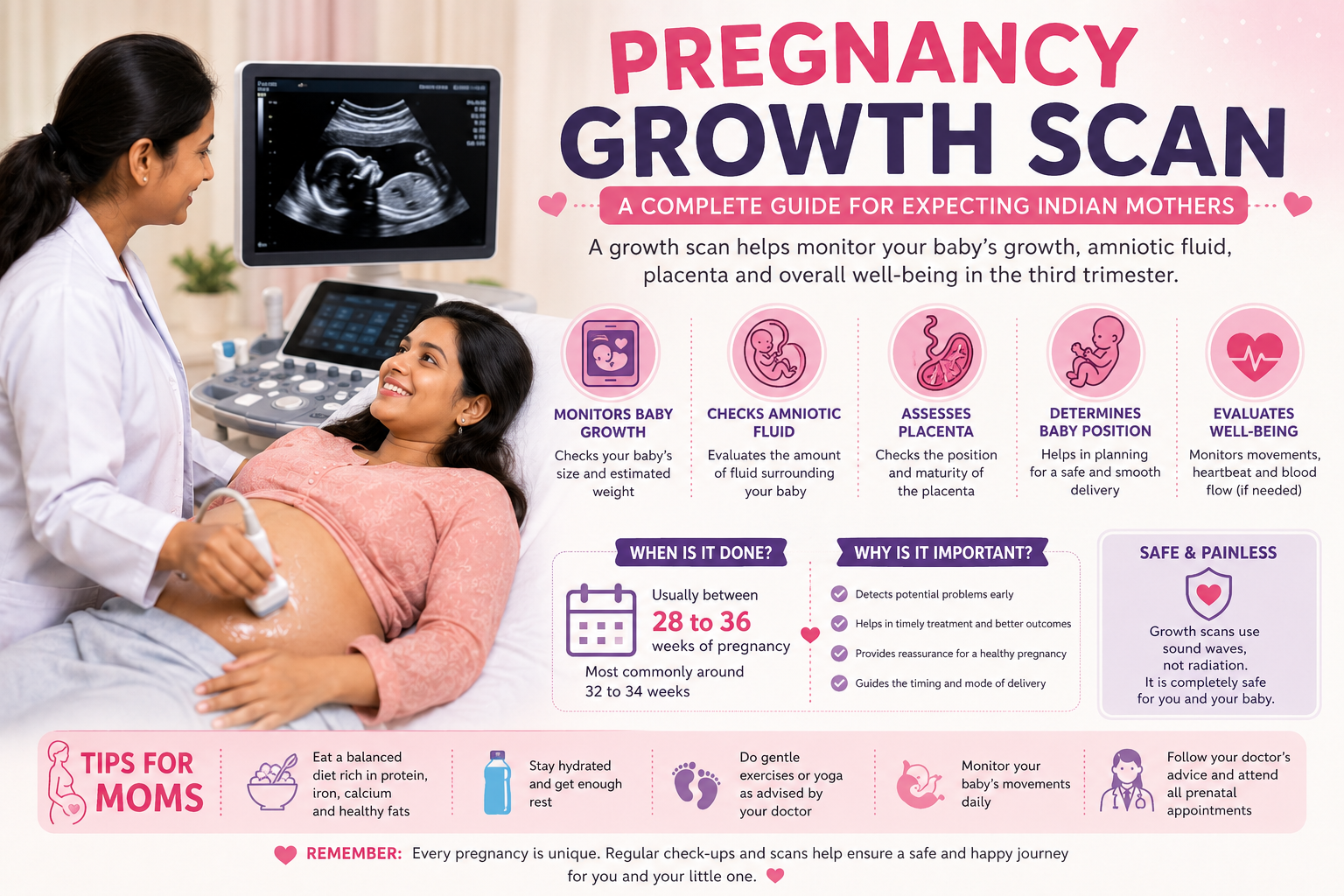

Pregnancy is a beautiful journey filled with excitement, emotions, and countless milestones. As you enter the third trimester, your baby’s growth becomes one of the biggest priorities. A pregnancy growth scan is an important ultrasound test that helps your doctor understand how your baby is developing inside the womb. “Along with regular check-ups and following pregnancy care tips for expecting mothers, growth scans help doctors monitor your baby’s health and development throughout the journey.”
For many Indian mothers, especially with the support and advice of family members and elders, a growth scan can bring both excitement and questions. This guide explains everything you need to know about growth scans, their purpose, procedure, results, safety, and how to prepare for them.
What Is a Pregnancy Growth Scan?
A pregnancy growth scan, also called a fetal growth scan, third-trimester ultrasound, or fetal well-being scan, is an ultrasound examination usually performed between 28 and 36 weeks of pregnancy. “A growth scan is one of the important pregnancy scans and tests performed during the later stages of pregnancy to assess your baby’s growth and wellbeing.”
Unlike the anomaly scan performed around 18–20 weeks, which checks the baby’s organs and physical structure, a growth scan focuses on:
- Baby’s growth and estimated weight
- Amniotic fluid levels
- Placenta position and maturity
- Baby’s movements and position
- Blood flow through the umbilical cord (Doppler study, if required)
The scan uses sound waves and does not involve radiation. It is considered safe when performed as medically advised by your healthcare provider.
When Is a Growth Scan Done During Pregnancy?
Most growth scans are commonly recommended around 32–34 weeks of pregnancy, although your doctor may suggest it earlier or repeat it depending on your pregnancy condition.
Learn the safety of ultrasound during pregnancy
Reasons Why Your Doctor May Recommend a Growth Scan
Routine Pregnancy Monitoring
For many healthy pregnancies, especially first-time mothers or women above 35 years, a growth scan helps monitor the baby’s overall development and provides reassurance that everything is progressing well.
High-Risk Pregnancy Conditions
Your doctor may advise additional growth scans if you have:
- Gestational diabetes
- High blood pressure or risk of preeclampsia
- Thyroid disorders
- Anaemia
- Obesity or certain infections
Previous Pregnancy Complications
Extra monitoring may be recommended if you have a history of:
- A baby born with low birth weight
- Preterm delivery
- Previous pregnancy loss
Difference in Fundal Height
During antenatal check-ups, doctors measure the distance from the pubic bone to the top of the uterus. If this measurement does not match your pregnancy weeks, a growth scan helps assess the reason.
Reduced Fetal Movements
If you notice a decrease in your baby’s usual movements or kicks, your doctor may recommend a scan to check your baby’s wellbeing.
Twin or Multiple Pregnancy
Twins and higher-order pregnancies require closer monitoring because each baby’s growth pattern may be different.
Placenta-Related Concerns
Conditions such as a low-lying placenta or changes in placental function may require follow-up growth scans.
“Since this scan is commonly performed in the final months of pregnancy, understanding your third trimester pregnancy guide can help you prepare physically and emotionally.”
What Happens During a Pregnancy Growth Scan?
A growth scan usually takes around 20–40 minutes and is painless.
Before the Scan
Clothing and Preparation
- Wear loose and comfortable clothing such as a saree, maternity wear, or salwar kameez.
- Drink water if your doctor advises you to have a moderately full bladder.
- Eat a light meal and stay comfortable.
Routine antenatal care recommendations
During the Scan
The sonographer applies a clear gel on your abdomen and moves a handheld probe over your belly. The images of your baby appear on the screen in real time.
During the scan, your healthcare professional may check:
- Baby’s head, abdomen, and limb measurements
- Heartbeat and movements
- Amniotic fluid quantity
- Placenta location
- Baby’s position
- Blood flow using Doppler ultrasound, if needed
Some mothers may also see their baby stretching, moving, or sucking a thumb, making the experience emotional and memorable.
“Mothers diagnosed with conditions such as gestational diabetes during pregnancy may require additional growth monitoring to ensure the baby is developing appropriately.”
Important Measurements in a Growth Scan and Their Meaning
Head Circumference (HC) and Biparietal Diameter (BPD)
These measurements evaluate the size of your baby’s head and help assess brain growth.
Abdominal Circumference (AC)
This is one of the most important measurements for assessing the baby’s nutrition and overall growth.
Femur Length (FL)
This measures the length of your baby’s thigh bone and gives information about skeletal growth.
Estimated Fetal Weight (EFW)
Doctors calculate an approximate baby weight using different body measurements.
Amniotic Fluid Index (AFI)
AFI checks the amount of fluid surrounding the baby. Too little fluid (oligohydramnios) or too much fluid (polyhydramnios) may require additional monitoring.
Placenta Assessment
The scan evaluates the placenta’s position, maturity, and function.
Baby’s Position
The baby may be:
- Cephalic (head-down position)
- Breech (bottom or feet down)
- Transverse (sideways)
This information helps doctors plan for a safe delivery.
Understanding Growth Scan Results
Your baby’s measurements are compared with standard growth charts based on your exact gestational age.
- Around the 50th percentile is considered average.
- Measurements below the 10th percentile or above the 90th percentile may need further evaluation.
- A single scan does not always indicate a problem. Doctors often look at growth patterns over time.
A smaller baby may simply be naturally small due to parental genetics, while some babies may have fetal growth restriction (FGR). Larger babies can sometimes be associated with conditions such as gestational diabetes.
Benefits of a Pregnancy Growth Scan
A growth scan helps by:
- Detecting possible concerns early
- Monitoring the placenta and blood flow
- Checking the baby’s growth and wellbeing
- Helping doctors plan the safest timing and mode of delivery
- Providing reassurance to parents
Is a Growth Scan Safe During Pregnancy?
Yes. Ultrasound scans use sound waves and do not expose the baby or mother to radiation.
Medical experts consider pregnancy ultrasounds safe when performed for appropriate medical reasons. However, scans should always be done according to your doctor’s advice rather than unnecessarily.
How to Prepare After the Growth Scan
After your scan:
- Discuss the report with your obstetrician.
- Ask questions about your baby’s growth, fluid levels, and position.
- Follow advice regarding repeat scans, Doppler studies, or NST (non-stress tests) if recommended.
Lifestyle Tips for Healthy Baby Growth During Pregnancy
Follow a Balanced Indian Diet
Include:
- Protein-rich foods like dal, milk, curd, eggs, paneer, fish, or chicken
- Iron-rich foods such as spinach, beetroot, and pomegranate
- Healthy fats like almonds, walnuts, and ghee
Stay Hydrated
Drink enough water and include healthy fluids like coconut water and buttermilk.
Stay Active
Practice gentle walking, stretching, or prenatal yoga only after approval from your doctor.
Monitor Baby Movements
Keep track of your baby’s regular movement patterns and contact your doctor if you notice a significant decrease.
“Following a balanced diet and knowing what to eat during pregnancy can support your baby’s healthy growth and your overall wellbeing.”
Special Pregnancy Situations Where Growth Scans Are Important
Gestational Diabetes
Growth scans help monitor whether the baby is growing too quickly due to increased blood sugar levels.
High Blood Pressure or Preeclampsia
Regular monitoring helps identify potential risks related to blood flow and baby growth.
IVF Pregnancy or Advanced Maternal Age
Some pregnancies may require additional scans for closer observation.
Common Myths and Facts About Growth Scans
| Myth | Fact |
|---|---|
| Every growth scan means something is wrong | Many growth scans are routine and provide reassurance |
| The scan gives the exact birth weight | Weight estimates may vary by around 10–15% |
| Ultrasound harms the baby | Medically advised ultrasounds are considered safe |
| Diet does not matter in late pregnancy | Good nutrition and hydration remain important until delivery |
Frequently Asked Questions (FAQs)
How many growth scans are needed during pregnancy?
Most women require one or two growth scans, but high-risk pregnancies may need more frequent monitoring.
Is a pregnancy growth scan painful?
No. It is a painless procedure, although slight pressure from the probe may be felt.
Can I eat before a growth scan?
Yes, you can usually have a light meal unless your doctor gives different instructions.
How is a growth scan different from an anomaly scan?
An anomaly scan checks the baby’s organs and structure, while a growth scan evaluates the baby’s size, weight, fluid levels, and overall wellbeing.
How much does a pregnancy growth scan cost in India?
The cost generally ranges between ₹800 and ₹2,500 depending on the city, hospital, and diagnostic centre.
When should I contact my doctor urgently?
Seek immediate medical attention if you experience:
- No or significantly reduced fetal movements
- Vaginal bleeding
- Severe abdominal pain
- Leakage of fluid
- Symptoms of high blood pressure such as severe headache or vision changes
Final Thoughts
A pregnancy growth scan is an important milestone in your third trimester. For most parents, it is a comforting opportunity to see their baby’s progress and ensure everything is developing well.
Every pregnancy is unique. Follow your doctor’s recommendations, eat a balanced diet, rest well, stay positive, and lean on your family support system during this beautiful journey into parenthood.
“As you move closer to your due date, reading about preparing for labour and delivery can help you feel more confident and ready to welcome your baby.”
Medical Disclaimer
This article is for informational and educational purposes only and does not replace professional medical advice, diagnosis, or treatment. Always consult your obstetrician or healthcare provider regarding your pregnancy, scan reports, or any health concerns.