

Pregnancy introduces many new medical terms that can leave expecting parents feeling confused or anxious. One such term commonly mentioned during an ultrasound scan is “posterior placenta.” If you’ve recently had a pregnancy scan and your report states that your placenta is posterior, you may be wondering what it means and whether it affects your baby’s health or your pregnancy.
The good news is that a posterior placenta is usually considered a completely normal placental position. In fact, many healthcare providers view it as one of the most favorable positions during pregnancy.
Understanding the role of the placenta, its location, and how it supports your growing baby can help ease concerns and make you feel more confident throughout your pregnancy journey.
In this article, we’ll explain what a posterior placenta means, its benefits, possible concerns, how it differs from other placental positions, and answer some of the most frequently asked questions expecting parents have.
What Is the Placenta?
The placenta is a temporary organ that develops in the uterus during pregnancy. It plays a vital role in supporting the growth and development of the baby.
The placenta acts as a lifeline between the mother and the baby by:
- Supplying oxygen
- Delivering nutrients
- Removing waste products
- Producing pregnancy hormones
- Supporting fetal growth
The placenta attaches to the wall of the uterus and remains connected to the baby through the umbilical cord.
Without a healthy placenta, the baby cannot receive the nutrients and oxygen needed for development.
What Does Posterior Placenta Mean?
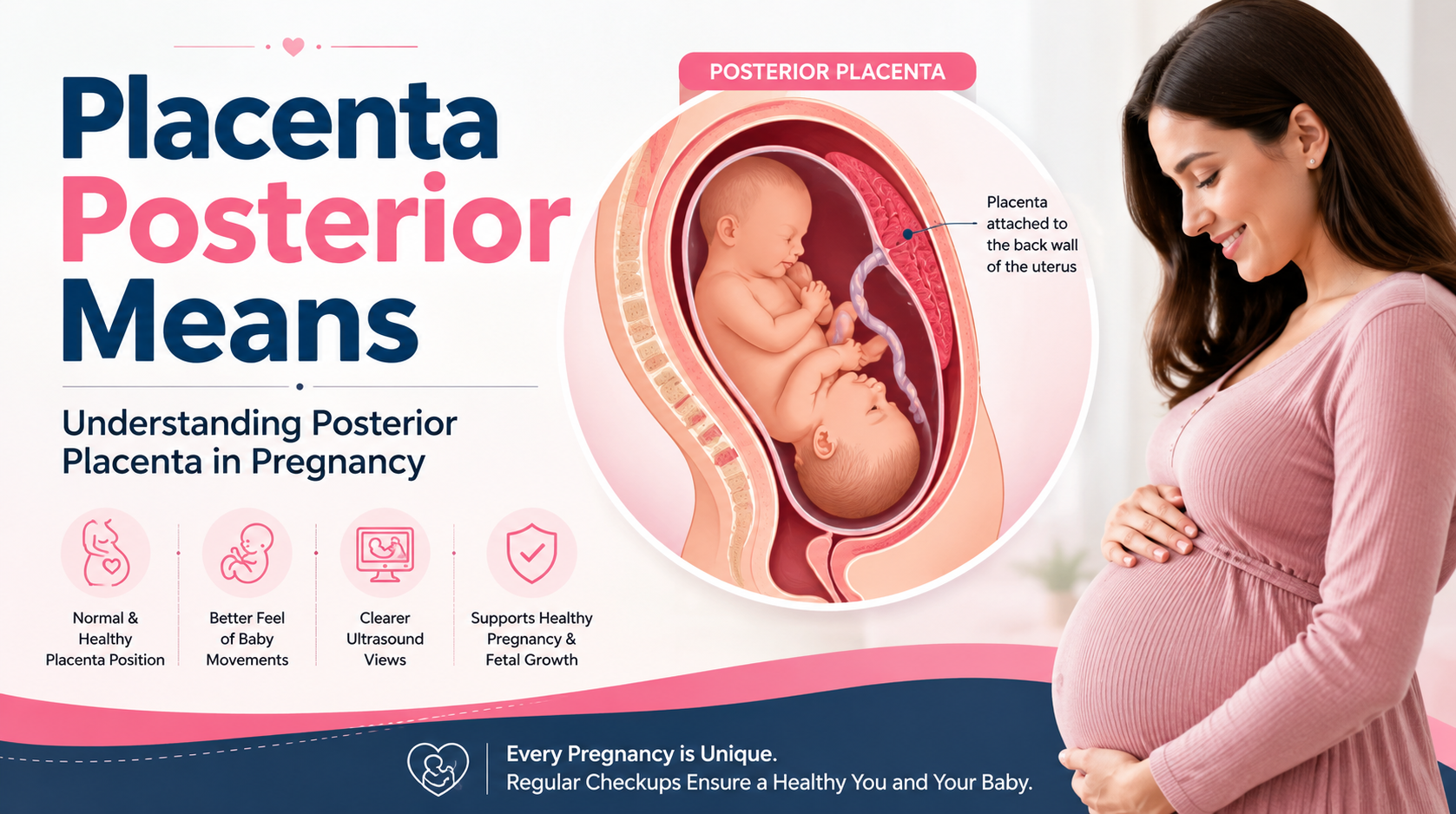
A posterior placenta means that the placenta has attached to the back wall of the uterus, which is closest to the mother’s spine.
The word “posterior” simply means “towards the back.”
When an ultrasound report states “posterior placenta,” it indicates that the placenta is growing on the back side of the uterus rather than the front, top, or lower section.
This position is generally considered normal and healthy.
Is a Posterior Placenta Normal?
Yes.
A posterior placenta is one of the most common and normal placental positions during pregnancy.
Healthcare providers generally do not consider a posterior placenta to be a complication or risk factor by itself.
Most women with a posterior placenta experience:
- Healthy pregnancies
- Normal fetal growth
- Normal fetal movements
- Successful deliveries
The location of the placenta alone usually does not affect the baby’s well-being.
Why Does Placental Position Matter?
The placenta can attach to different areas of the uterus.
Common placental positions include:
Posterior Placenta
Attached to the back wall of the uterus.
Anterior Placenta
Attached to the front wall of the uterus.
Fundal Placenta
Attached to the upper part (top) of the uterus.
Lateral Placenta
Attached to either side of the uterus.
Low-Lying Placenta
Located close to the cervix.
In most cases, the exact position is not a cause for concern unless the placenta covers or obstructs the cervix.
Related Pregnancy Articles
- Amla During Pregnancy: Benefits, Risks and Safety Tips
- Toned Milk vs Normal Milk: Which One Is Better?
- Best Fruits to Eat During Monsoon for Better Health
- Complete Mom Health Guide
- Complete Baby Care Guide
Advantages of a Posterior Placenta
Many healthcare providers consider a posterior placenta to be an ideal placental location.
1. Earlier Detection of Baby Movements
Women with a posterior placenta often feel fetal movements earlier compared to those with an anterior placenta.
This happens because the placenta is positioned behind the baby rather than in front of it.
As a result:
- Kicks may feel stronger
- Movements may be noticed earlier
- Baby activity may be easier to track
2. Better Ultrasound Visualization
A posterior placenta may provide clearer views of the baby during ultrasound examinations.
Healthcare providers can often obtain detailed images more easily.
3. Easier Monitoring of Fetal Activity
Since the placenta is located at the back of the uterus, many mothers report feeling stronger and more noticeable fetal movements.
This can provide reassurance during pregnancy.
4. Generally Favorable Labor Position
Some studies and clinical observations suggest that babies may find it easier to settle into an optimal birth position when the placenta is posterior.
However, many factors influence labor and delivery outcomes.
Does a Posterior Placenta Affect the Baby?
In most pregnancies, the answer is no.
A posterior placenta generally does not affect:
- Baby’s growth
- Oxygen supply
- Nutrient transfer
- Development
- Birth weight
The placenta functions normally regardless of whether it is attached to the front, back, side, or top of the uterus.
The most important factor is that the placenta remains healthy and adequately supports the baby.
Posterior Placenta and Baby Kicks
One of the most common questions expecting mothers ask is whether placental position affects baby movements.
With a posterior placenta:
- Baby kicks are often felt more clearly
- Movements may be detected earlier
- Kicks may seem stronger
Many mothers begin noticing movements between 18 and 22 weeks, though timing varies from pregnancy to pregnancy.
Remember that every pregnancy is unique.
Can a Posterior Placenta Cause Back Pain?
A posterior placenta itself does not directly cause back pain.
However, as the uterus grows, pregnancy-related changes can place pressure on:
- Muscles
- Ligaments
- Joints
- Lower back
Back pain is common during pregnancy regardless of placental location.
Maintaining good posture, gentle exercise, and discussing symptoms with your healthcare provider may help improve comfort.
Posterior Placenta and Delivery
Many women wonder whether a posterior placenta affects labor or delivery.
In most cases, a posterior placenta does not create any problems during childbirth.
Women with a posterior placenta can have:
- Vaginal deliveries
- Assisted deliveries if necessary
- Cesarean deliveries if medically indicated
The mode of delivery depends on multiple factors beyond placental location.
Posterior Placenta vs Anterior Placenta
Many parents compare these two common placental positions.
| Feature | Posterior Placenta | Anterior Placenta |
|---|---|---|
| Location | Back wall of uterus | Front wall of uterus |
| Baby Movements | Often felt earlier | May be felt later |
| Kick Sensation | Usually stronger | Sometimes cushioned |
| Ultrasound Views | Often clearer | May vary |
| Pregnancy Risk | Usually normal | Usually normal |
Both positions are generally healthy.
Can the Placenta Move During Pregnancy?
Technically, the placenta does not move on its own.
However, as the uterus expands, the placenta’s position may appear to shift relative to the cervix.
For example:
- A low-lying placenta early in pregnancy may move upward later.
- Placental position may look different on later scans.
This is a normal part of uterine growth.
When Should You Be Concerned About Placental Position?
A posterior placenta is usually not concerning.
However, medical attention may be needed if there are signs of placental complications such as:
- Vaginal bleeding
- Severe abdominal pain
- Reduced fetal movement
- Premature contractions
Any unusual symptoms should be discussed with your healthcare provider immediately.
Posterior Placenta and Placenta Previa
A posterior placenta is different from placenta previa.
Posterior Placenta
Located on the back wall of the uterus.
Placenta Previa
Occurs when the placenta partially or completely covers the cervix.
Placenta previa may require additional monitoring and sometimes cesarean delivery.
Most posterior placentas are not associated with placenta previa.
Common Myths About Posterior Placenta
Myth 1: Posterior Placenta Means a Baby Boy
There is no scientific evidence linking placental position to the baby’s sex.
Myth 2: Posterior Placenta Causes Complications
Most posterior placentas function normally and support healthy pregnancies.
Myth 3: Posterior Placenta Guarantees Easy Labor
Labor outcomes depend on many factors beyond placental location.
Myth 4: Baby Movements Are Always Stronger
While many mothers notice stronger movements, every pregnancy experience is different.
Tips for a Healthy Pregnancy With a Posterior Placenta
Whether your placenta is posterior or another position, healthy pregnancy habits remain important.
Eat a Balanced Diet
Focus on:
- Fruits
- Vegetables
- Whole grains
- Protein-rich foods
Attend Prenatal Appointments
Regular checkups help monitor maternal and fetal health.
Stay Active
Follow your healthcare provider’s guidance regarding exercise.
Stay Hydrated
Adequate fluid intake supports overall health.
Monitor Baby Movements
Pay attention to changes in fetal activity, especially later in pregnancy.
Frequently Asked Questions
Is a posterior placenta good or bad?
A posterior placenta is generally considered normal and healthy.
Can a posterior placenta affect delivery?
In most cases, no. Many women with a posterior placenta have normal vaginal deliveries.
Does a posterior placenta mean stronger baby kicks?
Many mothers report feeling stronger movements because the placenta is located behind the baby.
Is posterior placenta common?
Yes. It is one of the most common placental positions seen during pregnancy.
Can a posterior placenta become anterior later?
The placenta itself does not move, but its apparent position may change as the uterus grows.
References & Resources
| Topic | Resource |
|---|---|
| Placenta During Pregnancy | NHS – Antenatal Care & Pregnancy Monitoring |
| Pregnancy and Placental Health | MedlinePlus – Placenta Disorders |
| Fetal Development & Pregnancy | March of Dimes – Pregnancy Health |
Conclusion
A posterior placenta simply means that the placenta is attached to the back wall of the uterus. It is a common, normal, and generally favorable placental position that supports healthy fetal growth and development.
Many women with a posterior placenta experience strong baby movements, uncomplicated pregnancies, and successful deliveries. In most cases, this placental location does not require special treatment or additional concern.
If your ultrasound report mentions a posterior placenta, it is usually a reassuring finding rather than a cause for worry. As always, regular prenatal care, healthy lifestyle habits, and open communication with your healthcare provider remain the best ways to support a healthy pregnancy and baby.