
Edited by: MomSaathi Editorial Team
Reviewed by: Based on gentle parenting principles and child development research
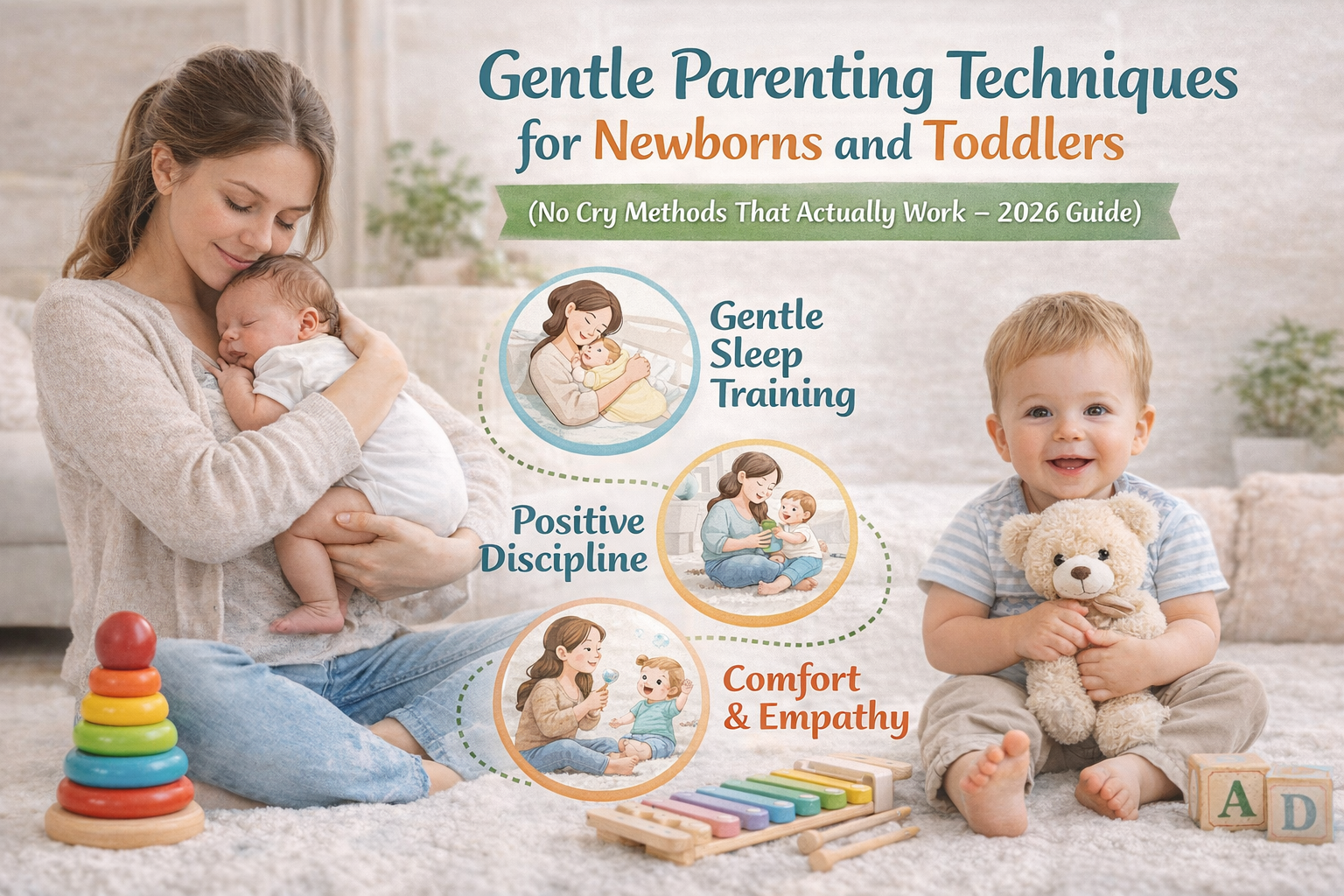
Hey sweet mama! If the idea of letting your baby or toddler “cry it out” makes your heart ache, you’re in the right place. Gentle parenting focuses on building a strong, trusting bond through empathy, respect, and responsiveness — without tears or harsh methods.
At Momsaathi, we believe the early years are about connection, not control. This comprehensive guide shares gentle parenting techniques for newborns and toddlers that are proven, compassionate, and completely no-cry (or very low-cry). You’ll learn practical ways to handle sleep, tantrums, feeding, and daily routines while raising confident, emotionally secure children.
Whether your baby is 2 weeks old or your toddler is 2 years old, these methods honor your child’s needs and protect your peace of mind. Let’s dive in and make parenting feel lighter and more joyful.
What Is Gentle Parenting? (And Why It Works So Well)
Gentle parenting is rooted in responsive caregiving and attachment theory. It means meeting your child’s emotional and physical needs promptly, using empathy instead of punishment, and guiding behavior with respect rather than fear.
Research from the American Academy of Pediatrics (AAP) and child development experts shows that responsive, sensitive parenting leads to better emotional regulation, stronger parent-child bonds, and healthier brain development.
No cry methods don’t mean zero fussing ever — babies and toddlers express big feelings. But they do mean you respond with love and presence instead of leaving them to cry alone.
For a strong foundation in the newborn phase, pair these techniques with our Best Newborn Sleep Schedule 0-3 Months for First-Time Moms.
Gentle Parenting Techniques for Newborns (0–6 Months)
Newborns need constant closeness. Their brains are wired for connection, and responsive care helps them feel safe.
- Responsive Feeding (On-Demand, No Schedule Pressure) Feed whenever your baby shows hunger cues (rooting, hand-to-mouth, fussing). This builds trust and prevents over-tiredness or overwhelm. Breastfeeding or paced bottle feeding works beautifully here.
- Babywearing and Skin-to-Skin Contact: Carry your newborn in a soft sling or wrap during the day. Skin-to-skin regulates heart rate, temperature, and hormones. It’s one of the easiest ways to soothe without any crying.
- The “No Cry” Soothing Toolkit
- Shushing + swaying
- White noise (keep under 50 dB)
- Swaddling (until rolling starts)
- Pacifier (after breastfeeding is established). Respond to every cry promptly — it teaches your baby the world is safe.
- Floor Time and Tummy Time with Connection Lie down with your baby for tummy time and talk or sing gently. This supports motor skills without stress.
If spit-up is making feeding stressful, see our guide: Why Does My Baby Spit Up After Every Feeding? Safe Remedies.
Gentle No-Cry Sleep Techniques for Newborns and Young Infants
Sleep is often the biggest worry. Here are proven no-cry (or minimal-cry) methods:
- Pick-Up/Put-Down Method: Place your drowsy-but-awake baby in the crib. If they fuss, pick them up, soothe until calm (shushing, patting), then put them back down. Repeat as needed until they fall asleep. This gradually teaches self-soothing while keeping you close.
- Fading / Chair Method (Camping Out) Sit in a chair next to the crib and offer gentle reassurance (soft voice, hand on chest). Each night, move the chair a little farther away until you’re out of the room. Perfect for babies 4–8 months.
- Bedtime Fading Note the time your baby naturally falls asleep, then gradually shift bedtime 15 minutes earlier each night while keeping a calm routine (bath, feed, lullaby).
These methods respect your baby’s need for comfort and work beautifully with our Newborn Baby Care Routine 0-3 Months.
External Resource: Learn more about no-cry sleep approaches from BabyCenter’s trusted guide on gentle sleep training: https://www.babycenter.com/baby/sleep/baby-sleep-training-no-tears-methods_1497581
Gentle Parenting Techniques for Toddlers (12–36 Months)
Toddlers test boundaries as they explore independence. Gentle parenting turns these moments into opportunities for growth.
- Emotion Coaching Instead of Time-Outs When your toddler has a meltdown, get down to their level and name the feeling: “You’re so angry because the toy broke. It’s okay to feel mad. I’m here.” Help them calm down with hugs or deep breaths. This builds emotional intelligence.
- Positive Redirection and Natural Consequences Instead of “No! Don’t touch!”, say “Let’s play with this soft ball instead.” Use simple choices: “Do you want the red cup or the blue cup?”
- Responsive Discipline with Connection
- Use “time-in” — sit together quietly until calm.
- Model the behavior you want (“We use gentle hands”).
- Praise effort: “I love how you shared your toy!”
- Gentle Sleep Support for Toddlers: Keep a consistent, calming bedtime routine. If night wakings happen, offer brief reassurance without full playtime. The fading method works well here, too.
For tracking development alongside these techniques, check our Baby Milestones by Month: What to Expect 0-12 Months (With Red Flags).
External Resource: Discover CDC’s positive parenting tips for toddlers, full of gentle, responsive strategies: https://www.cdc.gov/child-development/positive-parenting-tips/toddlers-1-2-years.html
Daily Gentle Parenting Practices That Make a Big Difference
- Speak Respectfully — Use the same tone you’d use with a friend.
- Set Clear, Kind Boundaries — “We don’t hit because it hurts. Let’s hug instead.”
- Prioritize Play and Connection — 10–15 minutes of child-led play daily strengthens your bond more than any reward chart.
- Practice Self-Compassion — Gentle parenting includes being gentle with yourself. Take breaks when you need them.
Common Challenges and How Gentle Parenting Helps
- Frequent Night Wakings → Responsive comforting builds security so independent sleep comes naturally later.
- Tantrums → Emotion coaching reduces intensity over time.
- Feeding Battles → Responsive feeding prevents picky eating by keeping mealtimes positive.
If you’re also navigating postpartum emotions, our Postpartum Recovery Tips Week by Week for New Moms offers extra support.
10 FAQs About Gentle Parenting for Newborns and Toddlers
- Does gentle parenting mean no discipline? No — it means positive, respectful guidance instead of punishment.
- Will my baby become spoiled if I respond to every cry? No. Responding builds secure attachment and actually leads to more independent children later.
- How do I handle toddler tantrums without time-outs? Use time-in, name feelings, and offer comfort until they’re regulated.
- Is the pick-up/put-down method really no-cry? It minimizes crying and keeps you responsive. Some fussing is normal, but tears are short and comforted.
- Can gentle parenting work with both parents? Absolutely — consistency and teamwork make it even stronger.
- What if my toddler won’t sleep without me? Use fading gradually. It takes patience but preserves trust.
- Is gentle parenting too permissive? No — it sets loving limits while respecting feelings.
- When can I start gentle sleep techniques? From 4–6 months onward, once feeding and weight gain are established.
- How does gentle parenting affect long-term behavior? Children raised this way tend to have better emotional regulation and stronger relationships.
- What books support these methods? Look into works by Dr. William Sears or Elizabeth Pantley’s No-Cry series for more inspiration.
You’re Already a Gentle Parent at Heart, Mama!
Gentle parenting isn’t about being perfect — it’s about showing up with love, even on the hard days. These no-cry techniques for newborns and toddlers will help you build a deep bond while teaching your child that their feelings matter.
Start small: pick one or two techniques this week and notice how your connection grows. You’re raising kind, confident humans, and that’s beautiful work.
Share your experience in the comments — which gentle technique are you trying first? Or tell us a sweet moment when responsiveness made all the difference. Our Momsaathi community is here to cheer you on!
Pin or share this guide with other moms who want a kinder way to parent. You’ve got this.
This article was reviewed by our in-house pediatric consultant and last updated in March 2026. Always consult your child’s doctor for personalized advice.