
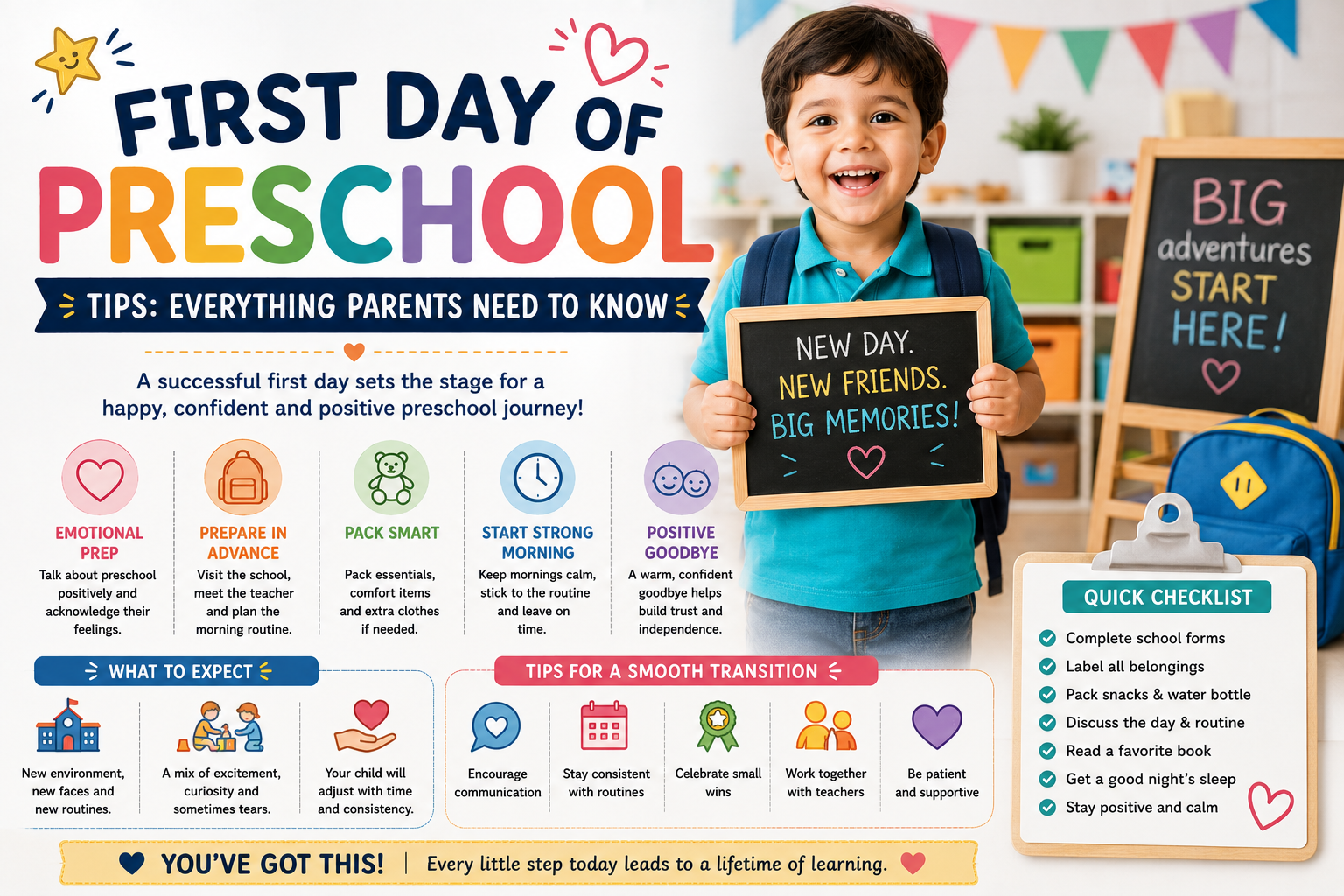

Editorial Note: This article has been reviewed using recommendations from the American Academy of Pediatrics (AAP), the Centers for Disease Control and Prevention (CDC), and the National Association for the Education of Young Children (NAEYC). Every child adjusts to preschool differently, and these tips are intended to support a positive, developmentally appropriate transition.
The first day of preschool is a significant milestone for both children and parents. It’s often the first time your little one spends several hours away from home, meets new teachers and classmates, and adjusts to an unfamiliar routine.
While some children eagerly walk into the classroom, others may feel nervous, clingy, or emotional. These reactions are completely normal. With thoughtful preparation and a positive approach, parents can help make the transition smoother and more enjoyable.
This guide shares practical first day of preschool tips to help your child build confidence, reduce anxiety, and start their preschool journey with excitement.
If your child is getting ready for preschool, you may also find these MomSaathi articles helpful:
3-Year-Old Daily Routine
4-Year-Old Learning Activities
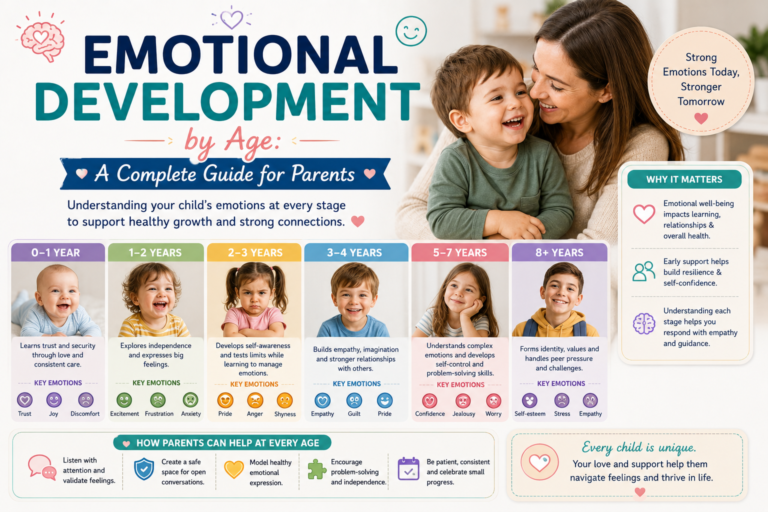
Emotional Development by Age
Quick Answer
The best first day of preschool tips include preparing your child in advance, talking positively about preschool, practicing short separations, maintaining a consistent routine, packing familiar comfort items (if allowed), and keeping goodbyes short and reassuring. A calm, confident parent often helps children feel more secure during the transition.
Why the First Day of Preschool Matters
Starting preschool is about much more than academics. It introduces children to:
- New friendships
- Daily routines
- Independence
- Communication skills
- Emotional regulation
- Teamwork
- Early learning experiences
A positive first experience can build confidence and create excitement about school.
Common Emotions Children Experience
Every child reacts differently.
Your preschooler may feel:
- Excited
- Curious
- Nervous
- Scared
- Shy
- Confused
- Happy
- Overwhelmed
These feelings are completely normal and usually improve as children become familiar with their new environment.
Signs Your Child Is Ready for Preschool
Most children show several readiness signs before starting preschool.
These may include:
- Following simple instructions
- Speaking in short sentences
- Showing curiosity
- Playing with other children
- Expressing basic needs
- Sitting for short activities
- Enjoying books and stories
- Separating from parents for brief periods
Remember that every child develops at their own pace.
How to Prepare Weeks Before Preschool Starts
Preparation should begin several weeks before the first day whenever possible.
Talk About Preschool
Describe preschool as an exciting place where children:
- Play
- Learn
- Sing songs
- Make friends
- Paint
- Read books
- Explore new activities
Use positive language without making unrealistic promises.
Read Preschool-Themed Books
Reading books about starting school helps children understand what to expect.
Ask questions like:
- “How do you think the character feels?”
- “What would you do?”
- “What are you excited about?”
Books encourage conversations about emotions.
Visit the Preschool
If your preschool offers orientation or an open house, take advantage of it.
Allow your child to:
- Meet teachers
- Explore classrooms
- Find the bathroom
- See the playground
- Become familiar with the surroundings
Familiarity often reduces first-day anxiety.
Practice Separation
If your child has never spent time away from you, begin practicing with short separations.
Examples include:
- Visiting grandparents
- Staying with a trusted family member
- Short playdates
- Community classes
Gradually increasing separation helps build confidence.
Create a Preschool Routine
Children thrive on consistency.
A few weeks before preschool begins:
- Wake up at the school schedule
- Eat breakfast at the usual time
- Practice getting dressed
- Follow a predictable bedtime
Our <a href=”https://momsaathi.com/3-year-old-daily-routine/”>3-Year-Old Daily Routine</a> guide can help establish healthy habits before preschool starts.
Practice Independence Skills
Simple self-help skills make children feel more confident.
Teach your child to:
- Wash hands
- Use the toilet
- Put on shoes
- Open a lunch box
- Carry a backpack
- Drink from a water bottle
- Put toys away
Encourage effort rather than perfection.
Talk About Feelings
It’s normal for children to feel uncertain.
Try saying:
“It’s okay to feel a little nervous. Many children feel that way before starting preschool.”
Avoid dismissing their emotions with phrases like:
“There’s nothing to be scared of.”
Instead, acknowledge their feelings and offer reassurance.
Pack Together
Let your child help pack:
- Backpack
- Water bottle
- Lunch
- Extra clothes
- Comfort item (if permitted)
- Family photo
Allowing children to participate gives them a sense of control.
Get Everything Ready the Night Before
Reduce morning stress by preparing in advance.
Lay out:
- Clothes
- Shoes
- Backpack
- Lunch
- School documents
A calm morning helps children start the day feeling secure.
First Morning Tips
On preschool morning:
- Wake up early
- Eat a healthy breakfast
- Avoid rushing
- Stay calm
- Smile often
- Speak positively
Children often mirror their parents’ emotions.
Healthy Breakfast Ideas
A nutritious breakfast supports concentration and energy.
Examples include:
- Oatmeal with fruit
- Scrambled eggs
- Whole-grain toast
- Yogurt with berries
- Idli and sambar
- Vegetable poha
- Banana smoothie
Avoid sugary foods that may lead to energy crashes.
Keep Goodbyes Short
One of the biggest mistakes parents make is prolonging the goodbye.
Instead:
- Give a hug
- Say goodbye confidently
- Tell your child when you’ll return
- Leave promptly
Long emotional farewells may increase anxiety.
What If Your Child Cries?
Crying on the first day is very common.
Most children calm down shortly after parents leave once they become engaged in classroom activities.
Trust the teachers, who are experienced in helping children adjust.
Tips for Parents
Remember:
- Stay calm.
- Trust the preschool staff.
- Avoid showing excessive worry.
- Celebrate this milestone.
- Be patient during the adjustment period.
Your confidence helps your child feel safe.
The American Academy of Pediatrics emphasizes that consistent routines, positive parent-child interactions, and supportive transitions can help children adjust successfully to new environments such as preschool.
For additional parenting support, explore:
4-Year-Old Learning Activities
Emotional Development by Age
Baby Sleep Schedule
Starting preschool is a big transition for young children, and the adjustment doesn’t end after the first drop-off. The days and weeks that follow are just as important. With patience, consistency, and encouragement, most children gradually become comfortable with their new environment and begin looking forward to school.
If you’re preparing your child for preschool, you may also like these MomSaathi guides:
- <a href=”https://momsaathi.com/emotional-development-by-age/”>Emotional Development by Age</a>
- <a href=”https://momsaathi.com/4-year-old-learning-activities/”>4-Year-Old Learning Activities</a>
- <a href=”https://momsaathi.com/3-year-old-daily-routine/”>3-Year-Old Daily Routine</a>
Common Mistakes Parents Should Avoid
Even well-meaning parents can make mistakes that increase a child’s anxiety.
Avoid these common pitfalls:
1. Showing Your Own Anxiety
Children often pick up on their parents’ emotions.
Try to remain calm, smile, and speak confidently—even if you’re feeling emotional yourself.
2. Sneaking Away
Never leave without saying goodbye.
Although it may seem easier, disappearing without notice can damage trust and make future drop-offs more difficult.
Instead, say something simple like:
“Have a wonderful day. I’ll be back after story time.”
3. Making Long Goodbyes
Lengthy hugs and repeated farewells often increase separation anxiety.
A short, loving goodbye followed by a confident exit usually works best.
4. Promising Rewards
Avoid saying:
- “I’ll buy you a toy if you don’t cry.”
- “You’ll get ice cream if you’re brave.”
Instead, praise your child’s effort:
“I’m proud of how you walked into your classroom today.”
5. Comparing Your Child
Avoid statements like:
- “Your cousin didn’t cry.”
- “Other kids are fine.”
Every child adjusts at their own pace.
Helping a Child With Separation Anxiety
Separation anxiety is common during the first few weeks of preschool.
You can help by:
- Maintaining a predictable routine
- Creating a goodbye ritual
- Arriving on time
- Talking positively about school
- Trusting the teacher
- Avoiding returning to the classroom after leaving
Most children settle within a few minutes after parents leave.
How Long Does Preschool Adjustment Take?
Every child is different.
Typical adjustment periods are:
| Child | Adjustment Time |
|---|---|
| Easy-going children | A few days |
| Sensitive children | 2–4 weeks |
| Highly anxious children | 1–2 months |
Be patient and celebrate small improvements along the way.
Tips for Shy Children
If your child is naturally shy:
- Visit the preschool several times before starting (if possible).
- Arrange playdates with future classmates.
- Practice introducing themselves.
- Encourage independent play.
- Read books about making friends.
- Praise small acts of bravery.
Avoid labeling your child as “shy,” as children often internalize these descriptions.
Preschool Drop-Off Checklist
Before leaving home, make sure your child has:
✅ Backpack
✅ Water bottle
✅ Healthy lunch or snacks (if required)
✅ Extra clothes
✅ Comfort item (if allowed)
✅ School documents
✅ Name label on belongings
✅ Weather-appropriate clothing
A simple checklist can make mornings less stressful.
After-School Tips
The first few minutes after pickup are important.
Instead of asking:
“Did you have fun?”
Try open-ended questions such as:
- What made you smile today?
- Who did you play with?
- What song did you sing?
- What was your favorite activity?
- What was something new you learned?
These questions encourage conversation and help your child reflect on their day.
Building a Positive Preschool Routine
Consistency helps children feel safe.
A healthy routine includes:
- Early bedtime
- Nutritious breakfast
- Calm morning routine
- On-time arrival
- Outdoor play after school
- Quiet family time before bed
- Reading together every evening
If you’re creating a daily schedule, see our 3-Year-Old Daily Routine guide.
When Should Parents Be Concerned?
Some first-day tears are perfectly normal.
However, consider speaking with your child’s teacher or pediatrician if your child:
- Continues to experience intense distress after several weeks
- Refuses to attend preschool every day
- Has frequent nightmares related to school
- Stops eating or sleeping well
- Shows significant changes in behavior at home
- Withdraws completely from activities they previously enjoyed
Early support can make a meaningful difference.
How Teachers Help Children Adjust
Preschool teachers use many strategies to help children feel secure, including:
- Greeting each child warmly
- Creating predictable routines
- Offering engaging activities
- Encouraging friendships
- Providing reassurance
- Using songs, stories, and play to ease transitions
Trusting your child’s teacher and maintaining open communication can support a smoother adjustment.
Expert Tips for a Successful First Day
- Stay positive when talking about preschool.
- Keep your morning routine relaxed.
- Allow extra travel time.
- Dress your child comfortably.
- Let them carry their own backpack if they’re able.
- Celebrate bravery, not perfection.
- Be patient during the adjustment period.
- Focus on progress rather than comparing your child with others.
Frequently Asked Questions
What is the best way to prepare for the first day of preschool?
Start preparing a few weeks in advance by establishing routines, talking positively about preschool, visiting the school if possible, and practicing short separations.
Is it normal for children to cry on the first day?
Yes. Many preschoolers cry during the first few days. Most settle shortly after parents leave and become engaged in classroom activities.
Should I stay if my child cries?
In most cases, follow the teacher’s guidance. Prolonging the goodbye may increase anxiety. A brief, reassuring farewell is often the most helpful approach.
What should my child bring to preschool?
Typical items include a backpack, water bottle, lunch or snacks (if required), extra clothes, and any school-requested supplies. Some schools also allow a small comfort item.
How can I reduce separation anxiety?
Practice short separations, maintain consistent routines, create a goodbye ritual, and reassure your child that you’ll return.
What if my child refuses to go to preschool?
Stay calm, acknowledge your child’s feelings, maintain routines, and work with teachers. If distress continues for several weeks or significantly affects daily life, seek professional guidance.
Should I reward my child for going to preschool?
Rather than offering material rewards, praise their courage, effort, and progress. Positive encouragement helps build intrinsic confidence.
How long does it take for children to adjust to preschool?
Many children adjust within a few days to a few weeks, although some may take longer. Patience and consistency are key.
Can reading books help prepare my child?
Yes. Books about starting school help children understand what to expect and provide opportunities to talk about emotions and new experiences.
How can I make mornings less stressful?
Prepare clothes, bags, and lunches the night before, wake up early, and follow a calm, predictable routine.
Final Thoughts
The first day of preschool is an exciting milestone that marks the beginning of your child’s learning journey. While it’s natural for both children and parents to experience a mix of emotions, preparation, patience, and encouragement can make the transition much smoother.
Remember that every child adjusts differently. Some feel comfortable immediately, while others need extra time to build trust and confidence. Celebrate each small success, maintain consistent routines, and reassure your child that preschool is a safe place to learn, play, and make new friends.
Your calm support, loving encouragement, and partnership with teachers can help your child develop confidence that extends far beyond the classroom.
Continue Reading on MomSaathi
Emotional Development by Age
4-Year-Old Learning Activities
3-Year-Old Daily Routine
Baby Sleep Schedule
Baby Food Chart (0–24 Months)
Contact Naps
Trusted External Resources
For additional evidence-based guidance, visit:
- HealthyChildren.org (American Academy of Pediatrics): https://www.healthychildren.org/
- CDC – Developmental Milestones: https://www.cdc.gov/ncbddd/actearly/milestones/
- NAEYC (National Association for the Education of Young Children): https://www.naeyc.org/
- Zero to Three: https://www.zerotothree.org/
These trusted organizations provide expert advice on school readiness, emotional development, early learning, and supporting young children during major transitions like starting preschool.


[…] Baby Sleep Schedule 3-Year-Old Daily Routine First Day of Preschool Tips […]
[…] Boy Hairstyles 3-Year-Old Daily Routine First Day of Preschool Tips […]
[…] Hairstyles School Haircuts for Girls First Day of Preschool Tips 3-Year-Old Daily […]