

Editorial Note: This article has been reviewed using recommendations from the American Academy of Pediatrics (AAP), the American Academy of Sleep Medicine (AASM), the National Sleep Foundation, the NHS, and the CDC. Sleep needs vary by age and individual health. If your child has persistent sleep problems, consult a pediatrician or a pediatric sleep specialist.
A consistent bedtime routine is one of the most effective ways to help babies and children fall asleep faster, sleep longer, and wake up refreshed. Whether you have a newborn, toddler, preschooler, or school-age child, a predictable evening routine signals to the brain that it’s time to wind down.
Research shows that regular bedtime routines are associated with better sleep quality, fewer night wakings, improved emotional regulation, and even enhanced cognitive development. They also reduce bedtime resistance and make evenings less stressful for parents.
In this comprehensive guide, you’ll learn how to create the best bedtime routine, age-specific schedules, common mistakes to avoid, and practical tips that actually work.
If you’re building healthy daily habits for your child, you may also like:
Baby Sleep Schedule
3-Year-Old Daily Routine
First Day of Preschool Tips
Quick Answer
The best bedtime routine includes calming activities such as a warm bath, brushing teeth, changing into pajamas, reading a bedtime story, cuddling, and turning off screens at least one hour before bed. Following the same routine every night helps children develop healthy sleep habits and improves sleep quality.
Why Is a Bedtime Routine Important?
Children thrive on routine. A predictable bedtime routine helps regulate the body’s internal clock (circadian rhythm), making it easier to fall asleep naturally.
Benefits include:
- Faster sleep onset
- Better sleep quality
- Fewer bedtime struggles
- Reduced night wakings
- Improved mood
- Better concentration
- Stronger emotional regulation
- Healthier brain development
- Improved family routine
Good sleep also supports physical growth, immune function, learning, and memory.
When Should a Bedtime Routine Start?
Experts recommend beginning a bedtime routine as early as 6–8 weeks of age. While newborns don’t yet have a regular sleep schedule, introducing calming activities helps establish healthy sleep associations.
It’s never too late to begin. Toddlers, preschoolers, and older children also benefit from consistent bedtime routines.
Elements of the Best Bedtime Routine
A successful bedtime routine should be calming, predictable, and consistent.
1. Eat Dinner at a Regular Time
Serve dinner about 2–3 hours before bedtime.
Choose balanced meals that include:
- Whole grains
- Lean protein
- Vegetables
- Healthy fats
Avoid heavy, spicy, or sugary foods close to bedtime.
2. Limit Screen Time
Phones, tablets, televisions, and video games emit blue light that can interfere with melatonin production.
Aim to stop screen use at least one hour before bedtime.
Instead, encourage:
- Reading
- Drawing
- Coloring
- Quiet puzzles
3. Take a Warm Bath
A warm bath helps relax muscles and signals that bedtime is approaching.
Bath time can also become a comforting part of your nightly routine.
4. Brush Teeth
Brushing teeth before bed promotes good oral hygiene while providing another predictable bedtime cue.
5. Change into Comfortable Pajamas
Comfortable sleepwear helps children feel relaxed and ready for sleep.
Choose breathable fabrics suitable for the room temperature.
6. Read a Bedtime Story
Reading together helps children:
- Develop language skills
- Strengthen parent-child bonding
- Reduce anxiety
- Improve imagination
Choose calm, age-appropriate books.
7. Dim the Lights
Lower lighting helps increase natural melatonin production.
Keep bedrooms quiet, cool, and dark whenever possible.
8. Offer Comfort and Reassurance
Spend a few quiet minutes talking, cuddling, or singing a lullaby.
This helps children feel secure before sleep.
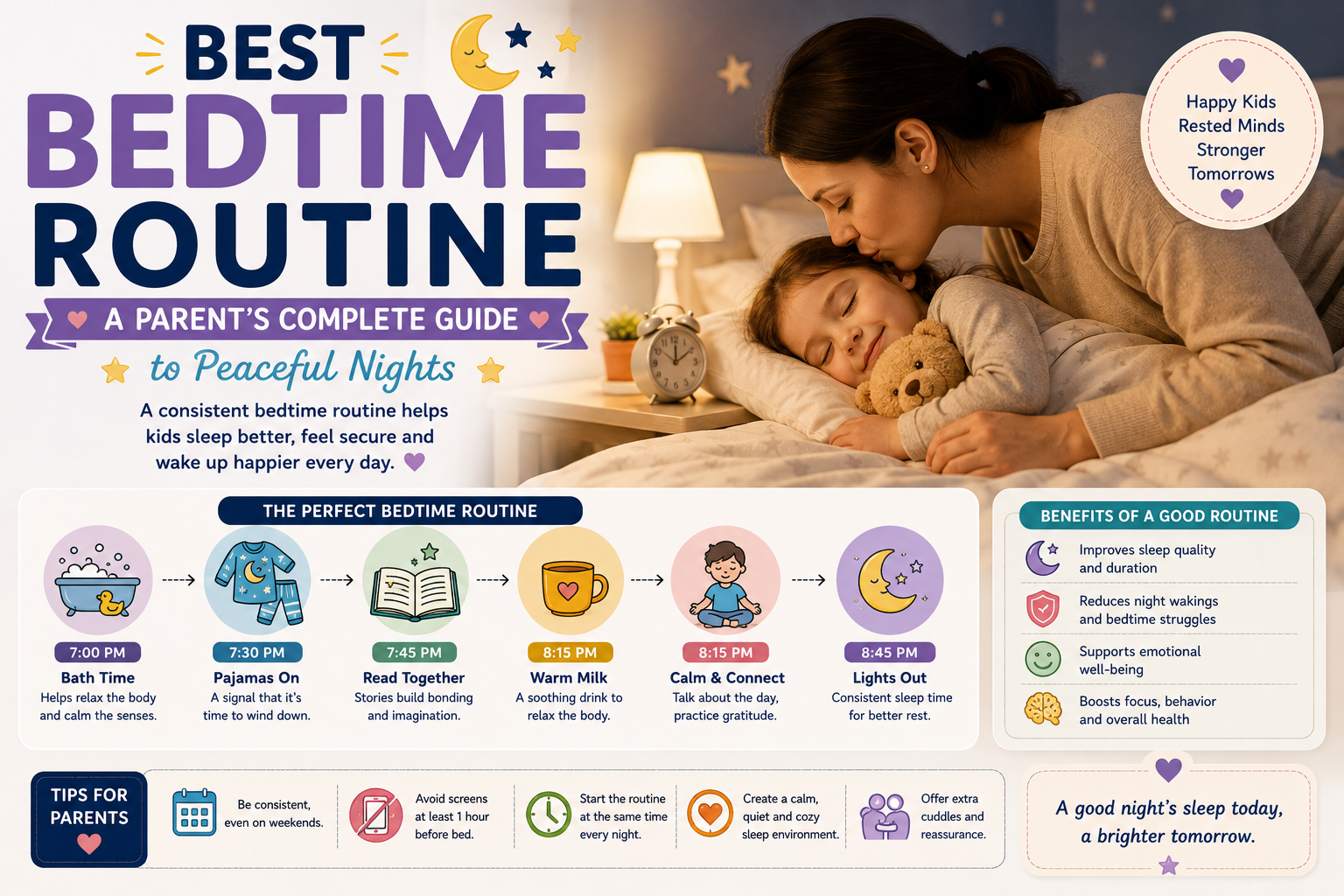
Sample Bedtime Routine (30–45 Minutes)
7:00 PM – Finish dinner
↓
7:30 PM – Bath time
↓
7:45 PM – Brush teeth
↓
7:50 PM – Pajamas
↓
7:55 PM – Read a story
↓
8:10 PM – Goodnight hugs
↓
8:15 PM – Lights out
Consistency is more important than the exact clock time.
Best Bedtime Routine by Age
Babies (0–12 Months)
A simple routine may include:
- Feeding
- Bath (optional)
- Massage
- Pajamas
- Lullaby
- Cuddles
- Sleep
Young babies benefit from gentle, calming routines rather than long activities.
Toddlers (1–3 Years)
Suggested routine:
- Dinner
- Bath
- Brush teeth
- Pajamas
- Story
- Quiet cuddle
- Bedtime
Toddlers often respond well to visual bedtime charts.
Preschoolers (3–5 Years)
Include:
- Tidy toys
- Bath
- Tooth brushing
- Story
- Gratitude conversation
- Hugs
- Lights out
Keeping the order the same each night helps reduce bedtime resistance.
School-Age Children
A healthy bedtime routine may include:
- Homework finished early
- No screens before bed
- Reading
- Relaxation
- Sleep at a consistent time
How Long Should a Bedtime Routine Be?
Most experts recommend:
- Babies: 20–30 minutes
- Toddlers: 30–45 minutes
- Preschoolers: 30–45 minutes
- School-age children: 30–60 minutes
Longer routines are not necessarily better. Keep activities calm and predictable.
Bedtime Activities That Promote Better Sleep
Try incorporating:
- Reading books
- Gentle stretching
- Soft music
- Deep breathing
- Gratitude practice
- Quiet conversation
- Coloring
- Prayer or meditation (if part of your family’s routine)
- Gentle massage for babies
Avoid stimulating games before bedtime.
Signs Your Child Is Ready for Bed
Watch for sleep cues such as:
- Rubbing eyes
- Yawning
- Becoming quiet
- Losing interest in play
- Clumsiness
- Irritability
Putting children to bed before they become overtired often leads to easier sleep.
Common Bedtime Mistakes
Avoid these habits:
- Inconsistent bedtime
- Screens before bed
- Sugary snacks late at night
- Exciting games before sleep
- Too much caffeine (older children)
- Bright bedroom lighting
- Skipping the bedtime routine
- Allowing bedtime to vary dramatically between weekdays and weekends
Bedtime Routine Checklist
✔ Dinner
✔ Bath
✔ Brush teeth
✔ Pajamas
✔ Story
✔ Hugs
✔ Lights dimmed
✔ Bedroom cool and quiet
✔ Screens off
✔ Same bedtime every night
A successful bedtime routine isn’t about perfection—it’s about consistency. When children know what to expect every evening, they feel more secure, making bedtime smoother for the entire family. Whether your child is a baby, toddler, preschooler, or school-age child, small daily habits can lead to healthier sleep over time.
If you’re building a healthy daily routine, you may also like:
Baby Sleep Schedule
3-Year-Old Daily Routine
First Day of Preschool Tips
Emotional Development by Age
Bedtime Routine for Babies Who Won’t Sleep
Some babies struggle to settle, especially during sleep regressions or developmental leaps.
Try these strategies:
- Keep bedtime at the same time every night.
- Feed your baby before starting the bedtime routine.
- Use a warm bath if your baby enjoys it.
- Give a gentle baby massage.
- Keep lights dim.
- Use white noise if it helps your baby relax.
- Avoid overstimulation before bedtime.
- Place your baby in the crib when drowsy but still awake, if appropriate for your family’s sleep approach.
Patience and consistency are key, as it can take several weeks for new sleep habits to develop.
Toddler Bedtime Routine That Reduces Tantrums
Toddlers often resist bedtime because they enjoy exploring and spending time with family.
A simple routine might look like this:
7:00 PM – Dinner
↓
7:30 PM – Bath
↓
7:45 PM – Brush teeth
↓
7:50 PM – Pajamas
↓
7:55 PM – Choose one bedtime story
↓
8:10 PM – Goodnight hugs
↓
8:15 PM – Lights out
Helpful Tips
- Give simple choices (“Blue pajamas or green pajamas?”)
- Use a bedtime chart with pictures.
- Give a 10-minute bedtime warning.
- Stay calm and consistent.
- Avoid negotiating after lights out.
Bedtime Routine for Preschoolers
Preschoolers enjoy routines and often feel more secure when bedtime follows the same pattern.
A calming routine may include:
- Putting toys away
- Taking a bath
- Brushing teeth
- Wearing pajamas
- Reading two bedtime books
- Talking about the best part of the day
- Giving hugs and kisses
- Going to bed at the same time every night
Keeping bedtime positive helps reduce anxiety and bedtime resistance.
Bedtime Routine for School-Age Children
As children grow older, they benefit from increasing independence while maintaining healthy sleep habits.
A recommended routine includes:
- Completing homework before dinner
- Eating a balanced evening meal
- Turning off screens one hour before bed
- Preparing clothes and school bag for the next day
- Reading independently for 15–20 minutes
- Brushing teeth
- Lights out at a consistent time
Best Foods Before Bed
A light bedtime snack may be appropriate if your child is genuinely hungry.
Healthy options include:
- Warm milk
- Plain yogurt
- Banana
- Oatmeal
- Whole wheat toast with peanut butter (age-appropriate)
- Cheese with whole-grain crackers
- Apple slices with nut butter (for older children)
Avoid large meals close to bedtime.
Foods and Drinks to Avoid Before Bed
These may interfere with sleep:
- Chocolate (contains caffeine)
- Sugary desserts
- Soft drinks
- Energy drinks
- Coffee
- Tea with caffeine
- Spicy foods
- Heavy fried meals
Encouraging water instead of sugary beverages in the evening can support better sleep.
Creating the Ideal Sleep Environment
A comfortable bedroom can improve sleep quality.
Aim for:
- A cool room temperature
- Comfortable bedding
- Dim lighting
- Minimal noise
- Blackout curtains if needed
- No television in the bedroom
- Limited toys in the sleeping area
Reserve the bed primarily for sleeping to strengthen the association between bed and rest.
Bedtime Routine for Children with ADHD or Sensory Sensitivities
Children with ADHD or sensory processing differences may benefit from additional structure and calming activities.
Helpful strategies include:
- Follow the exact same bedtime sequence every night.
- Use visual schedules.
- Reduce background noise.
- Keep lighting soft.
- Offer calming sensory activities, such as reading or quiet music.
- Avoid stimulating games before bed.
- Give reminders before each transition.
If sleep problems are persistent, discuss them with your child’s healthcare provider.
What If Your Child Wakes During the Night?
Night wakings are common, especially in younger children.
When possible:
- Respond calmly.
- Keep lights dim.
- Avoid turning on screens.
- Offer reassurance without encouraging prolonged play.
- Return your child to bed consistently.
Frequent or severe sleep disturbances should be discussed with a pediatrician.
Frequently Asked Questions
What is the best bedtime routine?
A consistent routine that includes a bath, brushing teeth, pajamas, reading a story, cuddles, and lights out at the same time every night.
What time should children go to bed?
The ideal bedtime depends on a child’s age and the amount of sleep they need. Choose a bedtime that allows them to get the recommended amount of sleep while waking comfortably for school or daycare.
How long should a bedtime routine take?
Most bedtime routines last between 20 and 45 minutes, depending on the child’s age.
Should children have a snack before bed?
Only if they are genuinely hungry. Choose light, nutritious foods rather than sugary snacks.
Should I read every night?
Yes. Reading together promotes language development, strengthens parent-child bonding, and helps children relax before sleep.
Can screen time affect sleep?
Yes. Blue light from electronic devices can delay melatonin production and make it harder for children to fall asleep.
Is it okay if bedtime changes on weekends?
Keeping bedtime within about an hour of the usual schedule can help maintain a healthy sleep routine.
What if my child refuses bedtime?
Stay calm, keep the routine consistent, avoid lengthy negotiations, and offer simple choices within the routine.
Is white noise safe?
White noise may help some babies and children settle to sleep. Use it at a safe volume and follow manufacturer recommendations.
When should I seek medical advice?
Speak with your child’s healthcare provider if your child has persistent snoring, pauses in breathing during sleep, ongoing insomnia, excessive daytime sleepiness, or sleep problems that significantly affect daily life.
Final Thoughts
The best bedtime routine is one that your family can follow consistently. A predictable evening routine helps children feel safe, improves sleep quality, and supports healthy physical, emotional, and cognitive development.
Remember that healthy sleep is influenced by more than bedtime alone. Daily physical activity, balanced nutrition, limited screen time, and consistent routines all work together to promote better rest.
Start with a simple routine, be patient, and adjust it as your child grows. Even small improvements can make bedtime calmer and mornings happier.
&nbsFor more parenting and child wellness resources, explore these MomSaathi guides:
Baby Sleep Schedule
3-Year-Old Daily Routine
First Day of Preschool Tips
Emotional Development by Age
High Protein Foods for Kids
Brain Development Foods
Trusted External Resources
For evidence-based sleep guidance, visit:
- American Academy of Pediatrics (HealthyChildren): https://www.healthychildren.org/
- American Academy of Sleep Medicine: https://aasm.org/
- Centers for Disease Control and Prevention (CDC) – Sleep: https://www.cdc.gov/sleep/
- NHS – Children’s Sleep: https://www.nhs.uk/
- National Sleep Foundation: https://www.thensf.org/
These organizations provide reliable, science-based information on children’s sleep, healthy bedtime habits, sleep schedules, and improving sleep quality for babies, toddlers, and older children.