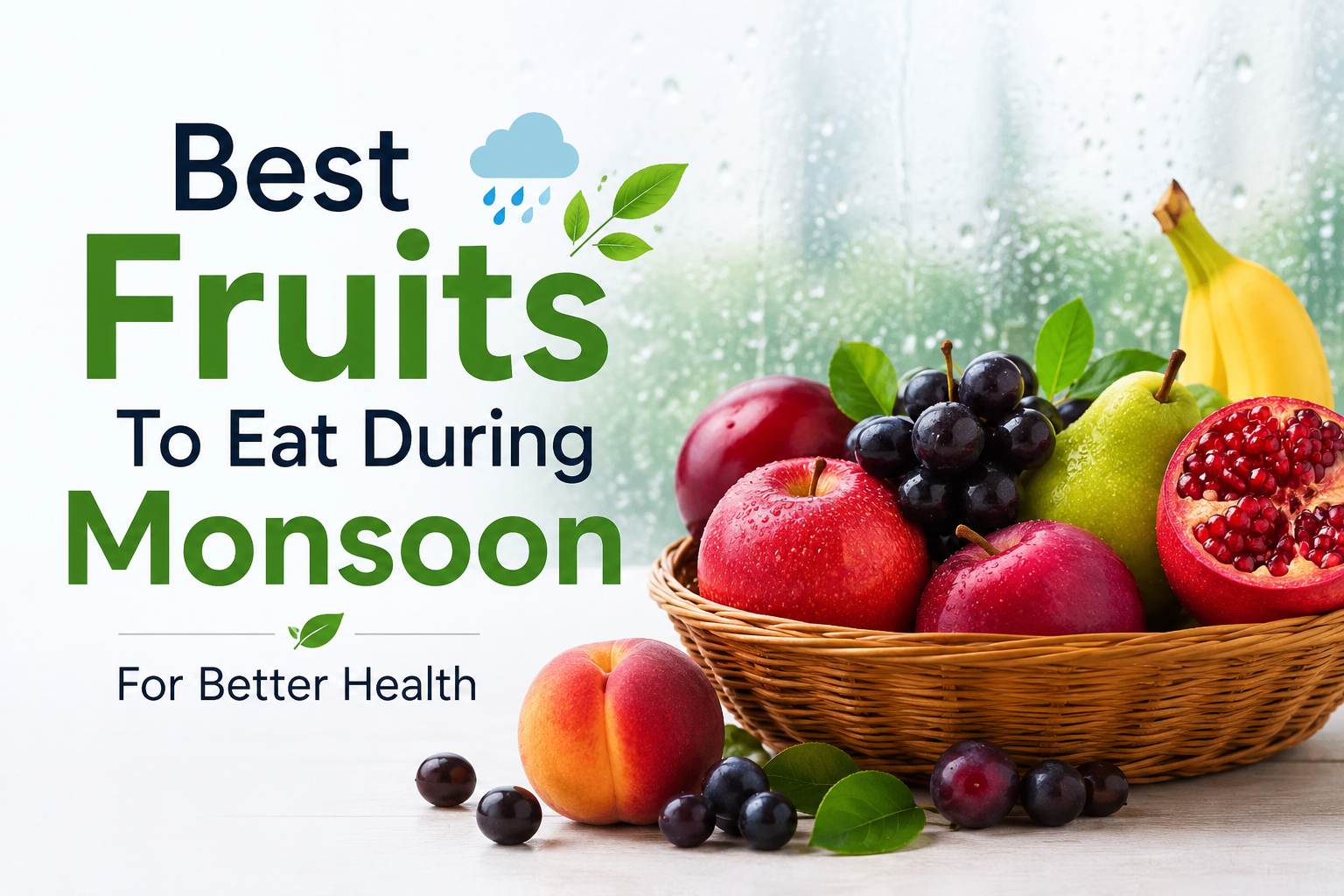

The rainy season is a welcome relief from the intense summer heat. Monsoon is one of the most loved seasons of the year with its cool breeze, refreshing showers and lush greenery.
But the season also carries the risk of infections, digestive problems, seasonal flu and lowered immunity. Therefore, the significance of keeping a check on your diet in the monsoon months.
One of the easiest ways to keep fit in the monsoon season is to include seasonal fruits in your everyday diet. Fruits are an important source of vitamins, minerals, antioxidants, fibre and natural hydration which help the body to fight infections and remain healthy.
They tend to be fresher, more flavourful and more nutritious as they are picked at the natural time for their growth. The fruits that grow naturally during monsoon when consumed can help boost immunity, improve digestion, help skin health and maintain energy levels.
In this article, we will discuss the best fruits to eat in the rainy season, their health benefits, nutritional value and tips to eat them safely in the monsoon.
Why You Should Eat Seasonal Fruits In The Rainy Season?
The level of humidity goes up during the monsoon and disease causing bacteria, viruses and fungi find it easier to flourish.
Here are some common seasonal problems many people experience:
- Coughs and colds
- Stomach upset
- Foodborne Illnesses
- Low immunity
- Tiredness and weakness
Seasonal fruits have nutrients which help to keep the body strong and healthy in these challenges.
Advantages of Eating Seasonal Fruits in Monsoon
- Stronger immunity
- Improved digestion
- Natural detoxification
- Improved hydration
- Healthy skin and hair
- More energy
Picking fresh, clean and seasonal fruits can be a good way to boost your family’s health during the rainy season.
Best Fruits for Rainy Season
1. Jamun (Indian Black Berry)
Jamun is one of the most demanded fruits in the monsoon season. The fruit is known for its deep purple colour, uniquely sweet and tangy taste, and a wealth of health benefits.
Nutrition Benefits
- High in Vitamin C
- Iron Source
- Antioxidants
- Aids in regulating blood sugar
- Enhances Digestion
Health Benefits
Jamun is known to be beneficial for digestive health and immunity. It has powerful antioxidants that help protect the body from oxidative stress.
People who want to manage healthy blood sugar levels also enjoy eating the fruit.
Eating
- Fresh fruits
- Salad of fruit
- Shakes
- Juice made at home
2. Pear (Nashpati)
Pear is another healthy fruit which generally available in rainy season. Its gentle sweet flavour and juicy, tender texture make it popular with children and adults alike.
Nutritional Advantages
- Rich in fibre
- High in Vitamin C
- Rich in potassium
- Aids hydration
Health Benefits
It is rich in fibre which helps to keep your digestive system healthy and prevents constipation.
Pears also keep your heart healthy and boost your immune system.
How to Eat
- Cut fresh
- Fruit bowls
- Smoothies
- Good for you desserts
3. Plum
Plums are delicious seasonal fruits loaded with vitamins, antioxidants and fibre.
Facts Nutrition
- Rich in Vitamin A
- Fortified with Vitamin C
- Antioxidants loaded
- Good source of fibre
Health Benefits
Plums are good for digestion, skin and immunity. They have antioxidant properties, which combat free radicals and promote general well-being.
Food
- Fresh fruits
- Salads of fruit
- Jams made at home
- Toppings for yoghurt
4. Peach
Peaches are soft and juicy fruits that are enjoyed by many during the rainy season.
Nutrition Information
- High in Vitamin C
- Has Vitamin A
- High in antioxidants
- Low calorie
Health Benefits
Peaches help with healthy skin, better digestion and immunity. They also help you stay hydrated in humid weather.
How to Feed
- Ripe peaches
- Shakes
- Smoothies
- Salads of fruit
- Toppings for muesli
5. Cherries
Cherries are nutrient dense fruits that are rich in antioxidants and anti-inflammatory compounds.
Nutrition Benefits
- High in antioxidants
- It contains Vitamin C
- Great source of potassium
- Contains dietary fiber
Health Benefits
Cherries can reduce inflammation, support heart health, and improve sleep quality. The antioxidant content helps strengthen immunity.
How to Use It
- Cherries, fresh
- Bowls for fruit
- Sweets
- Smoothie
6. Pomegranate
Pomegranate is one of the healthiest fruits for all seasons including monsoon.
Benefits for Nutrition
- Antioxidant-rich
- Rich source of Vit C
- Folic acid included
- Aids in iron absorption
Health Benefits
Pomegranate enhances immunity, maintains heart health and healthy blood circulation. Its antioxidant compounds help defend cells against damage.
How to Eat
- New seeds
- Juice
- Salads of fruits
- Toppings for yoghurt
7. Apple
The season of monsoons is the time when the saying “an apple a day keeps the doctor away” is most relevant.
Nutrition Information
- Rich in fibre
- Chock full of antioxidants
- Has Vitamin C
- Promotes a healthy gut
Health Benefits
Apples help digestion, improve immunity and give sustained energy. They are high in fibre, which is good for your digestive system.
How to Eat Them
- Fresh apples, sliced
- Fruit Salad
- Smoothies
- Muesli meal
8. Banana
Bananas are available all year round and are particularly useful in the rainy season.
Nutritional Value
- High in potassium
- With Vitamin B6
- Gives you natural energy
- Light and easily digestible
Health Benefits
Bananas are good for digestion, electrolyte balance and instant energies. They are especially good for active people and children.
How to Take
- Bananas, fresh
- Shakes
- Smoothies
- Crepes
- Nutritious snack
Rainy Season: Eat These Fruits with Caution
Fruits are healthy but some precautions are necessary in monsoon.
Watermelon
Due to its high moisture content and storage problems watermelons get spoilt quickly in humid weather.
Fruit from Street Vendors
Do not eat pre-cut fruits from open environments as they can get contaminated.
Overripe Fruit
Don’t eat overripe fruit because it contains harmful microorganisms.
Top Tips To Eat Fruits Safely In Monsoon
1. Rinse Produce Well
Always wash fruits in running water before you eat them.
2. Eat Fresh Fruit
Buy the fruit fresh and do not store it for long periods of time.
3. Don’t Cut Fruit
Humidity can attract bacteria and spoil cut fruit faster.
4. Proper Storage
Store fruits according to their freshness requirements.
5. Eat Fruits and Vegetables in Season
The out of season fruits are not as fresh, safe and nutritious as the seasonal ones.
Rainy Season Fruits for Kids
Children are more likely to get infections during the rainy season. Include nutrient-dense fruits in their everyday meals to promote healthy growth and immunity.
Monsoon fruits that are good for kids are:
- Bananas
- Apple
- Pomegranates
- Peach
- Plum
These fruits are rich in important vitamins, minerals and anti-oxidants for overall development.
Fruits to Eat During Pregnancy in Rainy Season
Pregnancy requires additional nutrients to help support the mother’s health and the baby’s growth.
Safe and nutritious monsoon fruits are:
- Apple
- Pomegranate
- Pears
- Bananas
- Peach
These fruits are a source of fibre, vitamins and minerals which help in digestion, immunity and in having a healthy pregnancy.
Always check with your healthcare provider about diet choices when pregnant.
Can Eating Fruits Boost Immunity During Monsoon?
Yeah. Rainy season fruits are packed with immune-boosting nutrients like:
- Vitamin C
- Vitamin A
- Antioxidants
- Zinc-containing compounds
- Dietary Fibre
These nutrients help strengthen the body’s natural defences and reduce the risk of seasonal illness.
Combining fruits can further support immunity along with a balanced diet, adequate sleep, hydration and physical activity.
Fast Ways to Add Rainy Season Fruits to Your Diet
If your family is not excited to eat fruits on a regular basis, try these simple ideas:
- Fruit Salad
- Smoothie bowls
- Fruit yoghurt, homemade
- Fruits Chaat
- Fruits with muesli
- Fresh fruit snacks
- Healthy dessert toppings
Children tend to eat more fruits with creative presentation.
References & Resources
| Topic | Resource |
|---|---|
| Healthy Diet & Nutrition | World Health Organization (WHO) |
| Benefits of Fruits and Vegetables | Harvard T.H. Chan School of Public Health |
| Fruit and Vegetable Consumption Guidelines | Food and Agriculture Organization (FAO) |
Conclusion
The rainy season fruits are rich in vitamins, minerals, antioxidants and fibre that boost immunity, digestion, hydration and overall health. Including seasonal fruits like jamun, pear, plum, peach, cherry, pomegranate, apple and banana can help your family stay healthy during the monsoon months.
Although fruits are loaded with health benefits, washing, storing and hygiene practices are equally important during this season. Selecting fresh seasonal produce and eating it safely may reduce infections and enhance nutritional benefits.
Eating fruits of the rainy season regularly will help you enjoy the beauty of monsoon and naturally boost the health and well-being of your family.
Frequently Asked Questions (FAQs)
| Question | Answer |
|---|---|
| Which fruits are best to eat during the rainy season? | Jamun, pear, plum, peach, cherry, pomegranate, apple, and banana are among the best fruits to eat during the monsoon season. |
| Why should we eat seasonal fruits during monsoon? | Seasonal fruits are fresher, more nutritious, and help boost immunity, improve digestion, and maintain hydration. |
| Can rainy season fruits help improve immunity? | Yes. Many monsoon fruits contain vitamin C, vitamin A, antioxidants, and fiber that support the immune system. |
| Is Jamun good during the rainy season? | Yes, Jamun supports digestion, contains antioxidants, and may help maintain healthy blood sugar levels. |
| Which fruits are safe for children during monsoon? | Bananas, apples, pears, peaches, plums, and pomegranates are nutritious and generally safe when properly washed and consumed fresh. |
| Can pregnant women eat seasonal fruits during the rainy season? | Yes, fruits such as apples, pears, pomegranates, bananas, and peaches provide important nutrients that support a healthy pregnancy. |
| Which fruits should be eaten carefully during monsoon? | Watermelon, overripe fruits, and pre-cut fruits from street vendors should be consumed with caution. |
| How can I safely eat fruits during the rainy season? | Wash fruits thoroughly, eat them fresh, avoid pre-cut fruits, and store them properly. |
| Which fruit is best for digestion during monsoon? | Pears, bananas, apples, plums, and Jamun are excellent choices because they are rich in dietary fiber. |
| Can I eat fruit every day during the rainy season? | Yes, eating a variety of fresh seasonal fruits daily can support immunity, digestion, and overall health. |