
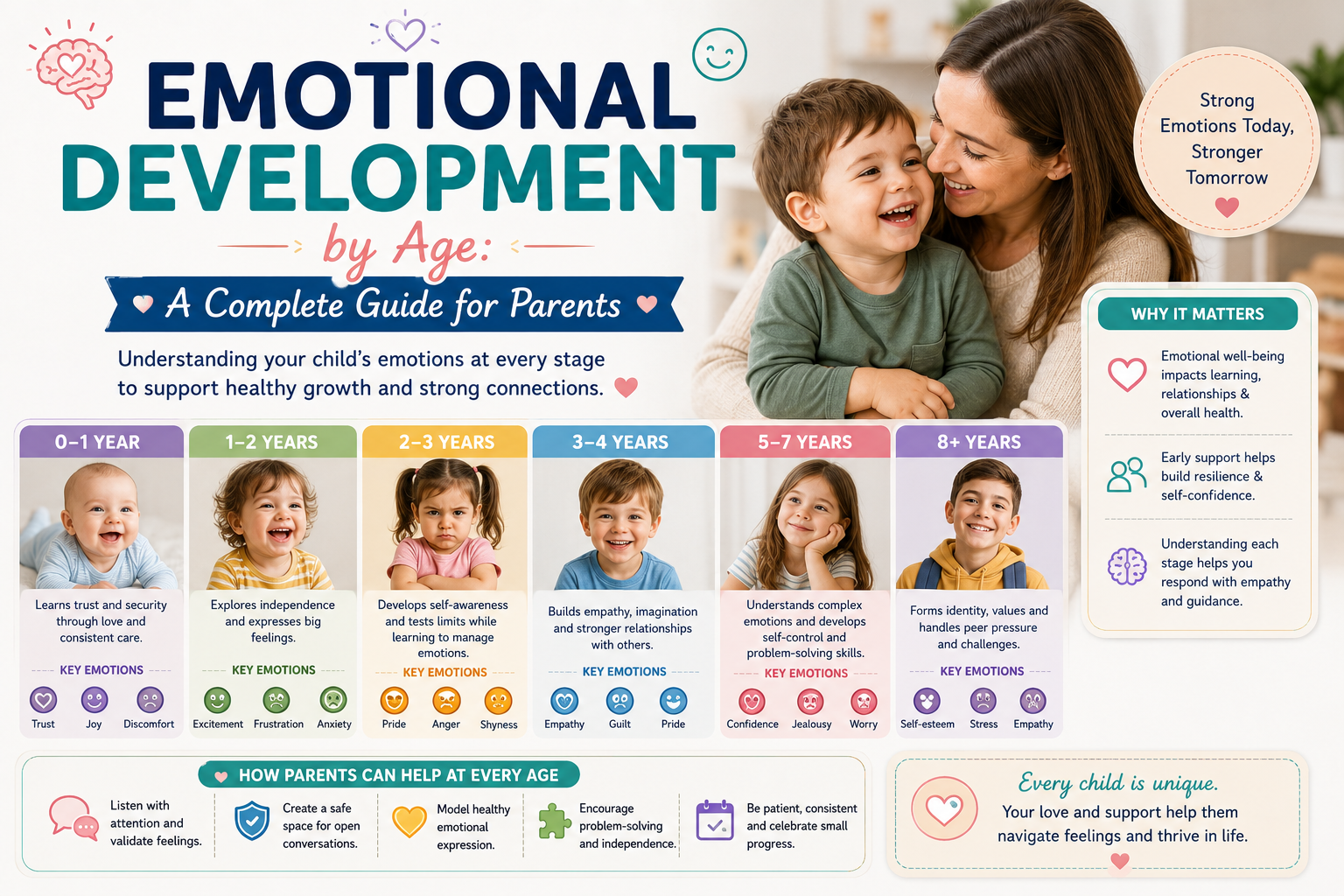

Every child experiences emotional growth from the day they are born. Learning to express feelings, build relationships, develop empathy, and regulate emotions are essential life skills that begin in infancy and continue throughout childhood and adolescence.
Understanding emotional development by age helps parents recognize what’s typical, support healthy growth, and identify when a child may need additional help. While every child develops at their own pace, emotional milestones provide useful guidance for nurturing confidence, resilience, and positive mental well-being.
Whether you’re caring for a newborn, toddler, preschooler, or teenager, this guide explains age-appropriate emotional milestones, common behaviors, and practical ways to support your child’s emotional health.
If you’re looking for more parenting resources, you may also enjoy:
3-Year-Old Daily Routine
4-Year-Old Learning Activities
Baby Sleep Schedule
Quick Answer
Emotional development by age refers to how children learn to recognize, express, understand, and manage emotions as they grow. From smiling at caregivers during infancy to developing empathy, self-control, friendships, and emotional resilience during adolescence, each stage brings important milestones that shape lifelong mental health and relationships.
What Is Emotional Development?
Emotional development is the process through which children learn to:
- Recognize their emotions
- Express feelings appropriately
- Understand other people’s emotions
- Build healthy relationships
- Develop empathy
- Manage frustration and disappointment
- Build confidence and resilience
These skills don’t develop overnight—they grow gradually through everyday interactions with parents, caregivers, teachers, and peers.
Emotional Development vs. Social Development
Many parents confuse emotional and social development, but they’re closely connected while serving different purposes.
| Emotional Development | Social Development |
|---|---|
| Understanding emotions | Building relationships |
| Managing feelings | Communicating with others |
| Self-awareness | Cooperation |
| Self-regulation | Sharing and teamwork |
| Empathy | Making friends |
Both areas work together to help children become emotionally healthy and socially confident adults.
Why Emotional Development Is Important
Strong emotional development benefits children throughout life.
It helps them:
- Build healthy relationships
- Communicate effectively
- Handle disappointment
- Solve problems calmly
- Develop self-confidence
- Learn at school
- Reduce stress and anxiety
- Improve decision-making
- Build resilience during challenges
Research consistently shows that children with strong emotional skills are better equipped to succeed academically and socially.
Emotional Development Milestones by Age
Emotional Development: Birth to 6 Months
During the first six months, babies form their earliest emotional connections with caregivers.
Common Milestones
- Smiles socially
- Enjoys eye contact
- Recognizes familiar voices
- Calms when comforted
- Responds to facial expressions
- Begins expressing happiness and discomfort
How Parents Can Help
- Hold and cuddle frequently
- Respond quickly to crying
- Talk softly
- Smile often
- Maintain eye contact
- Create predictable routines
Secure attachment begins during this stage.
Emotional Development: 6–12 Months
Babies become more aware of people around them.
Milestones
- Shows excitement
- Laughs frequently
- Develops stranger anxiety
- Experiences separation anxiety
- Shows preferences for caregivers
- Expresses different emotions through sounds and facial expressions
Parent Tips
- Play peekaboo
- Read picture books
- Encourage exploration while staying nearby
- Comfort during separation
Emotional Development at 1 Year
One-year-olds begin expressing their feelings more clearly.
Milestones
- Shows affection
- Enjoys praise
- Seeks comfort when upset
- Waves goodbye
- Begins understanding simple emotions
Activities
- Name emotions
Example:
“You look happy.”
“I see you’re frustrated.”
Helping children identify emotions builds emotional awareness.
Emotional Development at 2 Years
Two-year-olds experience strong emotions but have limited self-control.
Typical Behaviors
- Tantrums
- Strong independence
- Says “No!”
- Shows affection
- Begins sharing (with support)
- Expresses jealousy
Parent Tips
Stay calm during emotional outbursts.
Offer simple choices like:
- Blue shirt or red shirt?
- Apple or banana?
Choices reduce power struggles.
Emotional Development at 3 Years
Three-year-olds begin understanding other people’s feelings.
Milestones
- Shows empathy
- Comforts upset friends
- Follows routines
- Expresses emotions using words
- Plays cooperatively
- Enjoys pretend play
Our guide on 3-Year-Old Daily Routine includes routines that support emotional security and independence.
Emotional Development at 4 Years
Preschoolers become more socially aware.
Milestones
- Understands basic rules
- Waits for short turns
- Identifies emotions
- Expresses excitement verbally
- Begins solving simple conflicts
- Develops friendships
Activities such as storytelling, role play, and cooperative games help strengthen these skills. Explore our 4-Year-Old Learning Activities guide for practical ideas.
Emotional Development at 5 Years
Children become increasingly independent.
Milestones
- Better emotional control
- Understands fairness
- Shows kindness
- Accepts simple responsibilities
- Expresses pride in achievements
- Handles short separations comfortably
Parents should continue encouraging emotional conversations at home.
Emotional Development: 6–8 Years
School-age children experience rapid emotional growth.
Milestones
- Builds close friendships
- Understands empathy
- Manages frustration more effectively
- Accepts constructive feedback
- Understands rules and consequences
- Shows responsibility
Helpful Activities
- Team sports
- Reading together
- Board games
- Family discussions
- Journaling
- Problem-solving games
Emotional Development: 9–12 Years
Preteens become increasingly aware of themselves and others.
Milestones
- Develops stronger friendships
- Understands complex emotions
- Seeks independence
- Handles responsibilities
- Develops self-esteem
- Experiences peer influence
Parents should encourage open conversations without judgment.
Emotional Development: 13–18 Years
Adolescence is a time of major emotional and psychological growth.
Milestones
- Forms personal identity
- Experiences stronger emotions
- Develops romantic interests
- Learns emotional resilience
- Makes independent decisions
- Understands long-term consequences
- Builds deeper empathy
Teenagers still need parental support, even as they seek greater independence.
Emotional Development Milestone Chart
| Age | Emotional Milestone | Parent Support |
|---|---|---|
| 0–6 Months | Smiles, bonding | Respond warmly and consistently |
| 6–12 Months | Stranger anxiety | Offer comfort and reassurance |
| 1 Year | Shows affection | Label emotions with simple words |
| 2 Years | Tantrums begin | Stay calm and provide choices |
| 3 Years | Develops empathy | Encourage pretend play |
| 4 Years | Makes friends | Practice sharing and cooperation |
| 5 Years | Better self-control | Praise effort and kindness |
| 6–8 Years | Builds confidence | Encourage teamwork |
| 9–12 Years | Develops independence | Listen without judgment |
| 13–18 Years | Identity formation | Maintain open communication |
Factors That Influence Emotional Development
Many factors contribute to a child’s emotional growth, including:
- Loving relationships
- Parenting style
- Family environment
- Nutrition
- Sleep quality
- Physical activity
- School experiences
- Friendships
- Screen time
- Stressful life events
Healthy routines also support emotional well-being. If you’re working on better sleep habits, read our Baby Sleep Schedule guide.
[…] Baby Sleep Schedule 3-Year-Old Daily Routine First Day of Preschool Tips Emotional Development by Age […]
[…] Emotional Development by Age: Milestones & Parent Guide […]