
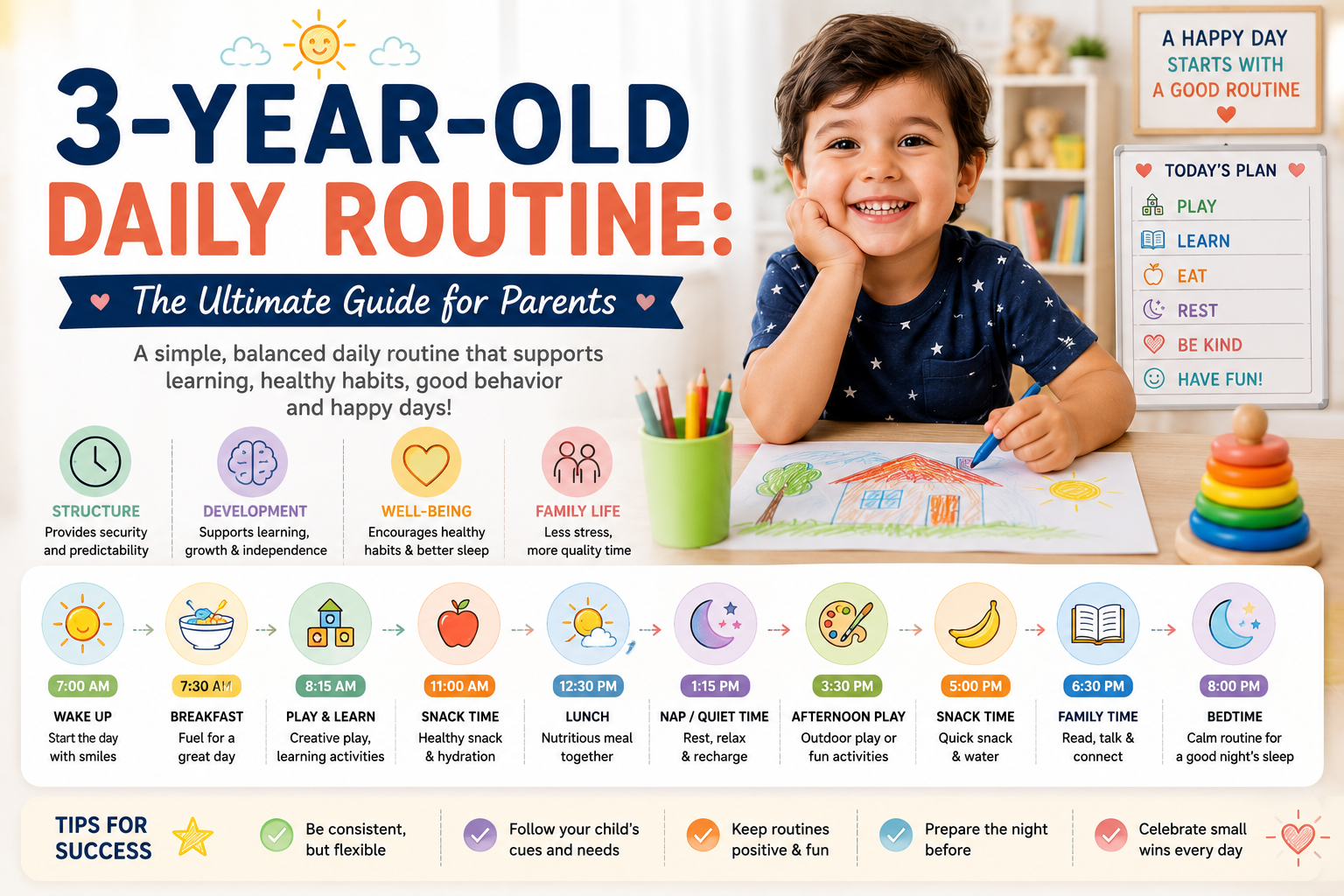

By the age of three, toddlers are becoming more independent, curious, and energetic. They love exploring the world, asking endless questions, and learning new skills every day. Establishing a 3-year-old daily routine provides the structure they need while allowing plenty of opportunities for play, creativity, and rest.
A predictable routine helps children feel secure, encourages healthy habits, and can make daily life less stressful for both parents and caregivers. Whether your child stays at home, attends preschool, or spends time with grandparents, a consistent schedule supports their physical, emotional, and cognitive development.
If you’re raising a toddler, you may also find these MomSaathi guides helpful:
Baby Food Chart (0–24 Months)
Baby Sleep Schedule
Contact Naps
Why Is a Daily Routine Important for a 3-Year-Old?
Children thrive on consistency. Knowing what comes next helps reduce anxiety and supports emotional regulation.
A structured routine can:
- Build healthy eating habits
- Improve sleep quality
- Encourage independence
- Support language development
- Reduce tantrums caused by unpredictability
- Create time for learning and family bonding
The American Academy of Pediatrics (AAP) encourages consistent daily routines, including regular mealtimes and bedtime, to support healthy child development.
Sample 3-Year-Old Daily Routine
| Time | Activity |
|---|---|
| 7:00 AM | Wake up and morning cuddles |
| 7:30 AM | Brush teeth, wash face, get dressed |
| 8:00 AM | Healthy breakfast |
| 8:30 AM | Free play |
| 9:30 AM | Outdoor play or walk |
| 10:30 AM | Learning activities |
| 11:30 AM | Snack |
| 12:30 PM | Lunch |
| 1:30 PM | Nap or quiet time |
| 3:00 PM | Wake up and snack |
| 3:30 PM | Creative play |
| 5:30 PM | Family time |
| 6:30 PM | Dinner |
| 7:15 PM | Bath and bedtime routine |
| 8:00 PM | Sleep |
Remember, every child is unique. Adjust the schedule based on your child’s needs and family lifestyle.
Morning Routine
7:00 AM – Wake Up
Start the day with a positive and calm atmosphere.
Encourage your child to:
- Wake naturally if possible
- Use the bathroom
- Drink a small glass of water
- Open the curtains for natural light
Morning sunlight helps regulate the body’s internal clock.
7:30 AM – Personal Hygiene
Teach simple self-care skills.
Your toddler can practice:
- Brushing teeth with supervision
- Washing hands and face
- Getting dressed
- Combing their hair
These routines help build confidence and independence.
8:00 AM – Healthy Breakfast
Breakfast provides energy for an active morning.
Healthy breakfast ideas include:
- Oatmeal with fruit
- Whole-grain toast with peanut butter (if age-appropriate and no allergy)
- Scrambled eggs
- Yogurt with berries
- Vegetable upma
- Idli with sambar
- Banana pancakes
Offer water or milk alongside breakfast.
Morning Play
8:30 AM – Independent Play
Independent play encourages creativity and problem-solving.
Activities include:
- Building blocks
- Toy vehicles
- Pretend kitchen
- Dolls
- Animal figures
- Simple puzzles
Even 20–30 minutes of independent play helps develop focus.
9:30 AM – Outdoor Time
Experts recommend active play every day.
Ideas include:
- Playground visits
- Walking
- Ball games
- Riding a tricycle
- Running
- Nature walks
- Bubble play
Outdoor activity supports physical development and helps children sleep better at night.
Learning Activities
10:30 AM – Educational Play
Three-year-olds learn best through play.
Try activities like:
Reading Books
Spend 15–20 minutes reading together.
Alphabet Games
Introduce letters through songs and flashcards.
Counting Practice
Count toys, fruits, or steps.
Coloring
Encourages creativity and fine motor skills.
Music
Sing songs and dance together.
Simple Crafts
Use paper, crayons, stickers, and child-safe glue.
Morning Snack
Around 11:30 AM, offer a nutritious snack.
Healthy options include:
- Apple slices
- Yogurt
- Cheese cubes
- Boiled eggs
- Seasonal fruits
- Homemade muffins
- Roasted chickpeas (age-appropriate and supervised)
Avoid excessive sugary snacks.
Lunch
12:30 PM
A balanced lunch should include:
- Whole grains
- Protein
- Vegetables
- Healthy fats
- Water
Example meals:
- Rice, dal, and vegetables
- Chapati with paneer
- Chicken with rice
- Vegetable khichdi
- Pasta with vegetables
- Lentil soup and bread
For age-appropriate meal ideas, see our Baby Food Chart (0–24 Months) and adapt portions for older toddlers.
Nap or Quiet Time
1:30 PM
Some 3-year-olds still benefit from a 1–2 hour afternoon nap, while others gradually transition to quiet time with books, puzzles, or soft music.
If your child no longer naps, maintaining a quiet rest period can help prevent overtiredness later in the day.
The American Academy of Sleep Medicine recommends that children aged 3–5 years get 10–13 hours of sleep per 24 hours, including naps.
Encouraging Independence
Daily routines are an excellent opportunity to teach life skills.
Encourage your 3-year-old to:
- Put toys away
- Wash hands before meals
- Help set the table
- Choose between two outfits
- Place dirty clothes in the laundry basket
- Carry their own water bottle
Praise effort rather than perfection to build confidence.
Screen Time Tips
If your family uses screens, set clear limits.
Consider:
- Choosing high-quality educational content
- Watching together when possible
- Avoiding screens during meals
- Turning off devices at least one hour before bedtime
The AAP recommends creating a family media plan that prioritizes sleep, physical activity, and interactive play.’
For more parenting support, explore:
Baby Won’t Sleep
Bath Thermometer for Newborn
Baby Haircut
A well-planned 3-year-old daily routine doesn’t need to be rigid. Instead, it should provide a predictable structure while leaving room for flexibility, fun, and your child’s individual needs. Consistency helps toddlers know what to expect, making transitions easier and supporting healthy emotional development.
If you’re building healthy habits for your toddler, you may also like these MomSaathi guides:
Baby Food Chart (0–24 Months)
Baby Sleep Schedule
Baby Won’t Sleep
Afternoon Routine
3:00 PM – Wake Up & Healthy Snack
After a nap or quiet time, offer a light, nutritious snack to replenish energy.
Healthy snack ideas include:
- Fresh fruit
- Whole-grain crackers with cheese
- Yogurt
- Homemade smoothies
- Boiled corn
- Peanut butter on toast (if appropriate and no allergy)
- Vegetable sticks with hummus
Encourage your child to drink water throughout the afternoon to stay hydrated.
3:30 PM – Creative Play
Creative activities help develop imagination, fine motor skills, and problem-solving abilities.
Ideas include:
- Coloring books
- Painting
- Building blocks
- Clay or playdough
- Sticker books
- Pretend play
- Dress-up games
- Puppet shows
Try to let your child lead the activity rather than directing every step.
4:30 PM – Outdoor Activity
Aim for at least 60 minutes of active play each day.
Outdoor activities may include:
- Playing in the park
- Riding a balance bike
- Ball games
- Running races
- Gardening
- Nature scavenger hunts
- Playing with bubbles
Regular physical activity supports healthy growth, motor development, and better sleep.
Family Time
5:30 PM
Toddlers enjoy participating in simple family routines.
You can:
- Read together
- Listen to music
- Dance
- Help prepare dinner
- Water plants
- Feed pets
- Talk about the day’s activities
These moments strengthen family bonds and improve communication skills.
Dinner Time
6:30 PM
Serve a balanced dinner that includes:
- Lean protein
- Vegetables
- Whole grains
- Healthy fats
Example meals:
- Chapati with dal and vegetables
- Rice with chicken and broccoli
- Vegetable pasta
- Paneer with roti
- Lentil soup with bread
- Fish with mashed potatoes
Avoid sugary drinks during dinner and encourage drinking water.
Bedtime Routine
A predictable bedtime routine helps toddlers relax and prepare for sleep.
7:15 PM – Bath Time
A warm bath can help your child unwind.
If you’re bathing your child, our guide on <a href=”https://momsaathi.com/bath-thermometer-for-newborn/”>Bath Thermometer for Newborn</a> includes useful water temperature safety tips that can also be adapted for young children.
Pajamas & Brushing Teeth
Encourage your child to:
- Brush their teeth with assistance
- Put on pajamas
- Choose a bedtime story
Making these tasks part of the nightly routine helps build lifelong healthy habits.
Reading Together
Reading for 15–20 minutes before bed helps:
- Improve language skills
- Build vocabulary
- Encourage imagination
- Create a calming bedtime ritual
Choose age-appropriate books with simple stories and colorful illustrations.
Lights Out
Aim for bedtime around 7:30–8:00 PM.
Most children aged 3–5 years need 10–13 hours of sleep per 24 hours, including naps, according to the American Academy of Sleep Medicine.
A cool, dark, and quiet bedroom can help promote better sleep quality.
Weekend Routine Ideas
Weekends don’t need to follow the weekday schedule exactly, but keeping meal and bedtime routines fairly consistent can help.
Fun weekend activities include:
- Zoo visits
- Library story time
- Family picnics
- Nature walks
- Baking together
- Visiting grandparents
- Indoor obstacle courses
- Gardening
Preschool vs. Stay-at-Home Routine
Preschool Schedule
- Earlier wake-up
- School activities
- Afternoon nap or quiet time
- Homework or reading
- Family dinner
- Bedtime
Stay-at-Home Schedule
- Flexible learning activities
- Longer outdoor play
- Creative projects
- Household participation
- Story time
- Consistent bedtime
Both routines can support healthy development when they include play, learning, nutritious meals, and adequate sleep.
Daily Routine Checklist
A simple checklist can help your toddler build independence.
✔ Wake up
✔ Brush teeth
✔ Eat breakfast
✔ Outdoor play
✔ Learning activity
✔ Healthy snack
✔ Lunch
✔ Nap or quiet time
✔ Creative play
✔ Dinner
✔ Bath
✔ Story time
✔ Bedtime
Common Mistakes Parents Should Avoid
- Skipping meals or snacks
- Inconsistent bedtimes
- Too much screen time
- Overscheduling activities
- Expecting perfection every day
- Not allowing enough free play
- Comparing your child to others
Remember that every child develops at their own pace.
Expert Tips for Parents
- Keep routines simple and realistic.
- Offer choices, such as selecting between two outfits or snacks.
- Use visual routine charts with pictures.
- Praise positive behavior and effort.
- Allow flexibility for special occasions and travel.
- Model healthy habits by following routines together as a family.
Frequently Asked Questions
What is a good daily routine for a 3-year-old?
A balanced routine includes regular wake-up and bedtime, nutritious meals, active play, learning activities, quiet time, and family interaction.
How much sleep does a 3-year-old need?
Most children aged 3–5 years need 10–13 hours of sleep in a 24-hour period, including naps if they still nap.
Should a 3-year-old still nap?
Some children continue taking a daily nap, while others transition to quiet time. Both can be appropriate depending on the child’s sleep needs.
How much screen time is appropriate?
Focus on high-quality content and balance screen use with physical activity, reading, and interactive play. Avoid screens before bedtime.
How much outdoor play does a 3-year-old need?
Daily outdoor play and active movement support physical, emotional, and social development.
What time should a 3-year-old go to bed?
Many toddlers do well with a bedtime between 7:30 PM and 8:00 PM, though individual needs vary.
How can I make routines easier?
Use picture charts, consistent timing, positive reinforcement, and simple instructions.
What should my 3-year-old eat?
Offer balanced meals that include fruits, vegetables, whole grains, protein, and healthy fats. Limit sugary snacks and drinks.
Should I schedule learning activities?
Yes. Short, play-based learning sessions are ideal at this age.
What if my child refuses to follow the routine?
Stay calm and consistent. Offer limited choices, use encouragement, and remember that occasional resistance is normal during toddlerhood.
Final Thoughts
A consistent 3-year-old daily routine provides children with the stability they need to thrive. By balancing nutritious meals, active play, learning opportunities, quiet time, and a calming bedtime routine, you can support your toddler’s physical health, emotional well-being, and growing independence.
Remember that no schedule is perfect. The goal isn’t strict timing but creating a predictable rhythm that works for your family. Adjust routines as your child grows, celebrate small milestones, and focus on spending meaningful time together.
For more parenting guidance, explore these MomSaathi articles:
Baby Food Chart (0–24 Months)
Baby Sleep Schedule
Contact Naps
Baby Haircut
Baby Hair Growth Oil
Authoritative Resources
For additional guidance on toddler routines and development, refer to these trusted organizations:
- American Academy of Pediatrics (HealthyChildren.org): https://www.healthychildren.org/
- Centers for Disease Control and Prevention – Developmental Milestones: https://www.cdc.gov/ncbddd/actearly/milestones/
- American Academy of Sleep Medicine – Sleep Recommendations: https://aasm.org/
- NHS – Child Health: https://www.nhs.uk/conditions/baby/
These evidence-based resources provide practical advice on toddler sleep, nutrition, development, and establishing healthy daily routines.
[…] Sleep Schedule 3-Year-Old Daily Routine First Day of Preschool […]
[…] Hairstyles 3-Year-Old Daily Routine First Day of Preschool […]
[…] 3-Year-Old Daily Routine: Complete Toddler Schedule […]