

Home » Baby Care » Baby Hair Loss: Causes, Symptoms, Treatment & Prevention
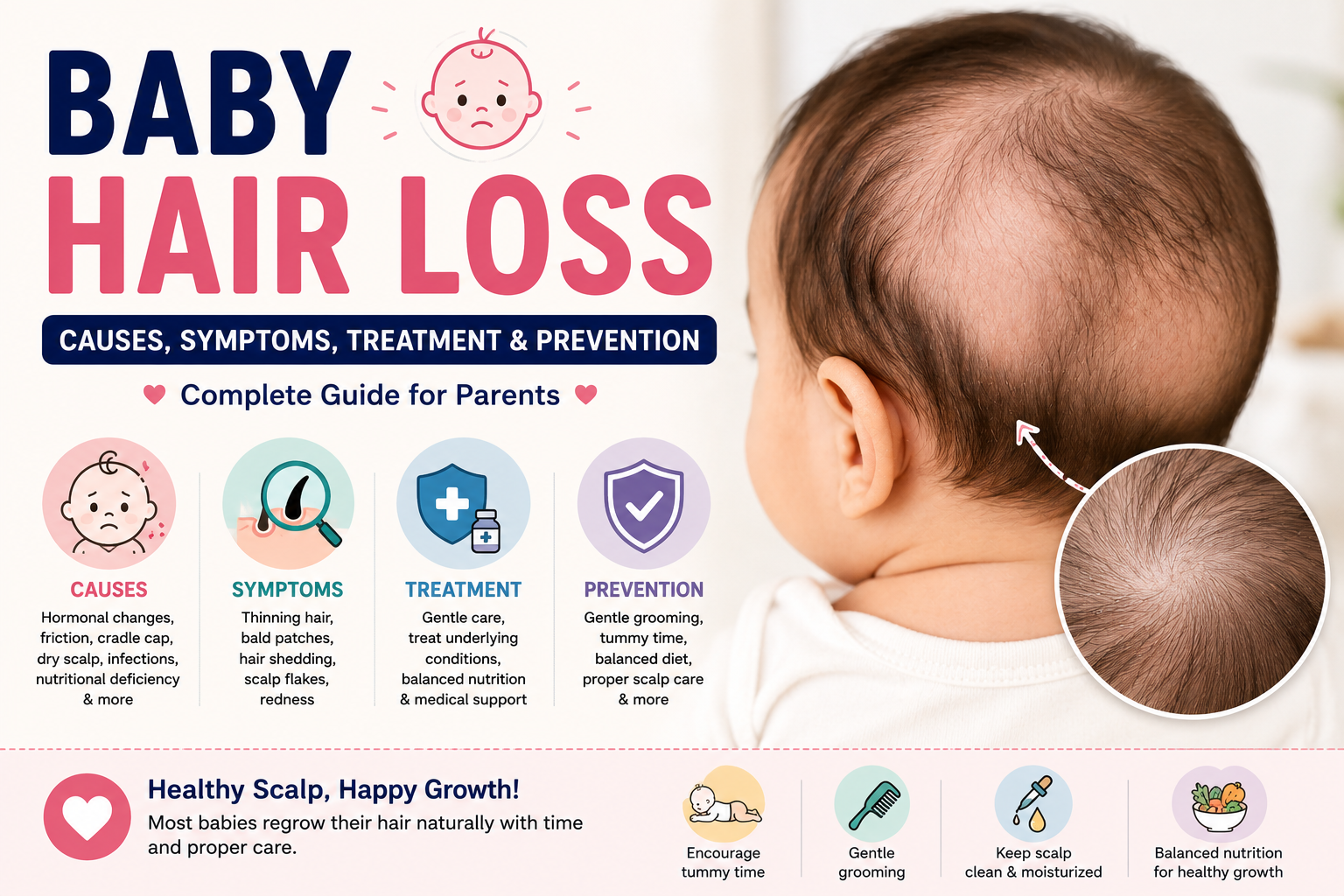
Baby hair loss showing thinning hair and bald patches on an infant's scalp with illustrations highlighting common causes, symptoms, treatment, prevention tips, and healthy hair regrowth.

Baby Hair Loss: Causes, Symptoms, Treatment & Prevention

Medical Note: This article is intended for educational purposes only and should not replace professional medical advice. If your baby’s hair loss is accompanied by fever, swelling, pus, bleeding, or rapid scalp changes, consult your pediatrician promptly.

Watching your baby’s hair fall out can be worrying for new parents. However, baby hair loss is extremely common during the first year of life and, in most cases, is completely normal. Many newborns lose some or even most of the hair they were born with before new, permanent hair begins to grow.

Hair loss in babies may occur because of hormonal changes after birth, friction from lying in the same position, or certain medical conditions affecting the scalp. While temporary hair shedding is usually harmless, sudden patchy hair loss, redness, scaling, or signs of infection may require medical evaluation.

This comprehensive guide explains the causes, symptoms, diagnosis, treatment, prevention, and when parents should seek medical care.

What Is Baby Hair Loss?

Baby hair loss, medically known as infant hair shedding, refers to the temporary loss of hair from a baby’s scalp. It commonly occurs during the first 3 to 6 months after birth as newborn hair is replaced by stronger permanent hair.

This natural process is part of normal development and usually does not affect future hair growth.

According to the American Academy of Pediatrics, newborn hair shedding is common and is generally not a cause for concern.

Is Hair Loss Normal in Babies?

Yes.

Many babies lose between 30% and 100% of their newborn hair during the first few months of life. New hair typically begins growing shortly afterward, although the color and texture may be different from the hair present at birth.

Most babies have fuller hair by their first birthday.

What Causes Baby Hair Loss?

Several factors can contribute to hair loss during infancy.

1. Hormonal Changes After Birth

One of the most common causes is the sudden drop in maternal hormones after delivery.

During pregnancy, maternal hormones keep hair in the growing phase. After birth, these hormone levels decrease, causing newborn hair to shed naturally before new hair begins to grow.

2. Friction (Pressure Hair Loss)

Babies spend a significant amount of time lying on their backs to reduce the risk of Sudden Infant Death Syndrome (SIDS). Continuous rubbing of the back of the head against a mattress, stroller, or car seat may lead to temporary hair loss, especially around the back of the scalp.

Providing supervised tummy time while your baby is awake can help reduce constant pressure on one area of the scalp.

3. Cradle Cap

Thick yellow or greasy scales caused by cradle cap may sometimes contribute to temporary hair shedding.

Parents should avoid forcefully removing these scales, as doing so may pull out healthy hair along with them. If your baby has greasy flakes on the scalp, our detailed guide on Baby Cradle Cap explains safe treatment methods and how to distinguish it from dry scalp.

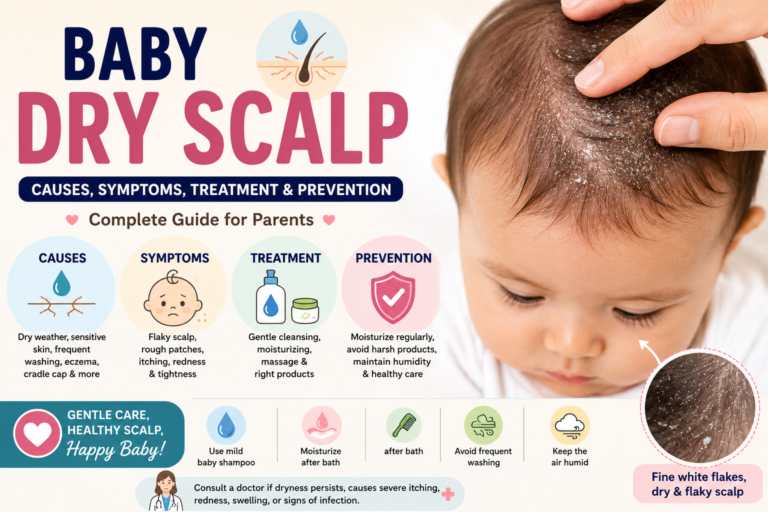
4. Baby Dry Scalp

A dry, flaky scalp can occasionally lead to minor hair breakage or temporary shedding.

If your baby’s scalp feels rough or develops fine white flakes, read our article on Baby Dry Scalp to learn how proper moisturizing and gentle scalp care can improve overall scalp health.

5. Baby Eczema

Babies with eczema may scratch their scalp frequently because of itching, resulting in hair breakage or temporary hair loss.

If your baby also has itchy red patches on the face, neck, or body, our Baby Eczema guide explains the symptoms, triggers, and treatment options.

6. Ringworm (Tinea Capitis)

A fungal infection of the scalp called ringworm can cause:

  • Round bald patches
  • Broken hairs
  • Scaling
  • Itching

Unlike normal newborn hair shedding, ringworm requires medical treatment. Our article on Baby Ringworm explains how to recognize fungal scalp infections in infants.

7. Nutritional Deficiencies

Although uncommon in healthy infants, deficiencies of nutrients such as:

  • Iron
  • Zinc
  • Biotin
  • Vitamin D

may contribute to poor hair growth or increased hair shedding.

Breastfed babies should continue regular pediatric check-ups to ensure they receive adequate nutrition.

8. Tight Hairstyles

Although rare in infants, tightly tied ponytails or hairstyles can lead to traction alopecia, a form of hair loss caused by constant pulling on the hair.

9. Medical Conditions

Less commonly, hair loss may occur because of:

  • Thyroid disorders
  • Alopecia areata
  • Autoimmune conditions
  • Serious illnesses

These conditions require evaluation by a pediatrician or pediatric dermatologist.

Symptoms of Baby Hair Loss

Hair loss may appear in different ways depending on the cause.

Common symptoms include:

  • Hair shedding
  • Thinning hair
  • Bald patches
  • Hair on the pillow
  • Hair in the bath
  • Receding hairline
  • Uneven hair growth
  • Scalp flakes
  • Mild redness (in some conditions)

Most babies do not experience pain or discomfort with normal hair shedding.

Baby Hair Loss vs Normal Hair Shedding

Normal Baby Hair Shedding Abnormal Hair Loss
Occurs during the first few months Can happen at any age
Hair grows back naturally Hair may not regrow without treatment
No scalp inflammation Redness, scaling, or infection may be present
Even thinning Patchy bald spots
No other symptoms Itching, crusting, or swelling may occur

Who Is More Likely to Experience Baby Hair Loss?

Hair loss is more common in babies who:

  • Are younger than six months
  • Spend long periods lying on their backs
  • Have cradle cap
  • Have eczema
  • Have fungal scalp infections
  • Have nutritional deficiencies
  • Have a family history of autoimmune diseases

How Is Baby Hair Loss Diagnosed?

Doctors usually diagnose baby hair loss through:

  • Physical examination
  • Scalp inspection
  • Medical history
  • Hair growth pattern assessment

If abnormal hair loss is suspected, additional investigations may include:

  • Fungal testing
  • Blood tests
  • Nutritional assessment
  • Thyroid function tests
  • Referral to a pediatric dermatologist

According to the American Academy of Dermatology (AAD), most cases of infant hair loss can be diagnosed based on the appearance of the scalp and hair without extensive testing.

Is Baby Hair Loss Permanent?

In most cases, No.

Normal newborn hair shedding is temporary, and healthy hair usually regrows within several months.

Hair loss caused by infections or nutritional deficiencies also improves once the underlying condition is treated.

However, autoimmune disorders such as alopecia areata may require specialist care.

Can Baby Hair Grow Back?

Yes.

Most babies develop a new cycle of healthy hair growth during the first year of life. The new hair may differ in:

  • Color
  • Texture
  • Thickness
  • Curl pattern

Some babies who are born with thick black hair later develop lighter or curlier hair as they grow.
Treatment for Baby Hair Loss

Treatment for baby hair loss depends on the underlying cause. In most infants, hair shedding is a normal part of development and does not require medication. As your baby’s hair growth cycle matures, new hair gradually replaces the hair that has fallen out.

See also  Dental Care for Kids India: Complete 2026 Guide for Parents

According to the American Academy of Dermatology (AAD), most cases of newborn hair loss improve naturally without treatment.

1. Be Patient with Natural Hair Regrowth

If your baby’s hair loss is caused by hormonal changes after birth, there is usually nothing you need to do except wait.

Most babies begin growing new hair within 6–12 months, although the new hair may differ in color, texture, or thickness.

2. Practice Gentle Hair Care

Wash your baby’s scalp using a mild, fragrance-free baby shampoo two or three times a week.

Avoid:

  • Harsh shampoos
  • Strong fragrances
  • Adult hair products
  • Vigorous scrubbing

Gentle cleansing keeps the scalp healthy without removing its natural protective oils.

3. Treat Cradle Cap Properly

If cradle cap is causing temporary hair shedding, soften the scales with a baby-safe moisturizer or oil before gently brushing them away with a soft baby brush.

Never pick or forcibly remove the scales, as this can damage the scalp and pull out healthy hair. If your baby has greasy yellow scales along with hair loss, our guide on Baby Cradle Cap explains safe treatment methods and when medical advice is needed.

4. Moisturize a Dry Scalp

A dry scalp can contribute to hair breakage and irritation. Keeping the scalp moisturized helps maintain a healthy environment for hair growth.

If your baby has fine white flakes or rough patches, our article on Baby Dry Scalp provides practical tips for restoring moisture and protecting the scalp.

5. Manage Underlying Skin Conditions

Hair loss may improve once the underlying skin condition is treated.

For example:

  • Babies with Baby Eczema often experience scalp itching that leads to hair breakage.
  • Baby Contact Dermatitis caused by shampoos or skincare products can irritate the scalp.
  • Baby Skin Allergy may trigger inflammation and scratching.

Treating these conditions early helps reduce ongoing scalp irritation and supports healthy hair regrowth.

6. Treat Scalp Infections Promptly

Hair loss caused by fungal infections such as Baby Ringworm requires prescription antifungal medication.

Similarly, bacterial infections such as Baby Impetigo should be treated promptly to prevent further damage to the scalp and surrounding skin.

7. Ensure Proper Nutrition

For babies who have started solid foods, a balanced diet supports healthy hair growth.

Include age-appropriate foods rich in:

  • Iron
  • Zinc
  • Protein
  • Vitamin D
  • Vitamin A
  • Biotin

If your pediatrician suspects a nutritional deficiency, they may recommend dietary changes or supplements.

Home Care Tips

Simple daily habits can help protect your baby’s scalp and encourage healthy hair growth.

Give Supervised Tummy Time

Since friction against the mattress commonly causes hair loss on the back of the head, supervised tummy time while your baby is awake helps reduce continuous pressure on the scalp and supports healthy development.

Change Your Baby’s Head Position

Alternate your baby’s head direction during sleep (while always following safe sleep guidelines) to reduce repeated rubbing on one area of the scalp.

Use a Soft Baby Brush

Brush your baby’s hair gently using a soft-bristled baby brush to avoid unnecessary pulling.

Keep the Scalp Clean

Wash away sweat, oils, and dirt regularly without over-washing.

Avoid Tight Hats

Tight caps or hats worn for long periods can increase friction and trap sweat, which may irritate the scalp.

Avoid Pulling the Hair

Never tie your baby’s hair tightly or use accessories that pull on the hair, as this may lead to traction alopecia.

What Parents Should Avoid

Avoid:

  • Pulling loose hair
  • Picking cradle cap scales
  • Using adult hair oils or shampoos
  • Applying home remedies without medical advice
  • Frequent shampooing
  • Tight hairstyles
  • Scratching the scalp

These practices can worsen irritation and slow healthy hair regrowth.

Can Baby Hair Loss Be Prevented?

Not all hair loss can be prevented because normal newborn hair shedding is part of natural development.

However, parents can reduce unnecessary hair loss by:

  • Following gentle hair care routines
  • Treating cradle cap early
  • Managing eczema promptly
  • Moisturizing a dry scalp
  • Providing supervised tummy time
  • Using soft bedding
  • Avoiding harsh hair products
  • Ensuring good nutrition as the baby grows

The American Academy of Pediatrics (HealthyChildren.org) also recommends regular well-baby check-ups to monitor overall growth and nutritional health, both of which contribute to healthy hair development.

Possible Complications

Normal baby hair loss rarely causes complications.

However, untreated underlying conditions may lead to:

  • Persistent bald patches
  • Scalp infections
  • Hair breakage
  • Permanent scarring (rare)
  • Delayed hair regrowth
  • Increased scalp irritation

If your baby’s scalp becomes red, swollen, painful, or develops crusting, consult a healthcare provider promptly.

Baby Hair Loss vs Alopecia Areata

Baby Hair Loss Alopecia Areata
Usually affects newborns Can occur at any age
Hair grows back naturally Hair loss may continue without treatment
Even thinning or friction-related loss Smooth, round bald patches
No inflammation in most cases Autoimmune condition
Usually temporary May require specialist care

When Should You See a Doctor?

Consult your pediatrician if:

  • Hair loss continues beyond 12 months
  • Large bald patches develop
  • The scalp becomes red or swollen
  • There is pus or crusting
  • Your baby develops fever
  • Hair loss occurs suddenly
  • Hair is falling out in clumps
  • Ring-shaped patches appear
  • Hair loss is accompanied by poor weight gain or other health concerns

The NHS advises parents to seek medical evaluation if hair loss is associated with scalp inflammation, infection, or fails to improve over time.

Conclusion

Baby hair loss is a common and usually temporary condition that affects many newborns during their first year of life. In most cases, it results from normal hormonal changes or friction against the mattress and resolves naturally as new hair grows.

However, hair loss may also be linked to conditions such as Baby Cradle Cap, Baby Dry Scalp, Baby Eczema, Baby Ringworm, or Baby Impetigo. Recognizing these conditions early and treating them appropriately helps protect your baby’s scalp and supports healthy hair regrowth.

If your baby’s hair loss is persistent, patchy, or accompanied by redness, swelling, or signs of infection, consult your pediatrician for a proper diagnosis and treatment plan.

Frequently Asked Questions (FAQs)

Is baby hair loss normal?

Yes. Hair shedding during the first few months of life is a normal part of the hair growth cycle.

When do babies start losing their hair?

Most babies begin losing newborn hair between 2 and 6 months of age.

Will my baby’s hair grow back?

Yes. In most cases, new hair grows back naturally within the first year.

Why is my baby losing hair at the back of the head?

This is often caused by friction from lying on the back while sleeping, which is recommended for safe sleep.

Can cradle cap cause hair loss?

Yes. Hair may come out with thick scales, but it usually grows back after the scalp heals.

Can dry scalp cause hair loss?

Dry scalp can contribute to minor hair breakage and temporary shedding if the skin becomes irritated.

Does eczema affect hair growth?

Eczema itself does not permanently damage hair follicles, but scratching can lead to temporary hair loss.

Is baby hair loss contagious?

No. Normal baby hair loss cannot spread from one person to another.

Can shampoo cause baby hair loss?

Harsh shampoos may irritate the scalp, but gentle baby shampoos are unlikely to cause hair loss.

Should I shave my baby’s head to improve hair growth?

No. Shaving does not make hair grow thicker or faster. Hair thickness is determined by genetics.

Can vitamin deficiency cause baby hair loss?

Yes, although it is uncommon in healthy infants. Your pediatrician can evaluate if a nutritional deficiency is suspected.

Can ringworm cause bald patches?

Yes. Ringworm of the scalp often causes round bald patches with scaling and requires antifungal treatment.

What foods support healthy hair growth?

For babies eating solids, iron-rich foods, protein, zinc, and vitamin-rich fruits and vegetables support healthy hair development.

When should I worry about baby hair loss?

Seek medical advice if hair loss is patchy, persistent, associated with redness, swelling, crusting, fever, or poor growth.

Can my baby’s new hair look different?

Yes. It is common for the new hair to have a different color, texture, or curl pattern than the hair your baby was born with.

More Reading

Post navigation

Subscribe
Notify of
guest

0 Comments
Oldest
Newest Most Voted
0
Would love your thoughts, please comment.x
()
x