

Edited by: MomSaathi Editorial Team
Reviewed by: Based on medical guidelines and week-by-week pregnancy symptom research
Introduction
Finding out you’re pregnant is a whirlwind of emotions. Whether it’s something you’ve planned for years or a beautiful surprise, your body is about to begin one of the most incredible transformations of your life.
At MomSaathi, we understand that every pregnancy journey is unique. While one mom may feel energetic and glowing, another might be navigating fatigue and nausea daily. This guide walks you through pregnancy symptoms week by week, along with practical nutrition and movement tips to help you feel supported at every stage.
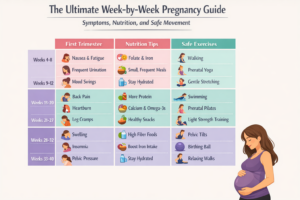
First Trimester: The Foundation (Weeks 1–12)
The first trimester is often called the invisible phase. You may not look pregnant yet, but internally, your body is working overtime.
Week 1–4: The Quiet Beginning
Most women don’t realize they’re pregnant until around week 4.
Common Symptoms:
- Mild cramping (implantation)
- Breast tenderness
- Metallic taste in the mouth
What to Focus On:
Start prenatal care early. Include a supplement with at least 400 mcg of folic acid, which is essential for your baby’s early development.
Week 5–8: The Hormone Surge
This is when pregnancy starts to feel real—and sometimes overwhelming.
Common Symptoms:
- Nausea (“morning sickness” that can happen anytime)
- Extreme fatigue
- Frequent urination
Nutrition Tip:
If full meals feel difficult, try small, frequent snacks like crackers, fruits, or ginger tea to ease nausea.
Week 9–12: The Peak of Exhaustion
Your baby is now developing rapidly, and your body is working hard to support the placenta.
Common Symptoms:
- Mood swings
- Heightened sense of smell
- “Pregnancy brain” (forgetfulness)
Safe Movement:
Focus on gentle breathing and pelvic floor exercises to support your changing body.
Second Trimester: The Honeymoon Phase (Weeks 13–27)
For many moms, this is the most enjoyable phase of pregnancy.
Week 13–16: The Glow Phase
You may finally start feeling better and noticing visible changes.
Common Symptoms:
- Increased energy
- Visible baby bump
- Round ligament pain
Nutrition Tip:
Increase calcium and vitamin D intake to support your baby’s growing bones.
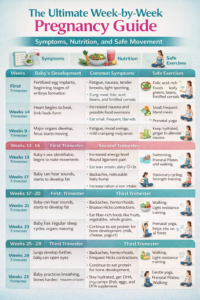
Week 17–20: The First Flutters
One of the most magical moments—feeling your baby move for the first time.
Common Symptoms:
- Baby movements (quickening)
- Increased appetite
- Nasal congestion
Safe Movement:
Try prenatal yoga and gentle stretching. Avoid lying flat on your back for long periods.
Week 21–27: Rapid Growth
Your baby grows quickly, and your body continues to adapt.
Common Symptoms:
- Backaches
- Leg cramps
- Stretch marks
Nutrition Tip:
Focus on iron-rich foods like spinach, lentils, and lean meats. Pair with vitamin C for better absorption.
Third Trimester: The Home Stretch (Weeks 28–40+)
You’re almost there! This phase is about preparation and comfort.
Week 28–32: Space Gets Tight
Your baby is growing rapidly, and space becomes limited.
Common Symptoms:
- Shortness of breath
- Heartburn
Nutrition Tip:
Eat smaller, frequent meals and avoid lying down right after eating.
Week 33–36: Preparing for Birth
Your body starts getting ready for labor.
Common Symptoms:
- Braxton Hicks contractions
- Swelling (edema)
- Difficulty sleeping
Safe Movement:
Swimming is an excellent low-impact exercise that relieves pressure on joints.
Week 37–40+: The Final Wait
Your baby is ready to arrive anytime now.
Common Symptoms:
- Pelvic pressure
- Loss of mucus plug
- Nesting instinct
Focus:
Rest as much as possible. Gentle walking and light movement can help prepare your body for labor.
Nutrition During Pregnancy: Quality Over Quantity
The idea of “eating for two” is a myth. You only need about 300–450 extra calories during later pregnancy stages.
Essential Nutrients:
- DHA/Omega-3: Brain development (fish, walnuts, chia seeds)
- Protein: Cell growth (eggs, lentils, tofu)
- Fiber: Prevents constipation (fruits, oats, legumes)
Movement as Medicine: Safe Exercises
Staying active during pregnancy offers many benefits:
- Reduces back pain
- Improves mood
- Helps in smoother labor
Best Exercises:
- Walking
- Prenatal yoga
- Light strength training
- Swimming
👉 Follow the “Talk Test” Rule:
You should be able to talk comfortably while exercising.
Warning Signs You Should Not Ignore
Contact your doctor immediately if you experience:
- Vaginal bleeding or fluid leakage
- Severe headaches
- Sudden swelling in hands or face
- Reduced baby movement (after week 28)
A Note for Every Mom-to-Be
Pregnancy is a journey filled with highs and lows. Some days you’ll feel strong and radiant, while others may feel exhausting—and both are completely normal.
At MomSaathi, we believe a healthy pregnancy isn’t about perfection—it’s about connection. Listen to your body, care for yourself, and embrace every moment of this beautiful transformation.
Trusted Resources for Pregnancy Guidance
- Mayo Clinic:
Pregnancy Week by Week Guide
- ACOG (American College of Obstetricians and Gynecologists):
How Your Fetus Grows During Pregnancy
- Johns Hopkins Medicine:
Nutrition During Pregnancy
- CDC (Centers for Disease Control):
Folic Acid and Pregnancy
- CDC Physical Activity Guidelines:
Physical Activity for Pregnant Women
- Harvard Health:
Exercising During Pregnancy
- Postpartum Support International (PSI):
Pregnancy & Postpartum Mental Health Support

[…] can also explore our pregnancy symptoms week-by-week guide to learn about other changes you may experience during […]