
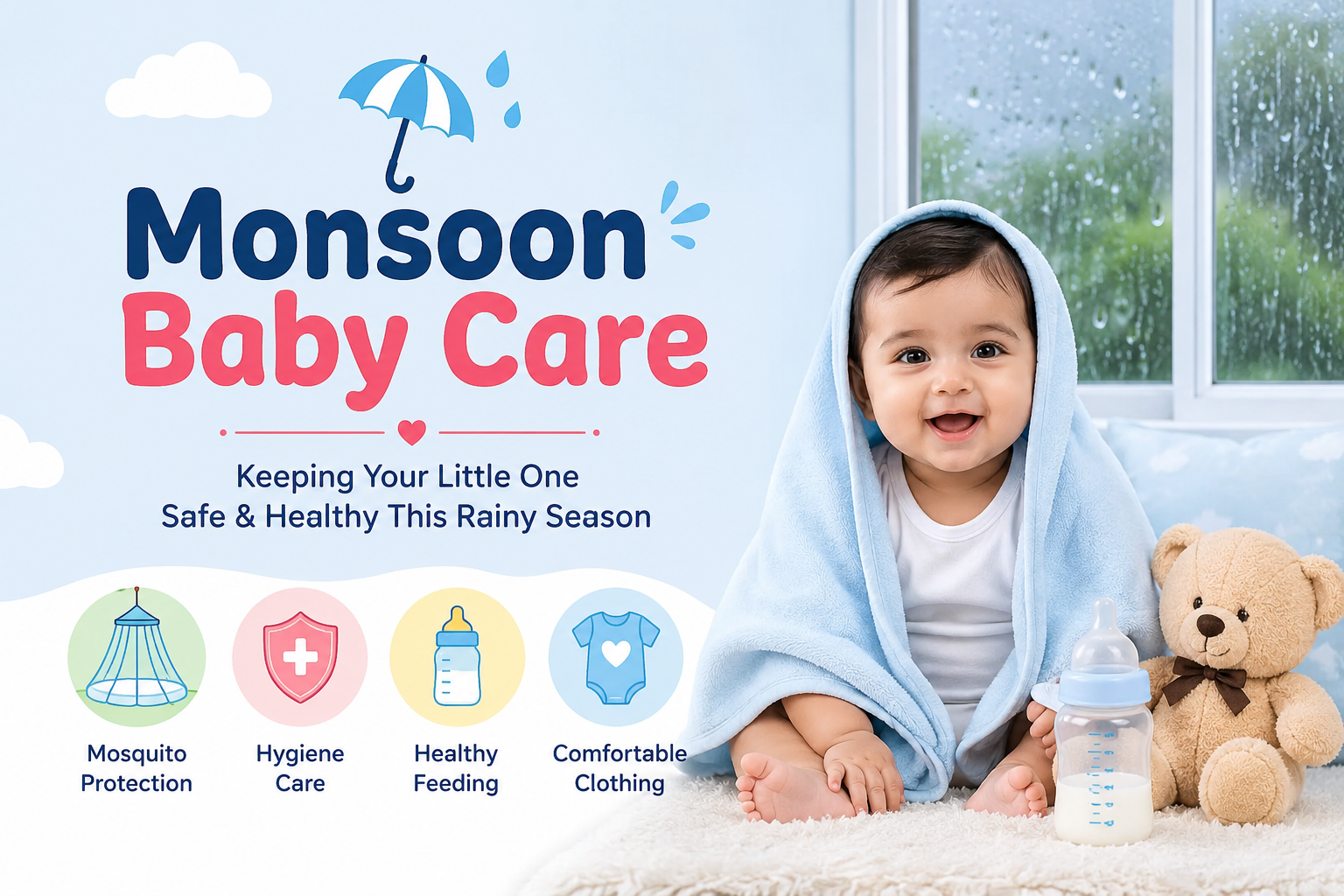

The monsoon season provides a welcome break from the heat but also creates conditions that can affect your baby’s health. The increased humidity, moist environment, mosquitoes and seasonal infections can make babies more prone to rashes, colds and stomach problems.
A few simple precautions can go a long way in helping your little one stay comfortable and protected during the rainy season.
Why Monsoon Care Is Important for Babies
During the rainy season, babies face a higher risk of:
- Diaper rashes
- Heat rashes
- Fungal infections
- Mosquito-borne diseases
- Colds and viral infections
- Stomach infections
- Dehydration
Following proper hygiene, feeding and mosquito protection measures can help keep your child healthy.
1. Safeguarding Your Baby’s Skin During Monsoon
A baby’s skin is soft and responds quickly in humid weather.
Diaper Rash Prevention
Monsoon humidity can increase the chances of diaper rashes.
- Change diapers every 2–3 hours even if they are not fully loaded.
- Allow your baby’s skin to air dry for a few minutes during each diaper change.
- Use a zinc oxide-based diaper rash cream as a protective barrier.
Heat Rashes
- Dress your baby in light, breathable cotton clothes.
- Avoid synthetic fabrics that trap heat and moisture.
- After a bath or sweating, gently pat the skin dry instead of rubbing.
- Mild heat rash can sometimes be eased with calamine lotion if necessary.
Fungal Infection Prevention
Pay close attention to skin folds around:
- Neck
- Armpits
- Groin area
Ensure these areas are completely dry after bathing to prevent fungal growth.
2. Mosquito and Insect Protection for Babies
Mosquito-borne illnesses are more prevalent during the rainy season, making prevention especially important.
Follow These Safety Measures
- Use a mosquito net for your baby’s sleeping area during both day and night.
- For babies over two months, use baby-safe mosquito patches or roll-ons on clothing (not directly on the skin).
- Avoid mosquito coils and chemical sprays in the baby’s room.
- Dress your baby in full-sleeve cotton clothes and socks during evenings.
- Eliminate standing water in buckets, planters, coolers and containers around your home.
3. Bathing and Hygiene Tips During Monsoon
Good hygiene helps lower the risk of infections.
Bathing Guidelines
- Usually, one warm bath daily is sufficient.
- Rinse your baby thoroughly after each bath, especially the scalp and skin folds.
Clothing Hygiene
- Dry clothes in direct sunlight whenever possible.
- If clothes are dried indoors, iron them before use to remove moisture and reduce fungal growth.
Hand Hygiene
All family members and caregivers should wash their hands regularly since stomach infections spread easily during monsoon.
4. Feeding Your Baby During the Monsoon
Proper feeding practices help prevent infections.
Breastfeeding Babies
Continue breastfeeding on demand.
Breast milk contains antibodies that help protect babies from seasonal illnesses.
Bottle Feeding
- Prepare formula fresh each time.
- Do not store prepared formula in a humid environment for more than one hour.
Solids for Babies and Toddlers (6+ Months)
- Keep hot foods hot.
- Avoid cut fruits that have been left out for long periods.
- Drinking water should be boiled even if filtered.
Sanitary Feeding Equipment
Mold and bacteria thrive in damp environments.
Sterilize:
- Feeding bottles
- Teethers
- Frequently used toys
every day.
5. Signs Your Baby May Be Sick
Contact your pediatrician if your baby has:
- Temperature above 100.4°F
- Fever lasting 24 hours
- Repeated vomiting
- Loose motions
- Difficulty breathing
- Fever accompanied by a skin rash
Common Monsoon Illnesses
- Viral infections
- Common cold
- Stomach infections
- Mosquito-borne diseases
The biggest concern is often dehydration, so keep your baby well hydrated.
6. Creating a Healthy Home Environment During Monsoon
A clean and dry home environment can minimize health risks.
Home Care Tips
- Ensure proper room ventilation.
- Use a fan or air conditioner on dry mode to reduce humidity.
- Maintain room temperature between 24°C and 26°C.
- Change bedsheets regularly.
- Keep outdoor footwear away from your baby’s play area.
Essential Monsoon Baby Care Kit
Keep these items readily available:
- Mosquito nets
- Zinc oxide diaper rash ointment
- Soft cotton clothes
- Digital thermometer
- ORS packets
- Nasal saline solution drops
Monsoon Baby Care by Age Group
Newborns (0–3 Months)
Newborn babies are vulnerable to infections and temperature changes.
- Dress them in layers of soft cotton clothing.
- Avoid synthetic fabrics.
- On very humid days, a sponge bath may be sufficient.
- Always use a mosquito net while sleeping.
- Continue exclusive breastfeeding.
- Do not give water.
See a Doctor If
- Your baby develops a fever.
- Refuses feeding.
- Has fewer than six wet nappies a day.
Babies (6–12 Months)
As babies begin crawling and exploring, extra care is needed.
- Keep floors clean and dry.
- Sterilize toys and teething rings regularly.
- Provide boiled drinking water.
- Serve freshly cooked meals.
- Change diapers promptly.
- Give diaper-free time daily.
- Use baby-safe mosquito repellent on clothing.
Toddlers (1–3 Years)
Toddlers are active and curious, making monsoon safety even more important.
- Dress them in quick-dry cotton clothes.
- Carry a change of clothes while going out.
- Use anti-slip footwear.
- Avoid unhygienic snacks and cut fruits.
- Keep ORS at home.
- Encourage indoor activities such as:
- Dancing
- Storytelling
- Creative play
Daily Monsoon Care Routine for a One-Year-Old
Morning Routine
- Dress your child in loose cotton clothes.
- Apply baby-safe mosquito protection to clothing.
- Offer boiled and cooled drinking water regularly.
Feeding and Diaper Care
- Serve freshly cooked hot food.
- Avoid leftovers.
- Do not leave food out for extended periods.
- Change diapers frequently.
- Change immediately after bowel movements.
- Use diaper rash cream if needed.
Sleep and Play
- Encourage active indoor play.
- Avoid puddles and muddy play areas.
- Ensure naps are taken in a dry, well-ventilated room with mosquito protection.
Nighttime Routine
- Give a warm bath before sunset.
- Ensure all skin folds are dry.
- Clean toys and teethers regularly.
- Dress your baby in comfortable full-sleeve nightwear.
Final Words
The secret to keeping babies healthy during the monsoon is simple: keep them dry, maintain good hygiene, serve fresh food and protect them from mosquitoes. Extra care during the rainy season can go a long way in keeping your child happy, healthy and comfortable.
Frequently Asked Questions (FAQs)
How often should I bathe my baby during monsoon?
Usually, one warm bath daily is sufficient. On very humid days, newborns may only need a sponge bath.
Can babies use mosquito repellents?
For babies over two months, baby-safe mosquito patches or roll-ons can be applied to clothing, not directly on the skin.
Should babies drink boiled water during monsoon?
Yes. Drinking water should be boiled before use, even if it has been filtered.
What foods should be avoided during monsoon?
Avoid cut fruits left out for long periods, leftovers, and unhygienic snacks.
References
- World Health Organization (WHO) – Child Health: https://www.who.int/health-topics/child-health
- UNICEF Parenting Resources: https://www.unicef.org/parenting
- Centers for Disease Control and Prevention (CDC) – Infant & Toddler Health: https://www.cdc.gov/infant-toddler-health/index.html
- HealthyChildren.org (American Academy of Pediatrics): https://www.healthychildren.org
- Indian Academy of Pediatrics (IAP): https://iapindia.org