
Good oral hygiene habits start early in life, and one of the most important tools in a child’s dental care routine is toothpaste. From the moment the first tooth appears, parents often wonder which toothpaste is safe, how much should be used, and whether children’s toothpaste is really different from adult toothpaste.
Walking through the dental care aisle can be overwhelming. There are dozens of options featuring cartoon characters, fruity flavors, fluoride and fluoride-free formulas, natural ingredients, and various age recommendations. As a parent, choosing the right toothpaste can feel confusing.
The good news is that understanding a few key factors can make the decision much easier. The right toothpaste can help prevent cavities, strengthen tooth enamel, encourage healthy brushing habits, and make oral care more enjoyable for children.
Good oral hygiene is an important part of overall child wellness. Parents can also explore our Complete Baby Care Guide for more child health tips.
In this comprehensive guide, we’ll explore everything parents need to know about kids toothpaste, including how it differs from adult toothpaste, when to start using it, the role of fluoride, important ingredients, safety tips, and how to choose the best option for your child.
Why Oral Health Matters for Children
Healthy baby teeth play a bigger role than many parents realize.
Primary teeth help children:
- Chew food properly
- Develop clear speech
- Maintain space for permanent teeth
- Build confidence through a healthy smile
- Support proper jaw development
Poor oral hygiene can lead to tooth decay, pain, difficulty eating, and future dental problems.
Establishing good brushing habits early helps children maintain healthy teeth and gums throughout life.
Proper nutrition and oral hygiene play a key role in achieving healthy child development milestones.
What Is Kids Toothpaste?
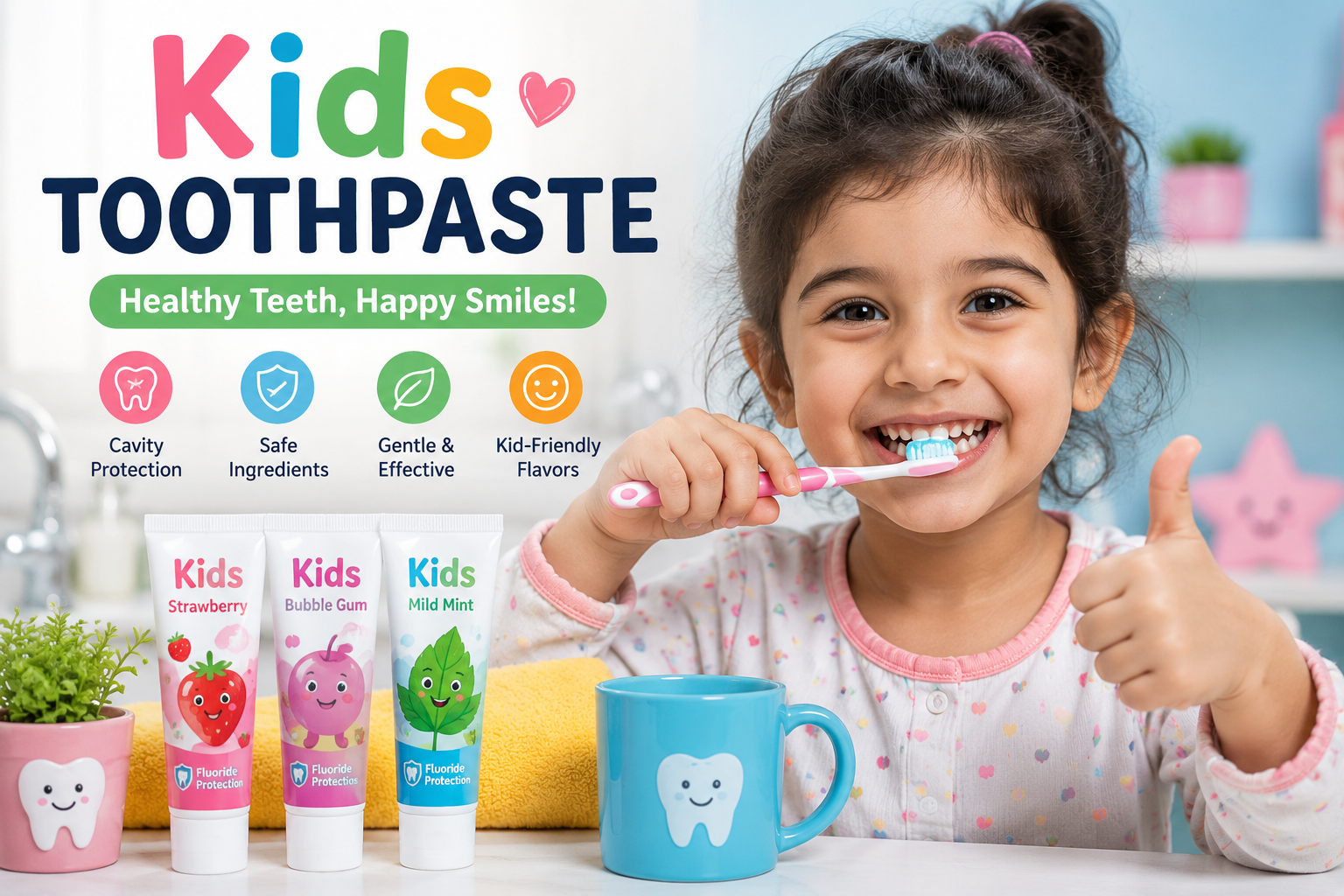
Kids toothpaste is specially formulated for children and their developing teeth.
Unlike adult toothpaste, children’s toothpaste often contains:
- Milder flavors
- Lower abrasiveness
- Child-friendly packaging
- Age-appropriate fluoride levels
- Fun colors and designs
These features encourage children to brush regularly while helping protect their sensitive teeth and gums.
The goal is to make brushing effective, safe, and enjoyable.
Is Kids Toothpaste Different from Adult Toothpaste?
Yes, there are several important differences.
Flavor
Many adult toothpastes have strong mint flavors that young children may find unpleasant.
Kids toothpaste usually comes in flavors such as:
- Strawberry
- Bubblegum
- Watermelon
- Mixed fruit
- Mild mint
Pleasant flavors encourage children to brush willingly.
Abrasiveness
Children’s teeth have thinner enamel than adult teeth.
Kids toothpaste is generally less abrasive, helping clean teeth gently while protecting enamel.
Packaging
Bright colors and favorite cartoon characters often make brushing more appealing.
Fluoride Content
Depending on the child’s age, toothpaste may contain different fluoride concentrations.
Parents should always check age recommendations on the label.
When Should Children Start Using Toothpaste?
Dental experts recommend beginning oral care even before teeth appear.
Before Teeth Erupt
Parents can gently wipe the baby’s gums with a clean, damp cloth.
When the First Tooth Appears
Once the first tooth emerges, brushing should begin using a soft-bristled infant toothbrush and a tiny amount of toothpaste.
Age 0–3 Years
Use a smear or rice-sized amount of toothpaste.
Age 3–6 Years
A pea-sized amount is generally recommended.
Parents should supervise brushing to ensure proper use.
Should Kids Use Fluoride Toothpaste?
This is one of the most common questions parents ask.
Fluoride is a naturally occurring mineral that helps strengthen tooth enamel and reduce the risk of cavities.
Research has consistently shown that fluoride toothpaste helps prevent tooth decay in children.
Benefits of fluoride include:
- Strengthening enamel
- Reducing cavity risk
- Supporting remineralization
- Protecting developing teeth
When used in age-appropriate amounts, fluoride toothpaste is generally considered safe and effective.
Fluoride vs Fluoride-Free Toothpaste
Many parents are unsure which option is better.
Fluoride Toothpaste
Advantages:
- Better cavity protection
- Stronger enamel support
- Recommended by many dental professionals
Fluoride-Free Toothpaste
Advantages:
- Suitable for some families’ preferences
- Often contains natural ingredients
However, fluoride-free toothpaste may not provide the same level of cavity protection.
Parents should discuss concerns with their pediatric dentist before making a decision.
Ingredients to Look for in Kids Toothpaste
Choosing toothpaste becomes easier when you understand the label.
Fluoride
Supports cavity prevention.
Xylitol
May help reduce cavity-causing bacteria.
Calcium-Based Ingredients
Can support enamel health.
Gentle Cleaning Agents
Help clean teeth without damaging enamel.
Child-Friendly Flavors
Encourage consistent brushing habits.
Ingredients Parents May Want to Limit
Some parents prefer to avoid certain ingredients.
These may include:
- Excessive artificial sweeteners
- Harsh abrasives
- Strong detergents
- Artificial colors
Reading ingredient labels helps parents make informed decisions.
How Much Toothpaste Should Children Use?
Using the correct amount is important.
Under 3 Years
Rice-grain-sized amount.
Age 3–6 Years
Pea-sized amount.
Older Children
Continue using a pea-sized amount unless advised otherwise by a dentist.
More toothpaste does not mean better cleaning.
Common Mistakes Parents Make with Kids Toothpaste
Using Too Much Toothpaste
Excessive toothpaste can increase swallowing risk.
Letting Children Brush Unsupervised
Young children often need assistance.
Choosing Toothpaste Based Only on Flavor
Flavor matters, but safety and effectiveness are more important.
Skipping Bedtime Brushing
Nighttime brushing is essential because bacteria continue growing while children sleep.
Not Replacing Toothbrushes Regularly
Replace toothbrushes every three months or sooner if bristles become worn.
How to Make Brushing Fun for Kids
Many parents struggle to get children excited about brushing.
Try these simple strategies:
Let Them Choose Their Toothbrush
Children enjoy selecting their favorite color or character.
Use a Brushing Timer
Two-minute timers make brushing more engaging.
Play a Song
Many children enjoy brushing while listening to music.
Reward Consistency
Simple sticker charts can encourage healthy habits.
Brush Together
Children often learn by watching parents.
Signs Your Child May Need a Different Toothpaste
Consider speaking with a dentist if your child experiences:
- Tooth sensitivity
- Frequent cavities
- Gum irritation
- Dislike of current toothpaste
- Difficulty brushing consistently
A dental professional can recommend products suited to your child’s needs.
How Often Should Kids Brush Their Teeth?
Children should brush:
- Twice daily
- Morning and night
- For approximately two minutes each time
Flossing should begin when teeth start touching each other.
Regular dental visits are equally important for maintaining oral health.
Best Oral Care Habits Beyond Toothpaste
Toothpaste is only one part of good oral hygiene.
Parents should also encourage:
Healthy Eating
Limit sugary snacks and drinks.
Water Consumption
Water helps rinse away food particles.
Regular Dental Checkups
Early preventive care can identify issues before they become serious.
Consistent Brushing Routine
Routine builds lifelong habits.
A balanced diet supports strong teeth and gums. Learn more about healthy foods for growing children.
Frequently Asked Questions
Is kids toothpaste safe if swallowed?
Small amounts are generally safe, but children should be encouraged to spit out toothpaste once they are old enough.
Can my child use adult toothpaste?
Children may use certain adult toothpastes depending on age and fluoride content, but age-appropriate products are usually preferred.
When should kids start brushing their own teeth?
Most children need supervision and assistance until around age 7 or 8.
Is flavored toothpaste bad for kids?
Not necessarily. Child-friendly flavors often help encourage regular brushing habits.
How often should I replace my child’s toothpaste?
Replace toothpaste when it expires or if it has been opened for a long time and appears dried out.
Choosing the Right Kids Toothpaste
Every child is different.
The best kids toothpaste is one that:
- Supports oral health
- Is age appropriate
- Encourages regular brushing
- Contains suitable ingredients
- Is recommended by dental professionals
Parents should focus on developing healthy brushing habits rather than searching for a “perfect” toothpaste.
Consistency matters far more than brand names.
Parents looking to build healthy habits can also read our Complete Mom Health Guide.
References & Resources
| Topic | Resource |
|---|---|
| Children’s Oral Health | American Academy of Pediatrics (AAP) – Oral Health |
| Fluoride and Children’s Teeth | CDC – Fluoride and Oral Health |
| Brushing Children’s Teeth | NHS – Taking Care of Children’s Teeth |
Conclusion
Kids toothpaste plays an important role in protecting growing teeth and establishing lifelong oral hygiene habits. From preventing cavities to encouraging consistent brushing, the right toothpaste can make a significant difference in a child’s dental health journey.
Along with choosing the right toothpaste, providing nutritious foods such as those discussed in our baby nutrition guide can help support overall oral health.
When choosing toothpaste, consider your child’s age, dental needs, fluoride requirements, flavor preferences, and your dentist’s recommendations. Using the correct amount, supervising brushing, and maintaining a consistent oral care routine are equally important.
A healthy smile begins with small daily habits. By choosing the right kids toothpaste and encouraging proper brushing techniques, parents can help their children build strong, healthy teeth that last a lifetime.