Your child’s brain grows faster during the first few years of life than at almost any other stage. In fact, the first 1,000 days—from pregnancy to around age 2—are especially important for brain development. During this time, good nutrition helps build healthy brain cells, strengthen neural connections, and support learning, memory, attention, and emotional development.
While no single “superfood” can make a child smarter, a balanced diet rich in essential nutrients such as protein, healthy fats, iron, iodine, choline, zinc, vitamins, and omega-3 fatty acids plays a vital role in healthy cognitive development.
In this guide, you’ll learn about the best brain development foods, the nutrients children need, age-wise recommendations, meal ideas, and practical nutrition tips.
Before reading further, you may also find these MomSaathi guides helpful:
High Protein Foods for Kids
Indian Lunch Box Ideas
Baby Food Chart (0–24 Months)
Quick Answer
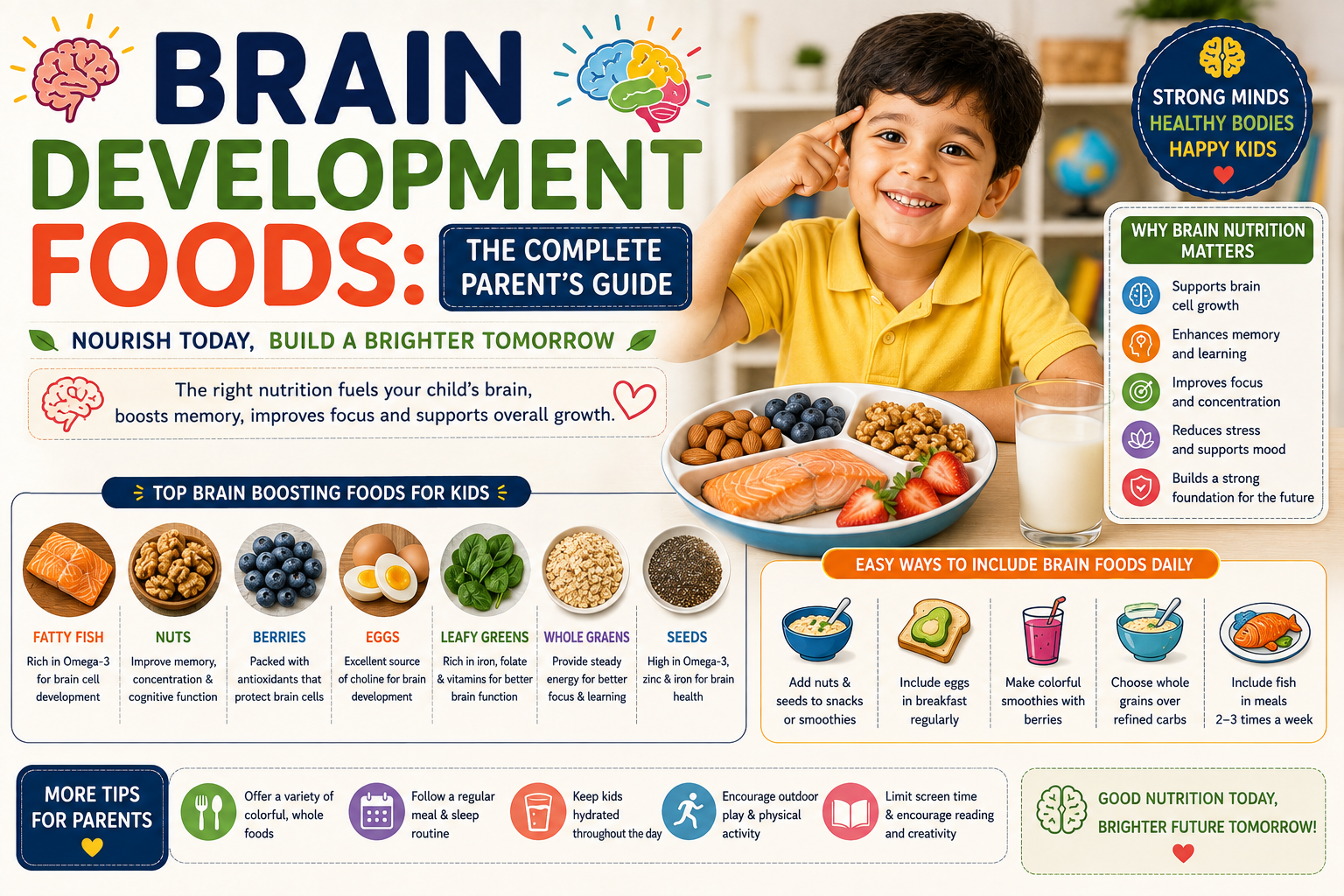
The best brain development foods include eggs, oily fish, milk, yogurt, paneer, leafy green vegetables, berries, beans, lentils, nuts, seeds, whole grains, fruits, and colorful vegetables. These foods provide nutrients such as omega-3 fatty acids, choline, iron, iodine, zinc, folate, protein, and vitamins that support healthy brain growth, memory, concentration, and learning.
Why Nutrition Is Important for Brain Development
A child’s brain develops rapidly from pregnancy through adolescence.
Proper nutrition helps:
- Build new brain cells
- Support memory and learning
- Improve concentration
- Enhance language development
- Strengthen problem-solving skills
- Support emotional regulation
- Improve attention span
- Promote healthy nervous system development
Good nutrition works best when combined with responsive caregiving, adequate sleep, physical activity, and a stimulating learning environment.
Essential Nutrients for Brain Development
1. Omega-3 Fatty Acids (DHA & EPA)
Omega-3 fats help build brain cells and support communication between neurons.
Food sources:
- Salmon
- Sardines
- Mackerel
- Flaxseeds
- Chia seeds
- Walnuts
2. Protein
Protein provides amino acids needed to build brain tissue and neurotransmitters.
Sources:
- Eggs
- Milk
- Paneer
- Yogurt
- Lentils
- Chicken
- Fish
- Tofu
3. Iron
Iron supports oxygen delivery to the brain and healthy cognitive development.
Iron-rich foods:
- Spinach
- Lentils
- Rajma
- Lean meat
- Eggs
- Fortified cereals
Iron deficiency during early childhood may affect learning and attention.
4. Choline
Choline plays a key role in memory formation and brain development.
Best sources:
- Eggs
- Dairy products
- Fish
- Chicken
- Soybeans
5. Zinc
Zinc supports learning, memory, and nervous system development.
Sources:
- Beans
- Lentils
- Nuts
- Seeds
- Dairy
- Meat
6. Iodine
Iodine is essential for thyroid hormones that regulate brain growth.
Sources include:
- Iodized salt
- Dairy
- Fish
- Eggs
7. Folate
Folate supports healthy brain and nervous system development.
Rich sources:
- Spinach
- Broccoli
- Lentils
- Beans
- Citrus fruits
Top Brain Development Foods for Kids
1. Eggs
Eggs are among the best foods for children’s brains because they provide:
- Choline
- Protein
- Vitamin B12
- Healthy fats
Serve as:
- Boiled eggs
- Omelets
- Egg sandwiches
- Egg muffins
2. Fatty Fish
Fish like salmon and sardines provide DHA, an omega-3 fat important for brain development.
Healthy options:
- Salmon
- Sardines
- Trout
- Low-mercury local fish
Always remove bones completely before serving.
3. Milk
Milk supplies:
- Protein
- Calcium
- Iodine
- Vitamin B12
Ideal for breakfast or smoothies.
4. Yogurt
Plain yogurt supports gut health while providing:
- Protein
- Calcium
- Iodine
- Probiotics
Top with fruits for a healthy snack.
5. Paneer
Paneer is an excellent vegetarian protein source.
Serve as:
- Paneer cubes
- Paneer bhurji
- Paneer wraps
- Paneer paratha
6. Leafy Green Vegetables
Leafy greens provide:
- Iron
- Folate
- Vitamin K
- Antioxidants
Good choices:
- Spinach
- Kale
- Fenugreek
- Amaranth
7. Beans & Lentils
Protein-rich legumes include:
- Rajma
- Chickpeas
- Black beans
- Moong dal
- Masoor dal
These foods also provide iron, zinc, and folate.
8. Whole Grains
Whole grains provide steady energy for the brain.
Choose:
- Oats
- Brown rice
- Whole wheat
- Millets
- Quinoa
9. Berries
Blueberries, strawberries, and other berries contain antioxidants that help protect brain cells from oxidative stress.
10. Nuts & Seeds
For older children (served safely and age-appropriately):
- Walnuts
- Almonds
- Pumpkin seeds
- Chia seeds
- Flaxseeds
Whole nuts should not be given to young children because of choking risk.
11. Colorful Fruits & Vegetables
Brightly colored produce provides vitamins and antioxidants that support overall brain health.
Examples:
- Carrots
- Sweet potatoes
- Tomatoes
- Bell peppers
- Oranges
- Mangoes
12. Avocados
Avocados provide healthy fats, fiber, and vitamins that contribute to overall brain health.
Serve mashed, sliced, or in sandwiches.
Brain-Boosting Breakfast Ideas
Start the day with nutrient-rich meals such as:
- Vegetable omelet with whole wheat toast
- Oatmeal with milk and fruit
- Yogurt with berries
- Paneer paratha
- Moong dal chilla
- Smoothie with yogurt, banana, and spinach
- Peanut butter toast (age-appropriate)
- Idli with sambar
A balanced breakfast helps provide steady energy for learning and concentration throughout the morning.Foods That Support Memory and Concentration
Children preparing for school benefit from meals that combine protein, whole grains, fruits, and vegetables.
Examples include:
- Eggs with whole grain toast
- Greek yogurt with berries
- Oats with nuts and seeds (age-appropriate)
- Hummus with vegetables
- Paneer wraps
- Bean salads
- Salmon with brown rice
These foods provide a mix of nutrients that support attention, memory, and overall cognitive function as part of a healthy dietary pattern.
A healthy brain develops through a combination of good nutrition, quality sleep, physical activity, play, and a stimulating environment. While no single food can increase intelligence, offering a variety of nutrient-rich foods consistently helps support memory, concentration, learning, and overall cognitive development.q
Brain Development Foods by Age
Babies (6–12 Months)
Once complementary feeding begins (around 6 months), introduce a variety of nutrient-dense foods while continuing breastfeeding or formula feeding.
Good choices include:
- Mashed eggs (if introduced safely)
- Lentil puree
- Mashed avocado
- Plain yogurt
- Sweet potato
- Oatmeal
- Mashed beans
- Iron-fortified cereals
Always introduce new foods one at a time and consult your pediatrician if your baby has allergies or special dietary needs.
Toddlers (1–3 Years)
Toddlers need regular meals and healthy snacks.
Brain-boosting foods include:
- Paneer
- Milk
- Yogurt
- Eggs
- Dal
- Whole wheat chapati
- Seasonal fruits
- Green vegetables
- Oats
- Nut butters (age-appropriate)
Preschoolers (3–5 Years)
Children become more active learners during these years.
Include:
- Paneer paratha
- Vegetable omelets
- Whole-grain sandwiches
- Fish (well-cooked and deboned)
- Brown rice
- Beans
- Yogurt with fruits
- Homemade smoothies
School-Age Children
School-going children need sustained energy for learning and concentration.
Daily meals should include:
- Protein-rich breakfast
- Whole grains
- Fresh fruits
- Vegetables
- Healthy fats
- Plenty of water
Indian Brain-Boosting Meal Ideas
Breakfast
- Moong dal chilla
- Vegetable omelet
- Oats with milk
- Paneer paratha
- Idli with sambar
Lunch
- Rajma rice
- Dal khichdi
- Paneer pulao
- Chicken curry with rice
- Vegetable chapati rolls
Healthy Snacks
- Yogurt with fruits
- Roasted chana
- Boiled eggs
- Fruit smoothies
- Paneer cubes
- Homemade trail mix (for older children)
Dinner
- Vegetable soup with paneer
- Fish with vegetables
- Dal with chapati
- Millet khichdi
- Mixed vegetable curry
Foods That May Negatively Affect Brain Health
No single food “damages” the brain, but diets high in ultra-processed foods and added sugars may reduce overall diet quality.
Limit:
- Sugary soft drinks
- Candy
- Packaged chips
- Deep-fried fast foods
- Highly processed snacks
- Excess sugary breakfast cereals
- Sugary desserts
These foods should be occasional treats rather than everyday staples.
Brain-Healthy Weekly Meal Plan
| Day |
Brain-Healthy Meal |
| Monday |
Paneer Paratha + Yogurt |
| Tuesday |
Rajma Rice + Salad |
| Wednesday |
Vegetable Omelet + Whole Wheat Toast |
| Thursday |
Dal Khichdi + Curd |
| Friday |
Fish Curry + Brown Rice |
| Saturday |
Moong Dal Chilla |
| Sunday |
Oats with Fruits & Nuts (age-appropriate) |
Tips for Picky Eaters
Helping picky eaters enjoy nutritious foods takes patience.
Try these strategies:
- Offer colorful meals.
- Serve small portions.
- Pair new foods with familiar favorites.
- Avoid forcing children to eat.
- Involve children in cooking.
- Keep healthy snacks readily available.
- Be a positive role model.
Repeated exposure often increases acceptance of new foods.
Brain Foods During Exams
Children need balanced meals before studying or taking exams.
Good options include:
- Eggs with toast
- Yogurt with fruit
- Oats with milk
- Peanut butter sandwich (age-appropriate)
- Paneer wraps
- Banana with yogurt
- Fresh fruits
- Plenty of water
Avoid skipping breakfast before school or exams.
Lifestyle Habits That Support Brain Development
Nutrition is only one part of healthy brain development.
Children also benefit from:
- 9–12 hours of sleep (depending on age)
- Daily physical activity
- Reading together
- Creative play
- Outdoor play
- Limited recreational screen time
- Strong family interactions
- Consistent routines
Healthy habits work together to support learning and emotional well-being.
Frequently Asked Questions
Which food is best for brain development?
A variety of foods—including eggs, fish, dairy products, lentils, beans, fruits, vegetables, nuts, seeds, and whole grains—supports healthy brain development.
Is milk good for brain development?
Milk provides protein, iodine, vitamin B12, and other nutrients that contribute to overall growth and development as part of a balanced diet.
Which fruit is best for memory?
Berries, oranges, apples, bananas, and avocados provide vitamins and antioxidants that support overall brain health.
Are eggs good for children’s brains?
Yes. Eggs are an excellent source of choline and protein, both of which play important roles in brain development.
Is fish necessary?
Fish provides omega-3 fatty acids such as DHA, but children who do not eat fish can obtain important nutrients from other foods. Speak with a healthcare provider if you have concerns about dietary adequacy.
Can vegetarian children get enough brain nutrients?
Yes. A well-planned vegetarian diet can provide many brain-supporting nutrients through foods such as dairy, eggs (if included), legumes, soy products, nuts, seeds, and whole grains.
What foods improve concentration?
Balanced meals containing protein, whole grains, fruits, vegetables, and healthy fats help support sustained energy and concentration.
Are supplements necessary?
Most healthy children do not need supplements if they eat a varied diet. Supplements should only be given on the advice of a healthcare professional.
Which Indian foods are good for brain development?
Dal, paneer, eggs, yogurt, fish, millet, leafy greens, whole grains, and seasonal fruits are excellent choices.
Can sugar affect concentration?
Large amounts of added sugar may contribute to energy fluctuations. Offering balanced meals and limiting sugary snacks is generally recommended.
Final Thoughts
Providing brain development foods every day is one of the simplest ways to support your child’s healthy growth, learning, and overall well-being. Instead of focusing on a single “brain food,” aim to offer a wide variety of nutrient-rich foods that provide protein, healthy fats, iron, iodine, zinc, vitamins, and fiber.
Combine healthy eating with adequate sleep, active play, reading, and a nurturing home environment to give your child the best foundation for lifelong learning and development.
For more parenting and nutrition advice, explore these MomSaathi resources:
High Protein Foods for Kids
Indian Lunch Box Ideas
Baby Food Chart (0–24 Months)
3-Year-Old Daily Routine
4-Year-Old Learning Activities
Emotional Development by Age
Trusted External Resources
For evidence-based information on child nutrition and brain development, visit:
These trusted organizations provide science-based guidance on nutrition, child development, healthy eating patterns, and cognitive development for children of all ages.


[…] Maternity Scrubs High Protein Foods for Kids Brain Development Foods […]
[…] Lunch Box Ideas Brain Development Foods High Protein Foods for […]
[…] Weight Gain Chart (India) Brain Development Foods Best Bedtime […]