

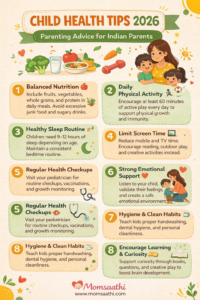
Child Health Tips 2026 are essential for Indian parents who want to build strong foundations for their child’s growth and development. Healthy nutrition, proper sleep, hygiene, and active routines play a crucial role in long-term well-being.
As we progress through February 2026, parents in Karnataka and across India are looking for realistic ways to support their children’s long-term health. With busy schedules, school pressures, urban pollution, and endless family advice, it’s easy to feel overwhelmed. The good news? You don’t need fancy diets, expensive supplements, or perfect routines.
The key to child health tips 2026 lies in building strong foundations through simple, everyday habits that fit real Indian family life — whether you’re a working mom in Bengaluru handling WFH and school drops, or managing a joint family in a smaller town.
Experts highlight four core areas: nutrition and routines, emotional well-being, smart screen management, and natural immunity building. These align with modern parenting goals 2026 India — focusing on consistency, empathy, and balance rather than perfection.
Let’s dive into practical, India-specific child health tips 2026 that busy parents can start today.
 Why Child Health Tips 2026 Matter for Indian Families
1. Nail Everyday Habits – Nutrition, Sleep, and Movement for Lifelong Health
Everyday habits form the strongest base for strong foundations child health. These basics support physical growth, brain development, and immunity without extra effort.
Nutrition: Embrace Desi Superfoods in Daily Meals Indian home cooking is already powerful. Prioritize balanced thalis with:
- Proteins: Dal, paneer, eggs, or chicken/fish (2–3 times/week).
- Whole grains: Ragi, jowar, bajra rotis, or brown rice — great for Karnataka winters.
- Veggies & fruits: Seasonal picks like palak, methi, carrots, bananas, guava, or papaya.
- Dairy: Curd, buttermilk, or warm milk with turmeric for gut health.
Age-specific ideas:
- Toddlers (1–3 years): Finger-friendly options like soft idli-sambar, mashed ragi porridge, or fruit purees. Let them self-feed to build independence.
- School-age (4–10+ years): Involve kids in simple prep — rolling chapatis or chopping veggies — to spark interest and reduce picky eating.
Common challenge: Junk cravings from ads or peer influence. Solution: Make “rainbow plates” fun (red tomatoes, green spinach, yellow dal), limit packaged snacks to once/week, and swap sweets with jaggery-based treats or fresh fruit chaat.
Hydration tip: 4–8 glasses of water daily (plus nimbu paani or tender coconut water in summer heat).
Following Child Health Tips 2026 helps improve immunity and overall development.
Sleep Routines: The Hidden Booster Quality sleep regulates hormones, boosts immunity, and sharpens focus. Aim for:
- Toddlers: 11–14 hours (including naps).
- School kids: 9–11 hours.
Wind-down ritual: Turmeric milk, family storytelling (Panchatantra or local folktales), dim lights, no screens 60 minutes before bed. In joint families, create quiet zones with earplugs if needed.
Daily Movement: Play Is Medicine 60+ minutes of active play daily fights obesity (rising in urban India). Options:
- Outdoor: Park runs, cycling, lagori, or kho-kho.
- Indoor: Bollywood dance-offs, simple yoga (child-friendly Surya Namaskar), or household games.
These healthy child habits Indian parents use create natural wellness — no gym required.
2. Strengthen Child Emotional Well-Being India – Key to Resilient Kids
Physical health gets checked at doctor visits, but child emotional well-being India often gets overlooked amid marks and milestones. In 2026, with rising school stress and social media, emotional foundations matter more than ever.
Doctors recommend structured routines as part of Child Health Tips 2026.
Validate Feelings and Build Connection Replace “Don’t cry” with “I see you’re upset — it’s okay, tell me more.” This teaches regulation and reduces tantrums.
Daily habit: 5-minute check-ins at dinner — “What made you happy/sad today?” It counters old “children should be seen, not heard” norms.
Model Calm Behavior Kids copy us. During traffic or work frustration, take deep breaths and say, “I’m feeling annoyed — let’s pause.” Use stories or emotion cards for younger kids.
Safe Spaces for Expression Encourage hobbies (drawing, music) over constant achievements. Family device-free meals foster open talk.
Challenge: Over-advice from relatives. Solution: Appreciate love while gently setting boundaries (“Thanks, aunty — we’ll discuss with the doctor”).
Emotionally secure kids handle challenges better — a top parenting goals 2026 India trend.
3. Implement Smart Screen Time Limits Kids India – Protect Growing Minds
Screens are part of education and fun, but excess links to poor sleep, posture issues, and attention problems.
2026 Guidelines:
- Under 2: Minimal (video calls only).
- 2–5 years: Max 1 hour/day, always co-viewed.
- 6+: 1–2 hours recreational.
Practical Rules:
- Device-free zones: Meals, bedrooms, study time.
- Co-view & discuss: “What did that show teach you?”
- Alternatives: Board games (Ludo, Carrom), outdoor play, or reading Amar Chitra Katha comics.
Challenge: “All friends have tablets.” Solution: Explain benefits — “More play builds stronger bodies and sharper minds.” Track family progress together.
Intentional screen time limits kids India safeguard eyes, creativity, and mental health.
4. Boost Immunity & Resilience – Natural Strategies for Indian Climates
Pollution, changing seasons, and infections demand proactive steps.
Daily Boosters:
- Warm turmeric/ginger milk, amla (seasonal), handful of nuts/seeds.
- Hygiene: Handwashing, twice-daily brushing.
- Vaccines: Stay current — discuss flu/COVID boosters with your pediatrician.
Nature Exposure:
- Morning sunlight for vitamin D; early walks despite city pollution.
- Probiotics: Homemade curd, idli/dosa batter for gut health (70% of immunity starts there).
You can also explore our Pregnancy Tips India 2026 guide for prenatal preparation.
For newborn care advice, read our Essential Newborn Care Guide.
Resilience Building:
- Allow safe failures (losing a game) to teach coping.
- Praise effort: “You tried so hard — that’s awesome!”
Combine these for robust strong foundations child health.
Overcoming Real Indian Parenting Challenges in 2026
- Joint families: Use grandparents for stories/outdoor play; set polite boundaries on advice.
- Working parents: Weekend quality time; use reminders/apps for routines.
- Budget-friendly: Stick to home foods over supplements.
Your 2026 Parenting Action Plan
Start small: Pick one habit this week (family meals, bedtime routine, or park time). Track wins as a family.
These child health tips 2026 empower you to raise healthier, happier kids rooted in love and consistency.
What’s one tip you’re trying first? Share in the comments — let’s support each other, Karnataka moms and beyond!
Momsaathi.com provides content for informational and educational purposes only. It is not intended to serve as a substitute for professional medical advice, diagnosis, or treatment. Always consult your pediatrician or healthcare provider for personalized guidance, especially regarding vaccinations, nutrition plans, or any health concerns.
Frequently Asked Questions (FAQs)
Why are everyday habits so important for a child’s long-term health?
Everyday habits shape a child’s growth, immunity, behaviour, and emotional stability. Simple routines like eating nutritious meals, sleeping on time, staying active, and maintaining hygiene create a strong foundation that supports both physical and mental development. Small daily actions build lifelong health patterns.
How can parents build healthy routines without overwhelming their child?
Start small and stay consistent. Introduce one habit at a time — such as fixed bedtime or daily outdoor play — and make it enjoyable. Children respond better when routines feel natural rather than forced. Consistency, encouragement, and positive reinforcement make habits stick.
What role does nutrition play in strengthening immunity?
Balanced meals rich in proteins, seasonal fruits, vegetables, whole grains, and healthy fats provide essential vitamins and minerals. Proper nutrition supports brain development, boosts immunity, and improves energy levels. Regular meal timings also help regulate digestion and overall wellbeing.
How much sleep does a growing child actually need?
Sleep needs vary by age, but most children require 9–12 hours of quality sleep daily. Adequate rest supports memory, learning, emotional regulation, and physical growth. Creating a calming bedtime routine and limiting screens before sleep can significantly improve sleep quality.
Everyday habits shape a child’s growth, immunity, behaviour, and emotional stability. Simple routines like eating nutritious meals, sleeping on time, staying active, and maintaining hygiene create a strong foundation that supports both physical and mental development. Small daily actions build lifelong health patterns.
Start small and stay consistent. Introduce one habit at a time — such as fixed bedtime or daily outdoor play — and make it enjoyable. Children respond better when routines feel natural rather than forced. Consistency, encouragement, and positive reinforcement make habits stick.
Balanced meals rich in proteins, seasonal fruits, vegetables, whole grains, and healthy fats provide essential vitamins and minerals. Proper nutrition supports brain development, boosts immunity, and improves energy levels. Regular meal timings also help regulate digestion and overall wellbeing.
Sleep needs vary by age, but most children require 9–12 hours of quality sleep daily. Adequate rest supports memory, learning, emotional regulation, and physical growth. Creating a calming bedtime routine and limiting screens before sleep can significantly improve sleep quality.