
Medical note: This article is for educational purposes only and should not replace professional medical advice. If your baby’s rash becomes severe, spreads rapidly, develops blisters, oozes pus, is accompanied by fever or does not improve within a few days despite home care, consult your paediatrician.
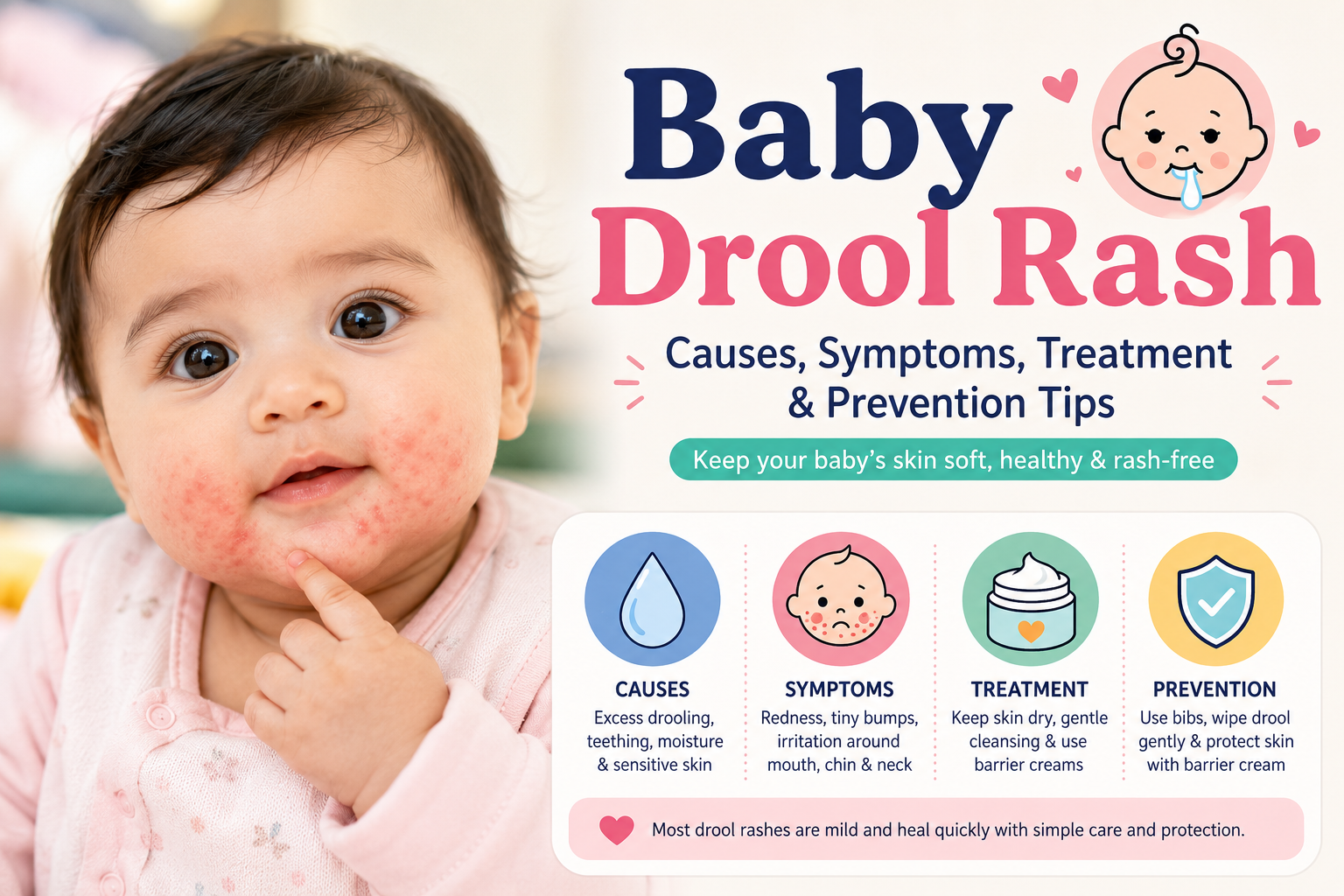
Baby drool rash is a common skin irritation caused by excess saliva staying on a baby’s skin for long periods. It usually appears around the mouth, chin, cheeks, or neck during teething and can often be treated with gentle skincare and keeping the area dry.
Babies produce a lot of saliva during their first year of life. When saliva stays on the skin for long periods, it can irritate the delicate skin around the mouth, cheeks, chin and neck, leading to redness, tiny bumps and discomfort.
The good news is that drool rash usually improves with gentle skincare, frequent drying and protecting your baby’s skin with a suitable barrier cream.
In this guide, you’ll learn what causes baby drool rash, how to treat it safely at home, how to prevent it from coming back and when it’s time to consult a doctor.
What Is Baby Drool Rash?
Baby drool rash is a form of irritant contact dermatitis caused by prolonged contact between saliva and your baby’s sensitive skin.
Unlike infections, drool rash is usually triggered by constant moisture and friction, which weakens the skin’s natural protective barrier.
It most commonly appears on the:
- Chin
- Around the mouth
- Lips
- Cheeks
- Neck folds
- Upper chest
Although it can look uncomfortable, drool rash is generally mild and treatable.
The American Academy of Pediatrics recommends using gentle skincare products and protecting babies’ delicate skin from excess moisture and irritation.
What Causes Baby Drool Rash?
Several factors can contribute to drool rash.
1. Excessive Drooling During Teething
The most common cause is teething.
Between 4 and 7 months, babies often begin producing more saliva as teeth start developing beneath the gums.
The constant drooling irritates the skin and increases the risk of a rash.
2. Sensitive Baby Skin
A baby’s skin is much thinner and more delicate than an adult’s skin, making it more prone to irritation from saliva.
3. Moisture Trapped in Skin Folds
Saliva often collects around:
- Neck folds
- Chin
- Cheeks
When moisture remains trapped, it softens the skin and increases irritation.
4. Pacifiers
Pacifiers can trap saliva against the skin around the mouth, increasing the likelihood of drool rash.
5. Food and Milk Residue
Milk, formula and baby food left on the skin can combine with saliva, causing additional irritation.
After feeding your baby, gently clean the face with a soft cloth. As your child grows, you may also enjoy our guide on Child Development Milestones Birth to 5 Years, which explains important developmental stages from birth to age five.
Symptoms of Baby Drool Rash
Symptoms may include:
- Red patches around the mouth
- Tiny red bumps
- Dry, rough skin
- Chapped cheeks
- Mild swelling
- Cracked skin
- Irritation around the chin
- Rash in the neck folds
The rash may look worse after naps because saliva remains on the skin for longer.
What Does Baby Drool Rash Look Like?
Drool rash usually appears as:
- Bright pink or red skin
- Small raised bumps
- Dry or flaky patches
- Slight peeling
- Irritated skin around the lips
Unlike eczema, drool rash usually stays in areas frequently exposed to saliva.
The NHS notes that many baby rashes are harmless and often improve with simple home care, but parents should seek medical advice if a rash is accompanied by fever, blisters or signs of infection.
How to Treat Baby Drool Rash
Most cases improve within a few days with gentle care.
Keep the Skin Dry
The first step is reducing moisture.
Instead of rubbing, gently pat your baby’s skin dry whenever you notice drooling.
A soft cotton cloth works best.
Apply a Barrier Cream
Barrier creams help protect the skin from saliva.
Common options include:
- Petroleum jelly
- Zinc oxide cream
- Baby barrier ointments recommended by your paediatrician
Apply a thin layer after gently cleaning and drying the skin.
Wash the Area Gently
Clean the affected skin with:
- Lukewarm water
- Soft cotton cloth
Avoid harsh soaps or heavily fragranced products.
Change Wet Bibs Frequently
A soaked bib keeps moisture against your baby’s skin.
Replace wet bibs with clean, dry ones throughout the day.
Keep Neck Folds Clean
Milk and saliva often collect inside the neck folds.
Gently clean and dry these areas daily to reduce irritation.
Can Breast Milk Help Baby Drool Rash?
Some parents use breast milk as a home remedy because it contains natural antibodies.
However, scientific evidence supporting its effectiveness for treating drool rash is limited.
Barrier creams and keeping the skin dry remain the most consistently recommended approaches.
Can Teething Cause Drool Rash?
Yes.
Teething is one of the most common reasons babies develop drool rash.
As saliva production increases, the skin remains damp for longer periods, increasing irritation.
Many parents also notice increased drooling around the same time babies begin chewing on toys or their fingers.
Is Baby Drool Rash Contagious?
No.
Drool rash is not contagious.
It cannot spread from one baby to another because it is caused by skin irritation rather than bacteria or viruses.
Continue Reading on MomSaathi
As your baby grows, you may also find our guide on When Can Babies Sit Up? helpful for understanding one of your baby’s first major developmental milestones.
How to Prevent Baby Drool Rash
Although drool rash is common, a few simple habits can help reduce the chances of it developing or returning.
1. Gently Wipe Away Drool
Instead of rubbing, gently pat your baby’s face dry with a soft cotton cloth whenever you notice excessive drooling.
Frequent gentle drying prevents saliva from sitting on the skin for long periods.
2. Use a Soft Absorbent Bib
A bib can absorb excess saliva before it reaches your baby’s clothes and skin.
Choose:
- Soft cotton bibs
- Highly absorbent fabrics
- Change bibs whenever they become damp
3. Apply a Protective Barrier
If your baby drools frequently, apply a thin layer of:
- Petroleum jelly
- Zinc oxide cream
- Baby-safe barrier ointment
This creates a protective layer between the skin and saliva.
4. Keep the Neck Area Dry
Saliva often collects in neck folds.
During bath time and after feeds:
- Clean the folds gently.
- Dry thoroughly before dressing your baby.
5. Avoid Harsh Skin Products
Use:
- Fragrance-free baby cleansers
- Gentle moisturisers
- Mild laundry detergents for baby clothing
Avoid alcohol-based wipes on irritated skin.
Baby Drool Rash vs Eczema
Many parents confuse drool rash with eczema.
| Baby Drool Rash | Baby Eczema |
|---|---|
| Caused by saliva | Caused by skin barrier dysfunction |
| Around mouth, chin and neck | Often on cheeks, arms and legs |
| Appears during drooling or teething | May flare due to allergies, dry skin or irritants |
| Improves when skin is kept dry | Usually needs regular moisturising and sometimes medicated creams |
| Usually temporary | Can be a long-term condition |
If you’re unsure about the cause of your baby’s rash, consult your paediatrician for an accurate diagnosis.
Baby Drool Rash vs Heat Rash
Heat rash develops when sweat ducts become blocked.
Drool Rash
- Around the mouth
- Chin
- Neck
- Related to saliva
Heat Rash
- Chest
- Back
- Underarms
- Skin folds
- Triggered by hot weather and sweating
Although both conditions can look similar, they have different causes and may require different care. For additional guidance on caring for your baby’s skin and overall newborn health, visit MedlinePlus, a trusted resource from the U.S. National Library of Medicine.
Home Remedies for Baby Drool Rash
Many mild cases improve with simple home care.
✔ Keep the Skin Dry
This remains the most effective remedy.
✔ Moisturise Regularly
Apply a baby-safe moisturiser after gently drying the skin.
✔ Barrier Cream
Use a thin layer before naps and bedtime when drooling may increase.
✔ Give the Skin Time to Breathe
When possible, allow your baby’s skin to air dry for a few minutes before replacing bibs or clothing.
✔ Wash Toys and Pacifiers
Pacifiers and teething toys can collect saliva and bacteria. Clean them regularly according to the manufacturer’s instructions.
When Should You See a Doctor?
Contact your baby’s healthcare provider if:
- The rash lasts longer than 5–7 days
- The rash becomes painful
- Blisters appear
- The skin begins to ooze yellow fluid or pus
- Your baby develops a fever
- The rash spreads rapidly
- Your baby seems unusually uncomfortable or irritable
- Home treatment does not improve the rash
Early medical evaluation helps rule out infections, eczema or other skin conditions that may require different treatment.
Conclusion
Baby drool rash is a common skin irritation that affects many infants, especially during the teething stage. While the red, bumpy rash may look concerning, it is usually harmless and improves with gentle skin care.
Keeping your baby’s skin clean and dry, changing wet bibs frequently and using a baby-safe barrier cream are often enough to help the rash heal within a few days.
However, if the rash becomes severe, spreads, shows signs of infection or does not improve with home care, consult your paediatrician for further evaluation.
With consistent care, most babies recover quickly and comfortably.
Frequently Asked Questions
What causes baby drool rash?
Drool rash is caused by prolonged contact between saliva and your baby’s delicate skin, especially during teething.
At what age do babies get drool rash?
It most commonly appears between 4 and 12 months, when drooling increases due to teething.
Is baby drool rash painful?
Mild drool rash may cause slight irritation, but severe cases can become sore if the skin cracks.
Can teething cause drool rash?
Yes. Increased saliva production during teething is the most common cause.
How long does baby drool rash last?
Most mild cases improve within 2–5 days with proper care.
Can drool rash spread?
No. Drool rash itself is not contagious, but it can spread to nearby skin if saliva continues to irritate new areas.
Can I use petroleum jelly for drool rash?
Yes. Petroleum jelly is commonly used as a protective barrier to help shield the skin from saliva.
Does breast milk cure drool rash?
There is limited scientific evidence supporting breast milk as a treatment. Barrier creams and keeping the skin dry remain the preferred approaches.
Can babies get drool rash without teething?
Yes. Some babies naturally drool more even before teething begins.
Should I stop using a pacifier if my baby has drool rash?
Not necessarily. However, keeping pacifiers clean and limiting prolonged moisture around the mouth may help reduce irritation.
Is drool rash a fungal infection?
No. Drool rash is usually an irritant rash rather than a fungal infection, although secondary infections can occasionally develop.
What is the fastest way to heal drool rash?
Keeping the skin dry, using a barrier cream and avoiding further irritation are generally the fastest ways to support healing.
Can drool rash appear on the neck?
Yes. Saliva often collects in neck folds, making this a common location for drool rash.
Can drool rash bleed?
Yes. If the skin becomes very dry or cracked, minor bleeding may occur. Seek medical advice if this happens.
When should I worry about baby drool rash?
Consult your paediatrician if the rash becomes severe, develops blisters, oozes pus, is associated with fever or does not improve after several days of appropriate home care.