
Medical note: This article is for educational purposes only and should not replace professional medical advice. If you have persistent pregnancy symptoms, irregular periods or conflicting test results, consult your healthcare provider for personalised guidance.
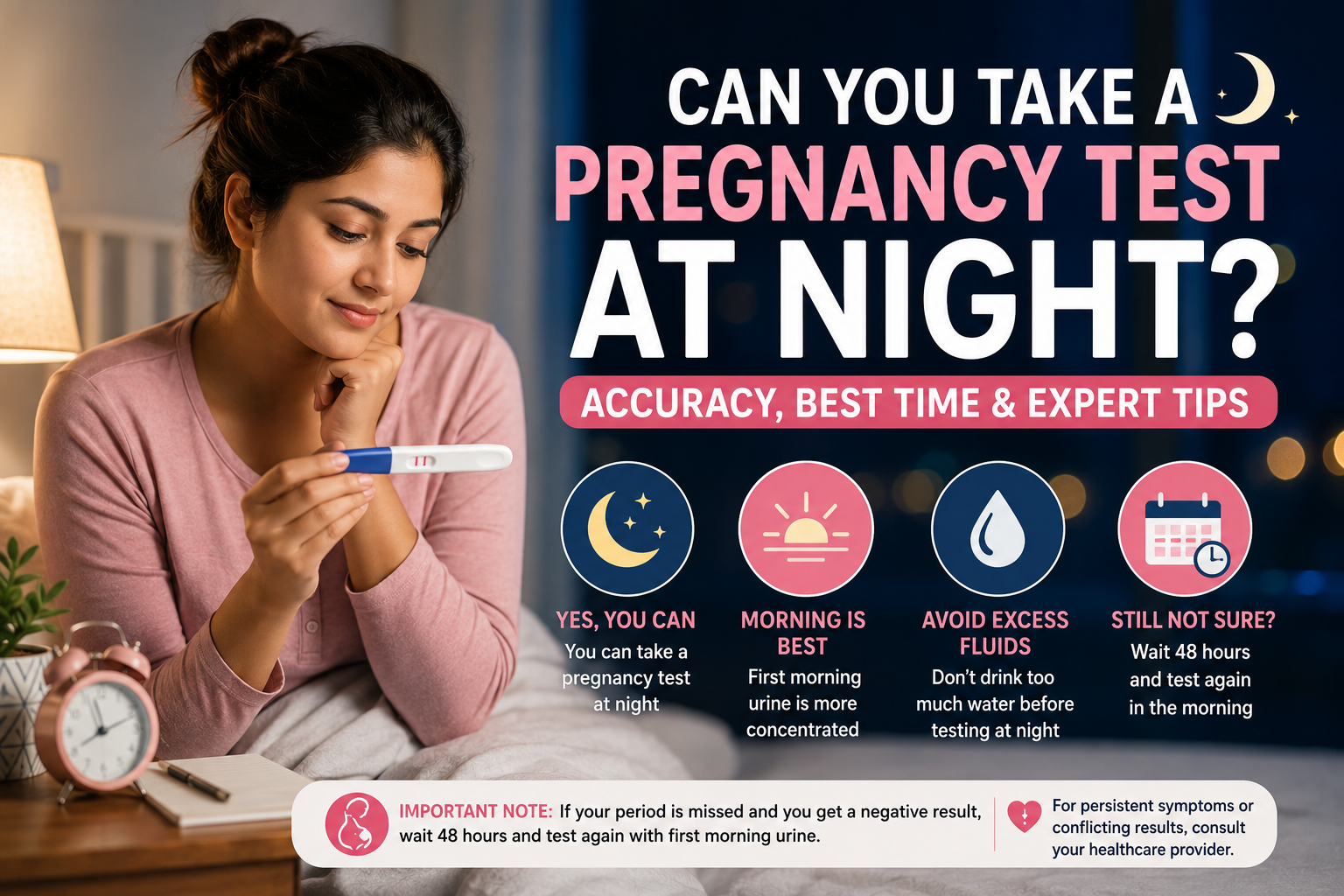
Yes, you can take a pregnancy test at night. However, if you’re testing very early in pregnancy, using your first morning urine is usually recommended because it contains the highest concentration of the pregnancy hormone human chorionic gonadotropin (hCG). This can improve the chances of detecting an early pregnancy.
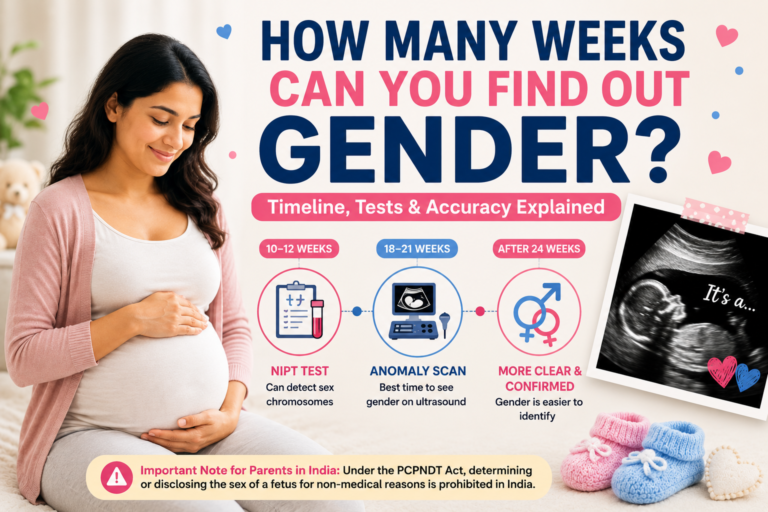
If you’re testing after your missed period, most modern home pregnancy tests are accurate enough to be used at any time of the day, provided you carefully follow the manufacturer’s instructions. If you’re trying to confirm a pregnancy, you may also want to read our guide on How Many Weeks Can You Find Out Gender? to understand when prenatal tests and ultrasounds may reveal your baby’s sex.
Can You Take a Pregnancy Test at Night?
Yes. Home pregnancy tests work by detecting hCG, a hormone your body starts producing after a fertilized egg implants in the uterus.
Most home pregnancy tests claim to be over 99% accurate when used correctly after a missed period. However, testing at night may slightly reduce accuracy if your urine is diluted due to drinking fluids throughout the day. According to the American College of Obstetricians and Gynecologists (ACOG), home pregnancy tests are most reliable when used after a missed period and according to the manufacturer’s instructions.
Is It Better to Take a Pregnancy Test in the Morning or at Night?
Morning is generally considered the best time, especially if:
- You’re testing before your missed period.
- You recently missed your period.
- You suspect a very early pregnancy.
- You’re using an early detection pregnancy test.
Night testing is usually acceptable if:
- You’re several days past your missed period.
- You haven’t consumed excessive fluids before testing.
- You’re using a highly sensitive pregnancy test.
According to the American College of Obstetricians and Gynecologists (ACOG), home pregnancy tests are most reliable when used after a missed period and according to the manufacturer’s instructions.
Why Is First Morning Urine More Accurate?
During sleep, urine becomes more concentrated because you typically don’t drink fluids overnight. This increases the concentration of hCG, making it easier for pregnancy tests to detect.
As the day progresses, drinking water, tea, coffee or other beverages may dilute urine and slightly reduce hCG concentration. If you’ve recently received a positive pregnancy test, our How Many Weeks Can You Find Out Gender? The article explains when different prenatal tests may determine your baby’s gender.
Can Drinking Water Affect Pregnancy Test Results?
Yes.
Drinking a large amount of water before taking a pregnancy test can dilute your urine, making it harder for the test to detect hCG during very early pregnancy.
If you’re taking the test at night:
- Avoid excessive fluids for 2–3 hours beforehand.
- Follow the instructions provided with your pregnancy test kit.
- Check the result within the recommended reading time.
When Is the Best Time to Take a Pregnancy Test?
| Situation | Best Time to Test |
|---|---|
| Before missed period | First morning urine |
| On the day of missed period | Morning preferred |
| 3–7 days after missed period | Morning or night |
| More than one week after missed period | Any time of the day |
The NHS also recommends using a home pregnancy test from the first day of a missed period for the most reliable results.
Can a Pregnancy Test Be Negative at Night but Positive in the Morning?
Yes.
This is possible because morning urine usually contains a higher concentration of hCG than urine collected later in the day.
If you receive a negative result at night but still suspect pregnancy:
- Wait 48 hours.
- Test again using your first morning urine.
- Follow the kit instructions carefully.
Since hCG levels typically increase rapidly in early pregnancy, a repeat test may provide a more accurate result.
If you’ve recently received a positive pregnancy test, our How Many Weeks Can You Find Out Gender? article explains when different prenatal tests may determine your baby’s gender.
How Accurate Are Home Pregnancy Tests?
Most leading pregnancy tests are over 99% accurate when:
- Used after a missed period.
- Instructions are followed correctly.
- The test has not expired.
- Results are read within the recommended time.
However, factors such as testing too early, diluted urine, or improper use can affect accuracy.
Signs You Should Take a Pregnancy Test
You may consider taking a pregnancy test if you have:
- Missed period
- Nausea or morning sickness
- Tender or swollen breasts
- Fatigue
- Frequent urination
- Mild cramping
- Food cravings or aversions
- Spotting (implantation bleeding)
If you’re experiencing these symptoms, you may also find our guide on How Many Weeks Can You Find Out Gender? helpful as you learn more about your pregnancy journey.
What Should You Do If the Result Is Negative?
If your test is negative but:
- Your period still hasn’t started,
- Pregnancy symptoms continue,
- You think you may have ovulated later than expected,
wait 2–3 days and repeat the test.
If you continue to get negative results but your period doesn’t arrive, consult your healthcare provider for further evaluation.
When Should You See a Doctor?
Seek medical advice if:
- You have repeated positive tests.
- You miss more than one menstrual period.
- You experience severe abdominal pain.
- You have heavy bleeding.
- Your pregnancy tests give conflicting results.
- You have concerns about your reproductive health.
For additional information about pregnancy testing and prenatal care, visit MedlinePlus, a trusted health resource from the U.S. National Library of Medicine.
Conclusion
You can take a pregnancy test at night, especially if you’re already past your missed period. However, for the highest accuracy—particularly during very early pregnancy—using your first morning urine is generally the best option because it contains the highest concentration of hCG.
If you’re unsure about your result, repeat the test after 48 hours or speak with your healthcare provider.
Frequently Asked Questions
Can I take a pregnancy test at 10 PM?
Yes. If you’re past your missed period, testing at 10 PM is generally reliable. Avoid excessive fluids beforehand.
Is a nighttime pregnancy test less accurate?
It can be slightly less accurate in very early pregnancy because urine may be more diluted than first morning urine.
How long should I avoid drinking water before taking a pregnancy test?
Avoid drinking large amounts of fluids for about 2–3 hours before testing if you’re taking it later in the day.
Can I trust a negative pregnancy test at night?
If your period is late and the result is negative, repeat the test after 48 hours using first morning urine.
Can I take two pregnancy tests in one day?
Yes. However, if the first result is negative and you’re testing very early, it’s usually better to wait 48 hours before testing again.
Which pregnancy test is the most accurate?
Most FDA-approved home pregnancy tests are highly accurate when used correctly after a missed period.
How soon after implantation can a pregnancy test detect hCG?
Some early detection tests may detect hCG around 6–8 days after ovulation, but testing after a missed period provides the most reliable result.
Does coffee or tea affect pregnancy test results?
No. Coffee or tea doesn’t directly affect the test, but drinking large amounts of any fluid may dilute urine.
Can medications affect pregnancy test results?
Some fertility medications containing hCG may cause false-positive results. Most antibiotics and common medications do not affect pregnancy tests.
Should I see a doctor after a positive pregnancy test?
Yes. Schedule an appointment to confirm the pregnancy and begin prenatal care.