
Edited by: MomSaathi Editorial Team
Reviewed by: Based on child development, parenting practices, and behavioural health research from WHO & UNICEF
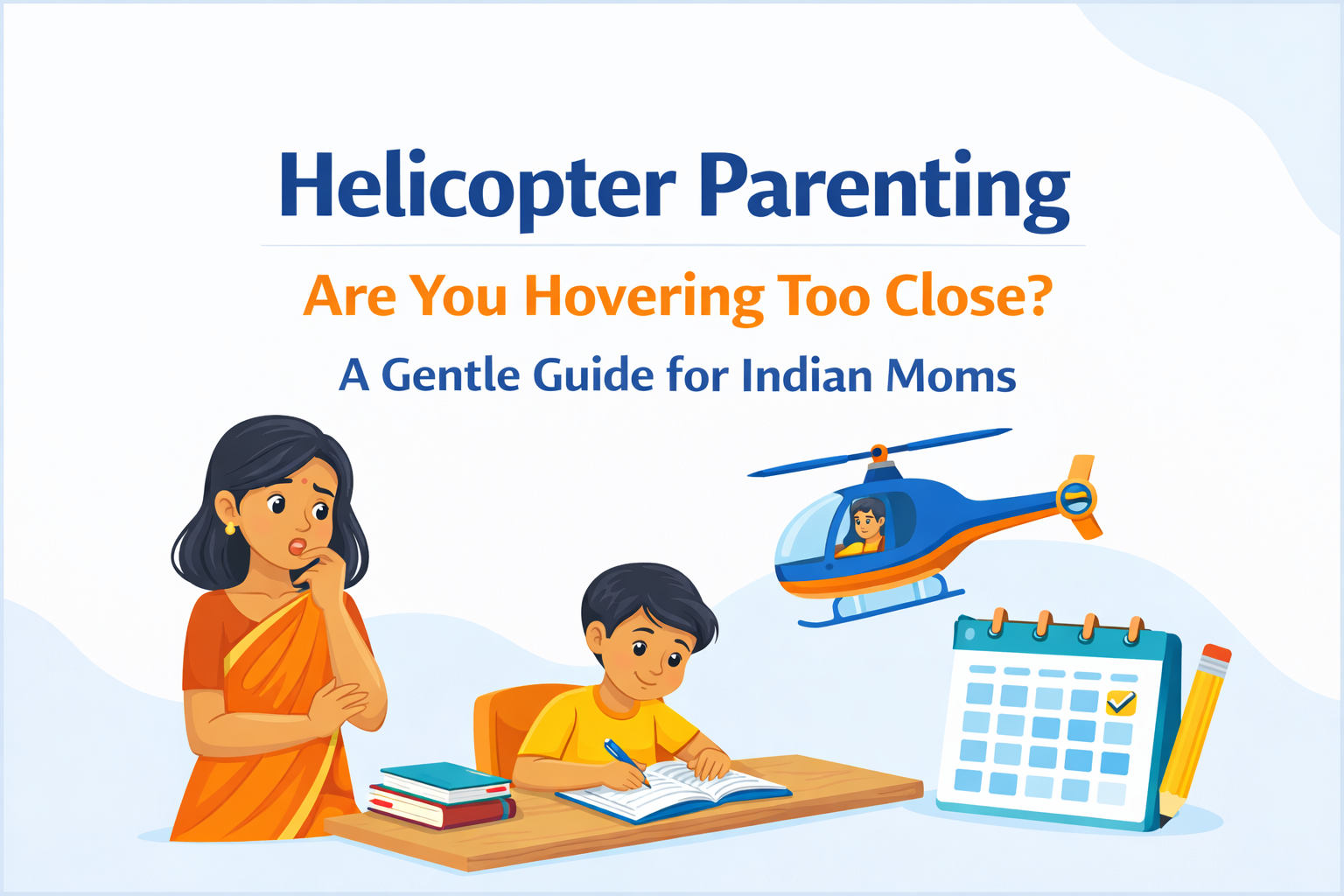
Hey moms, does this sound familiar? Your 10-year-old forgets his water bottle for school, and you rush to drop it off. Or your Class 12 teen is preparing for JEE, and you end up supervising every study hour while calling the tuition teacher yourself. In our high-pressure Indian homes — from Bengaluru to Delhi — many of us have become helicopter parents without even realizing it.
At Momsaathi, we know you’re doing this out of deep love and concern for your child’s future. But excessive hovering can unintentionally hold kids back. This guide explains what helicopter parenting really means in the Indian context, its signs, long-term effects on children’s mental health and independence, and gentle, practical ways to shift toward balanced parenting.
Internal Link: Explore Different Parenting Styles Common in Indian Families
What Is Helicopter Parenting?
The term “helicopter parenting” was coined in 1969 by Dr. Haim Ginott. It describes parents who “hover” over their children like a helicopter — constantly monitoring, intervening, and rescuing them from challenges, failures, or discomfort.
In India, helicopter parenting often shows up as:
- Completing school projects or homework to make them “perfect”
- Choosing tuitions, extracurricular activities, or even stream/career paths with little child input
- Constantly checking phones, social media, or friends “for safety”
- Intervening in teacher complaints or friend conflicts instead of letting the child handle it
- Shielding kids from small risks like traveling alone on public transport or handling minor disappointments
This style differs from authoritative parenting (warm guidance with age-appropriate freedom). In competitive urban India, with single-child families, intense board exams, and safety worries in crowded cities, helicopter parenting has become increasingly common.
Why Is Helicopter Parenting So Common Among Indian Moms?
We don’t plan to hover — it stems from genuine love mixed with real pressures. India’s education system is fiercely competitive. One low score in NEET or JEE can feel life-altering. Add joint family expectations, traffic and safety concerns in metros, and social media comparisons of “perfect” kids, and over-involvement feels like responsible parenting.
Studies in India show higher helicopter behaviors among parents of single children. Many first-generation urban moms navigate smartphones, online bullying risks, and global competition while wanting their child to “succeed at all costs.” Grandparents may also push for more control, making it harder to step back.
The result? Well-meaning moms end up micromanaging, driven by anxiety that “if I don’t push, my child will fall behind.”
Internal Link: Gentle Parenting in Joint Families – Handling Grandparents’ Expectations
Clear Signs You Might Be a Helicopter Parent
Ask yourself these questions:
- Do you frequently redo your child’s work to ensure it’s flawless?
- Do you feel anxious when your child faces a small problem without your help?
- Do you often speak for your child in front of teachers or coaches?
- Is your child’s schedule completely packed with activities you chose?
- Do you check their phone or social media daily “just to be safe”?
If several ring true, you may be leaning toward overprotective parenting. The good news? Awareness is the first step toward change.
The Hidden Effects of Helicopter Parenting on Children
Short-term, hovering might bring better grades or fewer immediate troubles. But research — including Indian studies — shows concerning long-term impacts:
- Reduced Independence & Decision-Making: Kids grow dependent on parents, struggling with problem-solving as adults.
- Mental Health Challenges: Higher risk of anxiety, depression, and lower self-esteem. Overcontrolling parenting limits children’s ability to regulate emotions.
- Lower Resilience: When failure is always prevented, kids fear mistakes and may develop perfectionism or avoidance.
- Weaker Social Skills: Difficulty handling conflicts or building friendships independently.
- Academic & Well-Being Trade-offs: In Indian teens, excessive pressure correlates with lower happiness and poorer long-term academic enjoyment.
One Indian study on minor teenagers highlighted two factors — “pressure” (affecting academics) and “intrusion” (affecting overall well-being and happiness). Another found negative links between perceived helicopter parenting and academic achievement among young adults.
By college or first job, these children may feel lost without constant parental rescue.
External Link: APA Insights on Helicopter Parenting and Emotion Regulation
Internal Link: Building Emotional Resilience in Kids – Gentle Techniques for Indian Families
How Helicopter Parenting Affects Indian Moms Too
Constant hovering leads to mom burnout. You lose sleep worrying, tie your identity to your child’s marks, and miss your own hobbies or couple time. In joint families, differing opinions with in-laws can add stress. When teens push back (“Mom, stop interfering!”), it hurts deeply.
The irony? Trying to control everything can weaken the joyful bond you crave.
Practical Ways to Stop Helicopter Parenting – Step-by-Step Guide for Indian Moms
You don’t need to go cold turkey. Shift gradually toward balanced, authoritative parenting — high warmth with healthy boundaries and freedom.
Here are workable, India-friendly tips:
- Pause Before Rescuing: Next time your child struggles with homework or a friend issue, ask, “What do you think you can try first?” Give them time to think.
- Allow Safe Failure: Let your 8-12-year-old pack their own school bag or handle a low-stakes project alone. Praise effort: “I’m proud of how hard you tried.”
- Involve Kids in Decisions: Co-create screen-time rules or let teens choose one extracurricular they genuinely enjoy (not just the “resume-friendly” one).
- Start Small with Independence: A 7-year-old can pick their outfit. A 14-year-old can discuss career interests without you deciding.
- Communicate with Family: Share your goals with grandparents. Use phrases like, “We want our child to become confident and happy long-term.”
- Model Healthy Boundaries: Show your child you have your own life and say “no” to over-involvement when needed.
- Seek Support: Join Momsaathi’s community, read books like How to Raise an Adult by Julie Lythcott-Haims, or consult a child psychologist if anxiety drives your habits.
Start with one area this week — perhaps homework supervision — and watch your child grow in confidence.
Internal Link: 50 Powerful Parenting Quotes to Inspire Balanced Motherhood
FAQ: Helicopter Parenting in India
Q1: Is helicopter parenting bad for children?
It can limit independence and increase anxiety/depression risks, though some involvement is positive. Balance is key.
Q2: Why do Indian parents helicopter more?
Competitive education, safety concerns, smaller families, and societal pressure play major roles.
Q3: How do I stop being overprotective without feeling guilty?
Start small, focus on long-term benefits, and remind yourself that teaching resilience is an act of love.
Q4: What’s the difference between helicopter and tiger parenting?
Tiger parenting emphasizes strict achievement; helicopter focuses on constant hovering and rescue.
Q5: At what age should I give more freedom?
Age-appropriate steps: more responsibility from primary school onward, with guidance for teens.
Final Thoughts: Let Your Child Fly
Helicopter parenting comes from a place of profound love — especially in our culture where we invest everything in our children. But true love often means stepping back so they can build wings.
By fostering independence, resilience, and self-belief today, you prepare your child for a confident, happy adulthood — whether they choose medicine, engineering, arts, or entrepreneurship.
You’re already a thoughtful mom for reading this and reflecting. Small, consistent changes can make a big difference. At Momsaathi, we’re here to support you every step.