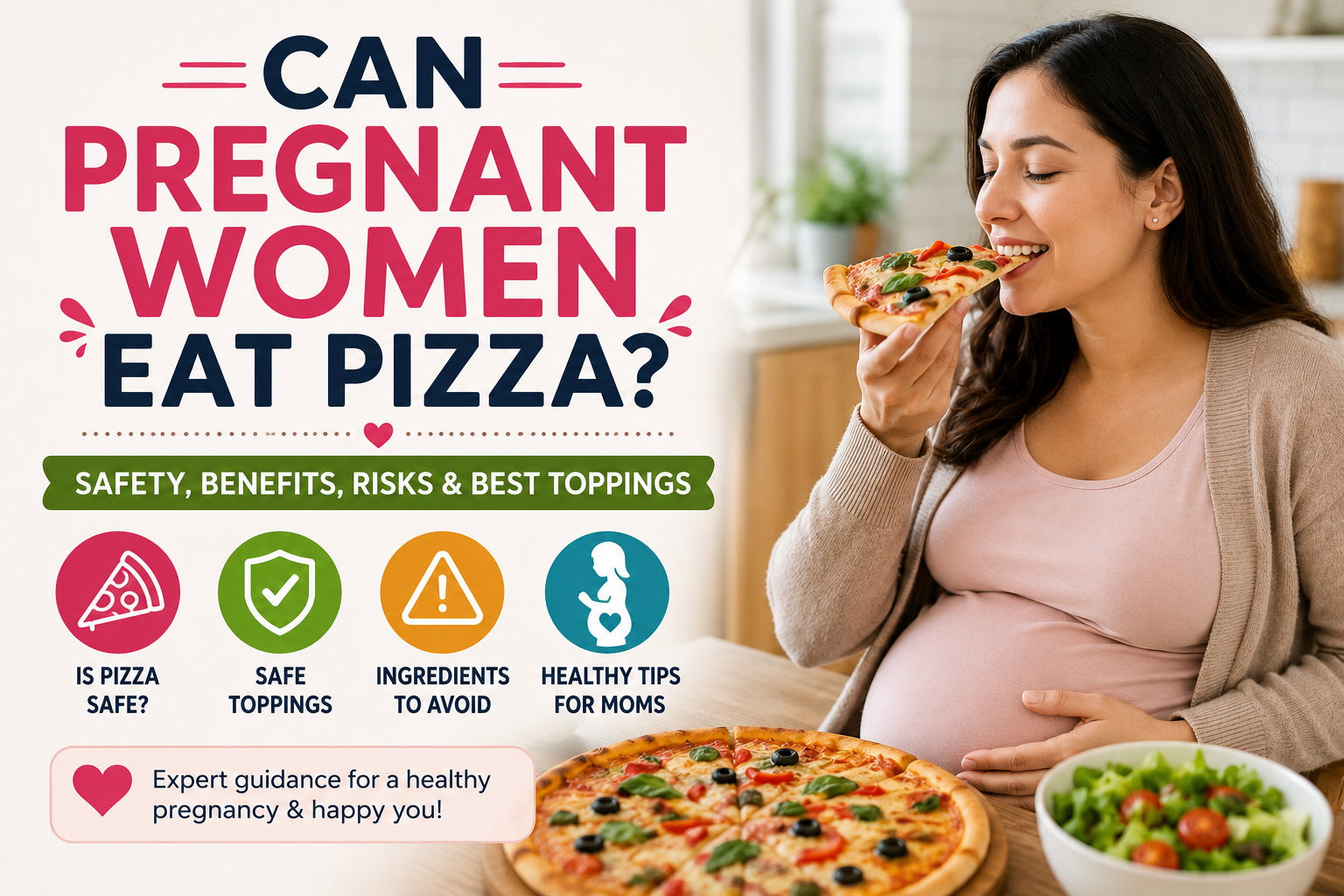
Yes, pregnant women can eat pizza if it is freshly cooked and prepared with pasteurized cheese and fully cooked toppings. However, certain ingredients like unpasteurized cheese, undercooked meat, and raw seafood should be avoided during pregnancy.
Pregnancy often comes with food cravings, and pizza is one of the most commonly craved comfort foods around the world. Whether it’s a classic Margherita, a veggie-loaded pizza, or a homemade whole-wheat version, many expectant mothers wonder: Can pregnant women eat pizza?
Quick Answer: Yes, pregnant women can generally eat pizza when it is freshly cooked, served hot, and made with pasteurized cheese and thoroughly cooked toppings. Avoid unpasteurized cheese, undercooked meat, and pizzas that have been left at room temperature for too long.
The good news is that pizza can usually be enjoyed during pregnancy when it is prepared safely and eaten in moderation. However, the answer depends on the ingredients used, how the pizza is cooked, and whether toppings such as cheese, meat, or seafood are safe for pregnancy.
Some pizzas contain nutritious ingredients like vegetables, whole grains, and calcium-rich cheese, while others may include processed meats, high sodium levels, or cheeses made from unpasteurized milk, which require extra caution.
If you’re wondering whether pizza is safe during pregnancy, you may also want to learn whether matcha is safe to drink while pregnant.
This comprehensive guide explains everything you need to know about eating pizza during pregnancy, including safe toppings, ingredients to avoid, nutritional considerations, and expert tips for making healthier choices.
Medical Disclaimer: This article is for educational purposes only and should not replace medical advice. Always consult your obstetrician or healthcare provider regarding your diet during pregnancy.
Can Pregnant Women Eat Pizza?
Yes. Most pregnant women can safely eat pizza if it is thoroughly cooked and made with pregnancy-safe ingredients.
A hot, freshly baked pizza from a reputable restaurant or homemade pizza prepared with hygienic practices is generally considered safe.
The most important factors include:
- Cheese made from pasteurized milk
- Fully cooked toppings
- Proper food handling
- Moderate portion sizes
Pizza should be part of a balanced pregnancy diet rather than an everyday meal.
Is Pizza Safe During Pregnancy?
Pizza is generally safe when:
- It is served piping hot.
- Cheese is fully melted.
- Meat toppings are thoroughly cooked.
- It is prepared under hygienic conditions.
- Fresh vegetables are properly washed before cooking.
The greatest risks are usually related to specific ingredients rather than the pizza itself.
Which Pizza Ingredients Are Safe During Pregnancy?
Cheese
Most pizzas contain mozzarella.
Mozzarella made from pasteurized milk is generally considered safe during pregnancy.
Safe cheeses include:
- Mozzarella (pasteurized)
- Cheddar
- Parmesan
- Processed cheese
- Cottage cheese made from pasteurized milk
Always verify that the cheese has been made with pasteurized milk when possible.
Vegetables
Vegetable toppings can increase nutritional value.
Popular pregnancy-friendly toppings include:
- Bell peppers
- Onions
- Mushrooms
- Tomatoes
- Spinach
- Sweet corn
- Olives
These vegetables provide vitamins, minerals, and fiber.
Chicken
Well-cooked chicken is a good source of:
- Protein
- Iron
- Vitamin B12
Ensure there are no pink or undercooked portions.
Paneer
Paneer made from pasteurized milk and cooked thoroughly is generally safe.
It also contributes calcium and protein.
Eggs
If your pizza contains eggs, ensure they are fully cooked.
Pizza Ingredients to Be Careful With
Some toppings require additional caution during pregnancy.
Pepperoni
Pepperoni is a processed meat.
If used, it should be heated until steaming hot.
Salami
Like pepperoni, salami should only be eaten after thorough cooking.
Ham
Cooked ham is generally safer than raw or cured varieties.
Seafood Toppings
Certain seafood pizzas may contain fish with higher mercury levels.
Choose pregnancy-safe seafood options and ensure they are fully cooked.
Soft Cheeses
Avoid pizzas topped with soft cheeses made from unpasteurized milk, such as:
- Brie
- Camembert
- Blue cheese
unless they have been thoroughly cooked until piping hot and your healthcare provider advises they are safe.
Why Pasteurized Cheese Matters
Pasteurization helps eliminate harmful bacteria.
Cheese made from unpasteurized milk may carry bacteria such as Listeria, which can pose serious risks during pregnancy.
Most commercially prepared pizza chains use pasteurized mozzarella, but checking ingredients is always a good idea.
Nutritional Benefits of Pizza During Pregnancy
When prepared thoughtfully, pizza can provide:
Calcium
Supports baby’s developing bones and teeth.
Protein
Essential for fetal growth and maternal health.
Carbohydrates
Provide energy during pregnancy.
Vegetables
Add vitamins, minerals, antioxidants, and fiber.
Healthy Fats
Contribute to fetal brain development when consumed in moderation.
Possible Risks of Eating Too Much Pizza
Although pizza can fit into a healthy pregnancy diet, frequent consumption may contribute to:
Excess Sodium
High sodium intake may worsen water retention or contribute to elevated blood pressure in some individuals.
A balanced pregnancy diet includes nutrient-rich foods. Read our guide on amla during pregnancy to discover its health benefits and safety.
Saturated Fat
Some pizzas are high in saturated fat, especially those with extra cheese and processed meats.
Calories
Large portions may contribute to excessive pregnancy weight gain.
Processed Meats
Processed toppings should be limited because they tend to contain higher levels of sodium and preservatives.
Homemade vs Restaurant Pizza
Homemade Pizza
Advantages include:
- Better ingredient control
- Less salt
- Whole-wheat crust options
- Fresh vegetables
- Lean protein choices
Restaurant Pizza
Choose restaurants known for:
- Good hygiene
- Fresh ingredients
- Proper cooking temperatures
Ask about pasteurized cheese if unsure.
Healthier Pizza Choices During Pregnancy
Choose:
- Thin crust
- Whole-wheat base
- Extra vegetables
- Grilled chicken
- Paneer
- Moderate cheese
- Less processed meat
Limit:
- Extra cheese
- Double meat
- Cream-based sauces
- Excess salt
Can Pregnant Women Eat Frozen Pizza?
Yes, provided it is:
- Cooked according to package instructions
- Heated thoroughly until piping hot
- Not consumed after expiration
Never eat frozen pizza that is only partially cooked.
Can Pregnant Women Eat Leftover Pizza?
Leftover pizza may be eaten if:
- Refrigerated promptly (within 2 hours)
- Stored safely
- Reheated until steaming hot before eating
Avoid leaving pizza at room temperature for extended periods.
Pizza Cravings During Pregnancy
Food cravings are common.
Pizza cravings may result from:
- Hormonal changes
- Increased appetite
- Desire for carbohydrates
- Emotional comfort
Enjoying pizza occasionally can be part of a balanced eating pattern.
Tips for Eating Pizza Safely During Pregnancy
- Choose freshly prepared pizza.
- Prefer pasteurized cheese.
- Ensure meat toppings are thoroughly cooked.
- Add extra vegetables.
- Avoid excessive processed meats.
- Limit portion size.
- Pair pizza with a fresh salad or fruit.
Foods to Avoid on Pizza During Pregnancy
Avoid:
- Raw meat toppings
- Undercooked chicken
- Unpasteurized soft cheeses
- Raw seafood
- Excessive processed meats
When in doubt, ask how the pizza has been prepared.
Common Myths About Pizza During Pregnancy
Myth 1: Pregnant Women Should Never Eat Pizza
False.
Properly cooked pizza can usually be enjoyed safely.
Myth 2: Cheese Pizza Is Always Unsafe
False.
Pasteurized cheese is generally considered safe.
Myth 3: Pizza Has No Nutritional Value
False.
Adding seasonal fruits to your diet can help meet your nutritional needs. Explore our list of healthy rainy season fruits during pregnancy.
Pizza can provide protein, calcium, vegetables, and energy depending on ingredients.
Myth 4: Pizza Causes Pregnancy Complications
There is no evidence that moderate pizza consumption causes pregnancy complications when prepared safely.
Along with maintaining a healthy diet, regular prenatal scans are essential. Learn how to understand your anomaly scan report.
Frequently Asked Questions
Can pregnant women eat pizza in the first trimester?
Yes, provided it is thoroughly cooked and prepared with pregnancy-safe ingredients.
Is mozzarella safe during pregnancy?
Yes, mozzarella made from pasteurized milk is generally considered safe.
As your pregnancy progresses, your doctor may recommend a growth scan at 30 weeks to monitor your baby’s development.
Can pregnant women eat pepperoni pizza?
Pepperoni should be thoroughly cooked until steaming hot before eating.
Can I eat pizza every day while pregnant?
Pizza is best enjoyed occasionally as part of a varied, balanced diet rather than every day.
Is homemade pizza healthier?
Homemade pizza often allows greater control over ingredients, sodium, and fat content.
References & Resources
| Topic | Resource |
|---|---|
| Healthy Eating During Pregnancy | NHS – Healthy Diet During Pregnancy |
| Nutrition During Pregnancy | ACOG – Nutrition During Pregnancy |
| Pregnancy Nutrition | MedlinePlus – Pregnancy and Nutrition |
| Food Safety During Pregnancy | FoodSafety.gov – Food Safety for Pregnant Women |
| Healthy Pregnancy Information | March of Dimes – Pregnancy Health |
Conclusion
So, can pregnant women eat pizza? For most healthy pregnancies, the answer is yes—when the pizza is prepared safely, served hot, and made with pregnancy-friendly ingredients.
Healthy food choices and regular prenatal care support a healthy pregnancy. Explore our Complete Mom Health Guide for more expert-backed advice.
Opt for pizzas with pasteurized cheese, well-cooked toppings, and plenty of vegetables. Limit processed meats, excessive cheese, and high-sodium options, and enjoy pizza in moderation as part of a balanced pregnancy diet.
Every pregnancy is unique, so if you have dietary restrictions, gestational diabetes, food allergies, or other medical concerns, consult your healthcare provider for personalized advice. With mindful choices, pizza can remain an enjoyable part of your pregnancy journey.