
One of the most exciting moments during pregnancy is wondering whether you’re expecting a baby boy or a baby girl. From choosing baby names to planning a nursery and imagining life with your little one, the curiosity about a baby’s gender often begins as soon as parents see those two pink lines on a pregnancy test.
A common question many expecting parents ask is: “When can you find out your baby’s gender?”
The answer depends on several factors, including the type of test, stage of pregnancy, and local laws regarding prenatal gender disclosure. While modern medical technology can often determine a baby’s sex relatively early in pregnancy, healthcare providers primarily use prenatal tests to monitor the baby’s health and development rather than reveal gender.
Many parents become curious about their baby’s gender around the same time they start attending important prenatal scans such as the anomaly scan.
In this guide, we’ll explain when a baby’s sex can be determined, the methods used, factors affecting accuracy, and important legal considerations for parents in different countries.
Medical Disclaimer: This article is intended for educational purposes only. Always consult your healthcare provider regarding pregnancy tests, ultrasounds, and prenatal care.
The anomaly scan performed between 18 and 22 weeks helps doctors assess fetal development and anatomy. Learn more about understanding your anomaly scan report.
Understanding Baby Gender vs Biological Sex
Before discussing when gender can be identified, it’s important to understand the difference between biological sex and gender.
Biological Sex
Biological sex is determined by chromosomes inherited at conception.
- XX chromosomes typically indicate a female fetus.
- XY chromosomes typically indicate a male fetus.
Gender
Gender refers to a person’s identity and may not necessarily align with biological sex assigned at birth.
In pregnancy-related medical testing, healthcare professionals are generally assessing biological sex rather than gender identity.
When Is a Baby’s Sex Determined?
Biologically, a baby’s sex is determined at conception.
When a sperm fertilizes an egg:
- XX chromosomes result in a female fetus.
- XY chromosomes result in a male fetus.
However, although biological sex is determined from the beginning, it cannot be visually identified immediately.
When Can Ultrasound Detect a Baby’s Sex?
Ultrasound is one of the most common methods used during pregnancy.
The timing and accuracy depend on gestational age.
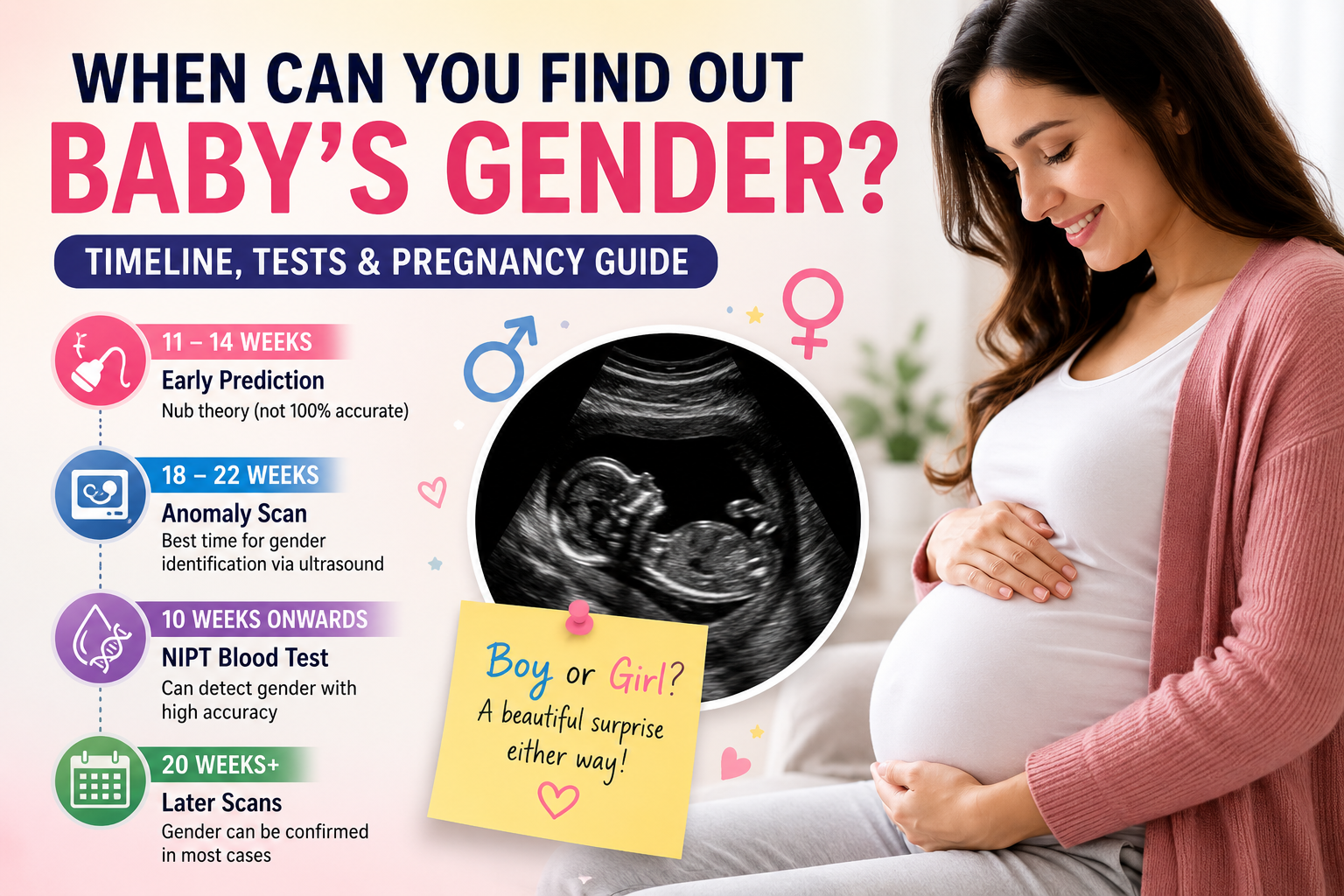
11 to 14 Weeks
During the first trimester scan, some sonographers may attempt to predict sex using the “nub theory.”
This involves examining the angle of a small genital structure.
Accuracy
- Approximately 70–90% under ideal conditions.
- Depends heavily on baby’s position.
Because accuracy is lower, predictions at this stage should not be considered definitive.
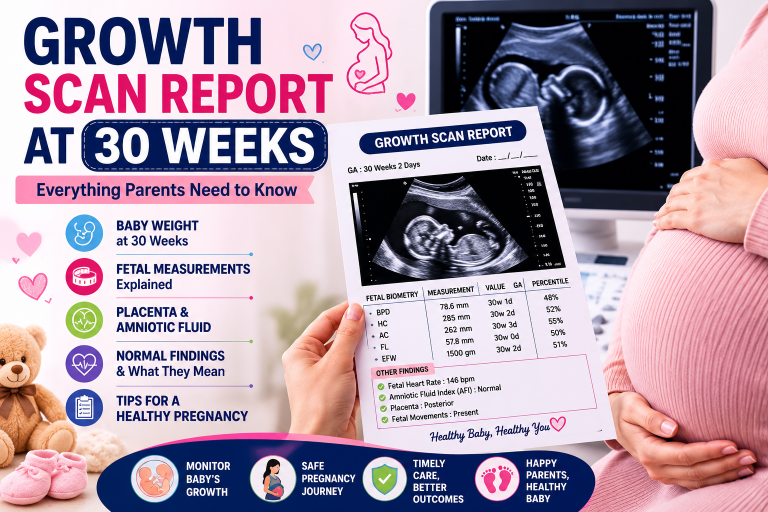
Later in pregnancy, doctors may recommend a growth scan at 30 weeks to monitor your baby’s growth and wellbeing.
18 to 22 Weeks: The Anomaly Scan
The anomaly scan is usually performed between 18 and 22 weeks.
This is when many healthcare providers can visually identify fetal sex if local regulations permit.
Why This Period Is Ideal
At this stage:
- External genitalia are more developed.
- Ultrasound images are clearer.
- Baby’s anatomy is easier to assess.
Accuracy
When conditions are favorable:
- Accuracy often exceeds 95%.
However, accuracy can still be affected by:
- Baby’s position
- Maternal body type
- Ultrasound quality
- Technician experience
After 22 Weeks
As pregnancy progresses, determining fetal sex generally becomes easier.
In most cases:
- Accuracy remains very high.
- Visibility depends on baby’s position.
Sometimes babies cross their legs or face away from the ultrasound probe, making visualization difficult.
Pregnancy scans also evaluate placental position. Read our guide on posterior placenta and what it means during pregnancy.
Can You Find Out Gender Before an Ultrasound?
Yes.
Several prenatal tests can identify fetal sex before the anatomy scan.
NIPT (Non-Invasive Prenatal Testing)
NIPT is a blood test performed during pregnancy.
It analyzes fetal DNA fragments circulating in the mother’s bloodstream.
When Is It Done?
Usually between:
10 and 12 weeks of pregnancy
What It Checks
NIPT primarily screens for chromosomal abnormalities, including:
- Down syndrome
- Trisomy 18
- Trisomy 13
It can also identify sex chromosomes.
Accuracy
Often above 99% for determining biological sex.
Many parents begin shortlisting names once they start imagining their baby’s arrival. Explore our collection of baby names for inspiration.
Chorionic Villus Sampling (CVS)
CVS is a diagnostic test performed during early pregnancy.
Timing
Usually between:
10 and 13 weeks
Purpose
Primarily used for genetic testing.
Because chromosomes are examined directly, biological sex can also be determined.
Amniocentesis
Amniocentesis involves testing amniotic fluid.
Timing
Usually between:
15 and 20 weeks
Purpose
Used for diagnosing certain genetic conditions.
Sex chromosomes can also be identified.
How Accurate Are Gender Predictions?
The accuracy depends on the method used.
| Method | Timing | Accuracy |
|---|---|---|
| Nub Theory | 11–14 Weeks | 70–90% |
| NIPT | 10+ Weeks | >99% |
| Ultrasound | 18–22 Weeks | 95%+ |
| CVS | 10–13 Weeks | Nearly 100% |
| Amniocentesis | 15–20 Weeks | Nearly 100% |
Factors That Affect Ultrasound Accuracy
Several factors can influence whether fetal sex can be identified.
Baby’s Position
One of the most common reasons for uncertainty.
If the baby’s legs are crossed, visibility may be limited.
Gestational Age
Earlier scans are generally less accurate.
More advanced development improves visibility.
Maternal Body Composition
Image quality may vary depending on body type.
Ultrasound Equipment
Modern high-resolution machines often provide clearer images.
Old Wives’ Tales About Baby Gender
Many cultures have traditions and myths claiming to predict a baby’s sex.
Some popular examples include:
Carrying High vs Carrying Low
A common belief suggests carrying high indicates a girl, while carrying low indicates a boy.
There is no scientific evidence supporting this.
Morning Sickness
Some people believe severe morning sickness means a girl.
Research findings remain mixed.
Cravings
Sweet cravings for girls and salty cravings for boys is another popular myth.
No reliable scientific evidence supports this theory.
Heart Rate Predictions
Many believe:
- Higher heart rate = girl
- Lower heart rate = boy
Medical research does not support this claim.
Gender Reveal Parties: Growing Popularity
Gender reveal celebrations have become increasingly popular.
Parents often use:
- Colored balloons
- Cakes
- Confetti
- Decorations
These events can create memorable experiences for family and friends.
However, many parents also choose to keep the surprise until birth.
Important Legal Considerations in India
For readers in India, this is particularly important.
Under the PCPNDT Act:
- Determining fetal sex for non-medical purposes is prohibited.
- Healthcare providers cannot disclose whether the baby is a boy or girl.
- Violations can result in legal penalties.
The law was introduced to prevent sex-selective practices and promote gender equality.
Therefore, while medical technology may be capable of identifying fetal sex, healthcare professionals in India are legally prohibited from revealing this information.
Why Prenatal Scans Are More Important Than Gender
Although many parents are curious about sex determination, the primary purpose of prenatal scans is to monitor health.
Ultrasounds help assess:
- Fetal growth
- Organ development
- Placental position
- Amniotic fluid levels
- Heart function
- Pregnancy complications
The most important outcome of any scan is ensuring that the baby is developing well.
Good nutrition and prenatal care support healthy fetal development throughout pregnancy. Learn more from our Complete Mom Health Guide.
Frequently Asked Questions
When can you find out your baby’s gender?
Biological sex may be identified through NIPT from around 10 weeks and by ultrasound more commonly between 18 and 22 weeks.
Can ultrasound be wrong about gender?
Yes, although errors are uncommon during the second trimester when image quality is good.
Is gender determination legal in India?
No. Under Indian law, healthcare providers cannot disclose fetal sex before birth.
Can a blood test tell baby gender?
Yes. NIPT can identify sex chromosomes with very high accuracy.
Can gender be identified at 12 weeks?
Sometimes, but accuracy is generally lower than during the anatomy scan.
Tips for Parents Waiting to Find Out
Waiting can be challenging, especially when excitement is building.
Some ways to enjoy the journey include:
- Choosing gender-neutral baby names
- Planning a nursery with neutral colors
- Focusing on baby health and development
- Tracking pregnancy milestones
- Creating a pregnancy journal
Remember that every stage of pregnancy offers special moments worth celebrating.
References & Resources
| Topic | Resource |
|---|---|
| Pregnancy Ultrasound Scans | NHS – Ultrasound Scans in Pregnancy |
| Prenatal Genetic Testing | MedlinePlus – Genetic Testing |
| Pregnancy & Fetal Development | CDC – Pregnancy |
| Pregnancy Health Information | March of Dimes – Pregnancy Health |
| Women’s Health & Prenatal Care | ACOG – Women’s Health Resources |
Conclusion
The question “When can you find out your baby’s gender?” is one of the most common questions expecting parents ask. While biological sex is determined at conception, modern testing methods such as NIPT may identify it as early as 10 weeks, and ultrasound examinations can often determine it between 18 and 22 weeks under favorable conditions.
However, prenatal care is about much more than learning whether you’re having a boy or a girl. The true purpose of pregnancy scans and testing is to monitor your baby’s health, growth, and development.
For parents in India, it’s important to remember that fetal sex disclosure is prohibited by law. Instead of focusing solely on gender, use this exciting time to celebrate the incredible journey of pregnancy and prepare to welcome your baby into the world—regardless of whether it’s a boy or a girl.