
Pregnancy is an exciting journey filled with important milestones, and one of the most anticipated scans during the third trimester is the 30-week growth scan. By this stage, parents are eager to know how their baby is growing, whether the weight is normal, and if everything is progressing as expected.
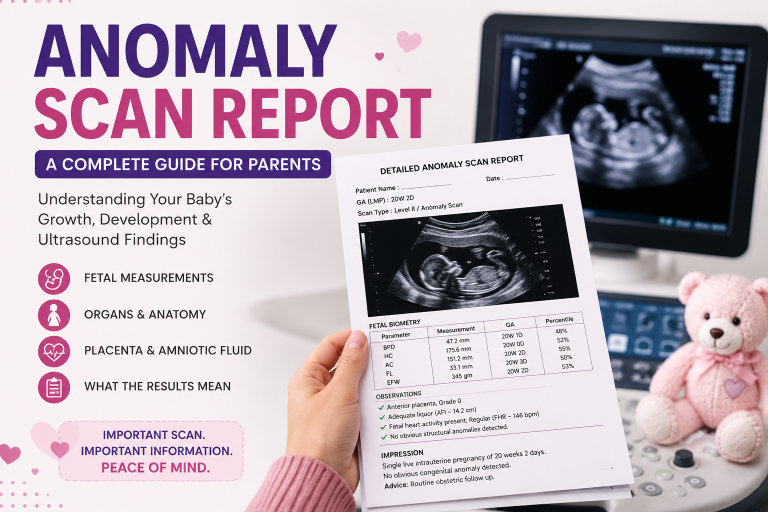
A growth scan is one of several important ultrasounds performed during pregnancy. Earlier in pregnancy, most women undergo an anomaly scan to assess fetal anatomy and development.
A growth scan report provides valuable information about your baby’s development, estimated weight, amniotic fluid levels, placental position, and overall well-being inside the womb.
If you’ve recently received a growth scan report at 30 weeks and are unsure how to interpret the findings, you’re not alone. Many expecting parents find the medical terms and measurements confusing at first.
This guide explains everything you need to know about a 30-week growth scan report, including common report terms, normal measurements, baby weight ranges, placenta findings, and frequently asked questions.
Medical Disclaimer: This article is for educational purposes only and should not replace professional medical advice. Always discuss your scan results with your obstetrician or healthcare provider.
What Is a Growth Scan During Pregnancy?
A growth scan is an ultrasound examination performed during the third trimester to monitor your baby’s growth and development.
Unlike the anomaly scan, which focuses on detecting structural abnormalities, a growth scan primarily evaluates:
- Baby’s size and weight
- Growth progression
- Amniotic fluid levels
- Placental health
- Fetal position
- Blood flow (in some cases)
The scan helps ensure that the baby is growing appropriately for the gestational age.
Your growth scan report may also mention placental position. Learn more about a posterior placenta and what it means during pregnancy.
Why Is a Growth Scan Done at 30 Weeks?
At 30 weeks, your baby is entering a period of rapid growth and weight gain.
Doctors recommend a growth scan to:
- Monitor fetal growth
- Check estimated fetal weight
- Assess amniotic fluid
- Evaluate placental function
- Detect growth restriction
- Identify excessive fetal growth
- Monitor high-risk pregnancies
For most women, this scan provides reassurance that the pregnancy is progressing normally.
What Does a 30-Week Growth Scan Report Include?
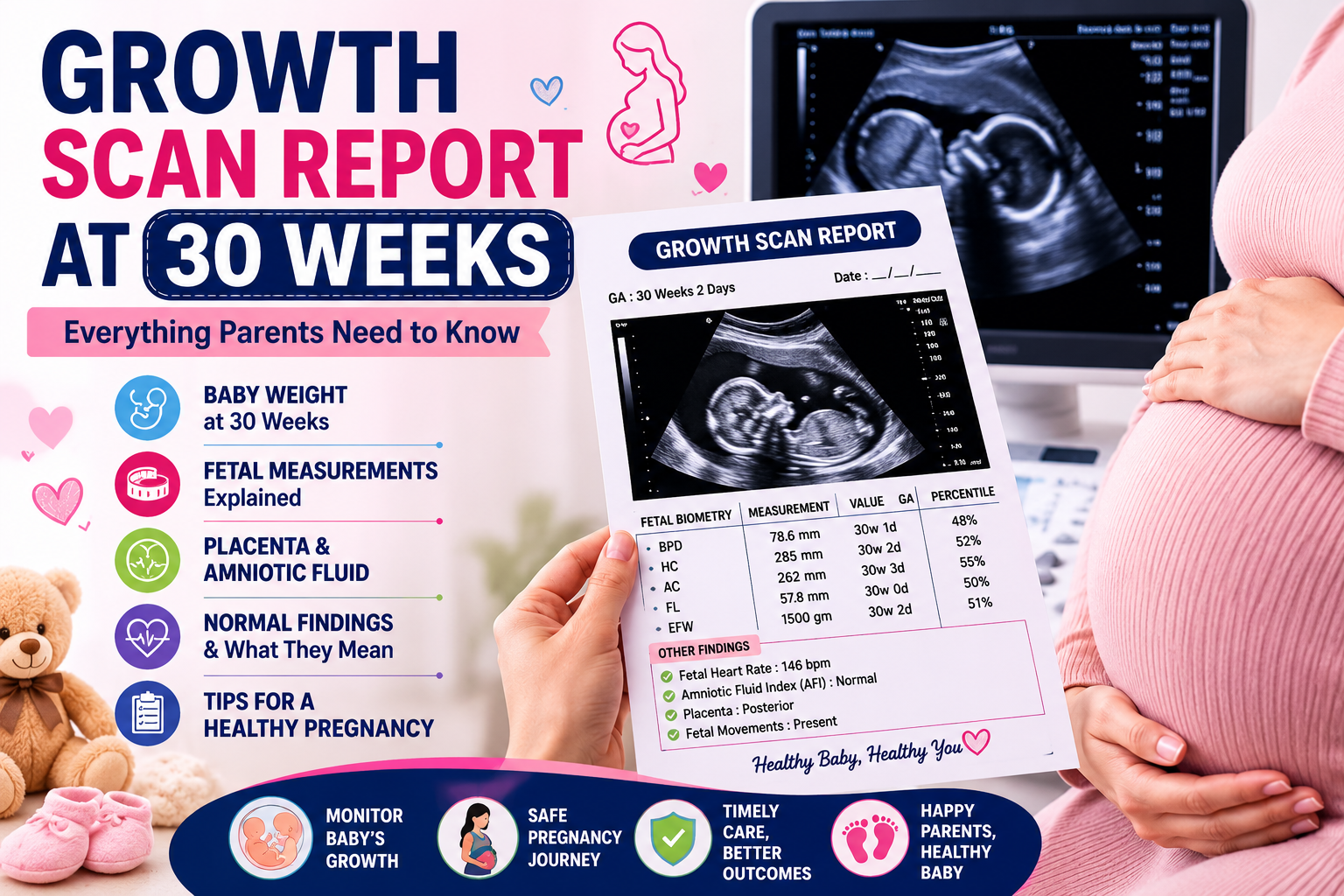
A typical growth scan report contains several important measurements.
Gestational Age (GA)
This indicates how far along the pregnancy is.
Example:
- GA: 30 Weeks 2 Days
Fetal Heart Rate (FHR)
Measures the baby’s heartbeat.
Normal fetal heart rate:
- 110–160 beats per minute
Proper nutrition plays an important role in supporting fetal growth. Read about the benefits of amla during pregnancy for expecting mothers.
Biparietal Diameter (BPD)
Measures the width of the baby’s head.
Used to estimate fetal growth and gestational age.
Head Circumference (HC)
Measures the size of the baby’s head.
Helps assess brain growth and development.
Abdominal Circumference (AC)
Measures the baby’s abdomen.
One of the most important indicators of fetal growth.
Femur Length (FL)
Measures the length of the baby’s thigh bone.
Used to estimate overall fetal size.
Estimated Fetal Weight (EFW)
Combines several measurements to estimate the baby’s weight.
This is often the measurement parents are most interested in.
What Is the Normal Baby Weight at 30 Weeks?
At 30 weeks, the average baby typically weighs:
Approximately 1.3 to 1.6 kilograms
or
Around 2.8 to 3.5 pounds
However, every baby grows differently.
Some babies naturally measure slightly above or below average while remaining completely healthy.
Doctors often look at growth trends rather than a single measurement.
Proper nutrition plays an important role in supporting fetal growth. Read about the benefits of amla during pregnancy for expecting mothers.
Normal Growth Scan Measurements at 30 Weeks
Typical values may include:
| Parameter | Approximate Range |
|---|---|
| BPD | 75–82 mm |
| HC | 270–295 mm |
| AC | 240–285 mm |
| FL | 54–62 mm |
| EFW | 1300–1600 g |
Individual measurements may vary.
Your healthcare provider will interpret them based on your pregnancy history and gestational age.
For comprehensive pregnancy wellness advice, visit our Complete Mom Health Guide.
Placenta Findings in a 30-Week Growth Scan
The report will usually mention placental position.
Common findings include:
Posterior Placenta
Attached to the back wall of the uterus.
Anterior Placenta
Attached to the front wall.
Fundal Placenta
Located at the top of the uterus.
Lateral Placenta
Located on one side of the uterus.
Most placental positions are normal.
Amniotic Fluid Assessment
Amniotic fluid surrounds and protects the baby.
The report may include:
AFI (Amniotic Fluid Index)
or
Deepest Vertical Pocket (DVP)
Normal amniotic fluid levels are reassuring signs of fetal well-being.
Baby Position at 30 Weeks
The scan may mention:
Cephalic Presentation
Baby’s head is down.
Breech Presentation
Baby’s bottom or feet are down.
Transverse Lie
Baby is positioned sideways.
At 30 weeks, many babies are still changing positions.
A breech position at this stage is not usually a concern.
What Does “Growth Corresponds to Gestational Age” Mean?
Many reports include statements such as:
Growth corresponds to gestational age.
This means the baby’s measurements are consistent with the expected size for 30 weeks of pregnancy.
It is generally considered a reassuring finding.
Understanding Percentiles in a Growth Scan
Some reports include fetal growth percentiles.
50th Percentile
Average growth.
Below 10th Percentile
May require closer monitoring.
Above 90th Percentile
May indicate a larger-than-average baby.
Percentiles help doctors assess growth patterns over time.
What If My Baby Is Measuring Small?
A baby measuring slightly small does not always indicate a problem.
Possible reasons include:
- Genetic factors
- Small parental stature
- Incorrect dating
- Normal variation
Doctors may recommend follow-up scans to monitor growth.
What If My Baby Is Measuring Large?
Some babies naturally grow larger than average.
Factors that may contribute include:
- Genetics
- Maternal diabetes
- Larger parental body size
Additional monitoring may sometimes be recommended.
Can a Growth Scan Detect Problems?
A growth scan can identify certain concerns, including:
Fetal Growth Restriction (FGR)
Baby is smaller than expected.
Excessive Growth
Baby is larger than expected.
Placental Issues
Reduced placental function.
Abnormal Amniotic Fluid Levels
Too little or too much fluid.
Fetal Position
Important for delivery planning later in pregnancy.
Common Terms Found in Growth Scan Reports
| Term | Meaning |
|---|---|
| GA | Gestational Age |
| EFW | Estimated Fetal Weight |
| FHR | Fetal Heart Rate |
| BPD | Biparietal Diameter |
| HC | Head Circumference |
| AC | Abdominal Circumference |
| FL | Femur Length |
| AFI | Amniotic Fluid Index |
Understanding these abbreviations can make reports easier to read.
Frequently Asked Questions
What is a growth scan at 30 weeks?
A growth scan is an ultrasound used to assess fetal growth, weight, placenta, and amniotic fluid during the third trimester.
What should be the baby’s weight at 30 weeks?
Most babies weigh between 1.3 and 1.6 kg at 30 weeks.
Is a growth scan different from an anomaly scan?
Yes. An anomaly scan focuses on anatomy, while a growth scan focuses on fetal growth and well-being.
Can a growth scan accurately predict birth weight?
No. It provides an estimate, and actual birth weight may differ.
Is a growth scan mandatory?
The recommendation varies depending on the pregnancy and healthcare provider.
Tips After Receiving Your Growth Scan Report
- Discuss findings with your doctor.
- Keep copies of reports.
- Monitor fetal movements.
- Attend follow-up appointments.
- Follow recommended nutrition guidelines.
- Stay hydrated and active.
References & Resources
| Topic | Resource |
|---|---|
| Pregnancy Ultrasound Scans | NHS – Ultrasound Scans in Pregnancy |
| Fetal Growth & Pregnancy Health | March of Dimes – Pregnancy Health |
| Prenatal Care Guidelines | MedlinePlus – Prenatal Care |
| Pregnancy Information | CDC – Pregnancy |
| Women’s Health & Pregnancy | ACOG – Women’s Health Resources |
Conclusion
A growth scan report at 30 weeks provides valuable information about your baby’s growth, estimated weight, placenta, amniotic fluid, and overall health. For most parents, the report offers reassurance that the baby is developing appropriately during the third trimester.
The growth scan helps monitor your baby’s development before birth. Later, parents can continue tracking important child development milestones after delivery.
While medical terms such as BPD, HC, AC, FL, and EFW may initially seem confusing, understanding these measurements can help you feel more informed and confident about your pregnancy journey.
Remember that every baby grows at their own pace. Always discuss scan findings with your healthcare provider, who can interpret the results in the context of your individual pregnancy and medical history.