
Motherhood can feel like a beautiful storm – full of love but also constant overwhelm, anxiety, racing thoughts and exhaustion.
When the mental load becomes too much, breathing exercises for calmness are one of the quickest, most powerful tools we have. No special equipment, extra time or even privacy needed. Just a few mindful breaths reduce stress hormones, soothe the nervous system and bring you back to center.
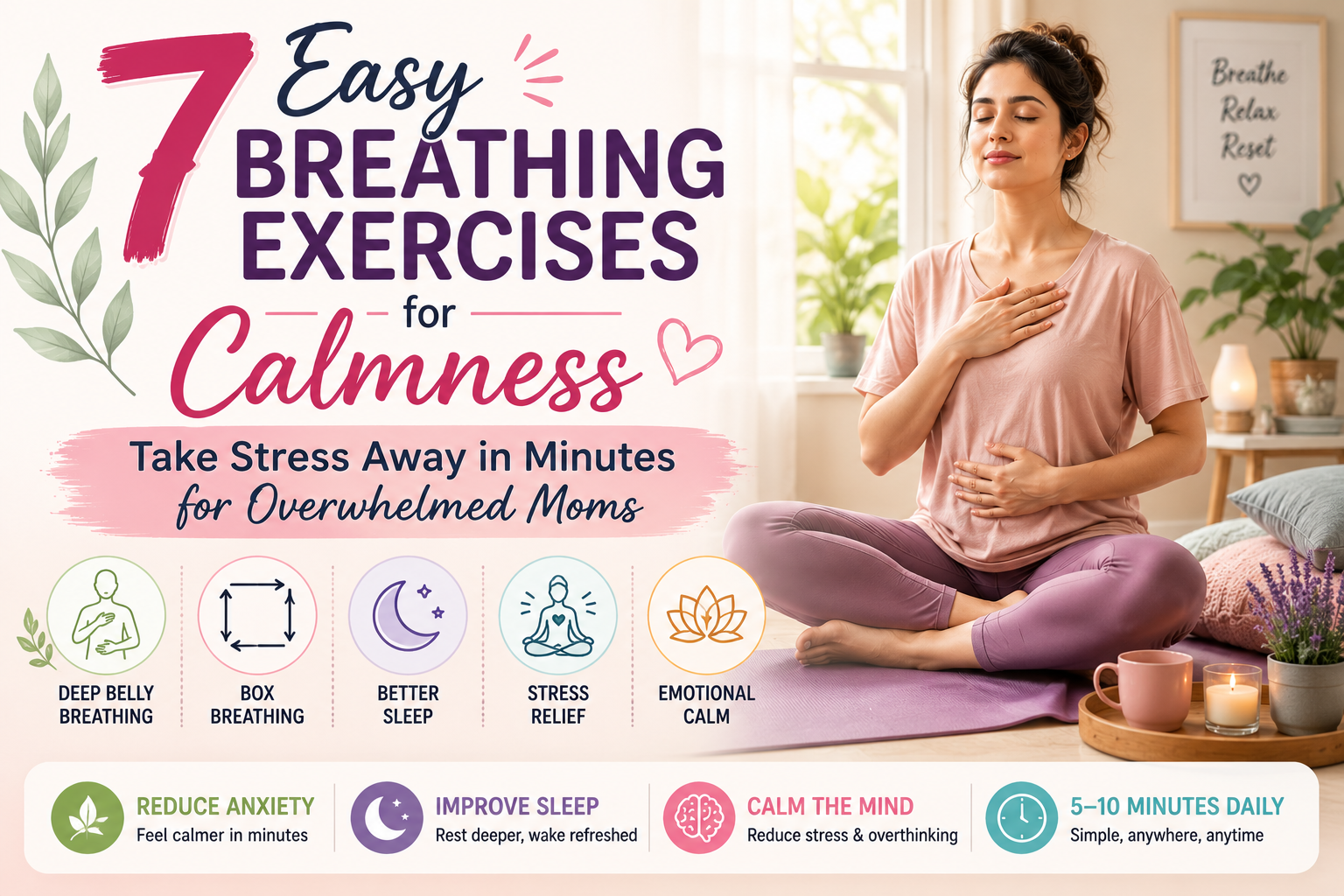
In this complete guide, you’ll learn 7 extremely effective breathing exercises that are especially useful for busy moms.
Every technique includes:
- Step-by-step instructions
- Science-backed benefits
- Modifications for postpartum and beginners
- Best time to use them
- Practical daily routines and expert tips
Also included is a ready-to-use calmness routine and answers to common questions.
Why Breathing Exercises Are So Effective for Overwhelmed Moms
When under stress, most people breathe shallowly from the chest, which keeps the body in “fight-or-flight” mode.
Breathing slowly and mindfully activates the parasympathetic nervous system (rest-and-digest), reduces cortisol, eases anxiety, and improves emotional regulation.
According to research from Harvard Health and the American Psychological Association, regular breathing practices can help:
- Reduce anxiety symptoms by up to 30–40%
- Improve sleep quality
- Reduce blood pressure
- Increase patience with kids and improve presence
- Provide instant calm during tantrums, sleepless nights or difficult moments
Best of all, these exercises take just 1–10 minutes and can be practiced anywhere — during feeding time, in the car, during naps or before bedtime.
7 Best Breathing Techniques to Relax
1. Deep Belly Breathing (Diaphragmatic Breathing)
How to Do It
- Get comfortable, sit or lie down
- Put one hand on your chest and one on your belly
- Breathe in slowly through the nose for 4 counts – your belly rises
- Breathe out through the mouth for 6 counts – feel your belly fall
- Repeat for 2–5 minutes
Benefits for Moms
- Relaxes the nervous system right away
- Relieves physical tension in shoulders and neck
- Enhances oxygen circulation and energy
- Great for postpartum recovery
Best Time to Practice
Morning or whenever feeling overwhelmed.
2. 4-7-8 Breathing Technique (Method by Dr. Andrew Weil)
How to Practice
- Close your mouth and inhale quietly through your nose for 4 counts
- Hold your breath for 7 counts
- Exhale fully through your mouth with a “whoosh” sound for 8 counts
- Repeat 4–8 cycles
Advantages
- Works as a natural tranquilizer for the nervous system
- Helps calm racing thoughts and insomnia
- Relieves anxiety before sleep
Beginner Tip
If 4-7-8 feels difficult, start with shorter counts like 3-5-6.
3. Box Breathing (Square Breathing)
How to Do It
- Breathe in for 4 counts
- Hold for 4 counts
- Exhale for 4 counts
- Hold empty for 4 counts
- Repeat 5–10 times
Advantages
- Increases focus and mental clarity
- Used by Navy SEALs in high-stress situations
- Perfect for moms needing calm during chaotic moments
Beginner Modification
Use a 3-3-3-3 count if needed.
4. Alternate Nostril Breathing (Nadi Shodhana)
How to Practice
- Close the right nostril with the right thumb
- Inhale through the left nostril
- Close the left nostril with ring finger and release the right nostril
- Exhale through the right nostril
- Inhale through the right nostril and switch again
- Repeat for 3–5 minutes
Advantages
- Balances both sides of the brain
- Reduces emotional overload
- Improves focus and mood
Best Time to Practice
Perfect for a midday reset when feeling mentally scattered.
5. Lion’s Breath (Simhasana)
How to Practice
- Sit comfortably on knees or cross-legged
- Inhale deeply through your nose
- Open your mouth wide, stick out your tongue and exhale strongly making a “haaaa” sound
- Repeat 5–8 times
Advantages
- Releases built-up frustration and tension
- Energizes the body and mind
- Great fun to practice with kids
6. Resonant Breathing (Coherent Breathing)
How to Practice
- Inhale for 5 counts
- Exhale for 5 counts
- Continue this slow rhythm for 5–10 minutes
Advantages
- Increases heart rate variability
- Promotes deep emotional peace
- Excellent for long-term stress relief
7. Physiological Sigh (Double Inhalation)
How to Practice
- Take a deep breath through your nose
- Take a second short “top-up” breath
- Exhale slowly and fully through the mouth
- Repeat 3–5 times
Benefits According to Research at Stanford
- One of the quickest ways to reduce stress in real time
- Fast and discreet — perfect for stressful public moments
10–15 Minute Daily Calmness Routine for Busy Moms Morning Routine (Energy & Calm)
- Deep Belly Breathing – 3 minutes
- Box Breathing – 4 minutes
- Resonant Breathing – 5 minutes
Evening Wind-Down Routine
- 4-7-8 Breathing – 5 minutes
- Physiological Sigh – 2 minutes
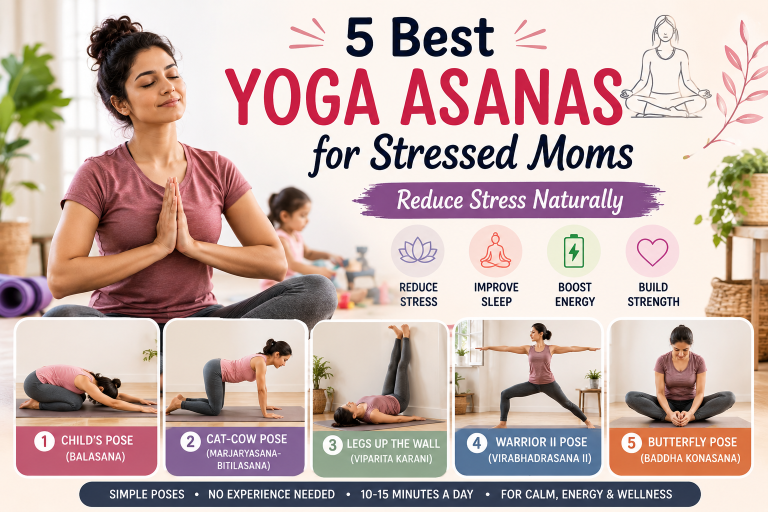
- Legs Up the Wall + Deep Belly Breathing – 5–8 minutes
Quick Reset (1–2 Minutes)
Use Physiological Sigh or Lion’s Breath during overwhelming moments or stressful situations.
Practical Tips for Making Breathing Exercises a Habit
- Start small with just 2 minutes a day
- Set phone reminders like “Mama Reset”
- Practice during feeding, rocking the baby or household chores
- Make it fun for kids with Lion’s Breath
- Track your mood in a simple journal
- Pair breathing exercises with gentle yoga
- Be kind to yourself on difficult days
Postpartum Considerations
- Always check with your doctor first
- Start with gentle breathing techniques like Deep Belly Breathing and Physiological Sigh
- Avoid long breath-holding if recovering from complications
Recommended Links
Frequently asked questions
How soon do breathing exercises work?
Many moms feel calmer within 60–90 seconds. Long-term benefits improve with consistent practice over 2+ weeks.
Can I practice these exercises with my kids?
Yes. Most techniques are quiet, simple and fun for children too.
Is dizziness normal at first?
Yes, especially while learning new techniques. Slow down and return to normal breathing if needed.
Which breathing exercise is best for anxiety?
The 4-7-8 Breathing Technique and Physiological Sigh are highly effective for acute anxiety.
Can breathing exercises replace therapy or medication?
No. They are supportive tools, not replacements. Seek professional help when necessary.
How often should I practice?
Daily practice for 10 minutes gives the best results. Even 3–5 minutes helps significantly.