

Edited by: MomSaathi Editorial Team
Reviewed by: Based on child development, parenting practices, and behavioural guidance from WHO & UNICEF
Hey moms, ever felt completely drained after negotiating for the 10th time why your child must wear a jacket in Bengaluru’s sudden rain or finish their dal-chawal before screen time? You warn them gently, explain the consequences patiently, and still end up giving in or stepping in to “fix” it. Many Indian moms are now talking about a trending style that feels refreshingly straightforward: FAFO parenting.
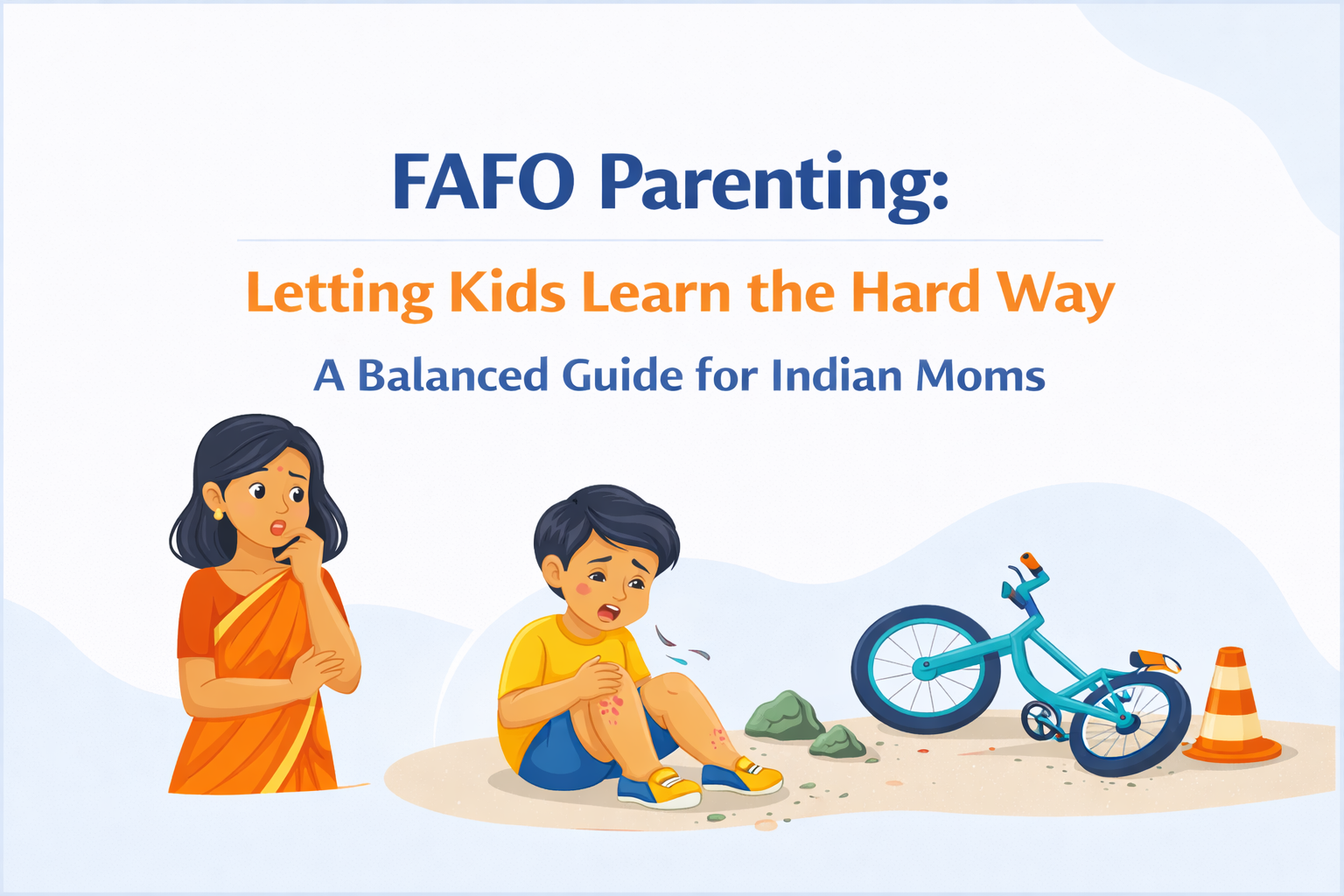
FAFO stands for “F*** Around and Find Out” (or the milder “Fool Around and Find Out”). It’s not about being harsh or neglectful. Instead, it means giving kids age-appropriate freedom to experience the natural consequences of their choices — without immediately rescuing them. Think: if your 8-year-old refuses to eat dinner, they feel hungry later. If your teen skips studying for a test after multiple reminders, they face the low score.
At Momsaathi, we understand the pressure Indian parents face — competitive exams, safety concerns, joint family expectations, and the exhaustion of modern parenting. FAFO is gaining popularity here as a reaction to both helicopter parenting (constant hovering and rescuing) and overly permissive gentle parenting that can leave moms burnt out. Let’s unpack what it really means, its pros and cons in the Indian context, and how to use it wisely without guilt.
Helicopter Parenting in India – Signs, Effects & How to Step Back
What Is FAFO Parenting Exactly?
The term FAFO originated in African American Vernacular English (AAVE) years ago and exploded on social media (especially TikTok) as a parenting trend around 2025. It’s often positioned as an antidote to “gentle parenting” burnout, where parents feel they must endlessly negotiate, validate every emotion, and shield kids from discomfort.
In simple terms:
- You warn or guide once or twice.
- If the child still chooses poorly (within safe limits), you let the natural outcome happen.
- Later, you debrief calmly: “What happened? What can we learn?”
Examples common in Indian homes:
- Your child refuses to pack their school bag properly → They forget their notebook and get scolded by the teacher.
- Teen ignores reminders about limited phone time → Battery dies during an important online class.
- Kid wants to go out in the monsoon without an umbrella after being told → They get wet and learn to listen next time.
It’s not punishment, yelling, or abandoning your child. It’s trusting that real-life consequences teach better than constant lectures or rescues. Many Gen X and millennial Indian parents say, “This is how we were raised!” — minus the catchy acronym.
Why FAFO Is Resonating with Indian Moms Right Now
Gentle parenting became popular for its empathy, but in high-pressure Indian families, it can feel exhausting. Endless explanations, avoiding any “no,” and handling meltdowns while managing work, in-laws, and tuitions lead to mom burnout.
At the same time, traditional strict parenting or helicopter style (doing everything for the child to ensure “success”) creates dependent kids who struggle with resilience. FAFO offers a middle path: clear boundaries + natural consequences + love.
In India, where JEE/NEET stress, safety fears, and “log kya kahenge” (what will people say) are real, many moms are quietly adopting elements of FAFO. An Indian Express piece noted exhausted parents embracing it to let kids “learn the hard way” instead of constant intervention.
It feels empowering: less micromanaging, more teaching real-world accountability.
Internal Link: Gentle Parenting in Joint Families – Making It Work with Grandparents
FAFO vs Helicopter Parenting vs Gentle Parenting
- Helicopter Parenting: You hover, prevent problems, finish homework/projects, and rescue from every discomfort. Result? Kids may lack independence and face higher anxiety.
- Gentle Parenting: Heavy focus on empathy, talking through feelings, and avoiding power struggles. Can be wonderful but draining if it turns permissive.
- FAFO Parenting: Warn → Allow safe natural consequence → Reflect together. It builds problem-solving skills and resilience without over-involvement.
FAFO isn’t the opposite of gentle — many experts suggest combining them: stay warm and connected, but don’t shield from every outcome.
[fc-smart-plan]
Benefits of FAFO Parenting for Children
When used thoughtfully, FAFO can:
- Build resilience and independence: Kids learn the world doesn’t revolve around constant parental fixes.
- Improve decision-making: Experiencing small failures early prepares them for bigger challenges like exams or careers.
- Reduce entitlement: They understand actions have outcomes.
- Lower mom stress: Less fighting over every little thing.
In the Indian context, this can help counter the “trophy kid” pressure and create more self-reliant teens ready for college or jobs.
Research on natural consequences (from psychology) supports that experiencing outcomes helps internalize lessons better than lectures alone.
50 Powerful Parenting Quotes to Inspire Your Journey
Potential Downsides & When to Avoid Pure FAFO
FAFO isn’t perfect, especially in India:
- Safety first: Never use it for dangerous situations (running into traffic, touching hot stove, online risks, or anything harming health).
- Age matters: Toddlers and young kids need more guidance; FAFO works better from primary school onward with supervision.
- Emotional support: If a child feels shame or abandonment after a consequence, debrief with empathy — “I’m here. Let’s see what we can do better next time.”
- Not for everything: Chronic issues (learning difficulties, anxiety) need professional help, not just “find out.”
Critics say extreme FAFO can feel like revenge parenting or lack emotional connection. The goal should always be teaching, not “I told you so.”
Parents.com – What Is FAFO Parenting? Unpacking the Trend
How Indian Moms Can Practice Balanced FAFO Parenting
Here’s a practical, guilt-free way to try it at home:
- Set clear expectations upfront: “If you don’t wear your raincoat, you’ll get wet and cold. Your choice.”
- Give one or two gentle reminders: No endless negotiations.
- Let the consequence happen (if safe): Stay nearby, but don’t rescue.
- Debrief with love later: “How did that feel? What will you do differently?” Hug and reconnect.
- Start small: Begin with low-stakes issues like clothes, snacks, or minor chores — not exams or health.
- Involve the family: Explain to grandparents or spouse why you’re trying this — frame it as building strong, independent kids.
- Combine with warmth: FAFO + gentle reflection = powerful. Praise effort and good choices loudly.
Example for a Bengaluru mom: Your 9-year-old wants to play outside without sunscreen on a sunny day. Warn once. If they refuse, let them play briefly (supervised), then apply sunscreen afterward and discuss the redness or discomfort.
For teens: “You chose not to revise despite reminders. The test result is yours to own. How can I support better preparation next time?”
Building Emotional Resilience in Kids – Gentle Techniques for Indian Families
FAQ: FAFO Parenting for Indian Moms
Q1: Is FAFO parenting harsh or neglectful? No. It’s about natural consequences with supervision and love — not punishment or ignoring your child.
Q2: Can I mix FAFO with gentle parenting? Yes! Many experts recommend it. Use empathy and connection, but allow safe consequences.
Q3: Is it suitable for Indian competitive education system? It can help. Letting kids face small academic consequences early builds better study habits long-term, without you constantly pushing.
Q4: What if my child doesn’t seem to learn from consequences? Reflect together, check for underlying issues (tiredness, learning gaps), and adjust. Consistency matters.
Q5: How is FAFO different from old-school strict Indian parenting? FAFO focuses on natural outcomes + debriefing, not fear, shouting, or physical punishment.
Finding Your Balance as an Indian Mom
Parenting isn’t one-size-fits-all. Helicopter parenting can create anxiety and dependence. Overly gentle approaches may exhaust you. FAFO offers a refreshing middle: teach accountability while staying emotionally present.
You don’t have to label yourself. Take what works — a bit of warning, space for natural learning, and lots of love. Your child will grow into a resilient, responsible adult who can handle life’s ups and downs, whether in India or abroad.
You’re already doing a great job by exploring different styles and wanting what’s best. Small experiments with FAFO can reduce daily battles and bring more peace to your home.
What do you think, moms? Have you tried letting your child “find out” in small ways? Share in the comments — we’re all learning together at Momsaathi.