
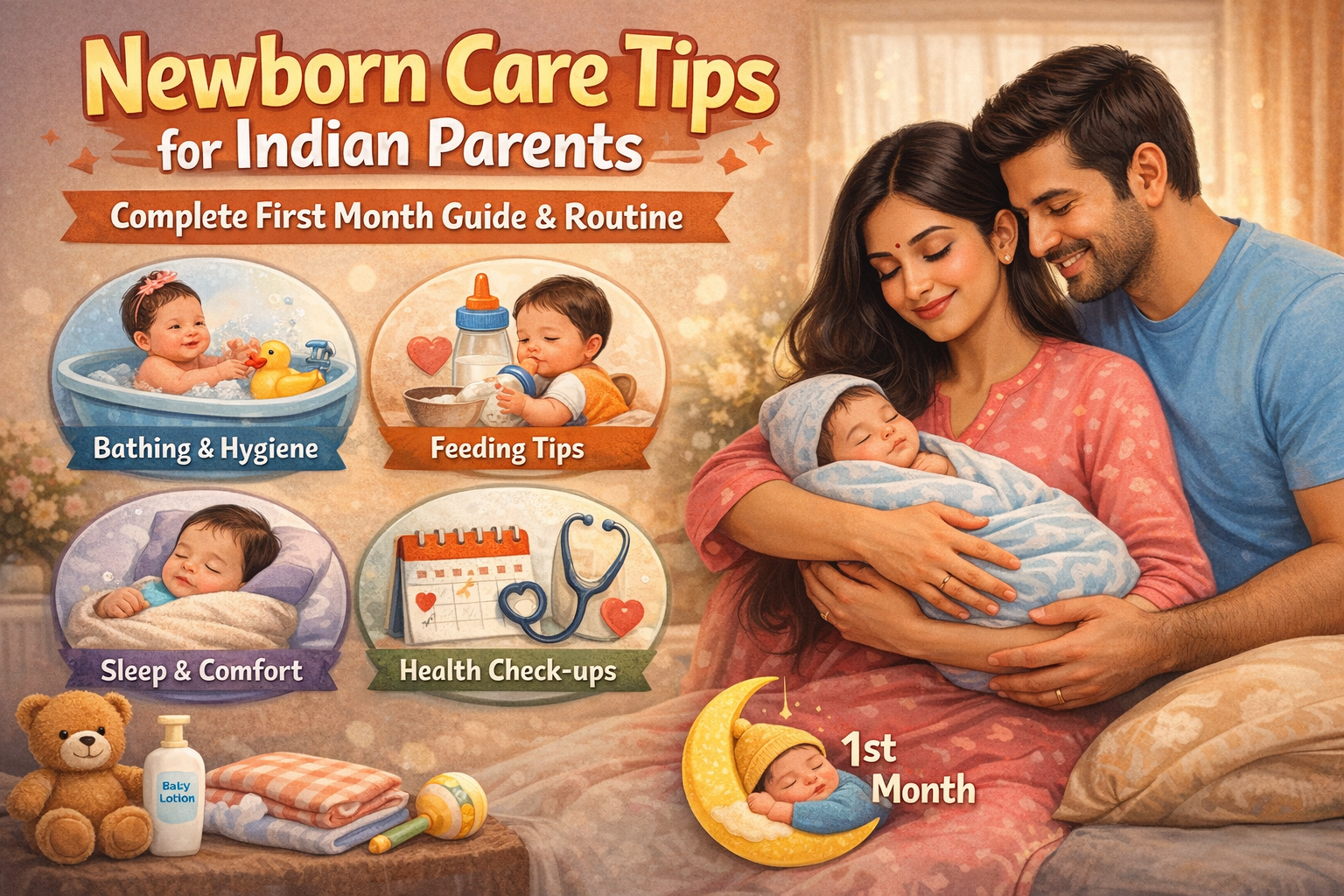

Newborn care tips for Indian parents are essential during the first month, when your baby adjusts to life outside the womb and you step into parenthood. In India, this period often combines joyful family traditions—like daily oil massage (tel malish), grandparent support, and simple home remedies—with modern pediatric guidelines for safety and health.
This in-depth guide covers daily routines, feeding, hygiene, seasonal adaptations (monsoon humidity in Bengaluru, winter dryness, summer heat), jaundice monitoring, vaccinations, common concerns, and bonding. It draws from trusted sources like the World Health Organization (WHO), UNICEF India, and Indian Academy of Pediatrics (IAP).
Always consult your pediatrician for personalized advice, vaccinations, and any health concerns.
Why the First Month Is Critical in Newborn Baby Care in India
Newborns lose some birth weight initially (normal up to 10%) but regain it by day 10–14 with good feeding. They sleep 16–18 hours daily in short bursts and feed 8–12 times.
In Indian homes, extended family often provides support, but advice can vary. Focus on:
- Exclusive breastfeeding (no water, honey, or gripe water for the first 6 months – WHO & IAP recommendation).
- Preventing infections through hygiene.
- Close monitoring for jaundice (very common in India) and danger signs.
- Building strong bonding.
For urban parents in Bengaluru or similar cities, pollution and weather changes require extra care.
Daily Newborn Care Routine for Indian Parents (Flexible First-Month Schedule)
A gentle routine helps everyone adjust.
| Time Slot | Key Activities | Indian-Specific Tips & Benefits |
|---|---|---|
| Early Morning | Feed, burp, gentle play | Skin-to-skin contact for warmth and bonding; burp well to ease gas. |
| Mid-Morning | Oil massage + sponge bath (2–3 times/week) | Use coconut or mustard oil for tel malish – improves circulation . |
| Daytime | Frequent feeds, diaper changes, short tummy time | Ventilate room; use mosquito net in humid/monsoon areas; light cotton clothes. |
| Evening | Calm bonding, feeds | Dim lights; soft family lullabies; avoid overstimulation. |
| Night | Cluster feeds, safe sleep | Back sleeping position; room temperature 22–24°C; safe co-sleep if preferred. |
1. Feeding: The Foundation of Newborn Baby Care in India
Exclusive breastfeeding on demand is ideal .
- Positioning & Latch: Use cradle hold; ensure deep latch.
- Frequency: Every 2–3 hours or on cue.
- Mom’s Support: Drink plenty of fluids; include ajwain, jeera, or fenugreek in diet for better supply.
- Burping: After every feed; gentle clockwise tummy massage helps.
- Formula Feeding: Only if medically advised; follow pediatrician-recommended brands.
Avoid traditional prelacteal feeds (honey/jaggery) – they increase infection risk.
2. Bathing, Hygiene & Umbilical Cord Care
Delay the first full bath for at least 24 hours .
- Oil Massage: Warm oil, gentle strokes – excellent for bonding and skin health.
- Umbilical Cord: Keep it dry and clean; fold diaper below; avoid applying oil, turmeric, or surma .
- Skin Care: Moisturize dry areas; no talcum powder. Dry skin folds thoroughly in humid/monsoon weather.
3. Seasonal Adaptations for Indian Climates
India’s weather varies greatly, so adapt care accordingly:
- Monsoon (High Humidity & Rain): Use mosquito nets and safe repellents; change wet clothes quickly; keep skin dry to prevent fungal rashes and infections.
- Winter (Dry & Cold): Layer breathable cotton + light wool; moisturize lips and cheeks; keep baths short to avoid chills.
- Summer (Heat & Humidity): Choose loose cotton clothes; offer extra feeds for hydration; avoid direct sunlight (especially 10 AM–3 PM); use fan (not direct draft).
These simple changes help prevent heat rash, colds, or dehydration.
4. Jaundice Monitoring & Common Health Concerns
Jaundice (yellow skin/eyes) is common – peaks around day 3–5.
- Signs to Watch: Yellowing spreading to body/legs; lethargy; poor feeding.
- What to Do: Frequent breastfeeding helps flush bilirubin; doctor may check levels or recommend phototherapy .
- Other Issues: Colic (evening fussiness) – soothe with rocking or swaddling; reflux – keep upright after feeds.
Vaccinations: Ensure birth doses (Hep B, BCG, OPV) are given – follow your pediatrician’s schedule.
5. Sleep Safety & Bonding
- Safe Sleep: Always back position; firm mattress; no pillows, toys, or heavy blankets .
- Bonding: Daily skin-to-skin (kangaroo care); talk, sing, and make eye contact.
- For Parents: Rest when baby sleeps; accept family help; watch for postpartum mood changes.
Newborn care tips for Indian parents become easier and more instinctive with time. Trust your instincts, seek support when needed, and cherish these early moments.
FAQs for Indian Parents
How long should oil massage last?
10–15 minutes before bath.
When should I call the doctor immediately?
Fever over 100.4°F, fewer than 6 wet diapers, poor feeding, excessive crying, or breathing issues.
Is co-sleeping safe?
Room-sharing is recommended; bed-sharing requires precautions (firm surface, no smoking/alcohol nearby).
Explore more helpful guides on MomSaathi:
- Pregnancy Diet for Indian Women – First Trimester Chart
- Baby Weight Gain Chart India
- Post Delivery Care for Mothers in India
- Newborn Essentials Checklist for Indian Parents
Ready to embrace your newborn journey? Share your questions or tips in the comments below, or follow us on Instagram (@momsaathi) for daily parenting inspiration!