

Editorial Note: This article provides general information about complementary feeding and compares ragi, packaged infant cereal, and oats. Nutritional needs and readiness for solids vary by baby. Product ingredients and nutrient fortification may also differ by brand, variant, and country. Check the current product label and consult your paediatrician or a qualified child-nutrition professional for individual concerns, especially for premature babies, poor growth, allergies, feeding difficulties, or medical conditions.
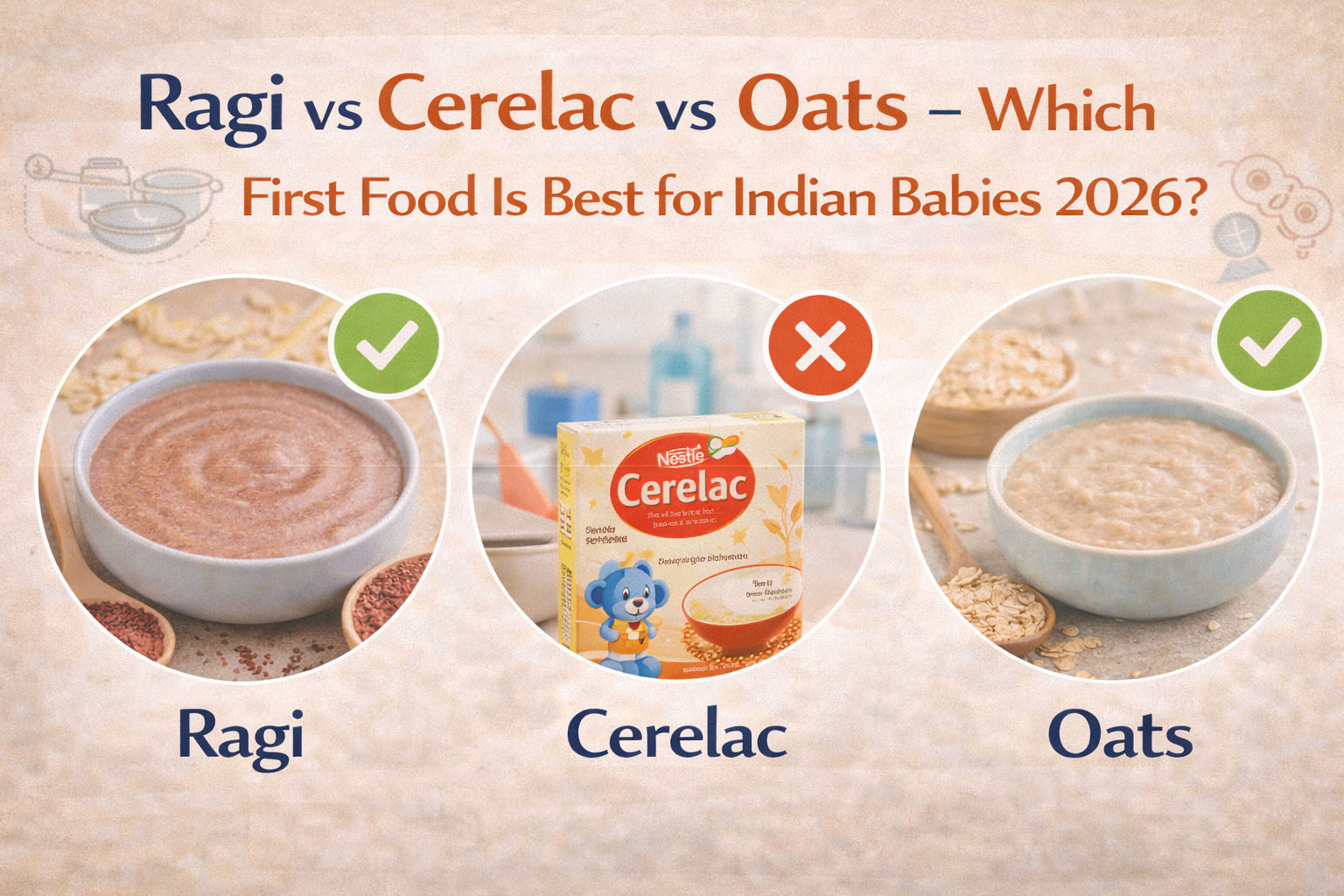
Ragi vs Cerelac vs Oats – Which First Food Is Best for Indian Babies 2026?
Starting complementary foods can leave parents comparing several options at once: traditional homemade ragi porridge, packaged infant cereals such as Cerelac, and simple oats. Each option differs in ingredients, preparation time, texture, fortification, cost, and how it fits into the baby’s overall diet.
The answer is not the same for every child. International guidance generally supports introducing complementary foods at around 6 months, alongside continued breast milk or infant formula, while also considering developmental readiness.
This guide compares ragi vs Cerelac vs oats for babies without declaring one food universally superior. It looks at practical factors such as nutrient profile, iron fortification, ingredients, convenience, texture, preparation, and age-related considerations.
Quick Answer: There is no single best choice for every baby. Ragi can be part of a varied homemade diet, plain oats are a versatile grain option, and an age-appropriate fortified infant cereal may provide added nutrients such as iron depending on the specific product. The better choice depends on your baby’s age, developmental readiness, overall diet, product ingredients, preparation, allergies, and professional advice where needed.
When to Start First Foods: 2026 Guidelines for Indian Babies
According to the Indian Academy of Pediatrics (IAP) and WHO, introduce complementary feeding around 6 months while continuing breastfeeding. First foods must be:
- Iron-rich to fight anemia
- Easy to digest and single-ingredient at first
- Homemade or minimally processed
- Offered in small amounts (1–2 tsp initially)
Avoid solids before 6 months to prevent allergies or infections.
Nutrition Comparison: Ragi vs Cerelac vs Oats (Per 100g Prepared – Approximate)
| Nutrient | Ragi (Homemade Porridge) | Cerelac (Ragi/Standard) | Oats (Plain Cooked) |
|---|---|---|---|
| Calories | 320–330 kcal | 400–420 kcal | 375–380 kcal |
| Carbohydrates | 65–70g | 70–75g | 66–68g |
| Dietary Fibre | 10–12g | 3–5g | 10–11g |
| Protein | 7–8g | 10–12g (fortified) | 13–17g |
| Iron | 4–5mg (natural high) | 8–12mg (fortified) | 4–5mg |
| Calcium | 330–360mg (excellent) | 200–300mg (fortified) | 45–55mg |
| Added Sugar/Preservatives | None | Often present | None (plain) |
| Best For Indian Babies | Anemia prevention, bones | Convenience | Digestion, variety |
Ragi excels in natural iron and calcium – crucial for Indian babies prone to anemia. Cerelac provides fortified nutrients but may contain added sugars. Oats are gentle but lower in key minerals.
Why Ragi Is Often the Best First Food for Indian Babies in 2026
Pediatricians frequently recommend ragi as the top choice because:
- High natural iron – Helps prevent anemia, a widespread issue in India.
- Rich calcium – Supports strong bones and teeth.
- No additives – Homemade ragi is free from preservatives and excess sugar.
- High fibre – Promotes steady energy and satiety without spikes.
- Cultural & affordable – Easily available in Karnataka and South India.
Cerelac is convenient and fortified (useful for busy parents), but experts prefer homemade for gut health. Oats are great for variety and easy digestion but not as nutrient-dense for iron/calcium needs.
Start with one grain at a time to monitor allergies.
Easy Homemade Ragi Porridge Recipe for 6+ Month Babies
A basic, no-added-sugar version – safe and pediatrician-approved.
Ingredients (1–2 small feeds):
- 1–2 tbsp ragi flour (sprouted for better absorption)
- ¾–1 cup water (or breast milk/formula)
- Optional (after 8 months): Pinch jaggery or mashed fruit for taste
Steps:
- Mix ragi flour with cold water to form a lump-free paste.
- Boil remaining water in a pan.
- Stir in ragi paste on low heat, cook 5–7 minutes until thick.
- Cool to lukewarm; thin with milk if needed.
- Start with 1–2 tsp; serve fresh.
Tip: Use sprouted ragi flour for easier digestion – store in airtight jar.
Anemia Prevention Tips for Indian Infants 2026
- Choose iron-rich foods like ragi, dal, or fortified options early.
- Pair with vitamin C (mashed tomato/fruit) for better absorption.
- Continue breastfeeding for natural iron.
- Get regular hemoglobin checks if family history of anemia.
- Avoid tea/coffee near meals (reduces iron uptake).
Final Thoughts
For most Indian babies in 2026, ragi stands out as the best first food due to its natural nutrients, anemia-fighting benefits, and homemade purity. Cerelac and oats work well as backups for convenience and variety. Always introduce slowly, watch reactions, and consult your pediatrician.
Momsaathi.com provides content for informational and educational purposes only. It is not intended to serve as a substitute for professional medical advice, diagnosis, or treatment. Consult your pediatrician before starting complementary feeding or if your baby shows signs of allergy, poor weight gain, or anemia.
Related Articles on Momsaathi.com:
- First 1000 Days Nutrition India – Guide for Indian Parents
- Signs Baby Getting Enough Breast Milk – Indian Moms Checklist
- Best Baby Food Brands India 2026 – Organic & Homemade Options
External Resources:
- IAP Guidelines for Complementary Feeding – Official Indian Academy of Pediatrics advice.
- WHO Guideline on Complementary Feeding 6–23 Months – Global standards.
- HealthyChildren.org (AAP) – Starting Solid Foods – Pediatric tips on first foods.