
Momsaathi.com provides content for informational and educational purposes only. It is not intended to serve as a substitute for professional medical advice, diagnosis, or treatment. Always consult your gynecologist, pediatrician, or nutritionist for a personalized first 1000 days nutrition plan for your baby, especially if there are anemia concerns, allergies, or growth issues.
The first 1000 days (from pregnancy to a child’s 2nd birthday) are the most important window for brain development, immunity, and lifelong health. In India, where anemia affects nearly 60% of children under 5 (NFHS-5 data), focusing on nutrient-rich desi foods during these 1000 days can make a huge difference.
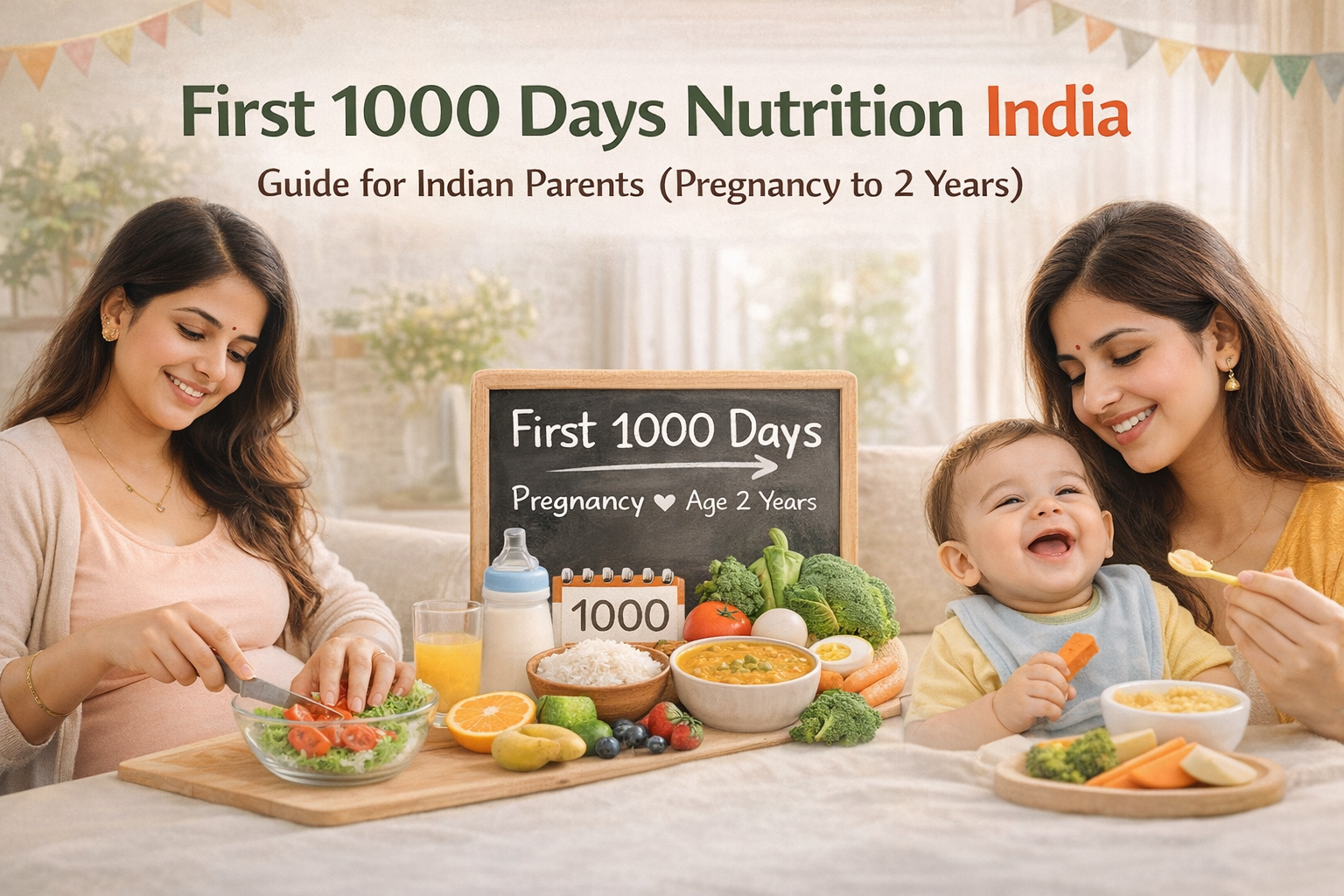
This guide covers first 1000 days nutrition India — trimester-wise pregnancy foods, 0–6 months breastfeeding, 6–24 months complementary feeding, superfoods (ragi, dal, jaggery), simple recipes, anemia prevention tips, and a clear timeline chart.
Why the First 1000 Days Matter in India
- Brain grows fastest (90% by age 5)
- Iron deficiency (anemia) is common — causes poor growth & learning delays
- Good nutrition now prevents obesity, diabetes, and immunity issues later
- Desi superfoods like ragi, dal, jaggery are affordable & powerful
Timeline Chart: First 1000 Days Nutrition India (Pregnancy to 2 Years)
| Stage | Age / Period | Focus Nutrients | Key Foods (Desi Examples) | Daily Goal / Tips |
|---|---|---|---|---|
| Pregnancy | Months 1–9 | Folic acid, Iron, Calcium, DHA | Palak, dal, jaggery, curd, ragi, dates, fish (low-mercury) | +300–500 kcal, small frequent meals |
| Exclusive Breastfeeding | Birth – 6 months | All from breast milk | Breast milk on demand (8–12 feeds/day) | Feed every 1.5–3 hrs, skin-to-skin |
| Complementary Feeding | 6–12 months | Iron, Zinc, Protein, Vitamin A | Ragi porridge, mashed dal, khichdi, mashed banana | Start 1 tsp → increase to ½ katori, 2–3 meals |
| Family Foods + Milk | 12–24 months | Balanced macros, Micronutrients | Roti-dal-sabzi, curd, fruits, jaggery laddoo | 3 meals + 2 snacks + 500 ml milk/day |
Superfoods for First 1000 Days Nutrition India
These affordable, traditional Indian foods are gold for anemia prevention and growth:
- Ragi (Finger Millet) – Iron, calcium, fiber → Best for anemia & bones
- Dal (Lentils) – Protein, iron, folate → Moong, masoor, chana – easy to digest
- Jaggery (Gur) – Iron, natural sweetness → Pair with vitamin C foods (amla, lemon)
- Spinach / Methi (Leafy Greens) – Iron, folate, vitamin A → Cook lightly to retain nutrients
- Dates & Pomegranate – Iron, antioxidants → Daily 4–5 dates soaked or fresh pomegranate
- Curd / Buttermilk – Calcium, probiotics → Daily for gut health & immunity
Simple Recipes for First 1000 Days (6–24 Months)
6–8 Months: Ragi Porridge (Iron Booster)
- 2 tbsp ragi flour + 1 cup water
- Cook to smooth paste → add breast milk/formula
- Optional: tiny pinch jaggery
8–12 Months: Moong Dal Khichdi (Protein + Iron)
- 2 tbsp moong dal + 2 tbsp rice
- Pressure cook with veggies (carrot, pumpkin)
- Mash lightly + ghee + pinch turmeric
12–24 Months: Jaggery Ragi Laddoo (Energy Snack)
- Roast ragi flour + ghee + jaggery
- Roll into small balls – 1 small laddoo/day
Anemia Prevention Tip
Pair every iron-rich food with vitamin C (lemon squeeze, amla, guava) to increase absorption by 3–6 times.
When to Consult a Pediatrician or Nutritionist
Seek help immediately if:
- Baby has fewer than 6 wet diapers/day after day 5
- Poor weight gain (below expected curve)
- Pale skin, lethargy, or breathlessness (anemia signs)
- Refusal to feed or constant fussiness
- Jaundice persists beyond 2 weeks
In India, free nutrition counseling is available at Anganwadi centres, government hospitals, or PMSMA sessions.
Final Words for Indian Parents
The first 1000 days nutrition India is not about fancy supplements — it’s about consistent, loving, home-cooked desi meals rich in ragi, dal, jaggery, and seasonal foods. Start strong in pregnancy, continue with breastfeeding, and introduce solids mindfully — you’re giving your child the best possible start.
Which superfood are you including this week? Share your baby’s favorite recipe in the comments — let’s inspire each other, Karnataka moms!
Related Articles on Momsaathi.com:
- Pregnancy Tips India 2026
- Week-by-Week Pregnancy Guide India
- Foods to Eat During Pregnancy in India
- Signs Baby Getting Enough Breast Milk
External Resources:
Frequently Asked Questions (FAQs) About First 1000 Days Nutrition in India
What are the first 1000 days of a child’s life?
The first 1000 days refer to the period from conception until a child’s second birthday. This window is crucial for brain development, immunity building, and long-term physical growth.
Why is nutrition important during the first 1000 days in India?
First 1000 days nutrition in India plays a vital role in preventing stunting, anemia, and developmental delays. Proper maternal and infant nutrition improves cognitive ability, immunity, and lifelong health outcomes.
What should a pregnant woman eat during the first 1000 days?
Pregnant women should consume a balanced diet rich in iron, folic acid, calcium, protein, and healthy fats. Indian foods like dal, green leafy vegetables, milk, nuts, fruits, and whole grains are highly recommended.
Is exclusive breastfeeding necessary for the first 6 months?
Yes, exclusive breastfeeding for the first six months is recommended as it provides complete nutrition, strengthens immunity, and supports optimal brain development.
When should complementary feeding begin?
Complementary feeding should begin at six months while continuing breastfeeding. Soft, mashed, iron-rich foods should be introduced gradually to support growth.
How does early nutrition affect brain development?
Nutrition during the first 1000 days supports rapid brain growth. Essential nutrients like DHA, iron, iodine, and protein help in cognitive development and memory formation.
What nutrients are most important in the first 1000 days?
Key nutrients include:
Iron
Folic acid
Calcium
Protein
Vitamin D
Iodine
Healthy fats
These support growth, immunity, and neurological development.
Can poor nutrition in early life affect adulthood?
Yes, poor nutrition during the first 1000 days can increase the risk of obesity, diabetes, weak immunity, and learning difficulties later in life.