

Home » MOM HEALTH » Pregnancy Care » Pregnancy Weight Gain Chart (India): Healthy Weight Gain by Trimester & BMI

Pregnancy Weight Gain Chart (India): Healthy Weight Gain by Trimester & BMI

Editorial Note: This article is based on guidance from the Indian Council of Medical Research–National Institute of Nutrition (ICMR-NIN), the World Health Organization (WHO), the American College of Obstetricians and Gynecologists (ACOG), and the Royal College of Obstetricians and Gynaecologists (RCOG). Weight gain recommendations vary depending on pre-pregnancy BMI, medical history, and whether you are carrying one baby or multiples. Always follow your obstetrician’s advice for personalized care.

One of the most common questions during pregnancy is, “How much weight should I gain?” The answer depends on your pre-pregnancy Body Mass Index (BMI), whether you’re carrying one baby or multiples, and your overall health.

Healthy weight gain supports your baby’s growth, placenta development, increased blood volume, amniotic fluid, and maternal tissue changes. Both too little and too much weight gain can increase the risk of pregnancy complications.

This guide explains the Pregnancy Weight Gain Chart (India) using recommendations relevant to Indian women, trimester-wise weight gain, monthly charts, diet tips, and frequently asked questions.

You may also like these MomSaathi guides:

Maternity Scrubs
High Protein Foods for Kids
Brain Development Foods

Quick Answer

For Indian women with a normal pre-pregnancy BMI (18.5–23 kg/m²), the ICMR-National Institute of Nutrition (NIN) recommends gaining about 10–12 kg during pregnancy. Women who are overweight (BMI 23–27.5 kg/m²) or obese (BMI >27.5 kg/m²) should generally aim for a lower total gain of 5–9 kg, while underweight women require closer monitoring and may need to gain more.

Why Healthy Weight Gain Matters

Pregnancy weight gain isn’t just about the baby’s weight.

It includes:

  • Baby
  • Placenta
  • Amniotic fluid
  • Increased blood volume
  • Enlarged uterus
  • Breast tissue
  • Maternal fat stores
  • Extra body fluids

Healthy weight gain helps reduce the risk of:

  • Low birth weight
  • Preterm birth
  • Gestational diabetes
  • High blood pressure
  • Cesarean delivery
  • Large-for-gestational-age babies

Pregnancy Weight Gain Chart (India)
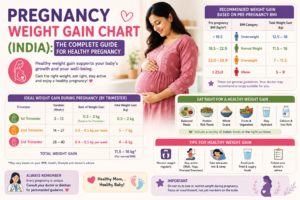
Recommended Total Weight Gain Based on Pre-Pregnancy BMI

Pre-Pregnancy BMI BMI Range (Indian Adults) Recommended Weight Gain
Underweight Below 18.5 Individualized; requires close monitoring
Normal Weight 18.5–23 10–12 kg
Overweight 23–27.5 5–9 kg
Obese Above 27.5 5–9 kg

These recommendations are based on the ICMR-NIN Dietary Guidelines for Indians 2024, which use BMI cut-offs appropriate for Indian adults.

Pregnancy Weight Gain by Trimester

Weight gain is not the same throughout pregnancy.

First Trimester (0–13 Weeks)

Typical gain:

  • Around 0.5–2 kg

Many women gain very little during the first trimester due to morning sickness.

Second Trimester (14–27 Weeks)

This is when weight gain becomes more consistent.

Average gain:

  • About 0.4–0.5 kg per week (varies with BMI and medical advice)

Third Trimester (28–40 Weeks)

The baby grows rapidly.

Weight continues to increase steadily until delivery.

Month-by-Month Pregnancy Weight Gain Chart (Normal BMI)

Pregnancy Month Expected Weight Gain*
Month 1 Minimal
Month 2 0–1 kg
Month 3 1–2 kg
Month 4 2–3 kg
Month 5 4–5 kg
Month 6 5–7 kg
Month 7 7–8.5 kg
Month 8 8.5–10 kg
Month 9 10–12 kg

*Approximate values for women with a normal pre-pregnancy BMI carrying a singleton pregnancy. Individual weight gain patterns vary.

How to Calculate Your BMI Before Pregnancy

Use this formula:

BMI = Weight (kg) ÷ Height (m²)

Example

  • Weight = 55 kg
  • Height = 1.60 m

BMI = 55 ÷ (1.60 × 1.60)

BMI = 21.5

This falls within the normal BMI range for Indian adults.

Factors That Affect Pregnancy Weight Gain

Many factors influence how much weight you gain, including:

  • Pre-pregnancy BMI
  • Twin or multiple pregnancy
  • Morning sickness
  • Physical activity
  • Diet quality
  • Medical conditions
  • Gestational diabetes
  • Thyroid disorders
  • Fluid retention
  • Genetics

Weight gain should always be interpreted alongside fetal growth and overall maternal health rather than as a number alone.

Healthy Pregnancy Diet for Appropriate Weight Gain

Choose nutrient-dense foods such as:

  • Whole grains
  • Fresh fruits
  • Vegetables
  • Milk and dairy products
  • Eggs
  • Lentils
  • Beans
  • Fish (low-mercury varieties)
  • Lean chicken
  • Nuts and seeds (age-appropriate and if no allergy)

The ICMR recommends an additional ~350 kcal/day from the second trimester for women with a normal BMI, along with increased protein intake to support pregnancy.

Foods to Limit During Pregnancy

Reduce intake of:

  • Sugary drinks
  • Deep-fried foods
  • Ultra-processed snacks
  • Excess sweets
  • Alcohol (avoid completely)
  • High-mercury fish

Choose home-cooked, balanced meals whenever possible.

Safe Physical Activity During Pregnancy

If approved by your healthcare provider, consider:

  • Walking
  • Prenatal yoga
  • Swimming
  • Stretching
  • Pelvic floor exercises

Moderate exercise helps support healthy weight gain and overall well-being during pregnancy.

Maintaining a healthy weight during pregnancy is about supporting your baby’s growth while keeping you healthy. Every pregnancy is unique, so your weight gain may differ from someone else’s. Your obstetrician will monitor your baby’s growth, your health, and your weight together rather than focusing on the scale alone.

If you’re looking for more pregnancy and parenting guidance, explore these MomSaathi resources:

Maternity Scrubs
High Protein Foods for Kids
Brain Development Foods
Indian Lunch Box Ideas

See also  Maternity Scrubs: The Complete Guide to Comfortable Pregnancy Workwear

Pregnancy Weight Gain for Twin Pregnancy

Women carrying twins naturally require more weight gain than those carrying one baby.

General recommendations vary depending on your pre-pregnancy BMI, overall health, and your obstetrician’s advice. Twin pregnancies require regular monitoring because nutritional needs are significantly higher.

Your doctor may recommend:

  • Higher calorie intake
  • More protein
  • Additional iron
  • Folic acid supplementation
  • Calcium-rich foods
  • Frequent fetal growth monitoring

Never follow standard singleton pregnancy weight charts for twins without medical guidance.

Underweight Pregnancy: What You Should Know

Women who are underweight before pregnancy may need to gain more weight to support healthy fetal growth.

Healthy tips include:

  • Eat small, frequent meals.
  • Include protein in every meal.
  • Drink milk or healthy smoothies.
  • Add healthy fats like nuts, seeds, and peanut butter (if appropriate).
  • Don’t skip meals.
  • Take prenatal supplements as prescribed.

Adequate weight gain may reduce the risk of low birth weight.

Overweight or Obese Pregnancy

If you begin pregnancy overweight or obese, your doctor will usually recommend slower, controlled weight gain rather than weight loss.

Focus on:

  • Balanced nutrition
  • Walking (if approved)
  • Plenty of vegetables
  • Lean protein
  • Whole grains
  • Limiting sugary drinks
  • Avoiding highly processed foods

Do not try to lose weight during pregnancy unless specifically advised by your healthcare provider.

Weekly Pregnancy Weight Gain Guide (Normal BMI)

After the first trimester, many women with a normal pre-pregnancy BMI gain approximately 0.4–0.5 kg per week.

Pregnancy Weeks Average Weight Gain*
1–13 Weeks 0.5–2 kg total
14–20 Weeks Around 2–3 kg
21–27 Weeks Around 2–3.5 kg
28–40 Weeks Around 3–5 kg

*Approximate values for singleton pregnancies. Individual patterns vary.

Signs You May Not Be Gaining Enough Weight

Speak with your doctor if you experience:

  • Significant weight loss
  • Persistent vomiting
  • Poor appetite
  • Slow fetal growth
  • Severe morning sickness
  • Difficulty eating because of illness

Early evaluation can help address nutritional concerns before they affect pregnancy outcomes.

Signs of Excessive Weight Gain

Rapid or excessive weight gain may require medical evaluation, especially if accompanied by:

  • Swelling of the face or hands
  • High blood pressure
  • Severe headaches
  • Vision changes
  • Sudden increase in body weight
  • Gestational diabetes

Do not self-diagnose. Contact your healthcare provider promptly if you notice these symptoms.

Tips for Healthy Pregnancy Weight Gain

Follow these practical habits:

  • Eat three balanced meals daily.
  • Include healthy snacks between meals.
  • Drink enough water.
  • Consume protein with every meal.
  • Eat plenty of fruits and vegetables.
  • Choose whole grains over refined grains.
  • Stay physically active if medically cleared.
  • Get adequate sleep.
  • Attend regular prenatal check-ups.
  • Take prenatal vitamins as prescribed.

Foods That Support Healthy Pregnancy Weight Gain

Choose nutrient-rich foods such as:

Protein

  • Eggs
  • Dal
  • Rajma
  • Chickpeas
  • Fish
  • Chicken
  • Paneer
  • Greek yogurt

Healthy Carbohydrates

  • Brown rice
  • Oats
  • Whole wheat roti
  • Millets
  • Sweet potatoes

Healthy Fats

  • Almonds
  • Walnuts
  • Flaxseeds
  • Chia seeds
  • Avocado

Fruits

  • Bananas
  • Apples
  • Oranges
  • Berries
  • Mangoes

Vegetables

  • Spinach
  • Carrots
  • Broccoli
  • Pumpkin
  • Tomatoes

Foods to Avoid Excessive Weight Gain

Limit:

  • Sugary drinks
  • Cakes and pastries
  • Packaged snacks
  • Fast food
  • Fried foods
  • Excess sweets
  • Processed meats
  • High-sugar desserts

These foods provide calories but relatively few essential nutrients.

Pregnancy Weight Tracking Tips

To monitor your weight accurately:

  • Weigh yourself once a week.
  • Use the same weighing scale.
  • Weigh yourself at the same time of day.
  • Wear similar clothing.
  • Record your progress in a pregnancy journal or app.
  • Focus on long-term trends rather than daily fluctuations.

Common Myths About Pregnancy Weight Gain

Myth 1: You Need to Eat for Two

Fact: Energy needs increase during pregnancy, but not by double. Most women require only modest additional calories, especially in the second and third trimesters.

Myth 2: More Weight Means a Healthier Baby

Fact: Excessive weight gain does not necessarily result in a healthier baby and may increase pregnancy risks.

Myth 3: You Should Diet During Pregnancy

Fact: Pregnancy is not the time for weight-loss diets unless specifically recommended by your healthcare provider.

Myth 4: Every Woman Gains the Same Amount

Fact: Healthy weight gain varies depending on BMI, health conditions, and whether you are carrying one baby or multiples.

Frequently Asked Questions

How much weight should I gain during pregnancy in India?

For women with a normal pre-pregnancy BMI, the ICMR-NIN generally recommends a total weight gain of 10–12 kg for a singleton pregnancy.

Is it normal to lose weight in early pregnancy?

Yes. Some women lose a small amount of weight during the first trimester due to nausea and vomiting. Persistent weight loss should be discussed with your doctor.

Can I exercise during pregnancy?

Most women with uncomplicated pregnancies can safely perform moderate exercise, but always follow your obstetrician’s advice.

Should I weigh myself every day?

Weekly tracking is usually sufficient unless your healthcare provider recommends more frequent monitoring.

Can too much weight gain harm my pregnancy?

Excessive weight gain may increase the risk of gestational diabetes, high blood pressure, and delivery complications.

What foods help healthy pregnancy weight gain?

Whole grains, lean protein, dairy, fruits, vegetables, nuts, seeds, and healthy fats support gradual, healthy weight gain.

Does carrying twins change weight gain recommendations?

Yes. Twin pregnancies generally require greater weight gain and closer nutritional monitoring.

What if I’m underweight before pregnancy?

Your doctor may recommend additional calories and closer follow-up to support healthy fetal growth.

Final Thoughts

Healthy pregnancy weight gain is an important part of supporting both maternal and fetal health. Rather than comparing yourself with others, focus on eating a balanced diet, staying active as advised, attending regular prenatal visits, and following your obstetrician’s recommendations.

Remember that every pregnancy is different. The goal is not to reach a specific number on the scale but to support healthy growth and development throughout pregnancy.

For more pregnancy and parenting resources, visit these MomSaathi guides:

Maternity Scrubs
High Protein Foods for Kids
Brain Development Foods
Indian Lunch Box Ideas
Best Bedtime Routine

Trusted External Resources

For evidence-based pregnancy guidance, refer to:

These organizations provide up-to-date, evidence-based recommendations on pregnancy nutrition, healthy weight gain, prenatal care, and maternal health.

More Reading

Post navigation

Subscribe
Notify of
guest

3 Comments
Oldest
Newest Most Voted

[…] Pregnancy Weight Gain Chart (India) Brain Development Foods Best Bedtime Routine […]

[…] Shower Wishes Pregnancy Weight Gain Chart (India) Best Bedtime […]

[…] Pregnancy Weight Gain Chart (India) Baby Shower Wishes Pregnancy Announcement Captions Brain Development Foods […]

3
0
Would love your thoughts, please comment.x
()
x