
Medical note: This article is for educational purposes only and should not replace professional medical advice. If your baby has difficulty breathing, swelling of the lips or tongue, persistent vomiting or becomes unusually sleepy along with hives, seek emergency medical care immediately.
Seeing red, raised welts suddenly appear on your baby’s skin can be frightening for any parent. These itchy bumps, known as baby hives, are common in infants and young children. While many cases are mild and resolve on their own, hives can sometimes be a sign of an allergic reaction that requires prompt medical attention.
Baby hives may develop after eating certain foods, taking medications, experiencing viral infections, insect bites or even exposure to heat or cold. Understanding what causes hives, how to recognize them and when to seek medical care can help you respond confidently.
This guide explains everything parents need to know about baby hives, including symptoms, causes, treatment, prevention tips and warning signs that should never be ignored.
What Are Baby Hives?
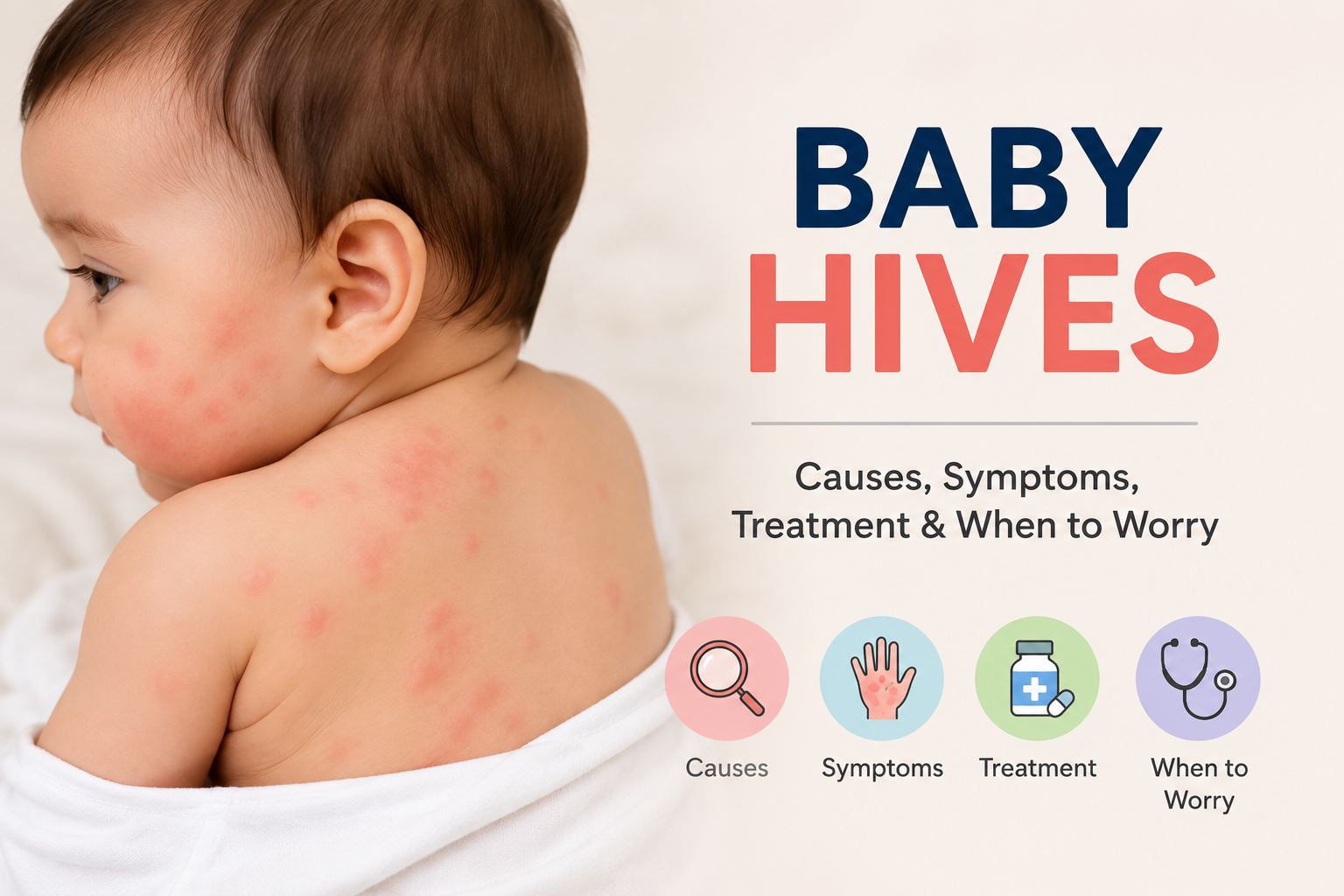
Baby hives, medically known as urticaria, are raised, itchy welts that appear on the skin when the body releases a chemical called histamine. Histamine causes tiny blood vessels to leak fluid into the skin, creating swollen, red or pink patches.
Hives can appear anywhere on the body, including the:
- Face
- Cheeks
- Arms
- Legs
- Chest
- Back
- Abdomen
- Neck
The rash often appears suddenly and may disappear within a few hours, only to reappear on another part of the body. According to the American Academy of Pediatrics (HealthyChildren.org), hives are common in children and are often caused by viral infections or allergic reactions. Parents should seek immediate medical care if hives occur with breathing difficulties or facial swelling.
What Do Baby Hives Look Like?
Baby hives usually have the following characteristics:
- Raised red or pink welts
- Smooth surface
- Irregular shapes
- Pale center with red edges
- Different sizes
- Extremely itchy
- May join together to form larger patches
Unlike eczema, hives tend to appear and disappear quickly.
What Causes Baby Hives?
Several conditions can trigger hives in babies.
1. Food Allergies
One of the most common causes is an allergic reaction to food.
Common food allergens include:
- Cow’s milk
- Eggs
- Peanuts
- Tree nuts
- Soy
- Wheat
- Fish
- Shellfish
Symptoms usually develop within minutes to two hours after eating.
2. Viral Infections
Many babies develop hives during or shortly after viral illnesses.
Examples include:
- Common cold
- Influenza
- RSV
- Hand, Foot and Mouth Disease
- COVID-19
- Viral fever
In fact, viral infections are among the most common causes of hives in young children.
3. Medications
Some medicines may trigger hives, including:
- Antibiotics
- Ibuprofen
- Certain vaccines (rarely)
- Other prescription medications
Never stop prescribed medication without consulting your healthcare provider.
4. Insect Bites or Stings
Mosquitoes, ants, bees and other insects may cause localized or widespread hives in sensitive babies.
5. Heat or Cold
Some babies develop hives after exposure to:
- Hot weather
- Cold temperatures
- Warm baths
- Sweating
These are known as physical hives.
6. Skin Contact with Irritants
Baby skin may react after touching:
- Soaps
- Fragrances
- Detergents
- Certain plants
- Animal saliva
- Latex
Symptoms of Baby Hives
Symptoms may include:
- Raised itchy bumps
- Red or pink patches
- Swelling around the eyes
- Swelling of the lips
- Itchy skin
- Rash that changes location
- Rash that appears suddenly
- Mild burning sensation
Some babies remain playful, while others may become irritable because of the itching. The NHS explains that most cases of hives improve within a few days, although identifying and avoiding the trigger can help prevent future episodes.
How Long Do Baby Hives Last?
Most acute hives improve within:
- A few hours
- 24 hours
- Up to six weeks (acute urticaria)
Individual welts often disappear within 24 hours, even if new ones appear elsewhere.
Are Baby Hives Contagious?
No.
Hives themselves are not contagious.
However, if they are caused by a viral infection, the virus may spread to others, even though the hives cannot.
How Are Baby Hives Diagnosed?
Doctors usually diagnose hives by:
- Examining the rash
- Reviewing recent illnesses
- Asking about new foods
- Reviewing medications
- Discussing family history of allergies
Blood tests or allergy testing are usually unnecessary unless hives are frequent or recurrent.
How Are Baby Hives Treated?
Treatment depends on the underlying cause.
Remove the Trigger
If a specific trigger is identified, avoid further exposure.
Antihistamines
Your paediatrician may recommend an age-appropriate antihistamine to reduce itching and swelling.
Never give over-the-counter allergy medicine without medical advice for infants.
Cool Compresses
Applying a cool, damp cloth may help soothe itching and reduce discomfort.
Keep Baby Comfortable
Dress your baby in:
- Loose cotton clothing
- Lightweight fabrics
- Breathable sleepwear
Avoid overheating.
Moisturise the Skin
A fragrance-free baby moisturiser may help reduce irritation, although it does not treat the hives themselves.
As your baby grows, you may also find our guide on Child Development Milestones: Birth to 5 Years helpful for understanding your child’s overall growth and development.
Home Remedies for Baby Hives
Mild cases of baby hives often improve within a day or two. These home care measures can help keep your baby comfortable while the rash settles.
1. Apply a Cool Compress
Place a clean, cool, damp cloth on the affected skin for 10–15 minutes several times a day. This may help reduce itching and swelling.
2. Dress Your Baby in Loose Cotton Clothing
Soft, breathable cotton clothing reduces friction and helps prevent additional skin irritation.
Avoid:
- Wool fabrics
- Tight clothing
- Heavy blankets
- Overheating
3. Keep Your Baby Cool
Heat can make hives itch more.
Try to:
- Keep the room comfortably cool.
- Avoid excessive sweating.
- Dress your baby in lightweight clothing.
4. Avoid Scratching
Babies may rub their face or body when hives itch.
Keep your baby’s nails trimmed short and consider using soft cotton mittens during sleep if scratching becomes excessive.
5. Identify Possible Triggers
If you suspect a particular food, medicine or product caused the hives, stop using it and discuss it with your baby’s healthcare provider before reintroducing it.
How to Prevent Baby Hives
Although not all cases can be prevented, these steps may reduce the risk:
- Introduce new foods one at a time as advised by your paediatrician.
- Use fragrance-free baby skincare products.
- Wash baby clothes with mild, hypoallergenic detergents.
- Keep your home free from common allergens where possible.
- Protect your baby from insect bites.
- Avoid overheating during hot weather.
- Give medicines only as prescribed.
When Should You See a Doctor?
Arrange a medical evaluation if:
- Hives last longer than 24–48 hours without improvement.
- The rash keeps returning.
- Your baby develops a fever.
- The rash appears after starting a new medicine.
- Swelling involves the eyes or lips.
- Your baby seems unusually irritable or uncomfortable.
- You cannot identify the cause.
When Is It an Emergency?
Seek emergency medical care immediately if your baby develops hives along with:
- Difficulty breathing
- Wheezing
- Swelling of the tongue
- Swelling of the throat
- Trouble swallowing
- Persistent vomiting
- Pale or blue lips
- Severe drowsiness
- Collapse or loss of consciousness
These symptoms may indicate anaphylaxis, a severe allergic reaction that requires immediate treatment.
Baby Hives vs Eczema
| Baby Hives | Baby Eczema |
|---|---|
| Raised welts | Dry patches |
| Very itchy | Itchy and flaky |
| Appears suddenly | Develops gradually |
| Moves to different areas | Usually stays in the same locations |
| Often disappears within hours | May last weeks or months |
Baby Hives vs Heat Rash
| Baby Hives | Heat Rash |
|---|---|
| Raised swollen welts | Tiny red bumps |
| Usually itchy | Often prickly or mildly itchy |
| Triggered by allergies, infections or medications | Caused by blocked sweat glands |
| Can appear anywhere | Common on the neck, chest and skin folds |
Can Vaccines Cause Baby Hives?
In rare cases, babies may develop hives after vaccination.
Most vaccine-related hives are mild and resolve quickly. However, if hives occur together with breathing difficulties, facial swelling or persistent vomiting, seek emergency medical care immediately.
Do not skip future vaccinations without discussing the reaction with your child’s healthcare provider.
Conclusion
Baby hives are common and are often caused by viral infections, allergies or temporary environmental triggers. Although the sudden appearance of raised, itchy welts can be alarming, most cases improve within a few hours to a few days with appropriate care.
The most important step is to watch your baby’s overall condition. If hives are accompanied by breathing problems, swelling of the lips or tongue, or signs of anaphylaxis, seek emergency medical attention immediately.
With prompt recognition and proper care, most babies recover completely without long-term complications.
Frequently Asked Questions
What are baby hives?
Baby hives are raised, itchy welts on the skin caused by the release of histamine, often triggered by allergies, infections or environmental factors.
What causes hives in babies?
Common causes include viral infections, food allergies, medications, insect bites, heat, cold and skin contact with irritants.
Are baby hives contagious?
No. Hives themselves are not contagious, although the viral infection causing them may spread.
How long do baby hives last?
Individual hives usually disappear within 24 hours, while the overall episode often resolves within a few days.
Can teething cause hives?
Teething does not directly cause hives. However, viral infections occurring during the teething period may trigger them.
Are baby hives itchy?
Yes. Hives are often intensely itchy and may make babies fussy or irritable.
Can formula cause hives?
Yes. Some babies may have an allergic reaction to proteins in cow’s milk formula.
Should I bathe my baby if they have hives?
Yes. A lukewarm bath is generally safe and may help soothe itchy skin. Avoid hot water.
Can mosquito bites cause hives?
Yes. Some babies develop hives in response to insect bites or stings.
Can hives appear after antibiotics?
Yes. Certain antibiotics can trigger allergic reactions that include hives. Contact your child’s healthcare provider if this occurs.
Are baby hives dangerous?
Most cases are mild. However, hives accompanied by breathing difficulties or facial swelling require immediate emergency care.
Can stress cause hives in babies?
Stress is not a common cause in infants. Viral infections and allergic reactions are much more likely triggers.
Can babies sleep with hives?
Yes, if they are otherwise well. However, seek medical advice if the hives worsen or are accompanied by other concerning symptoms.
How can I stop my baby from scratching hives?
Keep nails trimmed, dress your baby in soft cotton clothing and follow your healthcare provider’s advice on itch relief.
When should I worry about baby hives?
Seek urgent medical attention if hives occur with breathing problems, swelling of the lips or tongue, persistent vomiting, severe drowsiness or collapse. Consult your paediatrician if hives persist, recur frequently or you suspect a medication or food allergy.