
Medical note: This article is for educational purposes only and should not replace professional medical advice. Mild swelling after childbirth is common, but sudden, severe or painful swelling—especially if accompanied by chest pain, shortness of breath, severe headache or vision changes—requires immediate medical attention.
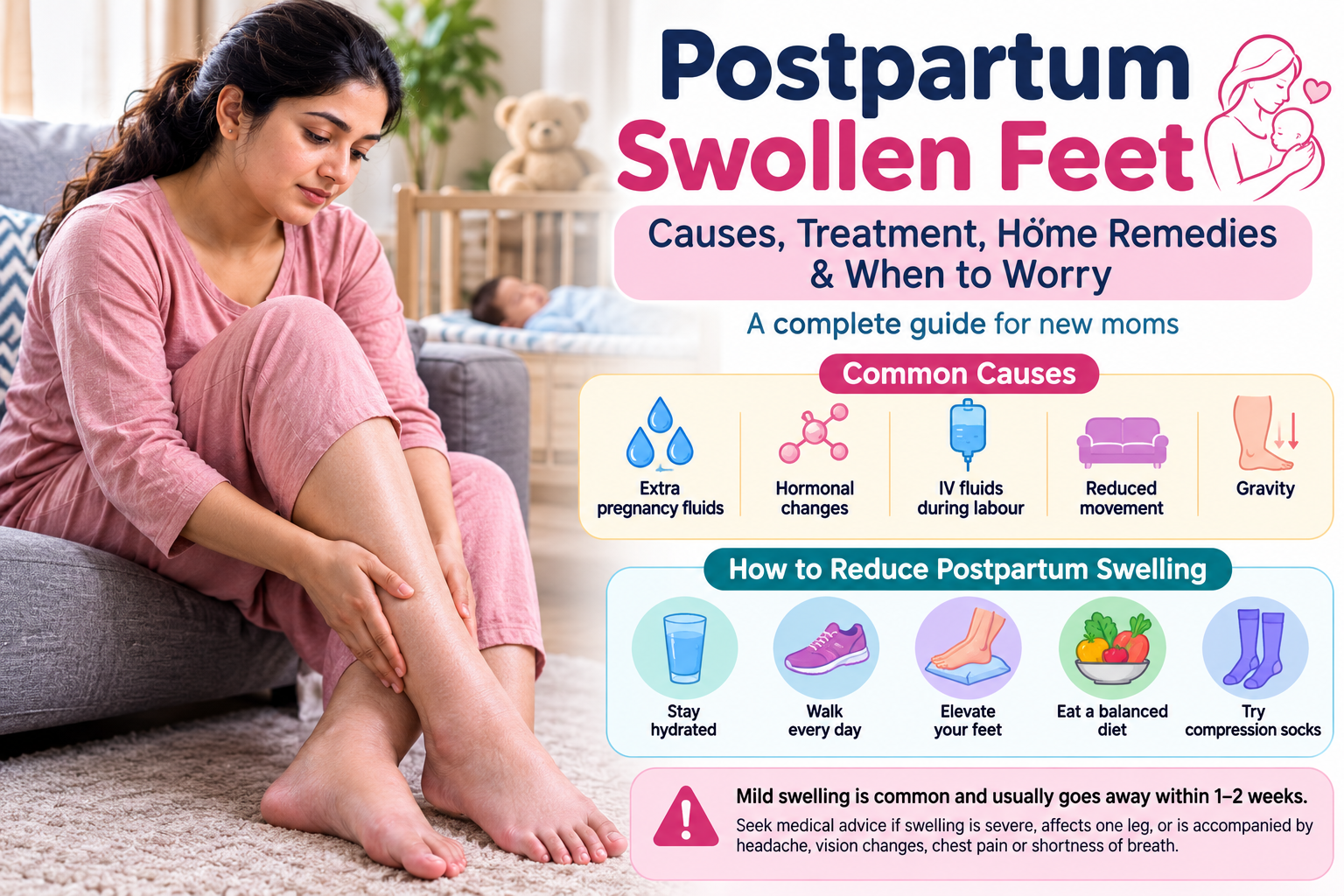
Postpartum swollen feet are common after childbirth and usually result from fluid retention, hormonal changes, and the body’s natural recovery process. In most women, swelling improves within a few days to two weeks, but persistent or painful swelling may require medical attention.
Bringing your baby home is an exciting milestone, but many new mothers are surprised to notice that their feet, ankles and legs become swollen after childbirth. In fact, postpartum swollen feet are very common and usually occur because your body is getting rid of the extra fluid retained during pregnancy.
For most women, the swelling gradually improves within one to two weeks after delivery. However, in some cases, swelling may signal a more serious medical condition that requires immediate attention.
This guide explains why postpartum swelling happens, how to reduce it safely and when it’s time to contact your healthcare provider.
What Are Postpartum Swollen Feet?
Postpartum swollen feet refer to the swelling of the feet, ankles or lower legs after giving birth. Doctors call this condition postpartum edema.
During pregnancy, your body produces approximately 50% more blood and body fluids to support your growing baby. After delivery, your body gradually removes this excess fluid through urine and sweat.
Until the extra fluid leaves your body, you may notice:
- Puffy feet
- Swollen ankles
- Tight shoes
- Heavy legs
- Mild discomfort while walking
For most mothers, these symptoms are temporary.
According to the American College of Obstetricians and Gynecologists (ACOG), postpartum recovery involves normal physical changes, including the gradual elimination of excess fluids retained during pregnancy.
Why Do Feet Swell After Giving Birth?
Several factors contribute to postpartum swelling.
1. Extra Pregnancy Fluids
The biggest reason is fluid retention during pregnancy.
Your body stores extra fluids to support:
- Your baby’s growth
- Placenta
- Increased blood volume
- Amniotic fluid
After childbirth, these fluids don’t disappear immediately. Instead, your kidneys gradually eliminate them over several days.
2. Hormonal Changes
Hormones such as progesterone cause your body to retain more water during pregnancy.
After delivery, hormone levels begin returning to normal, allowing the excess fluid to leave your body.
3. IV Fluids During Labour
Many mothers receive intravenous (IV) fluids during:
- Labour induction
- Epidural anaesthesia
- Caesarean section (C-section)
These additional fluids can temporarily increase swelling after birth. The NHS explains that mild swelling after childbirth is common and usually improves as the body naturally removes excess fluid over the following days and weeks.
4. Reduced Movement
New mothers often spend long periods:
- Feeding the baby
- Resting
- Recovering after delivery
Sitting or standing for extended periods allows fluid to collect in the feet and ankles.
5. Gravity
Gravity naturally pulls excess fluid toward the lower part of your body, making the feet and ankles appear more swollen, particularly by the evening.
Is Postpartum Swelling Normal?
Yes.
Mild swelling in both feet after childbirth is considered normal.
It is especially common if you:
- Had a C-section
- Received IV fluids
- Experienced prolonged labour
- Had swelling during pregnancy
- Delivered twins or multiples
According to the American College of Obstetricians and Gynecologists (ACOG), postpartum recovery involves many temporary physical changes, including fluid shifts as the body returns to its pre-pregnancy state.
How Long Does Postpartum Swelling Last?
Most mothers notice improvement within:
| Time After Delivery | What to Expect |
|---|---|
| 1–3 days | Swelling may temporarily increase |
| 4–7 days | Body begins eliminating extra fluid |
| 1–2 weeks | Significant improvement |
| Up to 3 weeks | Swelling usually disappears completely |
Recovery varies depending on:
- Delivery method
- Hydration
- Physical activity
- Overall health
Symptoms of Postpartum Swollen Feet
Common symptoms include:
- Puffy feet
- Swollen ankles
- Tight shoes
- Skin feels stretched
- Mild heaviness
- Temporary indentation when pressing the skin (pitting edema)
- Slight discomfort while walking
These symptoms usually improve with rest and time.
Natural Ways to Reduce Postpartum Swollen Feet
Stay Hydrated
Although it seems surprising, drinking enough water helps your body eliminate excess fluid more efficiently.
Aim for 2–3 litres of water daily, especially if you’re breastfeeding.
Walk Every Day
Gentle walking improves blood circulation and helps reduce swelling.
Start with:
- 5–10 minute walks
- Increase gradually as advised by your healthcare provider
Elevate Your Feet
Whenever possible:
- Raise your feet above heart level
- Use pillows while resting
- Elevate your legs several times a day
Wear Comfortable Footwear
Choose:
- Supportive slippers
- Comfortable walking shoes
- Avoid high heels
- Avoid tight footwear
Reduce Salt Intake
Eating excessive sodium may worsen water retention.
Instead, include:
- Fresh fruits
- Vegetables
- Whole grains
- Potassium-rich foods like bananas and sweet potatoes
Continue Reading on MomSaathi
If you’re beginning your postpartum journey, you may also like our guide on How Many Weeks Can You Find Out Gender?, which explains prenatal testing and ultrasound milestones during pregnancy.
Foods That May Help Reduce Postpartum Swelling
A healthy postpartum diet can support your body’s natural ability to eliminate excess fluids. Focus on foods rich in potassium, magnesium and water while limiting processed foods high in sodium.
Potassium-Rich Foods
Potassium helps maintain a healthy fluid balance.
Include:
- Bananas
- Sweet potatoes
- Spinach
- Avocados
- Coconut water (in moderation)
- Oranges
Water-Rich Foods
Hydrating foods may support fluid balance.
Good options include:
- Watermelon
- Cucumber
- Tomatoes
- Strawberries
- Lettuce
- Celery
Protein-Rich Foods
Protein supports healing after childbirth.
Choose:
- Lentils
- Eggs
- Greek yogurt
- Paneer
- Tofu
- Lean chicken or fish (if non-vegetarian)
If you’re breastfeeding, maintaining a balanced diet and staying hydrated can also support milk production and postpartum recovery.
Do Compression Socks Help?
Yes. Compression socks or stockings can improve circulation and help reduce swelling in the feet and ankles.
They may be especially useful if you:
- Had a C-section
- Stand for long periods
- Have mild varicose veins
- Travel frequently after delivery
Ask your healthcare provider about the right compression level before using them.
Postpartum Swollen Feet After a C-Section
Swelling often lasts slightly longer after a Caesarean birth because:
- IV fluids given during surgery increase fluid retention.
- Recovery is slower.
- Physical activity may be limited during the first few days.
Most women notice improvement within two weeks, although complete recovery can vary.
When Are Swollen Feet After Childbirth Dangerous?
While mild swelling is common, certain symptoms require immediate medical evaluation.
Contact your healthcare provider immediately if you notice:
- Swelling in only one leg
- Severe pain in the calf
- Redness or warmth in one leg
- Sudden shortness of breath
- Chest pain
- Severe headache
- Blurred vision
- Swelling that suddenly becomes much worse
- High blood pressure after delivery
These symptoms could indicate conditions such as a blood clot or postpartum preeclampsia.
For more information about postpartum recovery and maternal health, visit MedlinePlus, a trusted resource from the U.S. National Library of Medicine.
Can Postpartum Swelling Be a Sign of a Blood Clot?
Yes, although it is uncommon.
A deep vein thrombosis (DVT) is a blood clot that usually affects one leg.
Warning Signs
- Swelling in one leg only
- Calf pain or tenderness
- Red or warm skin
- Difficulty walking
If you develop these symptoms, seek emergency medical care immediately.
According to the Centers for Disease Control and Prevention (CDC), pregnancy and the postpartum period increase the risk of blood clots, making prompt evaluation essential.
Can Postpartum Swelling Be Caused by Preeclampsia?
Yes.
Although preeclampsia is often associated with pregnancy, it can also develop after childbirth, usually within the first six weeks.
Symptoms Include
- Severe headache
- Vision changes
- High blood pressure
- Swelling of the face and hands
- Severe swelling that appears suddenly
- Upper abdominal pain
- Nausea or vomiting
Postpartum preeclampsia is a medical emergency and requires immediate treatment.
When Should You See a Doctor?
Schedule an appointment if:
- Swelling lasts longer than 2–3 weeks
- Walking becomes painful
- Swelling worsens instead of improving
- You have fever or signs of infection
- Only one leg is swollen
- You develop severe headaches or vision problems
- You’re concerned about your recovery
Early medical advice can help rule out serious complications and provide peace of mind.
Conclusion
Postpartum swollen feet are a normal part of recovery for many mothers. The swelling occurs because your body is gradually removing the extra fluids retained during pregnancy and childbirth.
Most women notice significant improvement within one to two weeks with simple measures such as staying hydrated, walking regularly, elevating the feet and eating a balanced diet.
However, swelling that is severe, painful, affects only one leg or is accompanied by chest pain, shortness of breath, severe headache or vision changes should never be ignored. Prompt medical attention is essential to rule out serious conditions such as blood clots or postpartum preeclampsia.
With proper care and patience, most mothers recover completely and can focus on enjoying life with their new baby.
Frequently Asked Questions
Is it normal for my feet to swell more after giving birth?
Yes. Swelling may increase during the first few days after delivery before gradually improving.
How long do postpartum swollen feet last?
Most swelling improves within 1–2 weeks, although some women may notice mild swelling for up to 3 weeks.
Can breastfeeding cause swollen feet?
Breastfeeding itself doesn’t cause swelling, but staying well hydrated while breastfeeding supports your body’s recovery.
Should I drink less water if my feet are swollen?
No. Drinking enough water actually helps your body remove excess fluid more effectively.
Is walking good for postpartum swelling?
Yes. Gentle walking improves circulation and may help reduce swelling.
Do C-sections cause more swelling?
Yes. IV fluids and a longer recovery period often make swelling more noticeable after a Caesarean birth.
Can swollen feet be a sign of postpartum preeclampsia?
Yes. Swelling accompanied by severe headache, vision changes or high blood pressure requires immediate medical attention.
Can postpartum swelling affect only one foot?
Swelling in one foot or leg should be evaluated promptly because it may indicate a blood clot.
Are compression socks safe after delivery?
Many women benefit from compression socks, but consult your healthcare provider to choose the appropriate type.
When should I go to the emergency room?
Seek emergency care immediately if you have swelling in one leg with pain or redness, chest pain, difficulty breathing, severe headache or sudden vision changes.