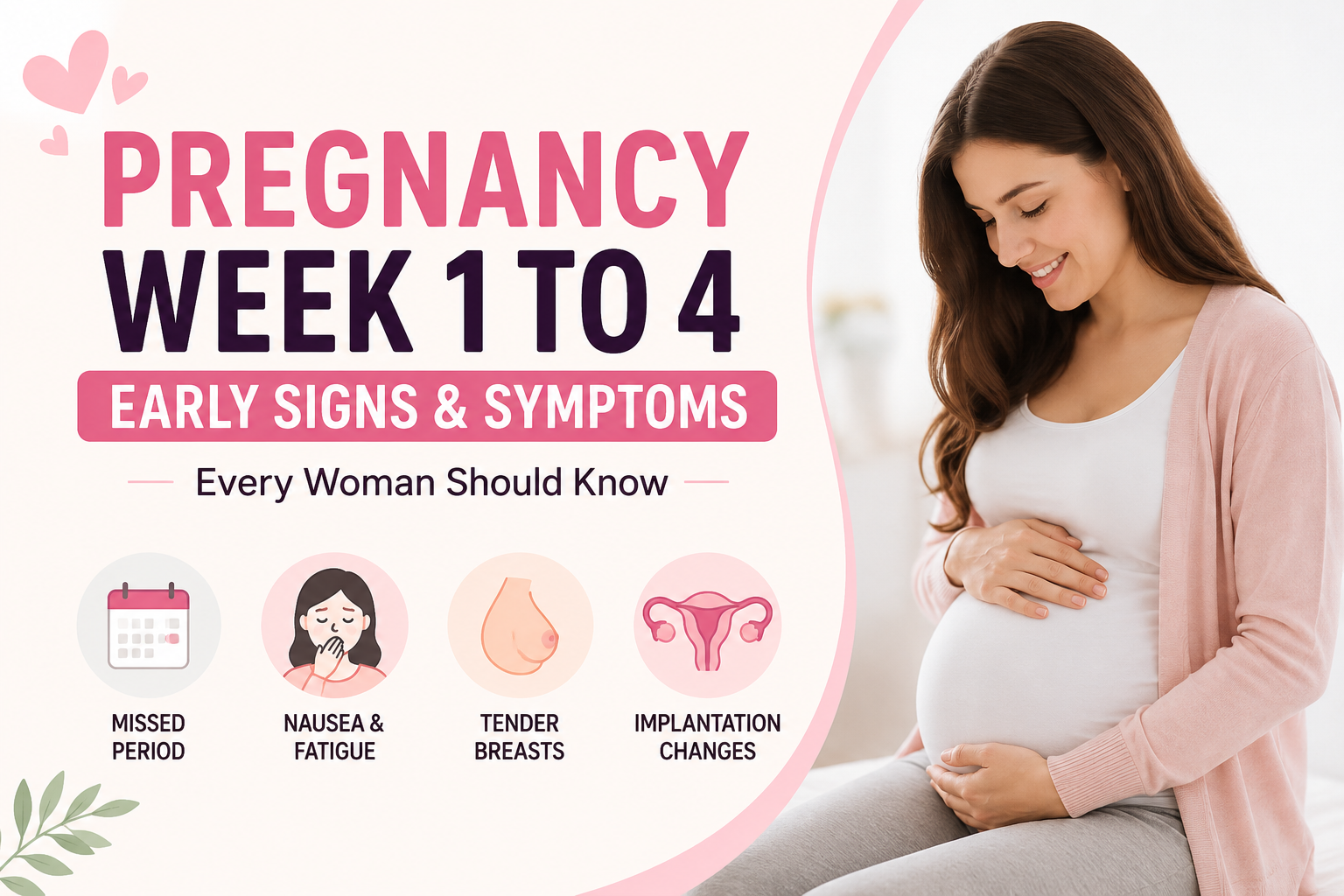

Pregnancy is one of the most important and life changing experiences in a woman’s life. But prior to the baby bump and prior to an ultrasound confirming the news, the body begins to show several signs of early pregnancy symptoms early on.. The first 4 weeks of pregnancy are very important because this is the time that fertilisation occurs and the baby begins to develop very fast.
Some women have subtle physical and emotional changes in Weeks 1 to 4. Some women don’t notice anything at all. Recognising these early signs of pregnancy can help you to identify a pregnancy sooner and prepare for the journey ahead.
In this guide we will tell you all about pregnancy week 1 to 4, like common symptoms, body changes, baby development and when to do a pregnancy test.
Pregnancy Weeks 1–4 Explained
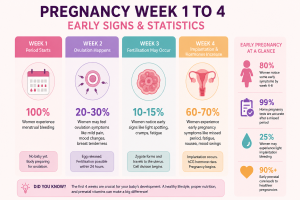
Pregnancy is counted by doctors from the first day of your last menstrual period (LMP), not the day you conceived.
It means:
- Week 1: Your period starts.
- Week 2: Ovulation happens.
- Week 3: Fertilisation may occur.
- Week 4: Pregnancy hormones start to increase and implantation occurs.
Many women start to feel early pregnancy symptoms by the end of week 4.
Signs and Symptoms of Week 1 of Pregnancy
Technically, week 1 isn’t pregnancy at all. Your body is preparing to ovulate and possibly conceive.
Week 1 General Symptoms
1. Periods with bleeding
This is your regular time. The lining of the uterus breaks down, preparing for a new cycle.
2. Light Cramps
A lot of women have lower back pain and cramps in their abdomen with their periods.
3. Mood swings
Hormonal changes can cause mood swings, irritability or tiredness.
4. Tiredness
Hormonal changes and blood loss during menstruation may sap energy levels.
What Becomes of the Infant?
No baby yet. Your body is simply preparing an egg for ovulation.
Week 2 Pregnancy Symptoms
Ovulation occurs most often in week 2. This is the most fertile time of the menstrual cycle.
Week 2 Early Signs
1. More cervical mucus
You may see clear, stretchy discharge that looks like egg whites. This allows the sperm to swim easily.
2. Mild pelvic discomfort
Some women have mild pain or discomfort during ovulation, called “mittelschmerz.”
3. More Libido
Ovulation leads to hormonal changes that can heighten libido in a natural way.
4. Breast Soreness
Hormonal changes can make the breasts feel tender or swollen.
Inside the Body What Happens
- The ovary releases an egg.
- When sperm and egg meet fertilisation can occur within 24 hours.
Symptoms of Week 3 of Pregnancy
Week 3. Fertilisation may take place. Now is the beginning of actual pregnancy.
Symptoms of Pregnancy at 3 Weeks
This early many women still miss symptoms, but some may notice subtle changes.
1. Light speckling
You may notice some light spotting as the fertilised egg travels to the uterus.
2. Light Cramps
You may feel very light cramping as your body gets ready for implantation.
3. Tiredness
Hormonal changes may start to affect energy levels.
4. Higher basal body temperature
Women who monitor ovulation may have a sustained increase in body temperature.
Week 3: Baby Development
So at this point:
- Sperm fertilises the egg.
- A zygote is formed.
- The cells start dividing rapidly.
- The fertilised egg travels to the uterus.
Development begins immediately, although the embryo is microscopic.
4 Weeks Pregnant Symptoms
Week 4: Many women first suspect that they are pregnant. Usually, implantation takes place and the body starts making the pregnancy hormone hCG, or human chorionic gonadotropin.
Symptoms of Pregnancy at Week 4
1. No Time
Usually, the first big sign of pregnancy is a missed period.
If you are late and your cycle is regular, then you might want to consider a pregnancy test.
2. Bleeding after implantation
Some women have light pink or brown spotting known as implantation bleeding. This is lighter than a regular period and typically lasts for 1–2 days.
3. Changes in Breasts
Breasts can be:
- Tenders
- Swelling
- Weighty
- Sensitive
The nipples may darken some, too.
4. Tiredness
High levels of progesterone can make you feel unusually tired.
5. Nauseousness
Some women may experience early morning sickness but it is more prevalent after Week 6.
6. Peeing a lot
Hormones change to increase the flow of blood to the kidneys and you have to go to the toilet more often.
7. Mood Changes
Hormones quickly affect the mood and feelings.
8. Swelling
Many women experience bloating in early pregnancy, due to increased levels of progesterone.
9. Craving or avoiding certain foods
You may suddenly start craving certain foods. Or you may find that you develop a distaste for smells and foods you normally like.
10. Improved sense of smell
Some women can become more sensitive to smells early on in pregnancy.
PMS Symptoms Vs Early Pregnancy Symptoms
Many of the signs and symptoms of early pregnancy are also signs and symptoms of PMS which can make it difficult to tell them apart.
| Symptom | PMS | First Trimester |
|---|---|---|
| Breast Tenderness | Common | Common |
| Weakness | Mild | Usually stronger |
| Cramping | Very common | Mild implantation cramps |
| Mood Swings | Common | Common |
| Missed Period | Rare | Major sign |
| Nausea | Rare | Frequent |
| Frequent urination | Uncommon | Common |
Usually the most significant difference is a missed period along with other symptoms.
What Triggers Early Pregnancy Symptoms?
Hormonal changes are the main reason for pregnancy symptoms.
Main Hormones Involved
Human chorionic gonadotropin (hCG)
- Produced following implantation
- Conducted positive pregnancy tests
Progesterone
- Supports the lining of the womb
- Causes bloating and tiredness
Oestrogen
- Assists in development of foetus
- Effects breast tissue and sensations
These hormones start to increase rapidly in Weeks 3 and 4.
How Soon Can I Take a Pregnancy Test?
Most home pregnancy tests are most effective:
- Missed period
- Week 4 or more
If you test too early, you may get a false negative because your hCG levels are too low.
Tips for Getting Accurate Results
- Use the first morning urine
- Carefully follow instructions
- Retest in 2–3 days if negative but symptoms continue
What Does the Baby Look Like During Weeks 1–4?
The baby is tiny but grows rapidly in the first month.
Development By Week
Week 1–2
- Body gets ready for pregnancy
- Egg is maturing
Week 3
- Fertilisation takes place
- Genetic material merges
Week 4
- Implantation commences
- Formation of placenta begins
- Construction of the neural tube
By week 4 the embryo is the size of a poppy seed.
Healthy Tips for Early Pregnancy
It is an important time to look after yourself in the first month.
1. Start taking prenatal vitamins
Folic acid during pregnancy can help prevent neural tube defects..
2. Say no to alcohol and smoking
These can impair foetal development.
3. Drink Plenty of Fluids
Drink plenty of water throughout the day.
4. Consume healthy food
Focus on:
- Fruit
- Vegetable
- Proteins
- Wholegrain cereals
5. Take Some Rest
Fatigue is common so adequate sleep is essential.
6. Reduce Your Caffeine Intake
Limit caffeine as directed by your doctor.
When to See a Doctor
You should see a health care provider if you:
- Get a positive pregnancy test
- Endure intense pain
- Experience heavy bleeding
- Feel dizziness or faintness
Early prenatal care helps get you off to a healthy pregnancy.
Closing Thoughts
Even if they aren’t visible on the outside, the first four weeks of pregnancy are a time of lots of important changes. Your body starts to prepare for the development of a baby from ovulation and fertilisation to implantation and hormone production.
Symptoms of early pregnancy vary from woman to woman. Some may feel tired, have breast tenderness, bloating or nausea. Others may notice almost no change at all. You may be able to detect pregnancy sooner by listening to your body and keeping track of your period.
If you suspect you might be pregnant, the best thing to do next is to take a home pregnancy test after you miss a period and to talk to a healthcare provider.
Knowing these early signs and symptoms will help you feel more confident and ready for the exciting journey ahead.