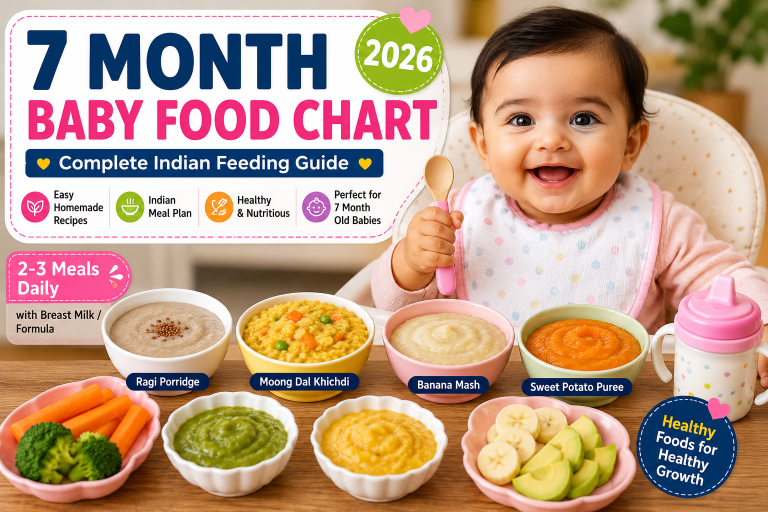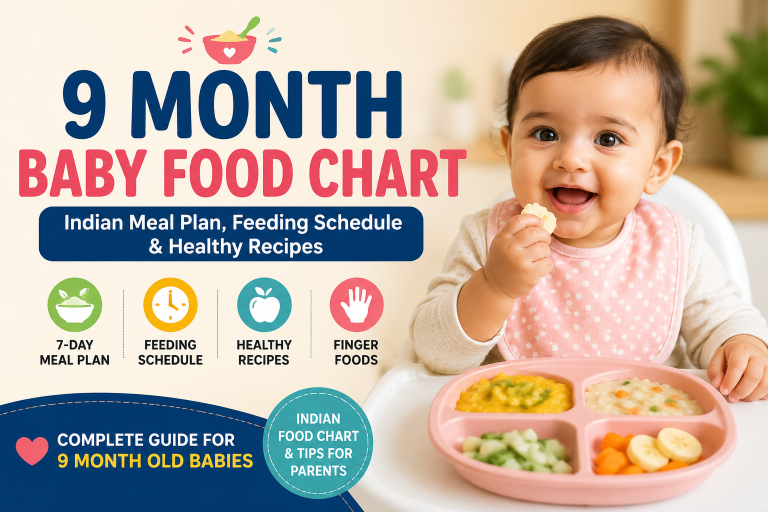
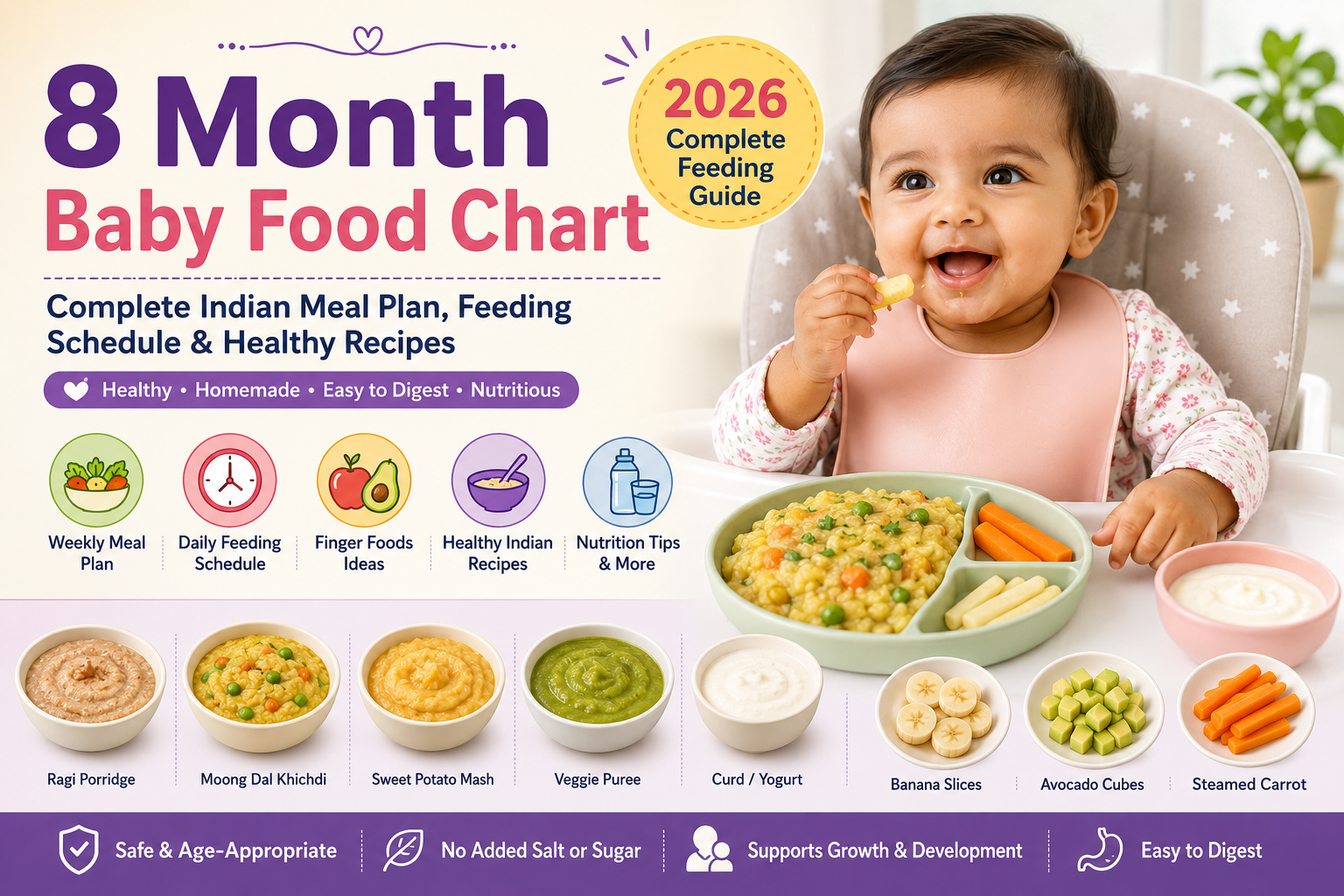

By the time your baby reaches 8 months, mealtimes become more exciting and interactive. Most babies are now ready to enjoy a wider variety of homemade foods, experiment with different textures, and begin self-feeding with soft finger foods.
Parents often wonder:
- What should an 8-month-old baby eat?
- How many meals should an 8-month-old have?
- Which finger foods are safe?
- Can babies eat eggs, paneer, yogurt, or chicken?
- What foods should still be avoided?
This comprehensive guide answers all these questions and provides a complete 8 month baby food chart, Indian meal plans, feeding schedule, homemade recipes, finger food ideas, and nutrition tips recommended for healthy growth and development.
Quick Answer (Featured Snippet)
What should an 8-month-old baby eat?
An 8-month-old baby can usually eat three small meals each day along with breast milk or formula. Their diet may include mashed fruits, vegetables, dal, khichdi, oats, ragi, yogurt, paneer, eggs (if introduced), soft finger foods, and well-cooked cereals. Introduce one new food at a time, avoid added salt and sugar, and continue breastfeeding or formula feeding.
Key Takeaways
- Offer 3 nutritious meals daily
- Continue breast milk or formula
- Encourage self-feeding
- Introduce soft finger foods
- Include iron-rich foods
- Offer small sips of water
- Introduce new foods gradually
- Avoid honey, added sugar, and salt
How Is an 8-Month-Old Different From a 7-Month-Old?
At 8 months, babies become much more active and curious.
Many babies can:
- Sit confidently without support
- Pick up food using their fingers
- Move food around their mouth
- Chew soft mashed foods
- Drink small sips of water
- Hold a spoon with assistance
- Show preferences for certain foods
This is the perfect stage to gradually increase food variety and texture.
Continue Reading
Nutritional Needs of an 8-Month-Old Baby
Your baby’s nutritional requirements continue to increase as they become more active.
| Nutrient | Why It Matters | Food Sources |
|---|---|---|
| Iron | Brain development | Ragi, lentils, spinach, egg yolk |
| Protein | Muscle growth | Dal, paneer, yogurt, eggs |
| Calcium | Strong bones | Yogurt, paneer |
| Healthy Fats | Brain development | Avocado, ghee (small quantity if advised), nut powders (if introduced safely) |
| Vitamin C | Better iron absorption | Orange, papaya, tomato |
How Much Should an 8-Month-Old Eat?
A general feeding pattern is:
- Breast milk or formula: 4–6 feeds
- Solid meals: 3 small meals
- Water: Small sips with meals
Every baby has a different appetite.
Some babies may still prefer milk, while others become enthusiastic eaters.
Never force-feed.
Best Foods for an 8-Month-Old Baby
A balanced meal should include foods from different food groups.
Fruits
Choose ripe, soft fruits.
Examples:
- Banana
- Apple (steamed)
- Pear
- Papaya
- Mango (seasonal)
- Chikoo
- Avocado
These provide fibre, vitamins, and natural sweetness.
Vegetables
Offer well-cooked vegetables like:
- Pumpkin
- Sweet potato
- Carrot
- Beetroot
- Bottle gourd
- Spinach
- Peas
- Broccoli
- Potato
Mash or finely chop according to your baby’s chewing ability.
Grains
Healthy grains include:
- Rice
- Oats
- Ragi
- Suji
- Dalia
- Whole wheat porridge
Rotate grains to provide different nutrients.
Protein Foods
Protein is essential for growth.
Good choices include:
- Moong dal
- Masoor dal
- Toor dal
- Paneer
- Yogurt
- Egg
- Chicken (well-cooked)
- Fish (boneless)
Introduce proteins gradually and monitor for allergies.
Sample Daily Feeding Schedule
| Time | Meal |
|---|---|
| 6:30 AM | Breast Milk / Formula |
| 8:30 AM | Oats or Ragi Porridge |
| 11:00 AM | Fruit & Water |
| 1:00 PM | Vegetable Khichdi with Dal |
| 3:30 PM | Breast Milk / Formula |
| 5:30 PM | Soft Finger Foods |
| 7:30 PM | Paneer Mash / Vegetable Puree |
| 9:00 PM | Breast Milk / Formula |
Adjust according to your baby’s sleep and feeding routine.
Weekly Indian Meal Plan
| Day | Breakfast | Lunch | Dinner |
|---|---|---|---|
| Monday | Ragi Porridge | Vegetable Khichdi | Banana Mash |
| Tuesday | Apple Puree | Dal Rice Mash | Paneer Mash |
| Wednesday | Oats Porridge | Pumpkin Dal | Sweet Potato Mash |
| Thursday | Banana | Vegetable Upma | Yogurt |
| Friday | Pear Puree | Beetroot Khichdi | Avocado Mash |
| Saturday | Suji Porridge | Mixed Vegetable Dal | Apple Mash |
| Sunday | Papaya Mash | Rice with Spinach Dal | Carrot Mash |
Healthy Homemade Recipes
Vegetable Khichdi
Ingredients
- Rice
- Moong dal
- Pumpkin
- Carrot
- Peas
Cook until soft and mash lightly.
Ragi Porridge
Ingredients
- Ragi flour
- Water
- Breast milk or formula (added after cooking if appropriate)
Avoid sugar.
Oats Vegetable Porridge
Cook oats with vegetables until soft.
Blend or mash depending on texture.
Sweet Potato Mash
Steam until soft.
Mash using a spoon.
Serve warm.
Paneer Vegetable Mash
Mash fresh paneer with cooked vegetables.
A good source of protein and calcium.
Introducing Finger Foods
By 8 months, many babies enjoy feeding themselves.
Safe options include:
- Banana slices
- Avocado cubes
- Soft pear slices
- Steamed carrot sticks
- Sweet potato wedges
- Steamed broccoli
- Soft idli pieces
- Well-cooked pasta
- Soft dosa strips
Always supervise meals and avoid choking hazards.
Printable 8 Month Baby Food Chart
As your baby grows, mealtimes become more structured. Most 8-month-old babies enjoy three small meals along with breast milk or formula.
| Time | Meal |
|---|---|
| 6:30 AM | Breast Milk / Formula |
| 8:30 AM | Ragi or Oats Porridge |
| 11:00 AM | Fruit Puree + Water |
| 1:00 PM | Vegetable Khichdi with Dal |
| 3:30 PM | Breast Milk / Formula |
| 5:30 PM | Soft Finger Foods |
| 7:30 PM | Paneer Mash / Vegetable Puree |
| 9:00 PM | Breast Milk / Formula |
Tip: Adjust meal timings according to your baby’s sleep routine and appetite.
Foods to Avoid at 8 Months
Although your baby is eating a wider variety of foods, some foods should still be avoided.
❌ Honey
❌ Added Salt
❌ Added Sugar
❌ Whole Nuts
❌ Popcorn
❌ Whole Grapes
❌ Hard Candy
❌ Chips
❌ Fried Foods
❌ Processed Snacks
❌ Soft Drinks
❌ Unpasteurized Milk
Avoiding these foods reduces the risk of choking and protects your baby’s developing digestive system.
Safe Finger Food Ideas
Finger foods help babies develop chewing skills, hand-eye coordination, and independence.
Safe choices include:
- Banana slices
- Avocado cubes
- Soft pear slices
- Steamed carrot sticks
- Steamed broccoli florets
- Sweet potato wedges
- Soft idli pieces
- Dosa strips
- Well-cooked pasta
- Soft paneer cubes
Always stay nearby while your baby is eating.
Hydration Tips
Along with breast milk or formula, babies can now enjoy:
- Small sips of water during meals
- Water from an open cup or trainer cup
- Homemade soups (without added salt)
Do not replace milk feeds with water.
7 vs 8 vs 9 Month Baby Food Comparison
| Feature | 7 Months | 8 Months | 9 Months |
|---|---|---|---|
| Meals | 2–3 | 3 | 3 + Snack |
| Milk Feeds | 5–6 | 4–6 | 4–5 |
| Texture | Thick Mash | Soft Finger Foods | Lumpy Foods |
| Self Feeding | Beginning | Improving | More Independent |
| Water | Small Sips | With Meals | More Frequent |
Food Texture Progression
| Age | Recommended Texture |
|---|---|
| 6 Months | Smooth Puree |
| 7 Months | Thick Puree |
| 8 Months | Soft Mash & Finger Foods |
| 9 Months | Lumpy Foods |
| 10–12 Months | Soft Family Meals |
Gradually increasing texture helps babies learn to chew and prepares them for family foods.
Common Feeding Mistakes Parents Make
Many parents unintentionally make small mistakes while introducing solids.
Avoid these common errors:
- Introducing several new foods on the same day.
- Adding salt or sugar to homemade meals.
- Replacing breast milk or formula too early.
- Offering large food pieces that may cause choking.
- Comparing your baby’s appetite with other children.
- Forcing your baby to finish every meal.
- Depending too much on packaged baby foods.
- Skipping iron-rich foods.
Remember, every baby has a unique appetite and feeding pace.
Signs Your Baby Is Eating Well
Healthy signs include:
✅ Good weight gain
✅ Active and playful
✅ Regular wet diapers
✅ Enjoys trying different foods
✅ Shows hunger and fullness cues
If you have concerns about growth or feeding, consult your pediatrician.
8 Month Baby Feeding Checklist
✔ Continue breastfeeding or formula feeding.
✔ Offer three balanced meals daily.
✔ Include at least one iron-rich food.
✔ Introduce soft finger foods.
✔ Give small sips of water.
✔ Avoid honey, salt, and sugar.
✔ Encourage self-feeding.
✔ Introduce one new food every 3–5 days.
MomSaathi Expert Tip
At 8 months, mealtimes are about learning as much as nutrition. Let your baby touch, smell, and explore food while continuing breast milk or formula. Self-feeding with safe finger foods helps develop fine motor skills and confidence.
Common Questions Parents Ask
Can an 8-month-old baby eat eggs?
Yes. Well-cooked eggs can usually be introduced after starting solids, unless advised otherwise by your pediatrician.
How many meals should an 8-month-old have?
Most babies enjoy three small meals daily along with breast milk or formula.
Can an 8-month-old eat yogurt?
Plain, unsweetened yogurt is generally suitable for many babies and provides calcium and protein.
Can babies eat rice every day?
Rice can be included regularly but should be rotated with oats, ragi, dalia, and other grains to provide a balanced diet.
When should babies start finger foods?
Many babies are ready around 8 months, provided they can sit independently and safely handle soft foods.
Can babies drink water?
Yes. Offer small sips of clean drinking water with meals while continuing milk feeds.
Is homemade baby food better than packaged food?
Fresh homemade meals allow better control over ingredients and texture. Packaged foods can be convenient occasionally, but check labels carefully and avoid products with added sugar or excessive sodium.
Quick Answer (Featured Snippet)
What should an 8-month-old baby eat?
An 8-month-old baby can eat three nutritious meals each day along with breast milk or formula. Soft mashed fruits, vegetables, dal, khichdi, oats, ragi, yogurt, paneer, eggs (if introduced), and safe finger foods are excellent choices. Introduce one new food every few days and avoid honey, added salt, added sugar, and choking hazards.
Final Thoughts
By 8 months, your baby is becoming more confident with solid foods and beginning to enjoy family mealtimes. Offering a balanced variety of homemade foods, encouraging self-feeding, and maintaining regular milk feeds help build healthy eating habits that support growth and development.
Every baby develops differently, so be patient, celebrate small milestones, and enjoy this exciting stage together.
Trusted Resources & Further Reading
The following trusted organizations provide evidence-based guidance on infant nutrition, complementary feeding, and child health.
- World Health Organization (WHO) – Infant and Young Child Feeding
- UNICEF Parenting – Baby Food & Nutrition
- HealthyChildren.org (American Academy of Pediatrics) – Feeding Your Baby
- CDC – Infant & Toddler Nutrition
- Indian Academy of Pediatrics (IAP)
Editorial Note: This article is based on recommendations from trusted health organizations, including the World Health Organization (WHO), UNICEF, the American Academy of Pediatrics (AAP), the Centers for Disease Control and Prevention (CDC), and the Indian Academy of Pediatrics (IAP). It is intended for educational purposes only and should not replace professional medical advice. Always consult your pediatrician before making significant changes to your baby’s diet.