Reaching the 6-month milestone is exciting for both babies and parents. It marks the beginning of a new journey—introducing solid foods alongside breast milk or formula. Many parents wonder which foods are safe, how much their baby should eat, and how to create a balanced meal plan without overwhelming their little one.
The good news is that introducing solids doesn’t have to be complicated. With patience, simple homemade foods, and age-appropriate textures, your baby can gradually explore new tastes while continuing to receive most of their nutrition from breast milk or formula.
In this guide, you’ll find a practical 6-month baby food chart, Indian meal ideas, feeding schedules, foods to introduce first, and expert tips to help make your baby’s weaning journey enjoyable and safe.
Also Read: Starting solids is just one part of your baby’s development. Learn how to support healthy growth with our Screen Time Chart by Age guide for babies and young children.
Can Babies Start Solid Foods at 6 Months?
Yes. Most healthy babies are developmentally ready to begin complementary foods at around 6 months of age while continuing breastfeeding or formula feeding.
According to global pediatric recommendations, breast milk or formula should remain the primary source of nutrition during the first year, with solid foods gradually introduced to provide additional nutrients, especially iron and zinc.
The goal at this stage is exploration rather than large meals.
Signs Your Baby Is Ready for Solids
Before introducing new foods, look for these signs of readiness:
- Sits with little or no support.
- Has good head and neck control.
- Shows interest in food during family meals.
- Opens mouth when food is offered.
- Can swallow food instead of pushing it out with the tongue.
- Reaches for food or a spoon.
If your baby was born prematurely or has medical concerns, speak with your pediatrician before starting solids.
Why Is the 6-Month Stage So Important?
Around six months, babies need additional nutrients that breast milk or formula alone may not fully provide.
Introducing nutrient-rich complementary foods helps support:
- Healthy brain development
- Physical growth
- Iron stores
- Muscle development
- Taste exploration
- Oral motor skills
- Hand-eye coordination
Every meal is also an opportunity for learning—not just nutrition.
Parenting Tip: Gentle and responsive parenting makes new experiences like weaning more enjoyable. Read our 5 Gentle Parenting Tips Every Mom Should Know.
First Foods for a 6-Month-Old Baby
Choose soft, smooth, single-ingredient foods that are easy to swallow.
Good first foods include:
Fruits
- Banana puree
- Steamed apple puree
- Pear puree
- Avocado mash
- Papaya mash
Vegetables
- Pumpkin puree
- Sweet potato puree
- Carrot puree
- Bottle gourd puree
- Potato mash
Cereals
- Rice cereal
- Homemade rice porridge
- Oatmeal
- Ragi porridge
Protein Sources
- Moong dal puree
- Mashed lentils
- Well-cooked mashed egg yolk (if advised by your pediatrician)
- Plain unsweetened yogurt (where appropriate)
Introduce only one new food at a time.
Week-by-Week 6-Month Baby Food Chart
Week 1
Focus on one food per day.
Morning
Breast milk or formula
Mid-Morning
1–2 teaspoons banana puree
Afternoon
Breast milk or formula
Evening
Breast milk or formula
Week 2
Introduce vegetables.
Foods include:
- Pumpkin puree
- Carrot puree
- Sweet potato mash
Continue milk feeds on demand.
Week 3
Introduce cereals.
Options include:
- Rice porridge
- Oatmeal
- Ragi porridge
Offer one meal of solids daily.
Week 4
Introduce protein-rich foods.
Examples:
- Moong dal puree
- Mashed lentils
- Yogurt (if suitable)
- Egg (as advised)
By the end of the month, many babies enjoy two small solid meals each day while continuing regular milk feeds.
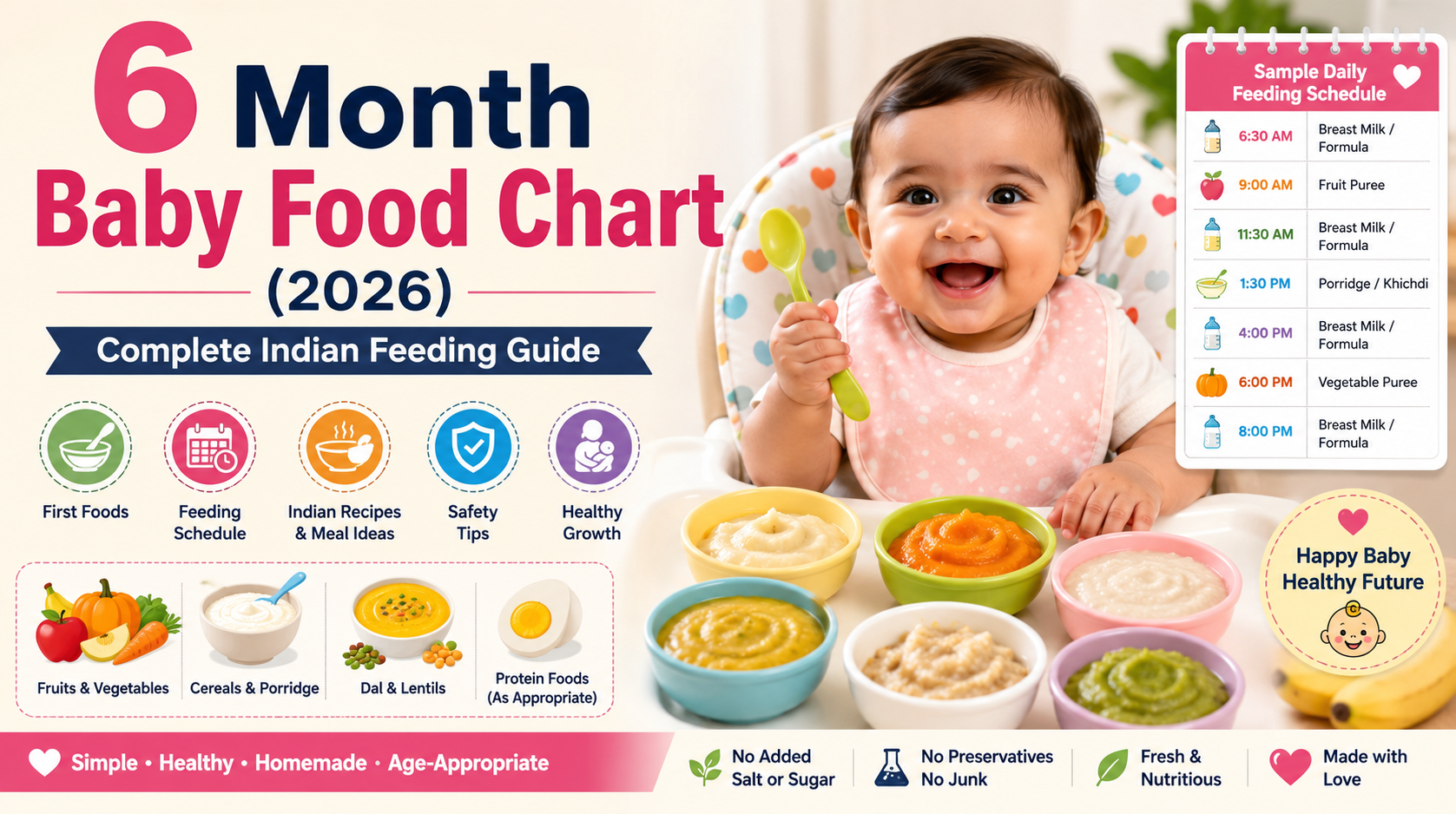
Sample Indian Baby Food Chart
| Time | Food |
|---|---|
| 6:30 AM | Breast Milk / Formula |
| 9:00 AM | Banana Puree |
| 11:30 AM | Breast Milk |
| 1:30 PM | Rice Porridge |
| 4:00 PM | Breast Milk |
| 6:00 PM | Pumpkin Puree |
| Bedtime | Breast Milk / Formula |
Remember that appetite varies from baby to baby.
For Busy Parents: Meal planning becomes easier when your routine is organized. Explore our Working Mom Survival Guide.
Best Homemade Baby Foods
Homemade meals are often fresh, simple, and easy to customize.
Healthy options include:
- Rice porridge
- Dal water with mashed dal
- Ragi porridge
- Vegetable puree
- Fruit puree
- Mashed sweet potato
- Khichdi (well mashed)
- Oats porridge
Avoid adding salt or sugar.
Vegetarian Meal Ideas
Parents following a vegetarian diet can offer:
- Mashed moong dal
- Mashed rajma (later, when age-appropriate and well-cooked)
- Rice and dal
- Vegetable puree
- Paneer mash (when introduced appropriately)
- Yogurt
- Ragi
- Oats
A varied vegetarian diet can provide excellent nutrition when planned appropriately.
Non-Vegetarian Meal Ideas
After discussing with your pediatrician, suitable options may include:
- Mashed egg
- Chicken puree
- Fish puree (boneless and well-cooked)
- Soft minced meat
Introduce each food individually and observe for reactions.
Feeding Tips for First-Time Parents
Keep mealtimes relaxed and enjoyable.
Helpful tips include:
- Feed when your baby is alert.
- Sit your baby upright.
- Offer small spoonfuls.
- Let your baby explore textures.
- Never force-feed.
- Continue breastfeeding or formula feeding.
- Watch for hunger and fullness cues.
Messy eating is a normal part of learning.
Parent Wellness: Caring for a growing baby can be overwhelming. Learn how to recognize the signs in our Mom Burnout Symptoms guide.
How Much Should a 6-Month-Old Eat?
At six months:
- Breast milk or formula remains the primary source of nutrition.
- Solids are offered once or twice daily.
- Portions are small—usually 1–2 tablespoons to start.
- Increase gradually based on your baby’s interest and appetite.
Every baby develops at a different pace.
Quick Answer
A 6-month-old baby can start complementary foods such as mashed fruits, vegetable purees, rice porridge, ragi porridge, oats, and lentils while continuing breast milk or formula. Begin with one meal daily and gradually increase based on your baby’s readiness and appetite.
Common Feeding Challenges
Parents often worry when babies:
- Refuse food
- Spit food out
- Make funny faces
- Eat very little
These reactions are common during the early weeks of weaning.
Continue offering foods without pressure.
Babies may need multiple exposures before accepting new tastes.
Printable 6-Month Baby Food Chart
This sample schedule is designed as a flexible guide. Continue breastfeeding or formula feeding on demand, and adjust meal timings based on your baby’s sleep and hunger cues.
| Time | Meal |
|---|---|
| 6:30 AM | Breast Milk / Formula |
| 9:00 AM | Banana or Apple Puree |
| 11:30 AM | Breast Milk / Formula |
| 1:30 PM | Rice Porridge / Ragi Porridge |
| 4:00 PM | Breast Milk / Formula |
| 6:00 PM | Pumpkin or Sweet Potato Puree |
| 8:00 PM | Breast Milk / Formula |
At 6 months, milk remains the primary source of nutrition. Solid foods are meant to complement, not replace, breast milk or formula.
7-Day Indian Baby Meal Plan
| Day | First Meal | Second Meal |
|---|---|---|
| Monday | Banana Puree | Rice Porridge |
| Tuesday | Apple Puree | Pumpkin Puree |
| Wednesday | Sweet Potato Mash | Ragi Porridge |
| Thursday | Pear Puree | Moong Dal Puree |
| Friday | Avocado Mash | Carrot Puree |
| Saturday | Papaya Mash | Vegetable Khichdi (Mashed) |
| Sunday | Oatmeal | Bottle Gourd Puree |
Introduce only one new food every 3–5 days to help identify any allergic reactions.
Foods to Avoid at 6 Months
Some foods are not suitable for young babies.
Avoid:
- Honey (until after 12 months)
- Whole nuts
- Popcorn
- Whole grapes
- Hard candies
- Added salt
- Added sugar
- Soft drinks
- Packaged juices
- Unpasteurized dairy products
- Highly processed foods
- Deep-fried foods
These foods may increase the risk of choking or are not appropriate for your baby’s nutritional needs.
Introducing Allergenic Foods Safely
Many experts now recommend introducing common allergenic foods after solids have started, rather than delaying them unnecessarily. Always introduce them one at a time and discuss any concerns with your pediatrician, especially if your baby has eczema or a family history of food allergies.
Common allergenic foods include:
- Egg
- Peanut (in age-appropriate forms, never whole)
- Dairy
- Wheat
- Soy
- Fish
Watch for possible signs of an allergic reaction, such as:
- Rash or hives
- Swelling of the lips or face
- Vomiting
- Persistent coughing
- Difficulty breathing (seek emergency medical care immediately)
Feeding Safety Tips
Follow these simple safety rules:
- Always supervise your baby while eating.
- Seat your baby upright in a high chair or supported position.
- Use a soft baby spoon.
- Serve foods with smooth, age-appropriate textures.
- Allow foods to cool before feeding.
- Wash your hands and utensils before preparing meals.
- Refrigerate leftovers promptly and reheat thoroughly if reused.
Avoid feeding while your baby is lying down.
Signs Your Baby Is Enjoying Solids
Every baby progresses differently, but positive signs include:
- Opening their mouth for the spoon.
- Reaching for food.
- Smiling during meals.
- Swallowing food comfortably.
- Showing curiosity about family meals.
These signs indicate growing interest in eating and learning.
Common Feeding Mistakes Parents Should Avoid
Even with the best intentions, some habits can make feeding more difficult.
Avoid:
- Forcing your baby to finish every bite.
- Introducing several new foods on the same day.
- Adding sugar or salt.
- Replacing milk feeds too early.
- Comparing your baby’s appetite with others.
- Offering choking hazards.
- Feeding in front of the television or mobile phone.
Creating a calm, distraction-free mealtime encourages healthy eating habits.
Frequently Asked Questions
How many times should a 6-month-old eat solid food?
Most babies begin with one meal a day and gradually increase to two small meals while continuing breast milk or formula as their primary source of nutrition.
Can a 6-month-old drink water?
Small amounts of water can usually be introduced with solid foods. Breast milk or formula should still provide most of your baby’s hydration. Follow your pediatrician’s advice for your baby’s individual needs.
How much food should a 6-month-old eat?
Start with 1–2 teaspoons or tablespoons, depending on your baby’s readiness and appetite, and increase gradually as they become more comfortable with eating solids.
What is the best first food for a 6-month-old?
There is no single “best” first food. Soft foods such as mashed banana, steamed apple puree, sweet potato, pumpkin, rice porridge, and iron-rich foods are commonly recommended as first complementary foods.
Should babies eat three meals a day at 6 months?
Most babies are not yet ready for three full meals. One or two small meals each day are generally sufficient while milk continues to provide most nutrition.
Quick Answer
What should a 6-month-old baby eat?
A 6-month-old baby can begin eating soft, mashed foods such as banana, apple puree, pumpkin, sweet potato, rice porridge, ragi porridge, oats, and mashed lentils while continuing breast milk or formula. Introduce one new food at a time, offer smooth textures, and avoid adding salt, sugar, or honey.
Looking Ahead: As your baby grows into toddlerhood, learn how to handle emotional milestones with our Toddler Tantrums Explained guide.
Final Thoughts
Starting solids is an exciting milestone, but every baby develops at their own pace.
Some babies eagerly accept new foods, while others need repeated exposure before they enjoy different tastes and textures.
The most important goals are to:
- Offer a variety of nutritious foods.
- Continue regular milk feeds.
- Keep mealtimes relaxed.
- Follow your baby’s hunger and fullness cues.
- Celebrate small milestones rather than focusing on how much your baby eats.
With patience and consistency, your baby will gradually build healthy eating habits that support lifelong growth and development.
Trusted Resources & Further Reading
Introducing solid foods is an exciting milestone, but every baby develops at their own pace. These trusted organizations provide evidence-based guidance on infant nutrition, complementary feeding, food safety, and healthy growth.
- World Health Organization (WHO) – Infant and Young Child Feeding Guidelines
- UNICEF Parenting – Baby Nutrition & Complementary Feeding
- HealthyChildren.org (American Academy of Pediatrics) – Starting Solid Foods & Infant Nutrition
- Centers for Disease Control and Prevention (CDC) – Infant & Toddler Nutrition
- Indian Academy of Pediatrics (IAP) – Child Health & Nutrition Resources
Editorial Note: This article is based on recommendations from trusted organizations including the World Health Organization (WHO), UNICEF, the American Academy of Pediatrics (AAP), the Centers for Disease Control and Prevention (CDC), and the Indian Academy of Pediatrics (IAP). Every baby grows at a unique pace. Before introducing allergenic foods or making significant dietary changes, consult your pediatrician, especially if your baby was born prematurely, has eczema, or has a family history of food allergies.