
Edited by: MomSaathi Editorial Team
Reviewed by: Based on linguistic research and trusted baby name sources
Introduction: The Scent of Positivity
In the world of baby naming, Abeer belongs to the category of “Sensory Names”—those that evoke a feeling, a memory, or an atmosphere. Choosing Abeer for your child is a wish for them to possess a personality that “lingers” in the hearts of others—someone who brings a refreshing and positive vibe wherever they go.
Abeer Name Meaning: More Than Just a Scent
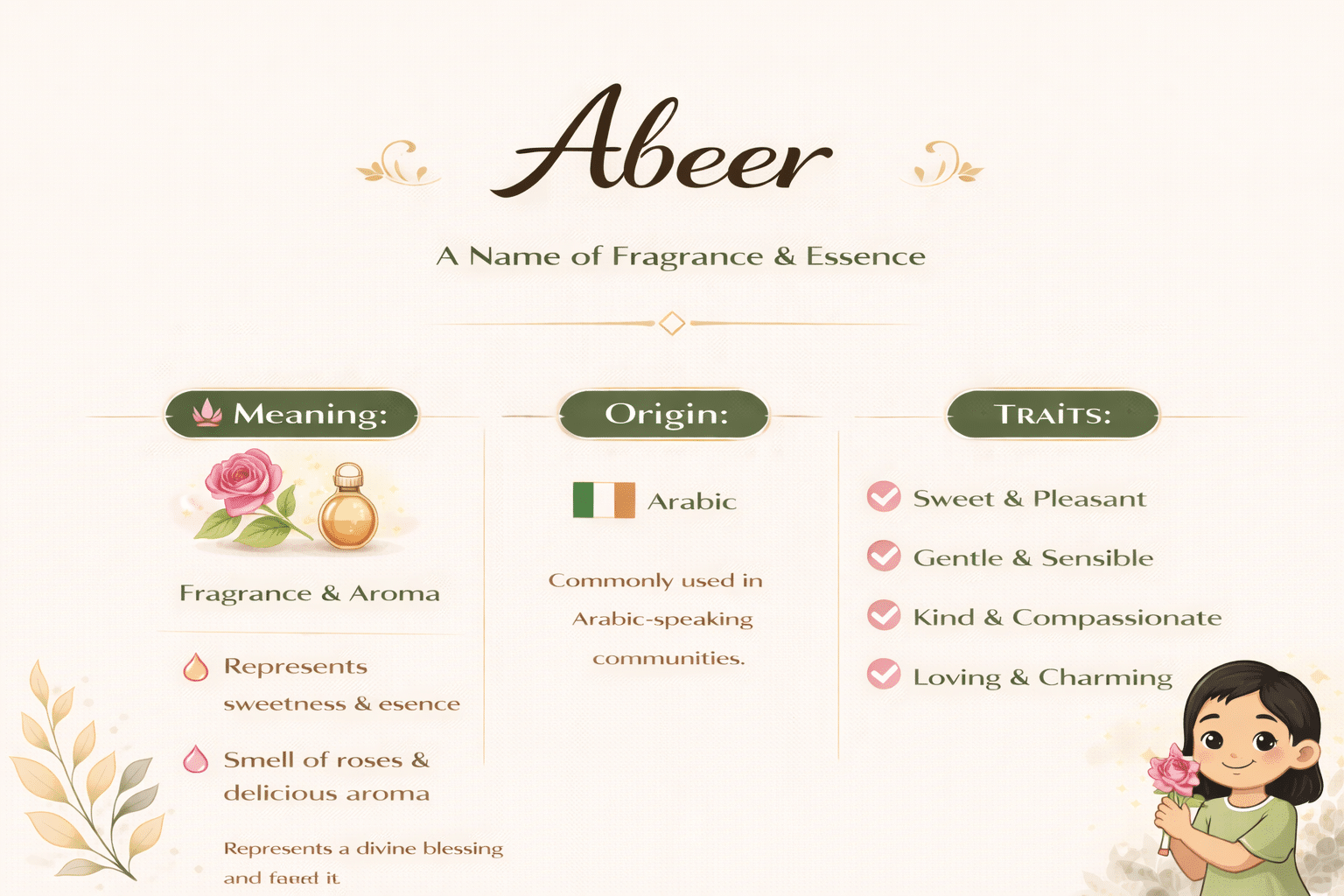
The Abeer name meaning is deeply rooted in the Arabic language, describing a high-quality fragrance.
-
Fragrance/Perfume: It refers to a scent that is pleasant, sweet, and comforting.
-
Saffron: In classical Arabic, it specifically refers to a blend of perfumes mixed with saffron, representing luxury and richness.
-
Aroma of Life: It signifies someone whose character is as delightful and welcoming as a beautiful garden in bloom.
Abeer Name Meaning in Hindi & Urdu
In the cultural landscape of India, the name is associated with joy and celebration:
-
Urdu (عبير): खुशबू (Fragrance), महक (Scent), इत्र (Perfume).
-
Hindi (अबीर): While the Arabic name means fragrance, in the context of Indian festivals like Holi, “Abir” refers to the vibrant, scented colored powder, linking the name to celebration and color.
For a parent, naming a child Abeer is an aspiration for them to live a colorful, joyful, and “fragrant” life.
Origin: The Saffron Connection
The Abeer name origin is Arabic. Historically, it wasn’t just any smell; it was a specific, thick perfume often containing saffron and musk. Because these ingredients were rare and precious, the name inherited a “prestige” status, associated with nobility and refined taste.
Personality Traits of Abeer
What defines the spirit of an Abeer? The Abeer name personality is often characterized by “Refreshing Gentleness.
-
Natural Charisma: Much like a scent that fills a room, people named Abeer have a magnetic personality that draws others to them effortlessly.
-
Refined & Artistic: They often have a deep appreciation for the finer things—art, music, and nature.
-
Calm & Soothing: They aren’t usually aggressive; they prefer to handle situations with grace and a “soft touch.”
-
Memorable: They leave a lasting impression. People often remember an Abeer for how they felt in their presence.
Numerology & Lucky Factors
-
Lucky Number: 1
-
Significance: In numerology, Number 1 represents Independence, Strength, and Fresh Starts. It suggests that Abeer will be a pioneer who isn’t afraid to stand out.
-
Lucky Color: Yellow and Light Green (colors of saffron and freshness).
-
Lucky Day: Friday and Sunday.
-
Lucky Stone: Amber or Yellow Topaz.
Gender Neutrality & Modern Appeal
In 2026, the trend of “Short & Chic” names has kept Abeer in the spotlight.
-
Unisex Potential: While traditionally more common for boys in India and girls in the Middle East, it is increasingly becoming a gender-neutral favorite.
-
Global Ease: It is phonetically simple and easy to pronounce worldwide (Uh-beer), making it a great “passport name.”
-
Celebratory Vibe: Its association with Holi (Abir) makes it feel culturally inclusive and lively.
FAQ Section
Q1: Is Abeer a modern name?
Abeer is a Timeless Classic. It has been used for centuries but its crisp, 5-letter structure makes it feel very modern and “Instagram-ready.”
Q2: What is the difference between Abir and Abeer?
They are the same name. Abir is the phonetic spelling often used in India, while Abeer is the more traditional Arabic transliteration.
Q3: How do you pronounce Abeer?
It is pronounced Uh-beer. The “Uh” is a short breathy sound, and “beer” rhymes with the English word “clear” or “near.”
Conclusion: A Legacy of Delight
Naming your child Abeer is a beautiful way to ensure they carry a sense of peace and pleasure throughout their life. It is a name that doesn’t just identify a person; it describes an experience. When you call your child Abeer, you are celebrating the “sweet aroma” they bring to your world.
🌸 The Essence of Aroma
To explore the classical Arabic roots and the celebratory history of Abir in the Indian subcontinent, visit these resources: