
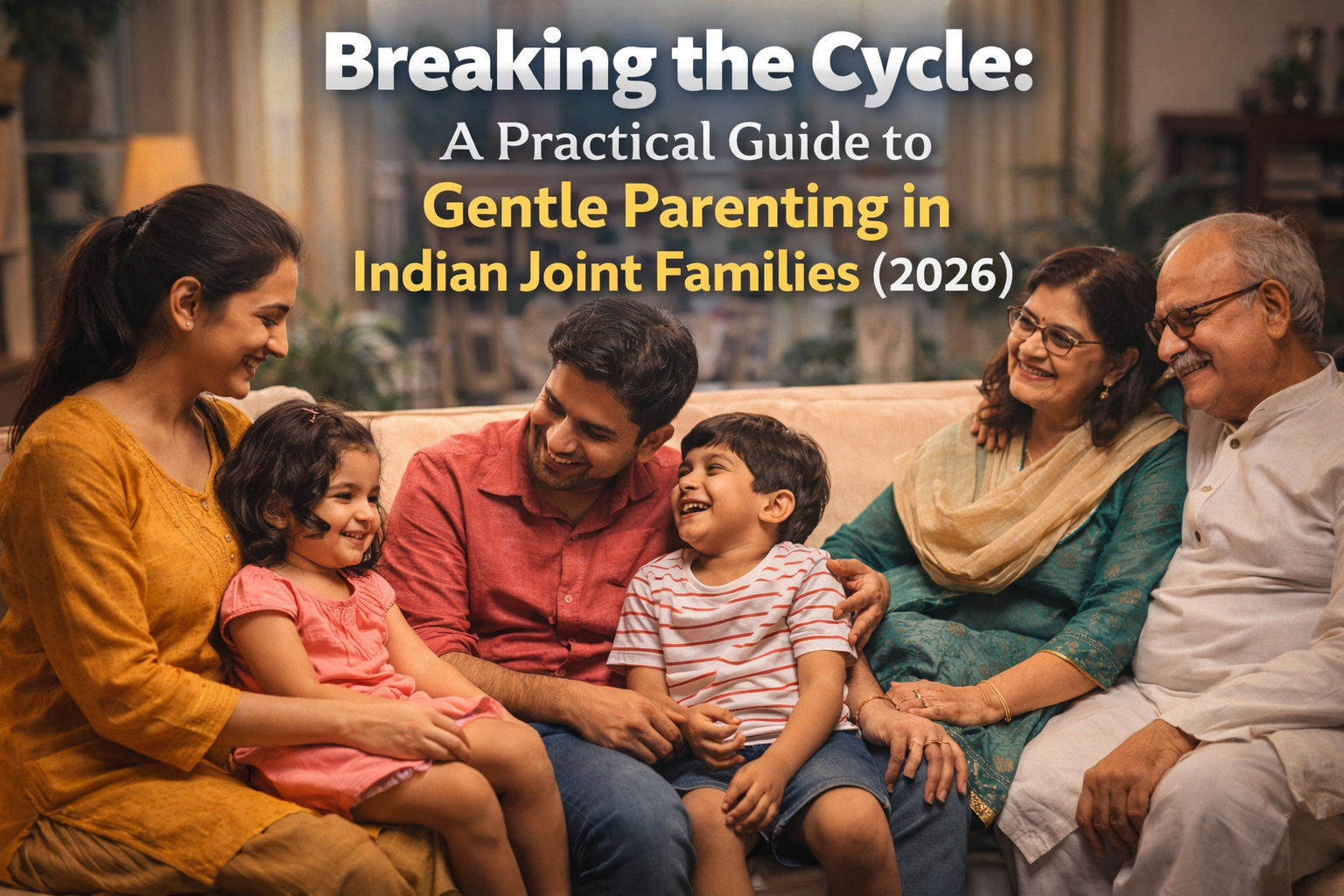

Introduction: The “Flying Chappal” vs. The Gentle Heart
In many Indian households, the “flying chappal” (slipper) or a stern “Wait till your father gets home” has been the gold standard for discipline for decades. But as we move through 2026, a new wave of Indian mothers is asking: “Is there a better way?”
You want to raise a child who is emotionally intelligent and confident, yet you live in a house where “respect” is often equated with “silence and obedience.” If you’ve ever felt the sting of a relative’s judgment when you didn’t scold your toddler for a tantrum, this guide is for you. Welcome to the MomSaathi community—where we learn to parent with grace, even when the house is full.
What is Gentle Parenting (And What It Isn’t)?
Before we dive into the how, let’s clear the air. Many elders in Indian families mistake “Gentle Parenting” for “Permissive Parenting.” They see it as “spoiling the child.
The Truth: Gentle parenting isn’t about letting your child do whatever they want. It is about authoritative parenting—setting firm boundaries while maintaining a soft heart.
-
Traditional Style: Focuses on stopping the behaviour through fear.
-
Gentle Style: Focuses on understanding the emotion behind the behaviour.
The “Dadi/Nani” Challenge: Navigating Generational Gaps
In an Indian joint family, you aren’t just parenting your child; you are often navigating the emotions of your elders. When your mother-in-law says, “We raised five kids with a stick, and they turned out fine,” it’s not an attack—it’s a reflection of her own experience.
For the Bible Verses About Birth article:
- “Pair these verses with our trimester-wise pregnancy diet chart for complete wellness.”
- “After welcoming your baby, follow our complete baby care guide for 0-12 months.”
- “Looking for beautiful names? Check our Indian baby names with meanings.”
1. The Power of “Information, Not Confrontation.”
Instead of saying, “Your methods are outdated,” try sharing the “why” behind your choices.
“Ma, I noticed that when I shout, he just gets more scared and doesn’t actually learn. I’m trying this new way to see if he understands the rules better.”
2. Setting Boundaries with Grace
You are the primary gatekeeper of your child’s emotional health. If a relative uses shame or physical discipline, it is okay to step in.
-
The Script: “I know you’re trying to help, but in our house, we don’t use hitting. Let’s try giving him a minute to calm down instead.”
5 Practical Gentle Parenting Phrases in Hindi/English
Occasionally, we lose our “gentleness” because we don’t have the right words in the heat of the moment. Here are 2026’s most effective scripts for Indian moms:
| Situation | Traditional Response | Gentle/Conscious Response |
| Toddler Tantrum | “Chup ho jao! Sab dekh rahe hain.” | “I can see you’re upset. It’s okay to cry. I’m here.” |
| Refusing Food | “Zabardasti khilao, nahi toh kamzor ho jayega.” | “Your tummy says it’s full. We will try again later.” |
| Breaking Something | “Hath mat lagao! Sab tod dete ho.” | “It was an accident. Let’s clean it up together so no one gets hurt.” |
| Sharing Toys | “Share karo, gande bachhe nahi bante.” | “He is playing with it right now. You can have it when he is done.” |
| Bedtime Battle | “Sote kyun nahi? Kal school jana hai.” | “It’s hard to stop playing. Do you want to read one book or two?” |
Dealing with “Mom Burnout” in a Full House
Living in a joint family means you are never truly alone, yet you can feel incredibly lonely. The “Invisible Load”—the mental list of school fees, MIL’s medicines, and the toddler’s vaccination—can lead to Mom Burnout.
The 15-Minute Micro-Reset: In 2026, we don’t have time for 2-hour spa sessions. Use the “Bathroom Retreat” or a 10-minute terrace walk. Tell the family: “I am taking 10 minutes for my mental health so I can be a better mother and daughter-in-law.”
For the WhatsApp DP for Boys article:
- “Perfect for announcing your baby boy — combine it with names from our baby names collection.”
For the Diet Chart article:
- “For more newborn guidance, read our complete baby care guide.”
Why This Matters: The 2026 Impact
We are raising the first generation of Indian children who will enter a world driven by AI and global connectivity. Technical skills will be easy to find, but Emotional Intelligence (EQ) will be the rarest and most valuable skill. By choosing gentle parenting today, you are giving your child the resilience they need for tomorrow.
Frequently Asked Questions (FAQs)
1. What is gentle parenting?
Gentle parenting is a respectful and empathetic approach that focuses on understanding a child’s emotions, setting boundaries calmly, and guiding behavior without punishment or fear.
2. Is gentle parenting practical in Indian joint families?
Yes, but it requires communication and patience. Since multiple family members are involved in raising the child, aligning expectations and explaining your parenting style is essential.
3. How can I explain gentle parenting to elders in a joint family?
Start with respectful conversations. Share examples, explain benefits like better emotional development, and show how it doesn’t mean lack of discipline but rather positive discipline.
4. What challenges do parents face while practicing gentle parenting in joint families?
Common challenges include differing opinions on discipline, pressure to follow traditional methods, and unsolicited advice from relatives.
5. How do I handle disagreements about parenting styles with family members?
Stay calm and consistent. Set clear boundaries, appreciate their concern, and gently explain your approach with practical examples rather than arguments.
Conclusion: You Are the “Saathi” Your Child Needs
Transitioning to gentle parenting in a traditional Indian home is a marathon, not a sprint. You will fail. You will yell. And that’s okay. The beauty of this path is the repair. When you lose your cool, apologize to your child. Show your elders that “sorry” isn’t a sign of weakness, but a sign of strength.
Join the MomSaathi Community below to share your stories of “Gentle Parenting Wins” in your own homes.