
Potty training can be a big transition for toddlers and their parents. Turning the process into a calm, playful routine may help a child feel more confident, especially when they are showing signs of readiness. The goal is not to make every toilet visit a game or to pressure a child to perform. Instead, use simple activities to build familiarity, encourage communication and celebrate effort.
Every child develops at a different pace. Some children are ready earlier than others, and progress often includes accidents or pauses. If your child becomes distressed, refuses repeatedly or seems unready, it is reasonable to take a break and try again later. These ideas are designed to make learning more positive, not to rush it.
When is a toddler ready for potty training?
Readiness is more useful than choosing an age from a chart. Your child may be showing readiness when they can stay dry for a while, notice or communicate that they need to go, follow simple instructions, show interest in the toilet, or help pull clothing up and down. They may also dislike being in a wet or dirty nappy. Children do not need to show every sign at once.
Choose a calm period if possible. A major move, new childcare arrangement, illness or the arrival of a sibling can make learning harder. If constipation, painful bowel movements, developmental concerns or medical conditions are involved, ask your child’s healthcare professional for tailored advice.
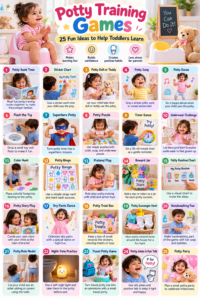
25 fun potty training games and activities
1. The potty book basket
Keep two or three age-appropriate books near the bathroom. Let your toddler choose one to look at while sitting briefly on the potty if they are comfortable. Keep visits short and never require a child to sit until a book is finished.
2. Choose a potty song
Make up a short song about walking to the bathroom, trying to use the potty and washing hands. A familiar tune can make the routine predictable. Avoid songs or timers that make a child feel they must produce urine or stool on demand.
3. Sticker chart for effort
Offer a sticker for a step such as telling you they need to go, sitting willingly, or washing hands. Reward effort and communication rather than only a successful pee or bowel movement. Some children love charts; others find them distracting, so follow your child’s response.
4. Teddy bear demonstrates
Use a favourite doll or stuffed animal to act out the routine: tell an adult, go to the bathroom, sit, wipe as appropriate, flush if safe, and wash hands. Keep the demonstration simple and respectful. The toy is a model, not a way to shame or compare the child.
5. Potty routine picture cards
Draw or print a few pictures showing the steps of using the toilet and washing hands. Put them at your child’s eye level. Let the child point to the next step, which can help children who are not yet using many words.
6. Bathroom helper
Give your toddler a small, safe job such as choosing a clean pair of underwear, bringing a book, or putting a used training cloth in the laundry basket. Keep cleaning products, medicines and sharp items out of reach.
7. Practise clothing skills
During playtime, practise pulling loose trousers up and down or placing a doll’s clothes in a basket. Choose easy-to-remove clothing during the training period. Avoid complicated buttons and tight overalls if they make bathroom trips stressful.
8. The handwashing song
Sing a short handwashing song after each toilet visit. Use soap and running water, and help your child reach the sink safely with a stable step stool. Supervise closely around water and never leave a young child alone near a sink or bath.
9. Potty pretend play
Let a doll or toy animal “ask to go” and practise taking it to a toy potty or a pretend bathroom. Explain that real bodies have their own timing and that it is okay if the child does not need to go when the toy does.
10. Find the bathroom together
When visiting a relative’s home or a familiar public place, calmly show your toddler where the bathroom is. This helps make the routine less mysterious. Do not force a toilet visit simply because you have arrived somewhere.
11. The bathroom routine checklist
Use a short checklist: notice the body signal, tell an adult, go to the bathroom, try if comfortable, wipe, flush if appropriate, and wash hands. Keep the list flexible and adapt wiping or flushing assistance to your child’s age and ability.
12. Body-signal detective
Use gentle, neutral language to help your child notice body signals. You might say, “Your legs are wiggling—do you need the toilet?” Avoid repeatedly asking every few minutes, which can create pressure. The aim is to help the child recognise their own signals over time.
13. Pick your potty
If possible, let your toddler choose between a child-sized potty and a toilet seat reducer with a stable footstool. A secure position with feet supported can help a child feel comfortable. The choice should be practical, safe and easy to clean.
14. Bathroom music break
Play a short, calm song as part of the routine if music helps your child relax. Keep the volume low and the visit brief. Stop using music if it distracts the child or makes them feel they must stay seated until the song ends.
15. Underwear choice game
Let your child choose between two clean pairs of underwear. This gives them a small sense of control. If accidents are common or your child is not ready for underwear, follow your family’s plan and avoid framing nappies or training pants as failure.
16. Readiness picture sort
Use pictures of everyday routines—getting dressed, washing hands, reading a book, going outside—and let your child sort them into “morning” and “evening.” Add a bathroom visit to the sequence. This builds routine awareness without making every activity about toileting.
17. The calm countdown
If your child enjoys predictable transitions, give a gentle cue such as, “After this page, we can see if your body needs the potty.” Do not use countdowns to force a child to sit or hold them there. If they say no and show no urgent need, try again later.
18. Practise asking for help
Teach a simple word, sign or picture that means “toilet” or “help.” Practise during pretend play and respond promptly when your child uses it. This is especially helpful for children who are shy about interrupting an activity or who communicate nonverbally.
19. Washable doll clothes
Let your toddler help wash doll clothes in a small basin with adult supervision, then place them in a basket. This can introduce the idea that wet clothes need changing and washing. Keep the activity separate from real accidents so the child never feels their body is dirty or bad.
20. Celebrate communication
When your child tells you they need the toilet—even if you do not reach it in time—thank them for telling you. This reinforces an important skill. Use calm language after accidents: “Pee came out before we reached the potty. We can try again next time.”
21. Make a bathroom comfort kit
Put toilet paper, wipes if your family uses them, spare clothes and a small book in an organised place. Let the child help choose the book or clothes. Keep wipes and other products safely stored and do not flush products that are not designed to be flushed.
22. Practise with a footstool
Show your child how to place their feet on a stable footstool when using the toilet. Feet dangling can feel insecure. Ensure the stool does not slide and supervise climbing. Never leave a toddler balanced on an adult toilet without direct support.
23. The outing preparation game
Before leaving home, invite your toddler to help pack spare clothes and identify where a bathroom might be available. Offer a toilet opportunity before the trip if the child is willing, but do not insist. Plan for breaks and accidents without embarrassment.
24. Calm clean-up helper
If an accident happens, invite your child to bring clean clothes or put wet clothing in a laundry basket if they want to help. Adults should do the cleaning and hygiene work. Do not make a child scrub floors, clean bodily waste or feel responsible for inconveniencing others.
25. Celebrate the whole routine
At the end of a bathroom visit, notice the effort: “You listened to your body,” “You told me,” or “You washed your hands.” You can celebrate with a cuddle, high-five or kind words. Keep praise genuine and avoid comparisons with siblings or other children.
Potty training games to avoid
Games should reduce stress, not create it. Avoid competitions to see who can stay dry longest, making a child sit until they produce something, teasing or shaming accidents, or withholding drinks to prevent wetting. Do not punish a child for accidents. Pressure can make toileting more upsetting and may lead a child to resist.
Never leave a toddler unattended on an adult toilet or near water. Keep the bathroom environment safe, use stable equipment, and supervise wiping and handwashing as needed. If a child seems frightened, pause the game and focus on comfort and trust.
What if potty training is not working?
Progress is rarely perfectly linear. A child may use the potty successfully at home but have accidents during outings, illness or changes in routine. Return to the basics: offer opportunities at predictable times, use neutral language, make clothing easy to manage, and respond to body signals. Avoid asking so often that the child feels watched.
Consider taking a break if your child consistently resists, becomes very distressed or seems unready. Speak with a healthcare professional if your child has painful stools, persistent constipation, pain while urinating, blood in urine or stool, unusual thirst or urination, or other symptoms that concern you. A clinician can help identify issues that may make training harder.
Frequently asked questions
What is the best game for potty training?
There is no single best game. Many families start with pretend play, picture cards, a short potty song or a sticker for effort. Choose an activity your child enjoys and stop if it creates pressure.
Should I reward my toddler for using the potty?
Small rewards can motivate some children, but praise and encouragement may be enough for others. Reward communication and trying, not just producing urine or stool. Keep rewards modest and avoid punishment when accidents happen.
How often should I invite my child to use the potty?
Offer predictable opportunities, such as after waking or before leaving home, and respond when your child signals a need. The right routine depends on the child. Avoid repeatedly interrupting play or forcing sitting.
Can games help with potty training regression?
Play may make the routine feel familiar again, but regression can have many causes, including changes at home, illness or constipation. Stay calm, reduce pressure and seek professional advice if there are physical symptoms or persistent concerns.
When should I ask a doctor for help?
Ask your child’s healthcare professional if toileting is painful, constipation persists, your child has urinary symptoms, or you are concerned about development or readiness. Seek prompt advice for blood, severe pain or other worrying symptoms.
Helpful next steps for parents
For a smoother experience, combine play with realistic expectations, easy-to-remove clothing and a calm bathroom routine. Read our unique girl names guide only if you are browsing other parenting resources; for toddler-specific support, review this article alongside guidance from your child’s clinician or childcare provider. You can also use the American Academy of Pediatrics toilet-training resource for additional general information.
Final thoughts
Potty training games work best when they make the process less intimidating and give toddlers a safe way to practise. Try one or two ideas, notice what your child responds to, and keep the routine flexible. Progress may take time, and accidents are a normal part of learning for many children. Your calm support matters more than a perfect chart or a quick result.
This article provides general parenting information and does not replace individual medical advice. Seek professional guidance for pain, persistent constipation, urinary symptoms or concerns about your child’s development.