
Choosing a haircut for a baby boy is less about following a trend and more about finding a style that suits his hair, comfort and everyday routine. Some babies have fine, straight hair; others have thick curls, waves or uneven growth. A simple trim may be all that is needed, while families who enjoy styling can explore short fades, soft fringes or longer natural looks as their child grows.
This guide covers baby boy haircut ideas, what to consider by age and hair type, how to prepare for a first haircut, and ways to keep the experience safe and calm. Hair grows at different rates, so there is no need to cut it at a particular age unless you want to.
When should a baby boy get his first haircut?
There is no medically required age for a first haircut. Some families trim a few strands early because hair falls into the eyes; others wait until toddlerhood or longer for cultural, religious or personal reasons. A baby’s hair may shed or change texture during the first year, and early growth can be patchy. This is normal for many children and does not mean a haircut will make hair grow thicker.
Choose a time when your baby is fed, rested and relatively calm. If the hair is not causing a problem, there is no need to rush. If you follow a cultural tradition around a first haircut, you can combine that preference with practical safety considerations.
20 baby boy haircut ideas
1. Natural baby trim
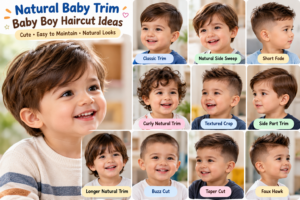
A light trim follows the hair’s natural shape and removes only uneven ends. It is a useful choice when you want to keep the baby’s original look while tidying hair around the ears or eyes. Ask the stylist to take off less than you think you need; more can always be trimmed later.
2. Soft side sweep
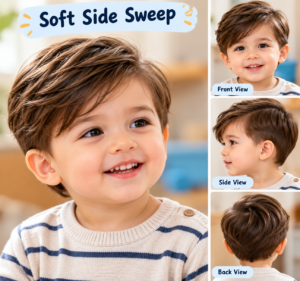
For babies with enough length on top, a soft side sweep keeps hair away from the face without a sharp part or heavy styling. It works with straight or slightly wavy hair and usually needs only a comb and water, if anything.
3. Short classic cut
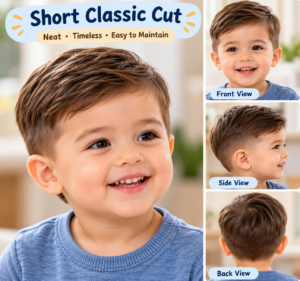
A classic short cut keeps the sides and back neat while leaving a little length on top. It is practical for active toddlers and easy to maintain. Avoid taking the sides extremely short if your child dislikes clippers or has sensitive skin.
4. Textured crop
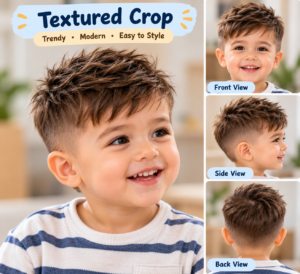
A textured crop leaves a little natural movement at the top and keeps the overall shape compact. It can work well for thicker hair. A stylist can adapt the texture to the child’s hair rather than trying to copy a photo exactly.
5. Curly top with short sides
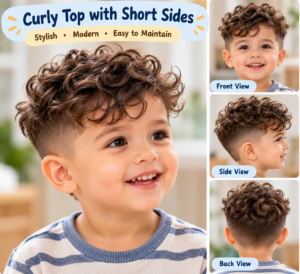
If your child has curls, leaving length on top can show their natural pattern while shorter sides reduce bulk. Curly hair can shrink as it dries, so discuss the expected finished length with the stylist and avoid cutting too much when the hair is wet.
6. Natural curls all around
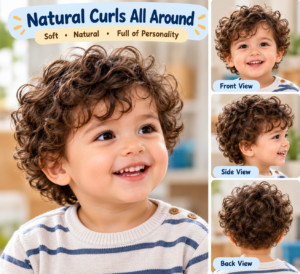
Some families prefer to keep curls at a similar length all around. A gentle shape-up can help hair look tidy without removing the texture that makes it distinctive. Use a wide-tooth comb or fingers and avoid brushing dry curls aggressively.
7. Mini fringe
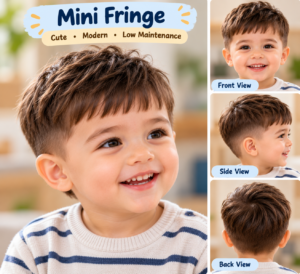
A short, soft fringe can frame the face, but it should not hang into the eyes. Ask for a length that stays clear of vision even when the hair falls forward. Check it regularly as the hair grows.
8. Longer surfer-style cut
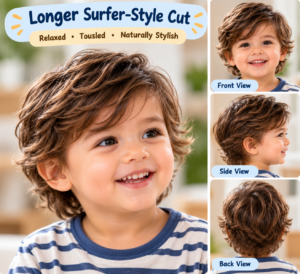
For families who like a longer look, leave the top and sides with natural movement and trim only the ends as needed. Keep hair away from the eyes and avoid tight elastics or accessories that could become a choking hazard.
9. Baby faux hawk
A subtle faux hawk leaves a little extra length along the centre while the sides remain shorter. It can be styled with fingers rather than strong products. For babies and young toddlers, skip gels, sprays and products that may irritate the skin or be transferred to the mouth.
10. Tapered cut
A taper gradually shortens the hair around the sideburns and neckline without an abrupt contrast. It creates a tidy shape while keeping the look soft. Tell the barber that you want a gentle taper rather than a very close skin fade.
11. Short crew-inspired cut
A crew-inspired style keeps the top short and easy to wash. It can be practical in warm weather, but hair length does not replace sun protection. Use shade and age-appropriate sun protection as recommended for your child.
12. Wavy layered cut
For wavy hair, a little length and light layering can help the natural shape sit comfortably. Avoid over-thinning the hair if you want to preserve fullness. A stylist familiar with children’s hair can work with the natural wave rather than forcing it straight.
13. Rounded toddler cut
A rounded shape keeps a soft outline around the head and can suit fine or medium hair. It is a classic option for toddlers whose hair grows unevenly. The goal is a balanced shape, not a perfectly symmetrical result at the expense of the child’s comfort.
14. Longer top with natural sides
Keep a little extra length on top and trim the sides only enough to stop hair covering the ears. This is a flexible middle ground between a short cut and a longer style. It can be combed to the side or left natural.
15. Side-part toddler cut
A side part can look polished for family occasions while remaining simple for everyday wear. Use a soft comb and avoid tight styling. If the part does not stay in place naturally, there is no need to use product.
16. Low-maintenance buzz cut
A buzz cut is very short and requires little styling, but it is not right for every child. Some toddlers dislike the sound or vibration of clippers, and a very short cut exposes more scalp to sunlight and cold. Never use adult clippers close to a moving child without a trained, careful adult.
17. Long fringe with a tidy back
This look keeps more hair at the front and trims the back. It may need frequent checks to ensure the fringe stays out of the eyes. If the hair repeatedly obstructs vision, a shorter front section may be more practical.
18. Natural afro shape
For tightly coiled hair, a natural rounded shape can preserve volume and texture. Gentle detangling, moisture appropriate for the child’s hair and avoiding excessive tension are important. A barber experienced with textured hair can help shape it without cutting away too much length.
19. Protective low-manipulation style
For children with textured hair, keeping the hair moisturised and avoiding repeated pulling or tight styling can reduce breakage. Any style should be loose and comfortable; tight braids or elastics can cause tension and discomfort. Seek advice from a stylist familiar with the child’s hair type.
20. Keep the natural growth
Not every baby needs a styled haircut. You can simply trim strands that get in the eyes and let the rest grow naturally. This is a valid choice and may be the easiest option during a period when your child is uncomfortable with grooming.
Best baby boy haircuts by age
Under 12 months
Many babies have fine or uneven hair, so a small trim may be enough if hair is getting into the eyes or ears. Keep the session short, support the baby securely and use a professional who is comfortable working with infants. Do not force a haircut for cosmetic reasons.
12 to 24 months
Toddlers may move suddenly or become wary of unfamiliar sounds. Choose a simple style that can be maintained quickly. Bring a favourite toy, schedule the appointment when your child is rested, and ask the stylist to pause if your toddler becomes distressed.
Two to four years
Older toddlers may enjoy choosing between two haircut pictures or selecting a cape colour. Keep choices manageable and realistic for their hair type. Explain what will happen in simple language and let the child know they can ask for a break.
How to choose a haircut for your baby’s hair type
- Fine or thin hair: A natural trim, rounded cut or short classic style can preserve the appearance of fullness. Avoid heavy styling products.
- Thick hair: A textured crop or gentle taper can reduce bulk without making the style difficult to maintain.
- Curly hair: Keep enough length for the curl pattern and ask the stylist to account for shrinkage as the hair dries.
- Wavy hair: A side sweep or light layers can work with the natural movement.
- Coily or tightly textured hair: Choose a stylist familiar with textured hair, detangle gently and avoid styles that pull tightly on the scalp.
How to prepare for your baby’s first haircut
Choose a child-friendly time
Book when your child is usually alert and settled, rather than near nap time or when they are hungry. A quiet appointment can be easier than a busy salon period.
Bring comfort items
A familiar toy, book or song may help. Keep small objects safe and supervised, and avoid giving a baby anything with detachable parts that could be swallowed.
Explain the process
Use simple words such as “The stylist will trim your hair, then we will clean it off.” Avoid promising that it will not feel strange; instead, reassure your child that you will stay nearby and can ask for a pause.
Prioritise safety
Keep the child securely seated with a responsible adult close by. Sharp scissors and clippers should be handled only by the stylist, away from a moving child’s face and hands. If your baby cannot sit safely or is extremely distressed, stop and try another time.
Baby hair care after a haircut
Wash the scalp gently with a mild product suitable for your child, and rinse well. Avoid applying strong fragrance, styling gel or adult hair products to an infant’s scalp. If the skin becomes irritated, stop the new product and ask a healthcare professional if the reaction persists or is severe.
Haircuts do not change the number of hair follicles or guarantee thicker growth. Hair texture and density change naturally as children grow. If you notice persistent scalp scaling, sores, patchy hair loss or other skin concerns, seek medical advice rather than trying to treat the issue with a haircut.
Frequently asked questions
Does shaving a baby boy’s head make hair grow thicker?
No. Shaving cuts the hair shaft at the surface and does not change the follicles beneath the skin. Hair may feel blunt as it grows back, but that does not mean it has become thicker.
What is the easiest haircut for a toddler boy?
A natural trim, short classic cut or simple crop can be easy to maintain. The best option depends on hair texture, how quickly it grows and how comfortable your child is during grooming.
How often should a baby boy get a haircut?
There is no required schedule. Trim when hair gets in the eyes, becomes difficult to manage or when your family prefers a tidy shape. Growth rates vary widely.
Can I cut my baby’s hair at home?
Some parents trim a small amount at home, but scissors and clippers near a moving baby can cause injury. If you attempt a trim, use appropriate tools, good lighting and another adult to help keep the child safely supported. Stop if the child moves unpredictably.
Which haircut is best for curly baby hair?
A natural curly shape or curly top with gently trimmed sides may work well. A stylist familiar with curls can account for shrinkage and advise on gentle detangling.
Related haircut guides
For more ideas, see MomSaathi’s baby haircut and first-haircut safety guide, browse curly haircuts for kids, or explore our baby girl haircut ideas.
For additional child hair-care information, see Nemours KidsHealth guidance on hair care.
Final thoughts
The best baby boy haircut is one that suits your child’s natural hair, feels comfortable and works for your family’s routine. From a simple natural trim to a curly top or classic short cut, you have plenty of options—but there is no need to rush a first haircut or copy a style that does not fit your child.
Choose a safe, patient stylist, keep expectations flexible and remember that your baby’s comfort matters more than a perfect photograph. Hair changes as children grow, so you can always try a different style at the next trim.