
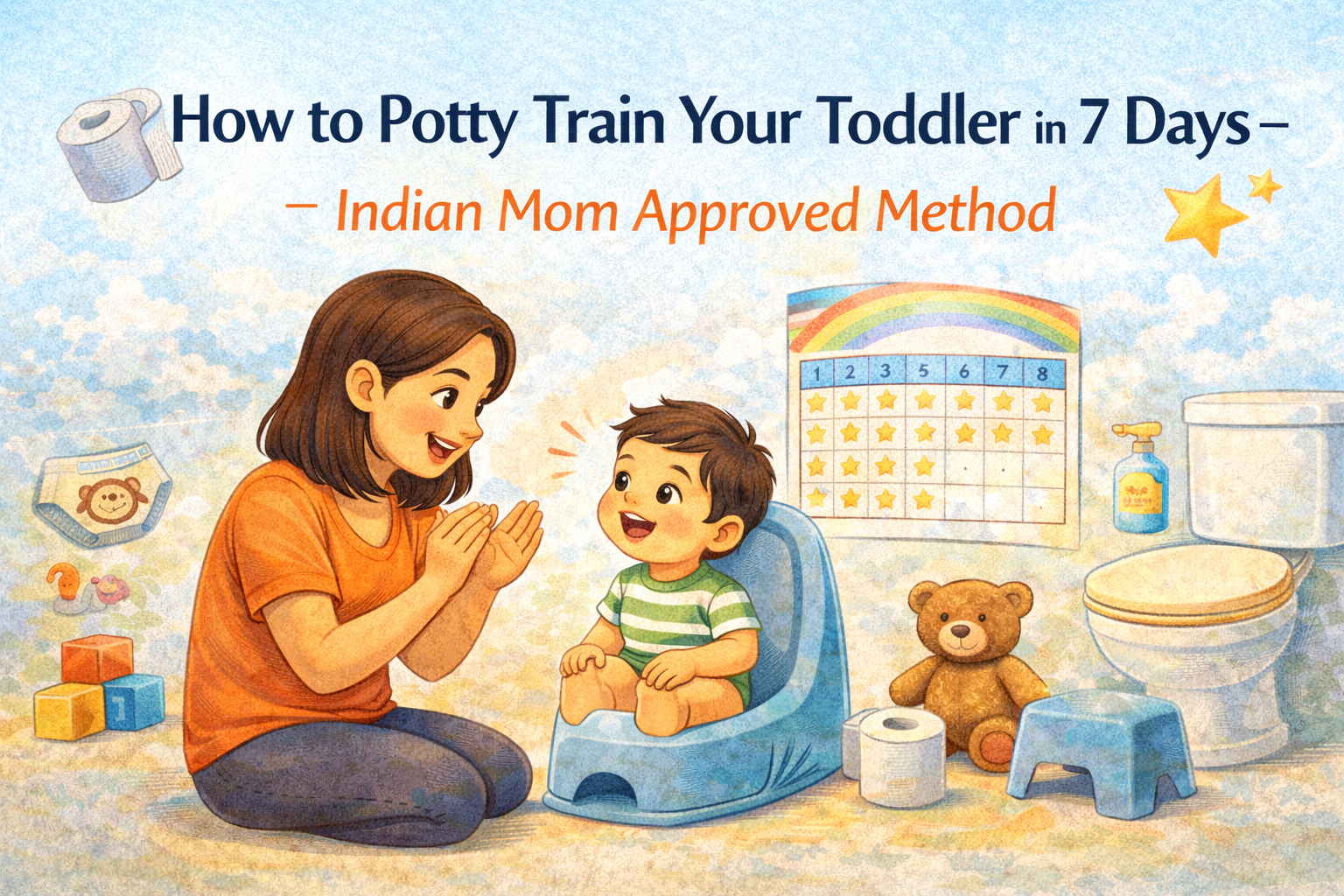

The 7-Day Potty Training Method – Indian Mom Approved (Realistic, Gentle, and Desi-Adapted)
Potty training a toddler (usually 18–30 months) can feel overwhelming in Indian homes—joint family opinions, small bathrooms (often Indian-style squat toilets), hot weather making naked time doable, and the cultural mix of early starts vs. modern “wait till ready” advice. Many Indian moms (from podcasts like Modern Indian Parent, YouTube vlogs, Instagram reels, and blogs in 2025–2026) adapt popular quick methods like Oh Crap Potty Training (by Jamie Glowacki) or 3-day/7-day intensive approaches. They report real success in 7–10 days of focused effort, not magic overnight, with patience for accidents.
Important reality check first (from Indian mom experiences):
- Not every child is ready at the same age. Signs of readiness: stays dry 2+ hours, tells you before/after peeing/pooping, shows interest in potty/toilet, can pull pants up/down, follows simple instructions.
- Aim for 20–30 months ideally (earlier with Elimination Communication/common in desi families, but that’s different).
- 7 days means intensive focus—dedicate a week (holidays/vacation), clear schedule, stay home mostly. Expect accidents (lots in first 3–4 days)—no punishment, just calm redirection.
- Many Indian moms combine this with traditional elements: using the Indian toilet (squat position helps natural pooping), family involvement (dadi helping), and simple rewards like claps/praise instead of big bribes.
- If your toddler resists strongly or regresses (e.g., new sibling, travel), pause and try later—no rush.
Preparation (1–2 Days Before Starting)
- Get supplies:
- Sturdy potty chair (floor-level for Indian homes) + potty seat reducer for adult toilet.
- Lots of cheap cotton underwear (or padded training ones like SuperBottoms for less mess).
- Waterproof mats/sheets for floors (old bedsheets work).
- Books like “Everyone Poops” or desi potty stories.
- Plenty of fluids (water, chaas, coconut water) to create practice opportunities.
- Talk it up: Show the potty, let them sit clothed, read books, say “Pee/poop goes in potty” casually. Dump a dirty diaper into the potty in front of them to connect the dots.
- Choose your week: Pick low-stress time—no travel, guests, or illnesses.
The 7-Day Plan (Adapted for Indian Moms)
Core principle (from Oh Crap + Indian adaptations): Go diaper-free from Day 1 (bottomless at home) so baby feels the sensation and learns body signals fast. Stay close, watch for cues (squirming, holding crotch, silent pause), and guide to potty immediately. Praise successes hugely; clean accidents calmly (“Oops, next time in potty!”).
Related Articles on MomSaathi
- 👉 15 Screen-Free Activities for Toddlers That Actually Work
- 👉 Gentle Parenting Phrases Every Indian Mom Should Use
- 👉 Toddler Screen Time Guide: Healthy Limits & Tips
- 👉 Self-Care & Me Time for Moms
- 👉 How to Build Strong Bonds Between Siblings
Days 1–3: Naked/Bottomless Intensive (The Messy Phase)
- Day 1: Bottomless at home. Give lots of liquids. Take to potty every 15–20 min or at signs. Stay in one room (living area with mats). Catch them mid-pee/poop and rush to potty (say “Pee coming? Let’s go potty!”). Celebrate big (clap, “Yay big boy/girl!”).
- Day 2: Continue bottomless or loose shorts. Extend intervals as they start signaling. Many Indian moms note pooping is easier in squat position—use Indian toilet if available (hold hands for balance if needed).
- Day 3: Add loose underwear. Keep prompting. Accidents drop; they start telling you or going themselves. Outdoor play? Use portable potty or quick trips home.
Days 4–5: Underwear + Routine Building
- Switch to underwear full-time at home. Set timers for potty sits (every 30–60 min + after meals/naps/drinks).
- Practice pulling pants up/down.
- Introduce outings short (park with potty in car). Use public restrooms—carry seat reducer or squat if Indian style.
- Nighttime: Many keep diapers/pull-ups at night till dry mornings (can take months longer—normal).
Days 6–7: Independence & Reinforcement
- Toddler leads more—ask “Do you need potty?” instead of always prompting.
- Handle outings longer (mall, family visits).
- Night training optional—watch for dry diapers.
- If poop resistance (common), encourage squatting position (many desi toddlers prefer it naturally).
Indian-Specific Tips That Actually Work (From Moms in Karnataka & Across India)
- Squat advantage: Indian-style toilets help with pooping (better angle). If Western toilet, use footstool for knees-up position.
- Family help: Involve elders—many grandmas have experience with early training. But set boundaries: no forcing or shaming.
- Mess management: Do in bathroom/tiled area first. Use old newspapers/mats. Hot Karnataka weather? Naked time is cooling + easy cleanup.
- Cultural tweaks: Skip harsh traditional methods (no fear tactics). Use positive words: “Potty jaana hai?” Praise in mother tongue.
- Common boosters: Songs/rhymes while sitting (“Potty potty karo beta”), sticker chart for big kids, or small treat (piece of fruit/chocolate after success).
- For stubborn poopers: Let them play near potty, read books while sitting—no pressure.
What to Expect & Red Flags
- Accidents: 10–20+ in first days—normal learning.
- Regression: Travel, illness, or stress can cause it—go back to basics.
- When to pause: If meltdowns, fear of potty, or constipation—wait 1–2 months.
- Success markers: Dry periods lengthening, self-initiating, fewer accidents by week 2.
This isn’t foolproof—some kids take 2–4 weeks—but many Indian moms (Rinie from Modern Indian Parent, YouTube Indian Mom on Duty, Instagram desi moms) say dedicating 7 focused days + consistency gets 80–90% success quickly. Stay calm, hydrated, and kind to yourself too.