
Edited by: MomSaathi Editorial Team
Reviewed by: Based on medical postpartum care guidelines and week-by-week recovery research
Hey, beautiful new mama
You just brought a tiny human into the world — and now your body and mind are going through one of the biggest recoveries of your life. Whether you had a vaginal birth, C-section, or anything in between, the fourth trimester can feel overwhelming, exhausting, and surprisingly emotional.
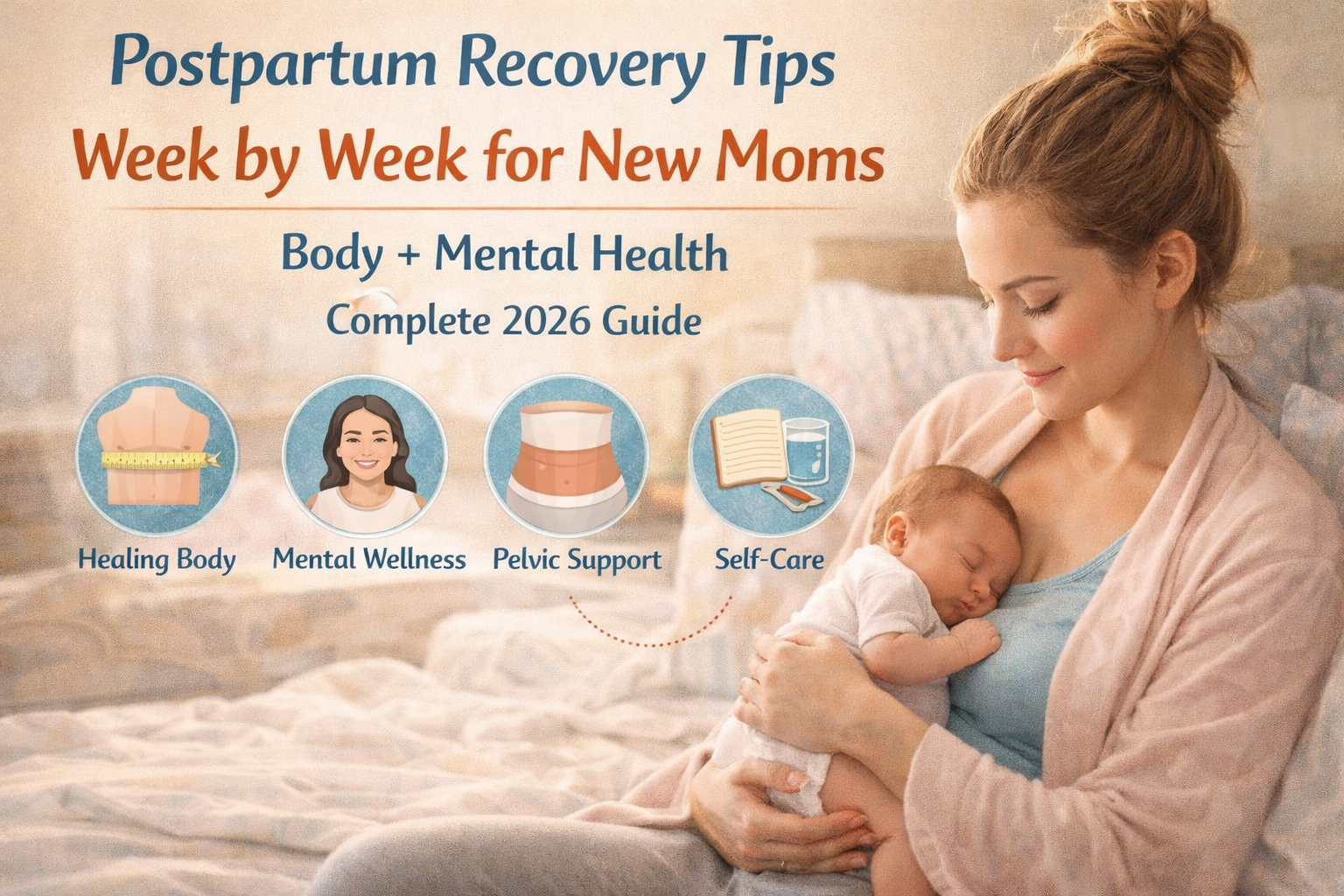
At Momsaathi, we believe every new mom deserves honest, gentle, and practical support. This postpartum recovery tips week by week guide covers physical healing, emotional ups and downs, nutrition, gentle movement, and mental health — all in one place. No pressure to “bounce back.” Just realistic, evidence-based advice to help you heal at your own pace.
You’ve got this, mama. Let’s walk through the weeks together so you feel informed, supported, and a little less alone.
Week 1: The Golden Hour & First Days at Home (Focus: Rest + Bleeding)
Your body is doing heavy healing work right now.
Physical Recovery Tips:
- Expect heavy bleeding (lochia) — bright red at first, like a heavy period. Use hospital-grade pads or adult diapers. Change often.
- If you had stitches (vaginal or C-section), keep the area clean and dry. Use a peri bottle with warm water after every bathroom visit.
- For C-section moms: Support your incision when coughing, sneezing, or laughing. Avoid heavy lifting.
- Rest as much as possible. Accept help with cooking, cleaning, and baby care.
- Stay hydrated (aim for 3–4 liters of water daily) and eat nutrient-rich meals.
Mental Health Tips:
- Baby blues are very common in the first 2 weeks — crying, mood swings, anxiety. This usually passes on its own.
- Skin-to-skin with your baby helps release oxytocin (the love hormone) and stabilizes mood.
- Talk openly with your partner or a trusted person about how you’re feeling.
Pro Tip: Pair this week with responsive newborn care from our Best Newborn Sleep Schedule 0-3 Months for First-Time Moms.
Week 2: Healing & Establishing Routines
Bleeding starts to lighten (pink/brown). Your uterus is shrinking back.
Physical Recovery:
- Gentle walking around the house is encouraged. No strenuous exercise yet.
- Continue peri care and sitz baths (warm water with Epsom salt) 2–3 times a day for soothing.
- For C-section: Incision should look less red and swollen. Watch for signs of infection (increasing redness, pus, fever).
- Breastfeeding or pumping may feel more comfortable now, but engorgement or cracked nipples can still happen.
Mental Health:
- If baby blues haven’t improved or you feel overwhelmed, reach out to your doctor.
- Try short mindfulness moments: 5 minutes of deep breathing while feeding baby.
- Remember: It’s okay if bonding feels slow — it grows with time and responsiveness.
Internal Link: If feeding feels challenging, read How to Transition from Breastfeeding to Solids: 6-Month Baby Led Weaning Guide for future planning (many tips apply early too).
Week 3–4: Energy Returns Slowly + Hormonal Shifts
Many moms notice a bit more energy, but fatigue is still high.
Physical Recovery Tips:
- Lochia becomes lighter (yellow/white). If it suddenly gets heavier or smells bad, call your doctor.
- Start very gentle pelvic floor exercises (Kegels) — only if it feels comfortable. Consult a pelvic floor physiotherapist if you had tears or episiotomy.
- For C-section moms: Light scar massage with vitamin E or recommended oil can help (after incision is fully closed).
- Eat iron-rich foods (leafy greens, lentils, red meat or supplements if prescribed) to rebuild blood levels.
Mental Health Tips:
- Watch for signs of postpartum depression or anxiety: persistent sadness, loss of interest, panic attacks, or intrusive thoughts.
- Schedule a follow-up visit with your OB/GYN or midwife around 4–6 weeks.
- Connect with other new moms — online or in-person support groups make a huge difference.
External Resource: For official postpartum mental health screening tools and support, visit the American College of Obstetricians and Gynecologists (ACOG) resource: https://www.acog.org/womens-health/faqs/postpartum-depression
Week 5–6: The “I’m Healing But Still Tired” Phase
You’re likely cleared for light activity at your 6-week check-up.
Physical Recovery:
- Most moms can slowly resume driving and short walks outside.
- Introduce gentle core activation (not full crunches yet). Focus on diaphragmatic breathing and pelvic tilts.
- Continue breastfeeding or pumping. Many moms notice supply stabilizes around now.
- Sleep when baby sleeps — even 20-minute naps help.
Mental Health:
- If you’re feeling better emotionally, celebrate it! If not, ask for help — therapy, medication, or both can be life-changing and safe while breastfeeding.
- Practice self-compassion: Your body created life. Healing takes time.
Internal Link: For safe sleep support during this exhausting phase, revisit Best Newborn Sleep Schedule 0-3 Months for First-Time Moms.
Week 7–12: Building Strength & Adjusting to Motherhood
You’re entering the “fourth trimester” endgame, but full recovery can take 6–12 months or longer.
Physical Recovery Tips:
- Gradually increase walks and add postpartum-friendly exercises (yoga, Pilates for new moms).
- Wear a supportive bra and consider belly binding only if it feels good (not too tight).
- Address any lingering issues: diastasis recti, incontinence, or back pain with a specialist.
Mental Health Tips:
- Reconnect with your partner — date nights at home count!
- Set small, realistic goals each day (shower + one meal = win).
- If anxiety or low mood persists beyond 6–8 weeks, seek professional support early.
External Resource: Mayo Clinic’s comprehensive postpartum recovery timeline and red flags: https://www.mayoclinic.org/healthy-lifestyle/labor-and-delivery/in-depth/postpartum-care/art-20047233
Nutrition, Movement & Self-Care Tips That Help All Weeks
- Eat: Warm, nourishing meals — soups, dals, oats, nuts, fruits. Include galactagogues like fenugreek or oats if breastfeeding.
- Hydrate & Rest: Keep water and snacks near your feeding station.
- Gentle Movement: Start with breathing exercises and progress slowly. Never push through pain.
- Mental Health Toolkit: Journaling, short meditations, asking for help without guilt, and limiting social media comparisons.
Internal Link: Combine physical healing with responsive parenting using Gentle Parenting Techniques for Newborns and Toddlers (No Cry Methods).
Red Flags — When to Call Your Doctor Immediately
- Heavy bleeding that soaks a pad in under an hour
- Severe headache, vision changes, or chest pain
- Fever over 100.4°F (38°C)
- Foul-smelling discharge or increasing pain at incision/stitch site
- Thoughts of harming yourself or the baby (emergency — call helpline or go to ER)
- Severe sadness or inability to care for yourself/baby for days
FAQs About Postpartum Recovery Week by Week
- How long does postpartum bleeding last? Usually 4–6 weeks, but can vary. It should gradually lighten.
- When can I exercise again after birth? Light walking from week 1–2. Full exercise only after 6-week clearance and when it feels right.
- Is it normal to cry a lot in the first weeks? Yes — baby blues affect up to 80% of new moms and usually resolve by week 2.
- How do I know if I have postpartum depression? If sadness, anxiety, or hopelessness lasts more than 2 weeks or interferes with daily life.
- Can I do Kegels right away? Gentle ones yes, but stop if painful and consult a pelvic floor therapist.
- Will my belly ever go back to normal? It takes time — skin, muscles, and organs need months to adjust.
- Is it okay to feel disconnected from my baby? Many moms do at first. Responsive care and time usually strengthen the bond.
- When does milk supply regulate? Around 4–6 weeks for most breastfeeding moms.
- Can I take pain medication while breastfeeding? Most common ones (ibuprofen, paracetamol) are safe — confirm with your doctor.
- How long until I feel like “myself” again? Physical healing: 6–12 weeks. Full emotional recovery: 6–18 months for many.
- Should I bind my belly? Only if it provides comfort — not for weight loss or tight shaping.
- What if recovery feels slower than other moms? Every birth and body is different. Compare only to your own progress.
You Are Healing Beautifully, Mama — One Week at a Time
Postpartum recovery is not a race. Some days you’ll feel strong, others you’ll need extra rest. Be kind to your body and mind — you just did something extraordinary.
Bookmark this postpartum recovery tips week-by-week guide and check back as the weeks unfold. Celebrate every small win: a shower, a walk outside, a moment of calm.
You are not alone. Reach out to your support system, your doctor, or our Momsaathi community anytime.
Drop a comment below: Which week are you in right now, and what’s helping you the most? Or share one tip you wish someone had told you earlier. Let’s support each other!
Share this guide with any new mom who needs gentle, realistic encouragement. You’re doing an amazing job — healing, nurturing, and growing into motherhood.