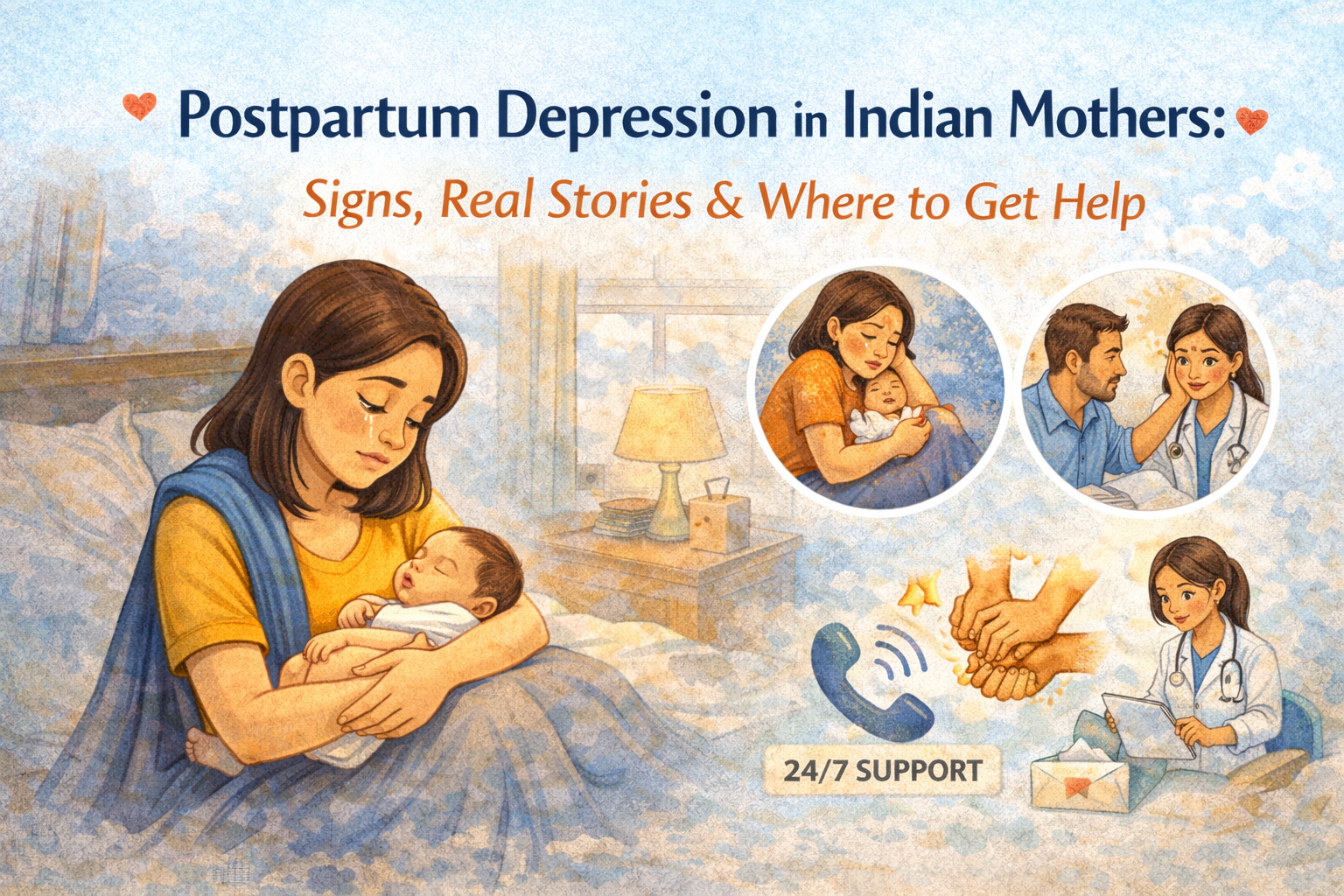

Postpartum Depression in Indian Mothers: Signs, Real Stories & Where to Get Help
Postpartum depression (PPD) is a serious but treatable mental health condition that affects many new mothers—far more than the temporary “baby blues” (which fade in 1–2 weeks). In India, cultural expectations of instant joy in motherhood, family pressures, stigma around mental health, and limited awareness often make moms suffer in silence. But PPD is real, common, and not a sign of weakness or bad parenting. You’re not alone, and help is available.
Prevalence in India (2026 Perspective)
Recent studies and meta-analyses (including systematic reviews from 2020–2025) show:
- Pooled prevalence of PPD in India is around 19–22% (some estimates up to 30% in certain groups or regions).
- Higher in southern India (~26%) vs. northern (~15%).
- Rates can reach 28% in some hospital-based studies, with postpartum anxiety even higher (~34%).
- Many cases go undiagnosed due to low mental health literacy (only ~50% of moms have adequate knowledge) and stigma.
- Risk factors common in Indian contexts: financial stress, lack of husband/family support, domestic violence, marital conflict, birth of a girl child (in some studies), unplanned pregnancy, low education, past mental health issues, or labor complications.
These numbers come from sources like PMC reviews, WHO-linked data, and Indian journals—higher in rural/low-resource areas, but urban moms face it too due to isolation, work pressure, or high expectations.
Common Signs & Symptoms
PPD usually starts within weeks to months after birth (can last months if untreated). It differs from baby blues by intensity and duration.
Key signs (often overlapping):
- Persistent sadness, hopelessness, or crying spells (without clear reason).
- Extreme fatigue or low energy (beyond normal new-mom tiredness).
- Loss of interest/pleasure in things, including bonding with baby.
- Irritability, anger outbursts, or feeling overwhelmed by everything.
- Guilt, worthlessness, or thoughts like “I’m a bad mom” or “Baby would be better without me.”
- Changes in sleep (insomnia or oversleeping) or appetite (weight loss/gain).
- Anxiety/panic attacks, racing thoughts, or fear of harming self/baby.
- Difficulty concentrating or making decisions.
- Physical aches (headaches, stomach issues) with no medical cause.
Red flags for immediate help: Thoughts of self-harm or harming the baby, severe detachment from baby, hallucinations, or inability to function/care for self/baby.
Related Articles on MomSaathi
- 👉 15 Screen-Free Activities for Toddlers That Actually Work
- 👉 Gentle Parenting Phrases Every Indian Mom Should Use
- 👉 Toddler Screen Time Guide: Healthy Limits & Tips
- 👉 Self-Care & Me Time for Moms
- 👉 How to Build Strong Bonds Between Siblings
If symptoms last >2 weeks or interfere with daily life, seek help—early intervention works best.
Real Stories from Indian Moms (Anonymized/Adapted from Shared Experiences)
Many Indian moms share bravely on Instagram, blogs, YouTube, and forums—breaking the silence.
- Shalini from Pune (shared on mental health sites): After her first baby, she felt constant sadness, cried endlessly, and couldn’t bond. Family said “It’s normal, adjust kar lo,” but she felt like a failure. Eventually sought counseling—therapy + family understanding helped her recover. She now advocates: “It’s not ‘just hormones’—it’s real, and asking for help saved me.”
- Riya from Chennai (from Live Love Laugh Foundation blog): Struggled silently for months with guilt, exhaustion, and detachment. Thought “Good moms don’t feel this.” Therapy helped her see it as illness, not character flaw. She emphasizes: “Talking to someone who listens without judgment changes everything.”
- Other common themes from desi moms (Instagram reels, YouTube): Overwhelm from “perfect” expectations, pressure to breastfeed/exclusively care without rest, isolation in nuclear families, or elders dismissing feelings as “weakness.” Many recover with therapy, meds (if needed), support groups, and open family talks. One mom shared: “I thought I was broken—turns out I was sick, and treatment made me whole again.”
These stories show hope: With help, most moms get better and enjoy motherhood.
Where to Get Help in India (2026 Resources)
Don’t wait—reach out. Start with your gynecologist/pediatrician (many screen now), but specialized support exists.
Helplines (Free, Confidential, 24/7 or extended hours):
- The Live Love Laugh Foundation Helplines: Multiple verified lines for stress/anxiety/depression (check thelivelovelaughfoundation.org/find-help for regional numbers in multiple languages).
- iCall (TISS Mumbai): 022-25521111 (Mon–Sat, 8 AM–10 PM) – counseling for maternal mental health.
- Vandrevala Foundation: 9999666555 or help@vandrevalafoundation.com.
- 1Life Helpline: 24/7 support (1life.org.in).
- Voice That Cares (VTC): PAN-India psychological first aid.
Other Support:
- NIMHANS (Bengaluru): Maternal mental health clinics (especially relevant in Karnataka—teleconsults available).
- Local psychiatrists/psychologists via Practo or hospital OPDs (many offer perinatal focus).
- NGOs like Sangath or BasicNeeds for community support.
- Online: Apps like YourDOST or tele-counseling platforms; Instagram communities (@mompower360, desi mom groups) for peer support.
- If severe: Emergency—go to nearest hospital or call 104/108 ambulance.
Tips for Starting:
- Tell a trusted person (partner, mom, friend): “I’m struggling more than normal—can we talk?”
- Track symptoms for 1–2 weeks.
- Self-care basics: Rest, nutrition, short walks, hydration—while seeking professional help.
PPD is treatable—therapy (CBT), meds (safe for breastfeeding), support groups all help. In India, awareness is growing (thanks to WHO, NMHS, and advocates). You’re strong for recognizing this—reaching out is the bravest step.