
With the March–April heat wave kicking in across India (yes, Karnataka is already feeling it!), newborn rashes are popping up everywhere in mom groups. Is that red bumpy skin heat rash (prickly heat) from the humidity, or an allergic reaction (like hives or eczema flare-up)? Don’t worry—most are harmless and treatable at home, but knowing the difference can save you stress and keep your little one comfy.
In this guide, we’ll break it down: symptoms, how to spot the difference, pediatrician-approved home remedies (including coconut oil vs calamine lotion), when to worry, and prevention tips for scorching Indian summers.
What is Heat Rash (Prickly Heat or Miliaria) in Newborns?
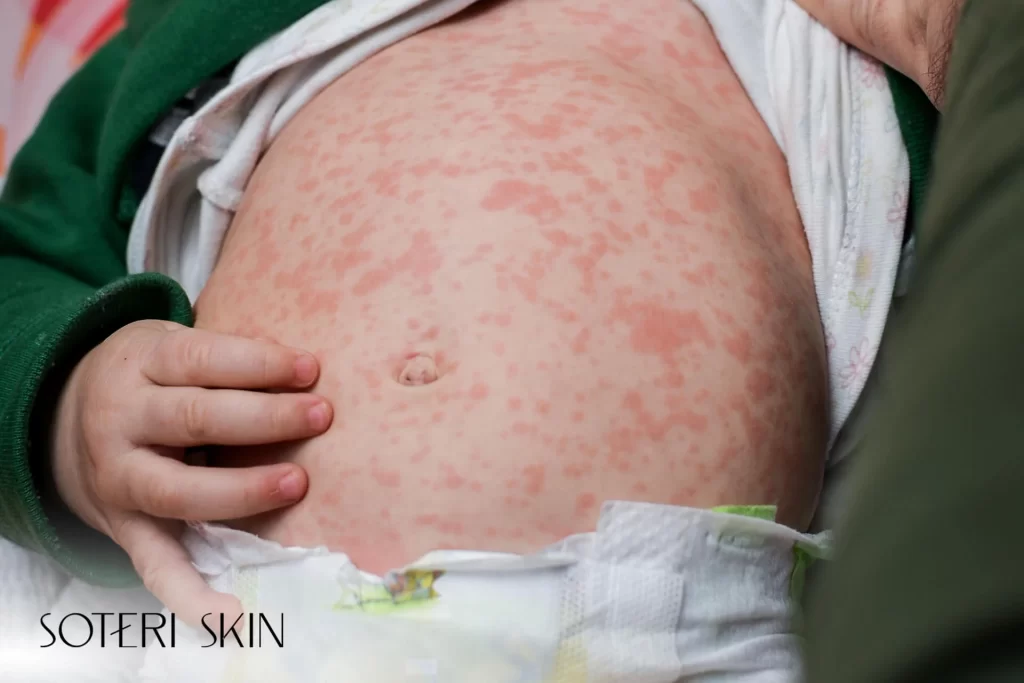
Heat rash happens when your baby’s tiny sweat glands get blocked in hot, humid weather. Sweat gets trapped under the skin, causing irritation. Newborns are extra prone because their sweat glands aren’t fully developed yet.
Common signs of heat rash:
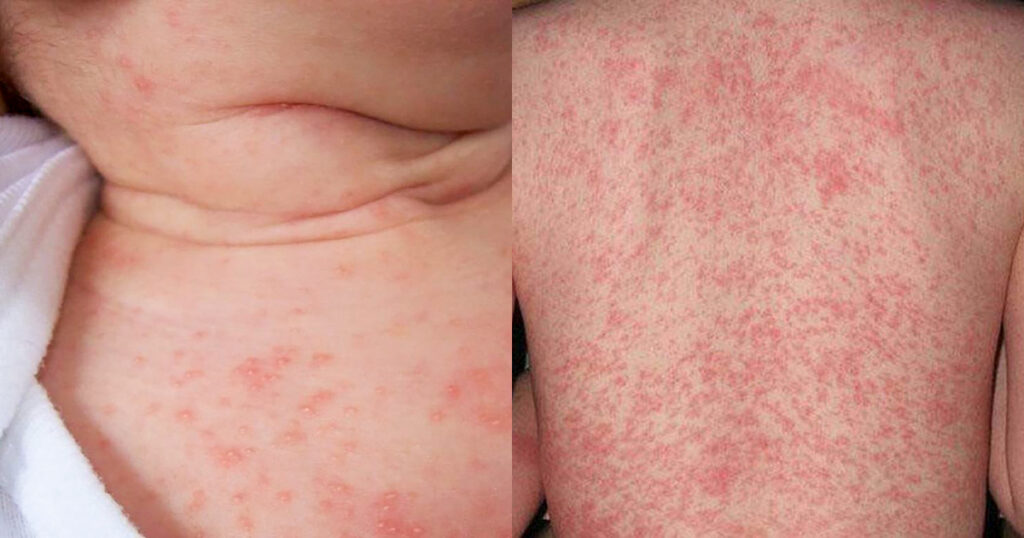
- Tiny red bumps or clear blisters (like small pimples or beads of sweat)
- Clusters in sweaty areas: neck folds, chest, back, armpits, groin, or diaper area
- Prickly, itchy, or burning feeling (baby may seem fussy or restless)
- Worsens with heat/sweat and improves when cooled down
It usually clears in a few days with simple cooling—no fever or other illness involved.
What is an Allergy Rash in Newborns? (Hives, Eczema, etc.)
Allergic rashes come from triggers like new foods (milk/dairy), soaps, detergents, fabrics, pollen, or even laundry products. Common types include:
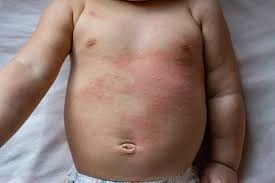
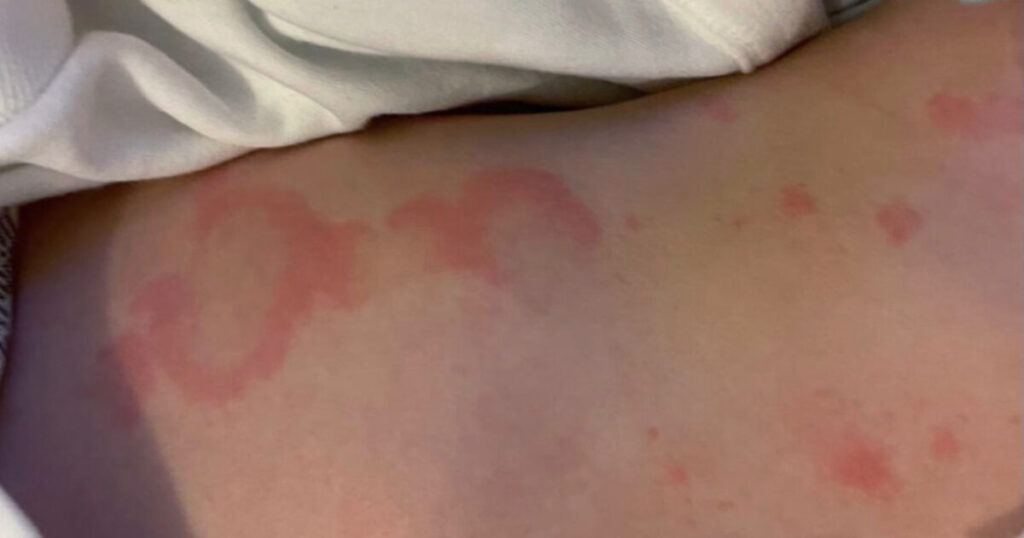
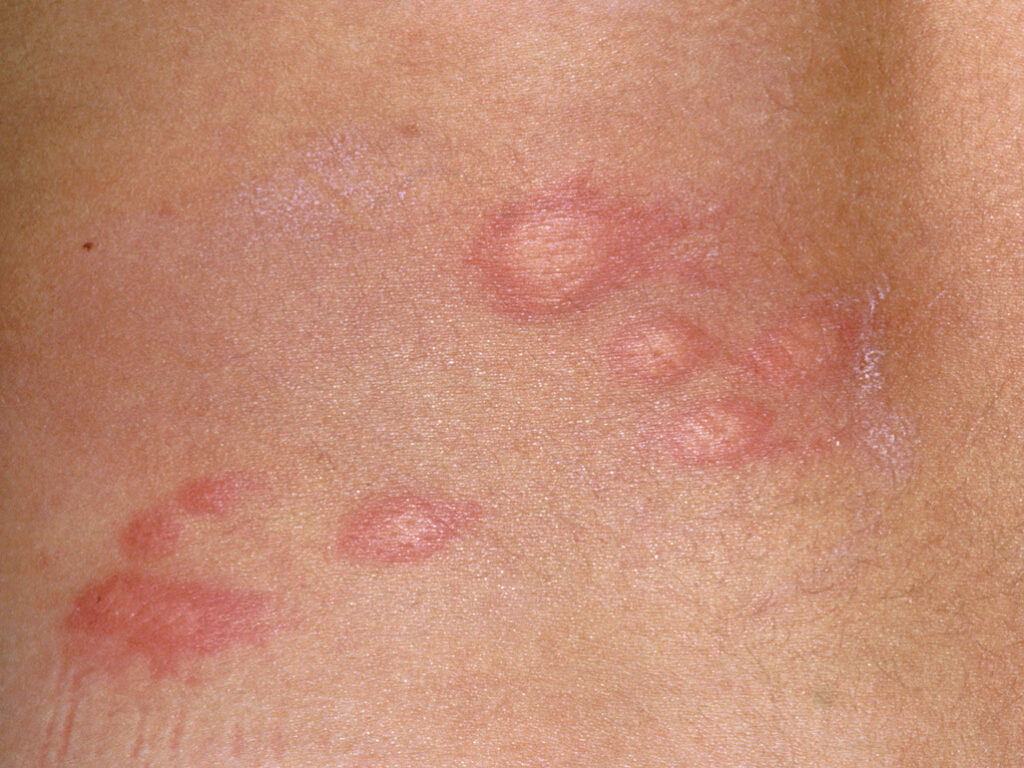
- Hives (urticaria): Sudden raised, red welts that come and go quickly (often in 24 hours)
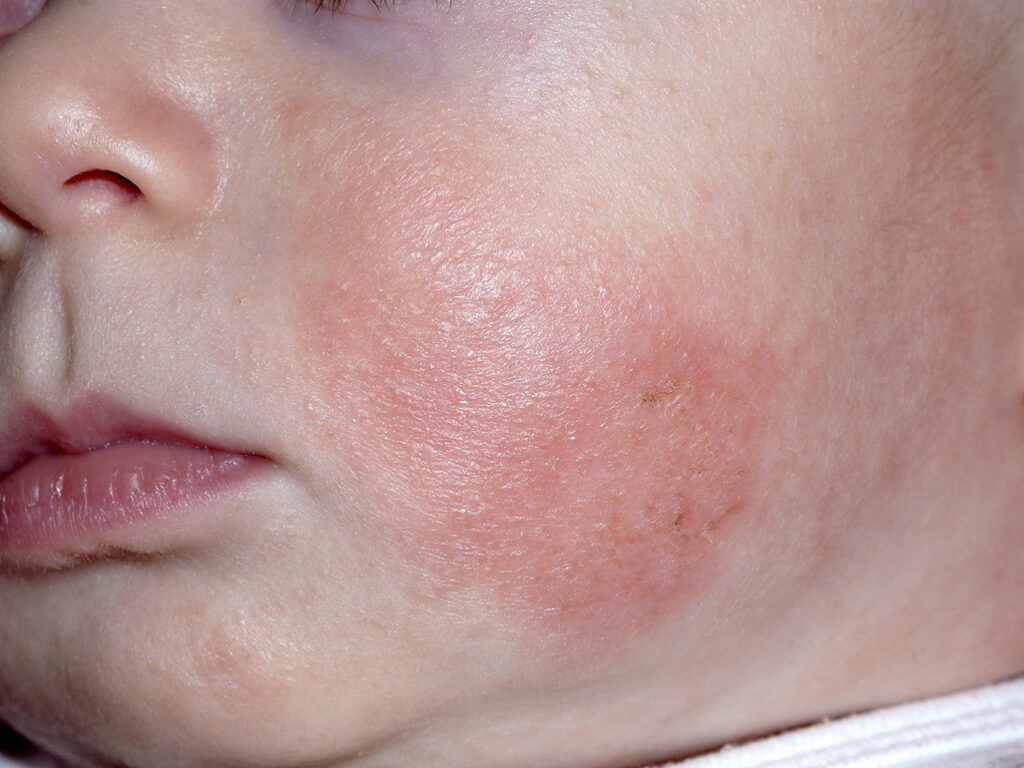
- Eczema (atopic dermatitis): Dry, red, scaly patches that are very itchy and can crack
Common signs of allergy rash:
- Raised welts/hives or dry, flaky patches
- Intense itching (more severe than prickly heat)
- Appears anywhere, often on face/cheeks, arms, or body
- Sudden onset, may recur with the same trigger
- Possible other signs: swelling, vomiting, or fussiness (severe cases need urgent care)
Unlike heat rash, it isn’t tied to temperature and doesn’t improve just by cooling.
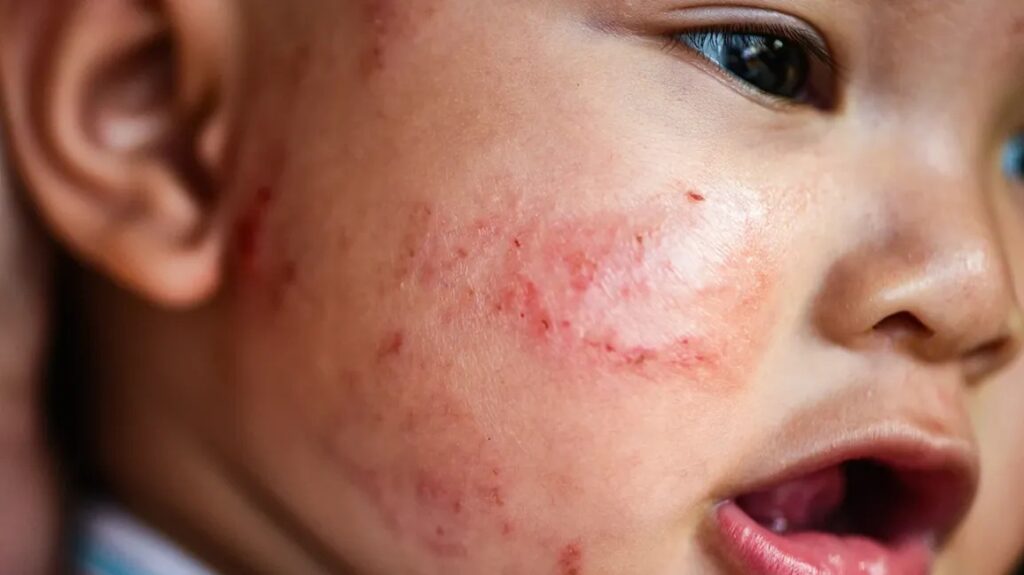
Quick Comparison: Heat Rash vs Allergy Rash
| Feature | Heat Rash (Prickly Heat) | Allergy Rash (Hives/Eczema) |
|---|---|---|
| Appearance | Tiny pinpoint red bumps/blisters in clusters | Raised welts (hives) or dry/scaly patches |
| Location | Sweat-prone folds (neck, chest, back) | Anywhere, often face/body |
| Itch Level | Prickly/tingly | Intense, burning itch |
| Trigger | Heat, humidity, overdressing | Allergens (food, soap, detergent) |
| Duration | Clears in days with cooling | May persist/recurr until trigger removed |
| Other Signs | No fever | Possible swelling, GI issues (severe) |
For Heat Rash (Most Common in Summer):
- Cool the baby immediately – Move to a fan/AC room, give a lukewarm (not cold) bath without soap, pat dry gently.
- Dress lightly – Loose, breathable cotton clothes (avoid synthetics). Skip layers; let skin breathe (safe diaper-free time indoors).
- Soothe the skin:
- Calamine lotion – Classic choice, cools and reduces itch (apply thinly).
- Pure coconut oil – Natural Indian home remedy; moisturizes and calms mild cases (many moms prefer it over lotions for newborns).
- Cool compress (clean cloth with cool water) for 10–15 mins.
- Keep hydrated – More breastfeeds or formula.
For Suspected Allergy Rash:
- Identify/avoid trigger (switch to fragrance-free detergent, mild soap).
- Gentle moisturizer (petroleum jelly or hypoallergenic cream).
- Cool compress for hives.
- If eczema suspected, use doctor-recommended barrier cream.
General tips: No scratching (trim nails), keep room cool (fan essential in Karnataka heat), change sweaty/damp clothes fast.
When to Worry & See a Pediatrician Right Away
Most rashes resolve at home, but rush to the doctor if:
- Rash spreads rapidly, has pus/oozing blisters (possible infection)
- Fever, swelling (face/lips/eyes), breathing trouble, vomiting (severe allergy/anaphylaxis emergency!)
- Rash lasts >1 week, worsens, or baby is inconsolable/poor feeding
- Signs of dehydration or extreme discomfort
In India, summer heat can turn minor issues worse—better safe with a quick pediatric visit.
Prevention Tips for Newborns During Indian Heat Waves
- Dress in light cotton only (white/light colors best)
- Avoid overdressing or tight swaddling
- Use fan/AC; keep room 24–28°C
- Daily cool baths, change diapers/clothes promptly
- Mild, fragrance-free products
- Shade outdoors; no direct sun for long

Final Thoughts
Summer 2026 is here, and heat rash is super common—but now you can spot it vs an allergy rash and treat safely at home. Coconut oil and calamine are mom-favorites in India, but always patch-test. Trust your instincts—if something feels off, chat with your pediatrician.
Have you dealt with newborn rashes this season? Share in the comments below—I read every one! Share this post with other moms in your WhatsApp groups.
Disclaimer: This is general info based on pediatric guidelines—not a substitute for medical advice. Consult a doctor for your baby’s specific condition.
Frequently Asked Questions (FAQs)
Is heat rash dangerous for newborns in India?
No, heat rash (prickly heat) is usually harmless and clears in a few days with cooling. It’s very common during Karnataka’s heat waves, but watch for infection signs like pus.
How can I tell if it's heat rash or allergy rash?
Heat rash shows tiny bumps in sweaty folds and improves with cooling. Allergy rash (hives/eczema) is more intense, sudden, and may involve face/swelling—often from food/soap triggers.
Can I use coconut oil for newborn heat rash?
Yes, pure coconut oil is a safe, natural remedy many Indian moms use for mild cases—it moisturizes and soothes. Patch-test first and apply thinly.
When should I take my baby to the doctor for a rash?
Immediately if there’s fever, swelling, breathing issues, pus, or if the rash lasts over a week/worsens. Better to consult early in summer.
Does overdressing cause heat rash in babies?
Yes—common trigger in hot Indian weather. Stick to light cotton layers and change sweaty clothes quickly.
Related Articles on Momsaathi.com:
- Baby Care Trends India 2026 – Explore the latest natural and smart parenting shifts for Indian babies this year.
- Signs Baby Getting Enough Breast Milk – Indian Moms Checklist – Quick signs to know your newborn is feeding well.
- First 1000 Days Nutrition India – Guide for Indian Parents – Superfoods, recipes, and anemia prevention from pregnancy to toddlerhood.
- Best Diapers for Babies India 2026 – Eco vs Disposable Guide with Rash Prevention Tips – Rash prevention and diaper choices for sensitive newborn skin.
External Resources:
- HealthyChildren.org (AAP) – Heat Rash (Prickly Heat) in Babies & Young Children – Detailed guide from the American Academy of Pediatrics on miliaria in infants.
- HealthyChildren.org (AAP) – Common Summertime Skin Rashes in Children – AAP overview of heat rash and other summer rashes.
- Indian Academy of Pediatrics Guidelines for Pediatric Skin Care – IAP recommendations on newborn skin care, including barrier protection and avoiding certain oils.