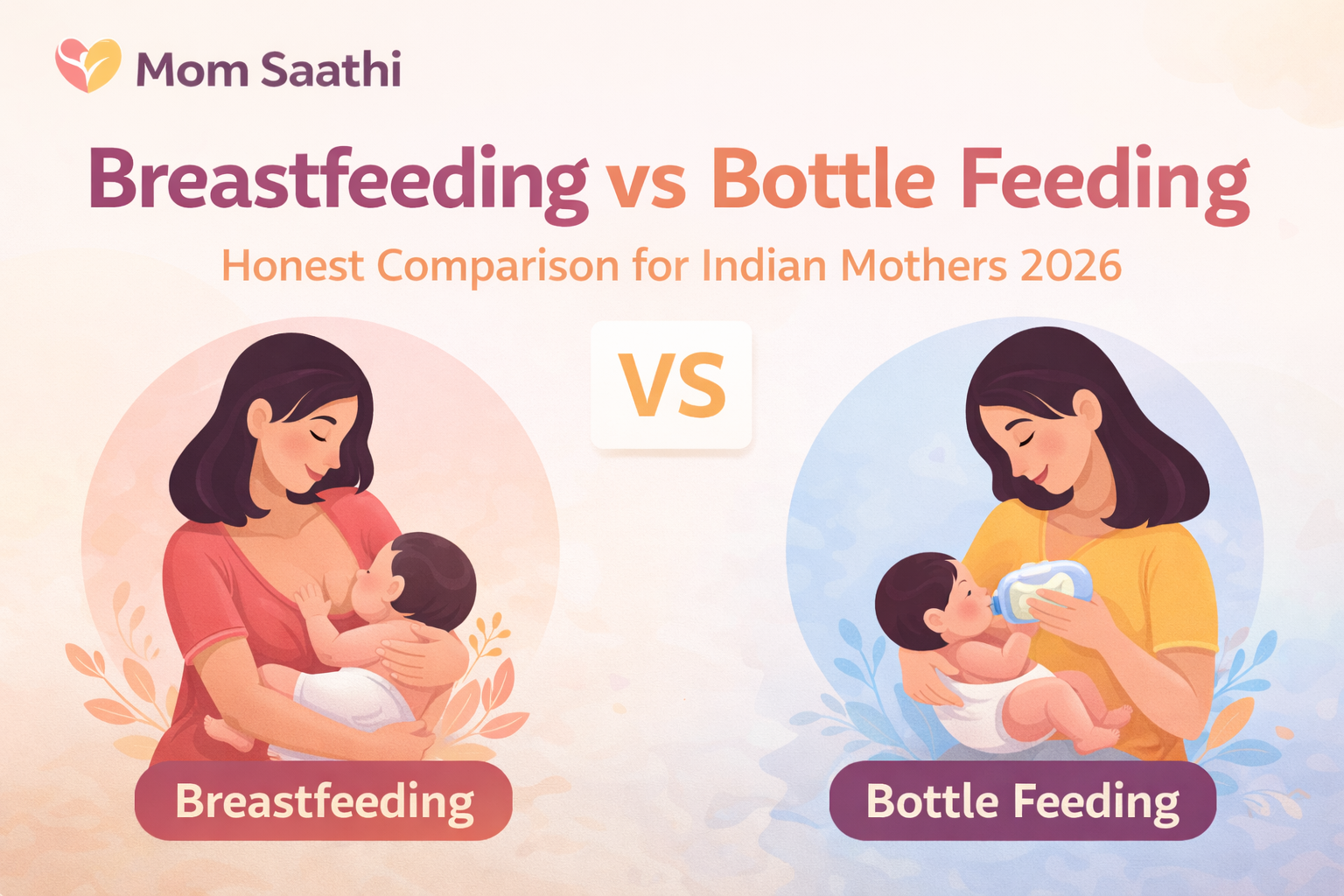

Breastfeeding vs Bottle Feeding (Formula Feeding): Honest Comparison for Indian Mothers in 2026
As a new mom in India, you’re navigating a mix of strong cultural support for breastfeeding (jaappa traditions, family advice, government programs like MAA), aggressive formula marketing, workplace pressures, and modern realities like returning to work early. Exclusive breastfeeding rates have improved—around 63.7% for the first 6 months (from recent NFHS-5 and WBTi 2025 data)—but many moms supplement or switch due to perceived low supply, pain, work, or family pressure. WHO, UNICEF, AAP, and Indian guidelines still recommend exclusive breastfeeding for ~6 months, then continued with complementary foods up to 2 years or beyond.
This is a realistic, no-guilt comparison based on current evidence (2025–2026 studies and guidelines). Breast milk remains the gold standard, but formula is a safe, nutritionally adequate option when needed—no judgment here.
Quick Side-by-Side Comparison (2026 Perspective)
| Aspect | Breastfeeding (Exclusive/Continued) | Formula/Bottle Feeding |
|---|---|---|
| Nutrition | Dynamic, perfectly tailored; changes with baby’s needs (e.g., more water in hot Indian summers). Colostrum = first immunity boost. Live cells, enzymes, hormones. | Mimics breast milk closely (iron-fortified, DHA/ARA added in many brands). Static composition; lacks live antibodies/bioactives. Adequate for growth. |
| Digestion & Comfort | Easier to digest → less gas, constipation, colic. Lower risk of spit-up. | Heavier → longer intervals between feeds (good for sleep sometimes), but more constipation/gas in some babies. |
| Immunity & Infections | Antibodies + good bacteria → lower risk of diarrhea, respiratory infections, ear infections, SIDS. In India, protects against common issues like diarrhea (high in monsoons). | No live immunity → higher risk of GI/respiratory infections, allergies. Studies show more diarrhea episodes. |
| Long-term Health | Lower obesity, type 2 diabetes, allergies, better cognitive scores. Mom: lower breast/ovarian cancer, diabetes risk. | Slightly higher weight gain (0.29 kg more at 6 months in some meta-analyses); potential higher chronic disease risk later. |
| Bonding & Convenience | Skin-to-skin, on-demand → strong bonding. Free, always ready, no prep. But mom is “on call.” | Anyone can feed → shared responsibility, predictable schedule. Pumping/sterilizing adds work/cost. |
| Cost (India 2026) | Almost free (extra food/calories for mom). | ₹2,000–5,000+/month (premium brands like NanPro, Similac). Bottles, sterilization extra. |
| Environmental Impact | Lowest footprint; sustainable. | Higher carbon footprint (~48% more than breastfeeding). Packaging waste. |
| Challenges in India | Latch pain, perceived low supply (common myth), work return (many resume by 3–6 months), family pressure for “top feeds,” pre-lacteals in some homes. | Aggressive marketing, over-diagnosis of “allergy” leading to unnecessary switches, bottle risks (malocclusion, infections if not sterilized). |
Related Articles on MomSaathi
Breastfeeding: The Wins (and Real Struggles)
Pros — Unmatched for immunity (especially vital in India’s infection-prone environment), easier digestion, free, promotes bonding/uterine recovery/postpartum weight loss for mom. Reduces infant mortality risks (diarrhea/pneumonia common killers). Exclusive breastfeeding protects against fever, ARI, and diarrhea (evidence from India-specific studies).
Cons/Realities in India 2026 —
- Early initiation still only ~42% (huge gap despite 88–90% hospital births).
- Supply worries (often perception; cluster feeding normal).
- Pain/soreness, engorgement, mastitis.
- Work: Maternity leave (26 weeks paid for many), but pumping at office hard; crèches rare.
- Cultural: “Baby not gaining enough” pressure → unnecessary top feeds/formula.
- Bottle use rising (~22% in 0–12 months).
Support exists: Lactation consultants, MAA program, apps, online communities. Skin-to-skin, frequent feeds, hydration, traditional foods (methi, jeera, shatavari) help supply.
Formula/Bottle Feeding: When It’s Needed (and Trade-offs)
Pros — Reliable supply, measurable intake (reassuring for weight worries), shared feeding (dad/family help), predictable routine. Modern Indian formulas (e.g., iron-fortified, probiotics in some) support good growth. No shame if medically indicated (e.g., low supply, adoption, meds, severe pain).
Cons/Risks —
- Higher infection risk (diarrhea, respiratory—worse in polluted/hot Indian settings).
- Cost + sterilization hassle (boil bottles in many homes).
- Overfeeding possible → faster weight gain but potential obesity link.
- No antibodies → misses immunity window.
- Cultural pushback sometimes (seen as “modern” but criticized by elders).
Trends show formula use rising in urban/middle-class families due to work, marketing, and myths about inadequate milk. But evidence still shows breastfeeding superior for health outcomes.
Realistic Advice for Indian Moms in 2026
- Try breastfeeding first — Most can succeed with support. Get latch help Day 1 in hospital (push for it). Track wet diapers (6+/day), weight gain.
- Combo feeding common — Many do both; better than stopping breastfeeding entirely.
- No guilt — Fed is best. If formula needed, choose Stage 1 (0–6 months), follow hygiene, consult pediatrician.
- Red flags — Poor weight gain, dehydration → see doctor fast (don’t just add formula without guidance).
- Support — Join local La Leche/Indian mom groups, use tele-lactation (growing in 2026), involve family positively.
Breast milk can’t be beaten for biology, but a happy, supported mom + fed baby is the real win. Millions of Indian moms mix both successfully.