
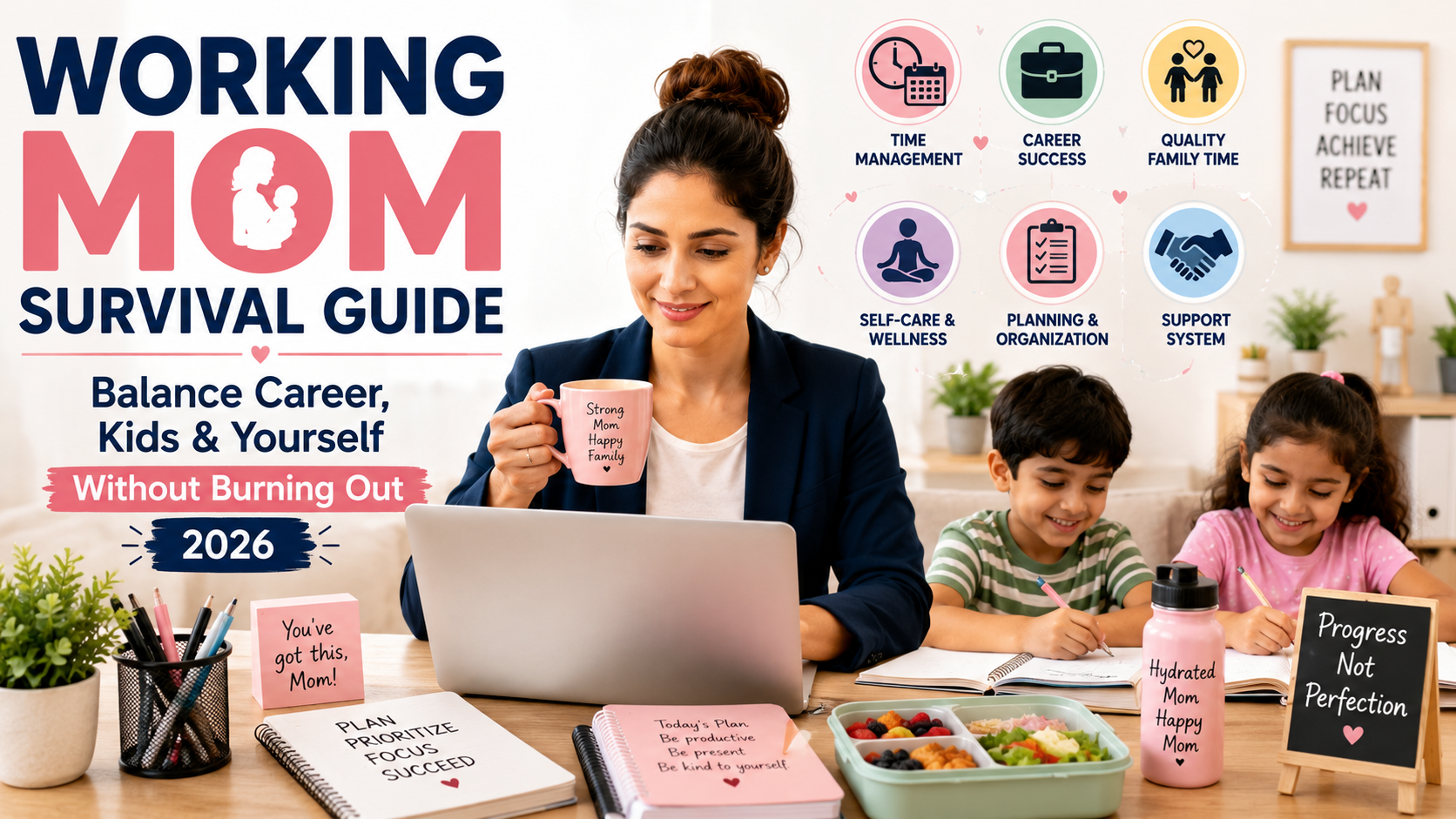

Being a working mom is one of the most rewarding—and demanding—roles a woman can have. Between meeting office deadlines, caring for children, managing household responsibilities, and trying to make time for yourself, it can often feel like there simply aren’t enough hours in the day.
Some mornings begin with preparing school lunches, rushing through traffic, attending back-to-back meetings, and then returning home to homework, dinner, laundry, and bedtime routines. It’s no surprise that many working mothers experience stress, guilt, and emotional exhaustion.
The good news is that surviving as a working mom isn’t about being perfect—it’s about creating routines, setting priorities, and asking for help when needed.
Whether you’re returning to work after maternity leave, managing a hybrid schedule, or balancing a full-time career with parenting, this guide offers practical strategies to help you stay organized, protect your wellbeing, and enjoy meaningful family time.
Related: Feeling exhausted while balancing work and parenting? Learn to recognize the early warning signs in our Mom Burnout Symptoms: Signs, Causes & Recovery Guide.
Why Working Moms Often Feel Overwhelmed
Modern working mothers often carry multiple responsibilities simultaneously.
On any given day, you may be:
- Managing work deadlines
- Preparing meals
- Helping with homework
- Coordinating school activities
- Attending parent-teacher meetings
- Caring for elderly family members
- Managing finances
- Maintaining relationships
The constant shift between professional and personal responsibilities can leave little time for rest or self-care.
Remember: feeling overwhelmed doesn’t mean you’re failing—it means your responsibilities are significant.
Common Challenges Working Moms Face
Every family’s situation is different, but many working mothers share similar struggles.
1. Lack of Time
Many moms feel like they’re always racing against the clock.
Daily responsibilities often include:
- Morning routines
- Office work
- Commuting
- Household chores
- Children’s activities
- Evening routines
Without a structured schedule, small delays can quickly become stressful.
2. Mom Guilt
Working mothers frequently worry about:
- Missing school events
- Spending less time with children
- Leaving children at daycare
- Working late
- Saying “no” to family activities
It’s important to remember that providing for your family and building your career are also valuable ways of caring for your children.
3. Mental Load
The “mental load” includes constantly remembering:
- School projects
- Vaccination appointments
- Grocery lists
- Birthdays
- Bills
- Uniform washing
- Meal planning
Even when tasks are shared, planning and remembering often fall on mothers.
4. Burnout
Trying to manage everything without breaks may eventually lead to burnout.
Signs include:
- Constant exhaustion
- Irritability
- Poor sleep
- Difficulty concentrating
- Feeling emotionally drained
Recognizing these signs early is essential.
The Working Mom Mindset
Success isn’t about doing everything yourself.
Instead, focus on:
- Progress over perfection
- Consistency over intensity
- Quality over quantity
Children remember love, attention, and connection far more than perfectly folded laundry.
Morning Routine That Saves Time
A successful workday often begins the night before.
Evening Preparation
Before going to bed:
- Pack school bags
- Prepare lunch boxes
- Lay out clothes
- Charge electronic devices
- Review tomorrow’s schedule
Fifteen minutes of preparation can save an hour of stress the next morning.
Morning Routine
Try this simple routine:
- Wake up 30–60 minutes before your children.
- Drink water.
- Stretch for five minutes.
- Review your day’s priorities.
- Prepare breakfast.
- Help children get ready.
- Leave home with extra buffer time.
Starting calmly often sets the tone for the rest of the day.
Self-Care Tip: Even five minutes of mindful breathing can reduce stress during a busy workday. Read our 7 Easy Breathing Exercises for Calmness.
Time Management Tips for Working Moms
Prioritize the Most Important Tasks
Every morning, identify:
- Three work priorities
- Three family priorities
Everything else becomes secondary.
Use a Family Calendar
Shared calendars help coordinate:
- School events
- Medical appointments
- Work meetings
- Sports activities
- Birthdays
Digital calendars reduce confusion for the entire family.
Batch Similar Tasks
Instead of multitasking constantly, group similar activities together.
Examples:
- Grocery shopping once a week
- Meal preparation on weekends
- Laundry on fixed days
- Paying bills together
Batching tasks saves time and mental energy.
Learn to Say No
You don’t need to attend every event, volunteer for every activity, or accept every invitation.
Protecting your time protects your wellbeing.
How to Balance Work and Family
Work-life balance doesn’t mean giving equal time to everything every day.
Instead, aim for flexibility.
Some weeks require more focus at work.
Other weeks require more attention at home.
Balance changes over time—and that’s perfectly normal.
Healthy Mom, Happy Family: Discover simple ways to improve your physical wellbeing in our Fitness for Mothers in India guide.
Create Healthy Family Routines
Predictable routines reduce stress for everyone.
Examples include:
- Family dinner together
- Reading before bedtime
- Weekend outings
- Screen-free evenings
- Sunday meal planning
Children benefit from consistency more than complicated schedules.
Healthy Habits Every Working Mom Should Follow
Sleep
Aim for consistent sleep whenever possible.
Rest improves:
- Patience
- Decision-making
- Mood
- Productivity
Nutrition
Don’t skip meals while caring for everyone else.
Choose:
- Fruits
- Nuts
- Whole grains
- Lean protein
- Plenty of water
Healthy mothers have more energy for work and family.
Exercise
Even 20–30 minutes of movement can improve physical and emotional wellbeing.
Walking, yoga, stretching, or dancing all count.
Digital Boundaries
Avoid checking work emails late at night whenever possible.
Being fully present during family time strengthens relationships.
Common Mistakes Working Moms Should Avoid
Many mothers unintentionally create additional stress.
Avoid these habits:
- Trying to do everything yourself
- Comparing yourself with others
- Skipping meals
- Ignoring sleep
- Feeling guilty about working
- Never asking for help
- Saying “yes” to everything
Remember: asking for support is a sign of strength.
Recommended: Struggling to balance your different roles? Read Motherhood vs Wifehood: Finding Harmony, Not Competition.
Signs You Need a Break
Listen to your body and emotions.
You may need to slow down if you notice:
- Constant fatigue
- Irritability
- Frequent headaches
- Forgetfulness
- Trouble sleeping
- Feeling emotionally disconnected
- Loss of motivation
- Feeling overwhelmed most days
Taking a short break can prevent long-term burnout.
The Ultimate Working Mom Survival Checklist
A simple daily checklist can reduce decision fatigue and help you stay organized.
Morning
☐ Wake up before the children (if possible)
☐ Drink a glass of water
☐ Eat a healthy breakfast
☐ Review your daily priorities
☐ Pack lunch and school essentials
☐ Leave home with extra time
During Work
☐ Focus on your top three priorities
☐ Take short movement breaks
☐ Stay hydrated
☐ Eat lunch without skipping
☐ Avoid unnecessary multitasking
Evening
☐ Spend uninterrupted time with your children
☐ Prepare for the next day
☐ Limit work emails after office hours
☐ Practice gratitude
☐ Aim for consistent bedtime
A Sample Time-Blocking Schedule
Time blocking helps reduce stress and improve focus.
| Time | Activity |
|---|---|
| 5:45 AM | Wake up & Quiet Time |
| 6:00 AM | Exercise / Stretching |
| 6:30 AM | Breakfast Preparation |
| 7:00 AM | Help Children Get Ready |
| 8:00 AM | Commute / Work Begins |
| 9:00 AM – 5:00 PM | Focused Work Blocks |
| 6:00 PM | Family Time |
| 7:00 PM | Dinner |
| 8:00 PM | Homework / Bedtime Routine |
| 9:30 PM | Relax & Prepare for Tomorrow |
| 10:00 PM | Sleep |
Remember, your schedule doesn’t have to look exactly like this. Adapt it to your family’s needs.
Digital Parenting: Healthy screen habits can make evenings calmer. Explore our Screen Time Chart by Age.
Self-Care Isn’t a Luxury
One of the biggest myths about motherhood is that self-care is selfish.
In reality, caring for yourself helps you care for your family.
Simple self-care ideas include:
- Reading for 15 minutes
- Walking outdoors
- Listening to your favorite music
- Journaling
- Yoga or stretching
- Talking with a friend
- Practicing deep breathing
- Taking a relaxing bath
Even small moments of rest can improve your emotional wellbeing.
Returning to Work After Maternity Leave
Returning to work can bring mixed emotions.
You may feel:
- Excited
- Nervous
- Guilty
- Confident
- Anxious
These feelings are completely normal.
To make the transition easier:
- Plan childcare early.
- Start adjusting routines before returning.
- Communicate openly with your employer.
- Give yourself time to adapt.
- Celebrate small wins.
Remember that transitions take time.
Tips for Remote Working Moms
Working from home has many advantages, but it also comes with unique challenges.
Helpful strategies include:
Create a Dedicated Workspace
Having a designated work area helps create boundaries between work and home life.
Set Working Hours
Children benefit from knowing when you’re working and when you’re available.
Communicate Expectations
Age-appropriate conversations help children understand when interruptions should be limited.
Take Real Breaks
Step away from your computer.
Stretch.
Drink water.
Spend a few minutes outdoors if possible.
How Partners Can Support Working Moms
Working mothers thrive when responsibilities are shared.
Partners can help by:
- Sharing school drop-offs
- Preparing meals
- Helping with bedtime routines
- Managing household chores
- Encouraging self-care
- Listening without judgment
- Appreciating everyday efforts
Support doesn’t have to be grand—it just needs to be consistent.
Parents Also Read: Make family meals less stressful with our practical guide on Solutions for Picky Eaters.
Building a Support System
You don’t have to do everything alone.
Consider building a support network that may include:
- Grandparents
- Friends
- Neighbors
- Childcare providers
- Parenting groups
- Colleagues
Strong support systems reduce stress and make parenting more manageable.
Working Mom Emergency Toolkit
Keep these essentials ready:
- Healthy snacks
- Water bottle
- Phone charger
- Children’s emergency contacts
- Extra clothes
- Basic medicines (as advised by your healthcare provider)
- Planner or digital calendar
- Spare keys
Being prepared helps reduce last-minute stress.
Frequently Asked Questions
How do working moms manage everything?
Working moms manage responsibilities by prioritizing tasks, planning ahead, sharing responsibilities, using routines, and accepting that perfection isn’t necessary.
How can working moms avoid burnout?
Adequate sleep, regular breaks, asking for help, healthy eating, exercise, and setting boundaries between work and personal life all help reduce the risk of burnout.
Is it normal to feel guilty as a working mom?
Yes.
Many working mothers experience guilt, but providing financial security, emotional support, and quality time are all valuable ways of caring for children.
How much quality time do children need?
Quality often matters more than quantity.
Even 20–30 minutes of fully present, distraction-free time each day can strengthen parent-child relationships.
How can employers support working mothers?
Flexible schedules, parental leave policies, mental health support, and understanding workplace cultures help working mothers balance professional and family responsibilities.
Quick Answer
Working moms can balance career and family by following structured routines, planning ahead, sharing responsibilities, practicing self-care, and focusing on quality family time instead of perfection.
Final Thoughts
There is no such thing as a perfect working mom.
Some days work will need more attention.
Other days your family will come first.
What matters most is creating a life that reflects your values, supports your wellbeing, and allows your family to thrive.
Celebrate your progress instead of chasing perfection.
Remember:
Your children won’t remember every completed household chore. They’ll remember your hugs, encouragement, laughter, and the time you spent together.
Trusted Resources & Further Reading
Looking for more evidence-based advice on balancing work, parenting, and personal wellbeing? These trusted organizations offer practical guidance for working parents and families.
- UNICEF Parenting – Practical Parenting Advice & Family Wellbeing
- International Labour Organization (ILO) – Resources on Work, Family and Decent Employment
- HealthyChildren.org (American Academy of Pediatrics) – Parenting, Child Health & Family Wellness
- American Psychological Association (APA) – Managing Stress & Mental Wellbeing
- World Health Organization (WHO) – Mental Health & Wellbeing
Editorial Note: This guide is based on practical parenting strategies and recommendations from globally recognized organizations, including UNICEF, the International Labour Organization (ILO), the American Academy of Pediatrics (AAP), the American Psychological Association (APA), and the World Health Organization (WHO). Every family’s situation is unique, so adapt these suggestions to your work schedule, childcare arrangements, and personal wellbeing goals.